150-200 Million VND Fines for Crypto Payments in Vietnam: What You Need to Know
 May, 12 2026
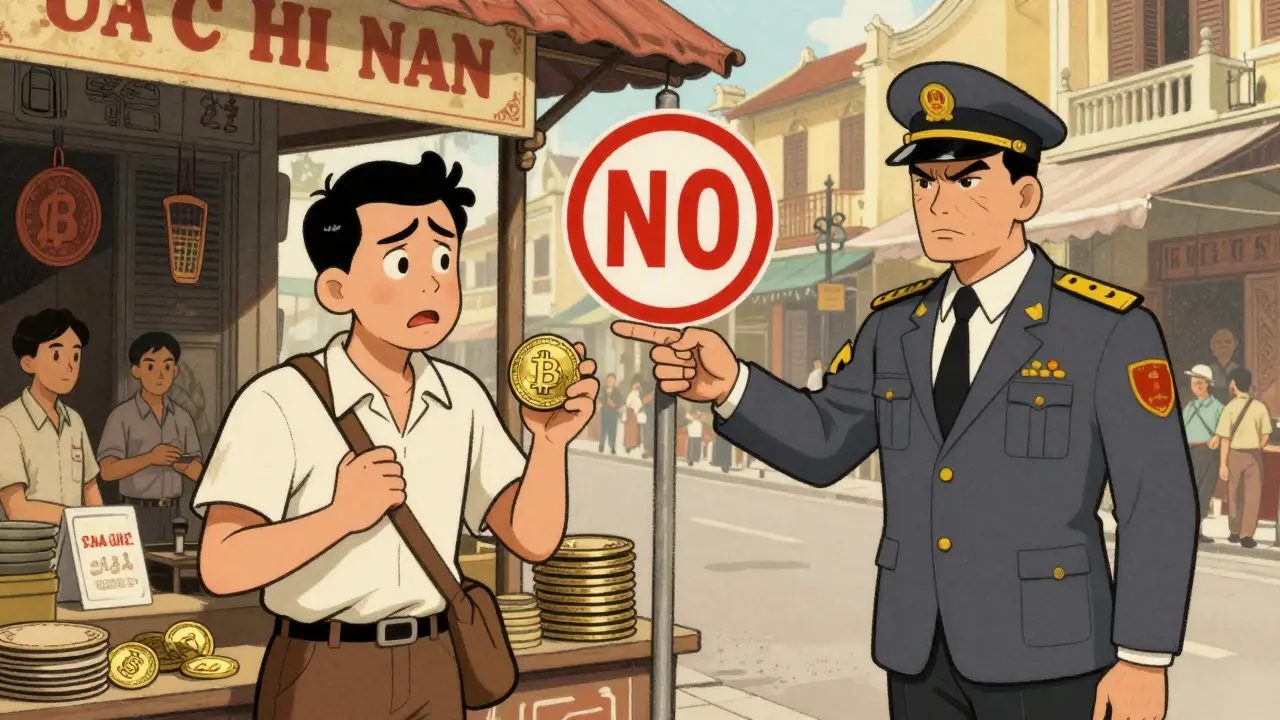
Imagine you are running a small business in Ho Chi Minh City. A customer walks in and offers to pay for your services using Bitcoin, a decentralized digital currency that operates independently of any central authority. It seems like a modern, efficient transaction. But under current Vietnamese law, accepting that payment is not just risky-it is illegal. If caught, you could face administrative fines ranging from 150 million to 200 million Vietnamese Dong (approximately $6,500 to $8,900 USD). This is not a hypothetical scenario; it is the strict reality enforced by the State Bank of Vietnam (SBV), the country's central banking authority.
The confusion around cryptocurrency in Vietnam stems from a specific distinction that many users miss. The government does not ban you from owning crypto. You can buy, sell, and hold digital assets as investments. However, using them as a medium of exchange-paying for goods, services, or tuition-is strictly prohibited. This article breaks down exactly where the line is drawn, why the fines exist, and how this regulatory framework impacts everyday users and businesses in 2026.
The Legal Basis: Decree No. 96/2014/ND-CP
To understand the penalty, we have to look at the source code of Vietnamese financial law. The fine structure comes directly from Decree No. 96/2014/ND-CP, a government regulation establishing administrative sanctions for violations in monetary and banking activities. Specifically, Clause 6, Article 27 of this decree lists "the issuance, supply, and use of bitcoin and other similar virtual currencies as a means of payment" as a prohibited activity.
This was not an overnight decision. In October 2017, following directives from then-Prime Minister Nguyen Xuan Phuc, the SBV formalized its stance. They announced that effective January 1, 2018, any act involving the use of crypto as payment would be subject to prosecution. The logic behind this is rooted in monetary sovereignty. The SBV argues that allowing private digital currencies to function as money undermines the state's control over inflation, tax collection, and capital flow.
It is crucial to note that the law defines "lawful means of payment" very narrowly. According to Article 4.6 of Decree 101/2012/ND-CP (amended by Decree 80/2016/ND-CP), only instruments prescribed by the SBV-such as bank cards, checks, and payment orders-are legal. Anything else, including Bitcoin, Ethereum, or stablecoins, falls outside this definition when used for transactions.
Asset vs. Payment: The Critical Distinction
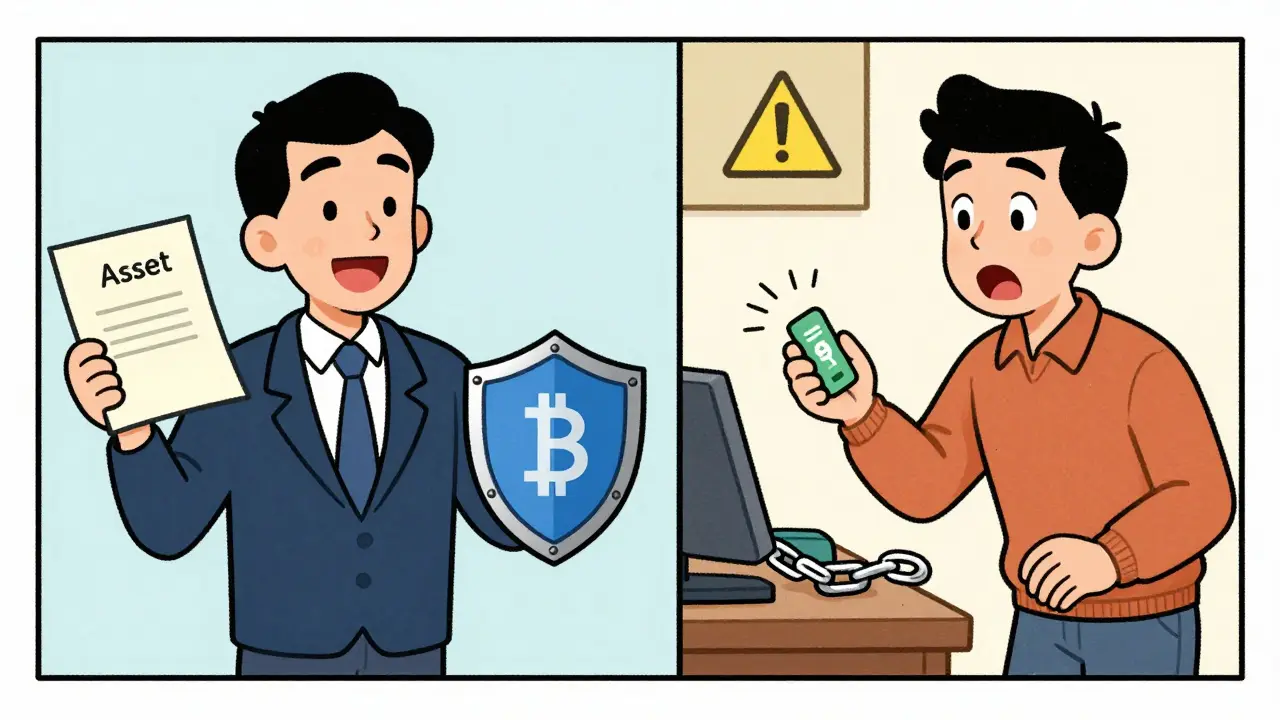
This is where most people get tripped up. Is holding crypto illegal? No. Is trading it on exchanges illegal? Not explicitly, though the regulatory landscape for exchanges remains complex. The ban is specifically targeted at the utility of the asset as money.
Think of it this way: You can own a painting worth millions of dollars. That is an asset. But if you try to walk into a grocery store and hand the cashier a canvas print instead of cash or a card, the transaction fails because the painting is not recognized as legal tender. In Vietnam, cryptocurrency is treated similarly. It is viewed as a speculative asset, not a currency.
Le Truong Tung, president of FTP University, explained this rationale clearly. He noted that accepting Bitcoin as payment complicates economic control. Because the Bitcoin network is decentralized, it creates opportunities for tax evasion and illegal transfers. Furthermore, it strips the nation of sovereignty over issuing its own currency. By banning payments, the SBV aims to keep all commercial transactions within the visible, taxable, and controllable traditional banking system.
| Activity | Legal Status | Potential Penalty |
|---|---|---|
| Holding Crypto Assets | Not Explicitly Prohibited | N/A (Tax obligations may apply) |
| Trading on Exchanges | Gray Area / Unregulated | No direct fine, but platforms lack legal protection |
| Using Crypto for Payments | Illegal | 150 - 200 Million VND Fine |
| Issuing New Tokens | Prohibited | 150 - 200 Million VND Fine |
Enforcement Reality: Theory vs. Practice
On paper, the threat is severe. In practice, enforcement has been selective. The SBV has rarely issued widespread fines to individual consumers. Instead, they target high-profile cases and institutional attempts to integrate crypto.
A notable example occurred in July 2017, before the 2018 enforcement date took full effect. A Vietnamese university announced plans to accept Bitcoin for tuition fees. The SBV intervened immediately, warning that this violated existing regulations. The university quickly abandoned the plan. This case set a clear precedent: educational institutions and large corporations cannot use crypto as a payment rail.
For the average user, the risk lies less in being fined by the SBV and more in the lack of consumer protection. If you send Bitcoin to a merchant and they refuse to deliver the goods, you have no legal recourse. The courts will not recognize the transaction as valid because the medium of exchange was illegal. You simply lose your money. This is often a greater deterrent than the potential fine.
Furthermore, customs authorities have been active. The General Department of Vietnam Customs reported rapid growth in cross-border crypto transactions in 2017. While they did not disclose specific numbers of prosecutions, they signaled that illicit flows would be monitored. The focus here is on preventing capital flight and money laundering, which aligns with global anti-money laundering (AML) standards.
Why Vietnam Stays Strict While Neighbors Evolve
If you look at Southeast Asia, Vietnam’s approach stands out for its rigidity. Thailand implemented a regulatory framework in 2018 that allows licensed cryptocurrency exchanges to operate. Singapore’s Monetary Authority created a licensing regime for digital payment token services in 2017. Both countries have embraced blockchain technology while managing risks.
Vietnam’s refusal to follow suit reflects deep-seated concerns about financial stability. Dr. Nguyen Xuan Thanh, former director of the Vietnam Program at Harvard’s Kennedy School, noted that Vietnam’s approach prioritizes monetary sovereignty over technological innovation. Critics argue this misses an opportunity. Le Hong Hiep, a fellow at Singapore’s ISEAS-Yusof Ishak Institute, stated that the blanket ban fails to address the underlying demand for alternative payment methods and stifles local blockchain development.
Yet, despite the ban, adoption remains high. Chainalysis’ 2021 Global Crypto Adoption Index ranked Vietnam 8th globally. How is this possible? Users engage in peer-to-peer (P2P) trading and use crypto primarily for investment or remittances, carefully avoiding formal merchant payments. They treat it as a savings tool rather than a wallet.
The Future: Draft Decrees and Regulatory Shifts
Is the ban permanent? Signs suggest the government is reconsidering its strategy, albeit slowly. In December 2021, the Ministry of Finance circulated a Draft Decree on Management of Virtual Assets. This draft maintained the prohibition on using crypto as payment but proposed treating cryptocurrencies as taxable assets.
This is a significant shift. Recognizing crypto as an asset implies acknowledging its value and ownership rights. It opens the door for taxation frameworks, which in turn suggests a move toward regulation rather than outright suppression. Dr. Tran Ngoc Ca, former Deputy Director of Vietnam’s Academy of Finance, noted in 2023 that the 150-200 million VND fine is becoming increasingly difficult to enforce as usage grows. The pressure for regulatory modernization is mounting.
However, as of May 2026, the core rule remains unchanged. The SBV continues to reiterate that cryptocurrencies are not legal tender. Any business considering integrating crypto payments should assume the worst-case scenario: a hefty fine and potential reputational damage. For individuals, the advice is simple: invest if you wish, but do not spend.
Can I legally buy Bitcoin in Vietnam?
Yes, buying and holding Bitcoin is not explicitly illegal. The ban applies specifically to using cryptocurrency as a means of payment for goods and services. You can purchase crypto through exchanges or peer-to-peer networks, but you must treat it as an investment asset, not a currency.
Who issues the 150-200 million VND fine?
The fine is imposed by state authorities under the authority of the State Bank of Vietnam (SBV). Enforcement is typically carried out by financial inspection agencies or police units dealing with economic crimes. The penalty is defined in Decree No. 96/2014/ND-CP.
What happens if I use crypto to pay for tuition or rent?
This is considered a violation of payment laws. Both the payer and the recipient could theoretically face administrative fines. Additionally, the transaction is not legally protected. If the landlord refuses to honor the agreement after receiving crypto, you have no legal standing to recover your funds.
Are there any exceptions for small transactions?
No, there are no explicit exceptions for transaction size. The law prohibits the use of virtual currencies as a means of payment regardless of the amount. However, enforcement tends to focus on larger, institutional-level violations rather than minor individual exchanges.
Will Vietnam legalize crypto payments in the future?
It is unlikely in the near term. Recent drafts suggest a move toward regulating crypto as an asset for taxation purposes, but the SBV remains firm on maintaining monetary sovereignty. The primary goal is to channel digital payments into state-sanctioned electronic banking systems rather than decentralized cryptocurrencies.
Tobias Gjerlufsen
May 12, 2026 AT 11:32you people are completely missing the point of monetary sovereignty. it is not about 'control' in the way you think it is. it is about the state maintaining its ability to print money and manage inflation without interference from decentralized networks that do not respect national borders. if everyone used bitcoin for daily transactions, the central bank would lose its primary tool for economic stabilization. the fine is just a deterrent to keep the fiat system intact because without it the entire modern economy collapses into chaos. stop acting like this is some kind of oppression when it is actually basic macroeconomic hygiene.
Michael Berggren
May 12, 2026 AT 23:42interesting perspective but i think you are ignoring the reality on the ground. many vietnamese users are already using crypto for remittances because it is faster and cheaper than traditional banking methods. 🌏 the government might want to maintain sovereignty but the technology does not care about borders. eventually they will have to adapt or risk losing more capital outflows. maybe regulation instead of prohibition would be better? 💡
Tobias Gjerlufsen
May 14, 2026 AT 21:11adaptation is not the same as surrendering control. look at what happened with the university tuition incident. once you open the door for one exception the whole framework crumbles. the sbv knows exactly what they are doing by keeping it strict. your emoji filled optimism does not change the fact that unregulated capital flight destabilizes emerging economies. you are thinking like a libertarian while living in a world run by nation states.
Kiran CS
May 16, 2026 AT 13:09how utterly quaint. the idea that a small developing nation can successfully ban an immutable ledger is laughable. it reminds me of trying to hold back the tide with a sieve. the elites in hanoi know this too which is why they are quietly accumulating assets offshore while preaching digital abstinence to the masses. truly a masterclass in double standards.
Caique Muniz
May 18, 2026 AT 05:17lol yeah right. like any of us are going to pay a fine we cant afford just to buy coffee. the enforcement is basically non existent for small transactions. they only go after the big fish. typical government move. scare the little guy while the real money moves through the cracks. so much drama for nothing.
Kiran CS
May 20, 2026 AT 00:33precisely. the selective enforcement is the hallmark of a regime that knows its laws are unenforceable but needs to project strength. it is theater for the domestic audience. meanwhile the black market thrives and the state loses tax revenue. pathetic really.
Destiny Kilby
May 20, 2026 AT 08:53i feel for the small business owners who might accidentally accept crypto without knowing the legal implications. it is such a harsh penalty for something that seems harmless on the surface. the confusion around the law is real and it puts ordinary people at risk. hopefully there will be clearer guidelines soon so no one gets caught off guard by these massive fines
Jerry CUNNINGHAM SR
May 20, 2026 AT 13:38it is important to understand the distinction between holding an asset and using it as currency. the article explains this well. owning crypto is not illegal but spending it is. this distinction protects the financial system while allowing individuals to invest. we should respect the regulatory framework as it aims to protect consumers from fraud and volatility. education is key here.
Destiny Kilby
May 21, 2026 AT 08:19yes but the line is very blurry for someone who is not a lawyer. if i send someone money for a service is that a payment or a gift? the lack of clarity makes it scary. i just want to be compliant but the rules seem designed to trap people rather than guide them. it feels unfair
Sheldon Friesen
May 22, 2026 AT 09:53oh please. if you are stupid enough to use bitcoin for buying lunch then yes you deserve the fine. it is not rocket science. the government has made it clear since 2018. read the decree. stop whining about ambiguity when the text is literally right there. ignorance is not a valid defense in court nor on reddit. get educated or stay poor.
Tricia Alach
May 23, 2026 AT 21:32i think its just hard to wrap ur head around the fact that digital money is treated differently than physical cash. its like saying u can own gold but not spend it at the store. kinda weird logic tbh. but hey maybe thats just how it works over there. hope things get easier for everyone involved tho
Mike S
May 24, 2026 AT 19:16the audacity of these governments to dictate how we transact is staggering. they claim it is for 'stability' but really it is about control. every time i see this kind of restriction i wonder how long before the people realize their currency is being manipulated against them. wake up sheeple. the revolution is here whether you like it or not.
robert Whitehead
May 25, 2026 AT 22:51let us be clear. cryptocurrency is a speculative asset class not a medium of exchange. treating it as money is a fundamental misunderstanding of its purpose. the vietnamese government is correct to prohibit its use as payment because it lacks intrinsic value and stable purchasing power. anyone arguing otherwise is either ignorant or promoting a scam. stick to investments and leave the payments to the banks.
Mike S
May 26, 2026 AT 16:12intrinsic value? lol. tell that to the fed printing trillions of dollars out of thin air. fiat has less intrinsic value than a rock. at least crypto is transparent. your moral high ground is crumbling under the weight of your own hypocrisy. keep telling yourself that though.
Ruben Michel
May 28, 2026 AT 00:50one must appreciate the rigorous adherence to legal formalism in this case. the decree is explicit and the penalties are severe. this demonstrates a commitment to order and predictability in the financial sector. those who choose to engage in prohibited activities do so at their own peril. the rule of law must be upheld regardless of popular sentiment towards decentralized technologies.
Gavin Wonnacott
May 29, 2026 AT 08:31absolute garbage. this is just another example of state tyranny. they want to choke off innovation and keep the population subservient. i bet the politicians are laughing all the way to the bank while enforcing these draconian measures. shame on them for stifling progress. we need to burn this system down.
Ruben Michel
May 30, 2026 AT 21:05your emotional outburst is noted but irrelevant. the stability of the financial system is paramount. without strict regulations we would see rampant fraud and instability. your call to 'burn it down' is childish and counterproductive. mature citizens respect the legal framework even when they disagree with specific policies.
Bradley Geldenhuys
June 1, 2026 AT 21:04look man i get the frustration but lets not jump to conclusions. the situation is complex. on one hand you have the need for monetary policy control on the other you have the demand for efficient cross border transfers. maybe there is a middle ground where crypto is regulated as a financial instrument rather than banned outright. we need to push for sensible reforms not anarchy. keep pushing the boundaries but do it smartly.
H F
June 1, 2026 AT 22:07brilliantly put! i think the key here is finding that balance. vietnam is in a tough spot. they cannot ignore the global trend towards digital assets but they also cannot afford to lose control of their currency. perhaps a pilot program for regulated crypto payments could work? it would show the world they are serious about innovation while maintaining oversight. exciting times ahead!
Zara Zaman
June 3, 2026 AT 17:24this is nonsense. vietnam should focus on strengthening its own economy instead of banning foreign technologies. the restrictions are hurting local businesses and driving talent abroad. we need to embrace globalization not fight it. the current approach is weak and ineffective. stand firm and integrate properly.