Angola Crypto Mining Restrictions: Energy Crisis & Legal Consequences Explained
 Mar, 26 2026
The Power Play Behind Angola's Crypto Ban
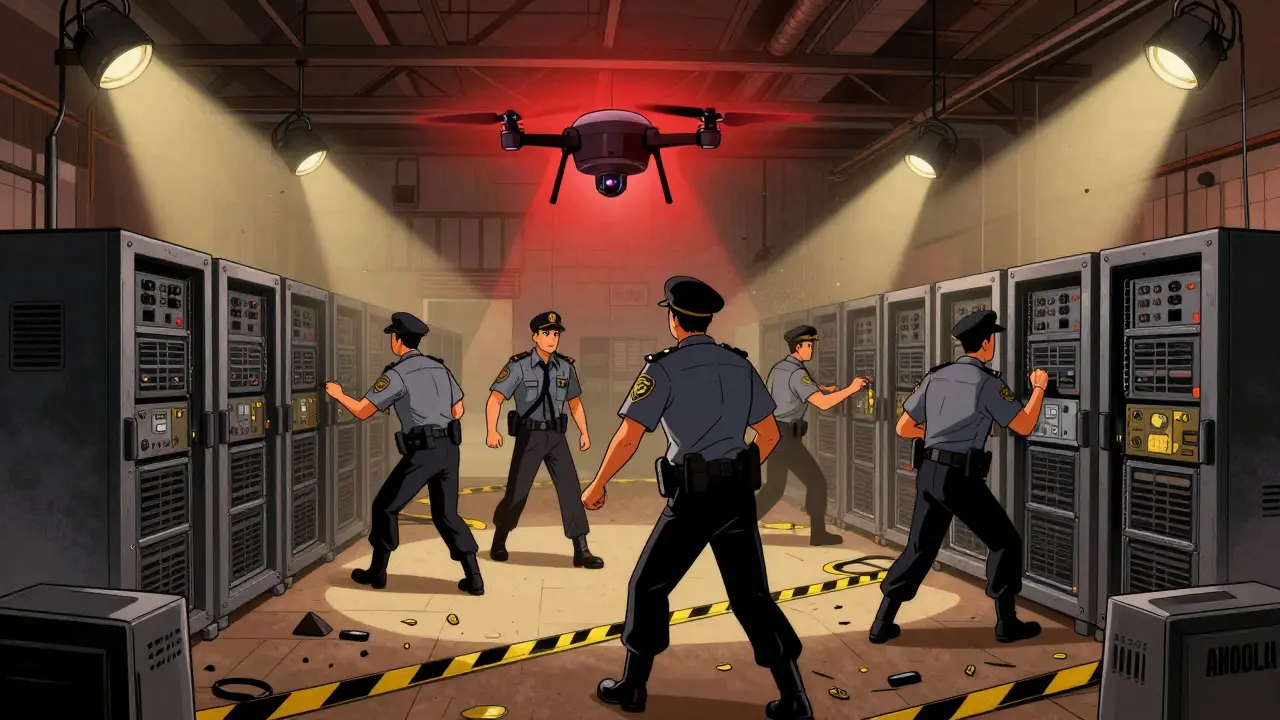
You probably haven't heard much about cryptocurrency laws in Luanda recently, but the situation on the ground has shifted dramatically. In August 2025, a massive sting operation known as Operation Serengeti 2.0 swept through Angola. Law enforcement agencies didn't just shut down a few small rigs; they dismantled 25 full-scale mining centers. Authorities arrested 60 Chinese nationals and seized equipment worth roughly $37.2 million. But this wasn't about stopping digital currency trading-it was about saving the lights. The government realized that crypto mining was eating up power needed for hospitals and schools.
While many nations struggle to find a middle ground on digital assets, Angola took a hardline stance rooted in basic survival. The country faces a severe energy deficit. With nearly 39 million people relying on a national grid that struggles to provide consistent service, the stakes are incredibly high. You can see why officials decided the math simply didn't add up. This breakdown explores exactly what triggered the restrictions, how enforcement works today, and whether there is any hope for compliant mining in the future.
Key Takeaways
- Criminal Offense: Possessing or operating unauthorized mining equipment carries prison sentences of one to five years.
- Power Theft: Illegal mines were stealing about 15% of available electricity during peak usage periods.
- Global Shift: Many banned operators moved to neighboring Namibia, facing higher costs but avoiding arrest.
- Grid Priority: The government prioritizes essential services over speculative asset generation.
- Future Outlook: A potential regulatory opening exists only if operations run entirely off-grid with renewables by 2028.
Why Energy Security Takes Precedence Over Bitcoin
To understand the severity of the Mining Ban, you have to look at the physical reality of Angola's electrical grid. The nation's total generation capacity sits around 5,500 megawatts. That sounds like a lot, but it must serve 39 million citizens. For perspective, the average Angolan consumes less than 420 kWh of electricity per year, which is less than 10% of the global average. Meanwhile, just before the crackdown, unregulated mining farms were consuming between 50 and 200 megawatts collectively. That power alone could theoretically support 300,000 households.
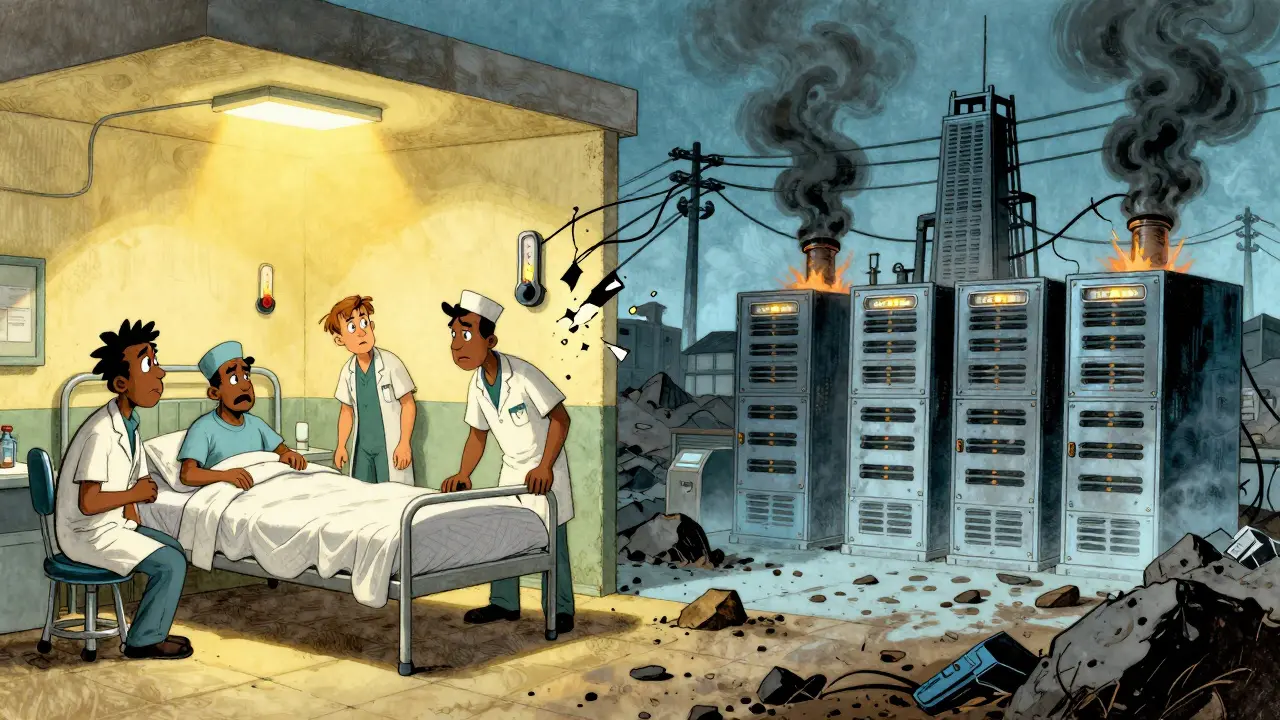
The problem goes beyond simple capacity numbers. The grid is fragile. According to energy analysts from the International Energy Agency, the system loses 28% of its generated electricity due to transmission inefficiencies. Imagine pouring water into a bucket with holes; that is the current state of infrastructure. During dry seasons, reservoir levels drop significantly-specifically at the Cambambe Dam, which fell to 38% capacity during the 2023 drought. When you layer industrial-grade Bitcoin Mining onto that instability, blackouts become frequent and dangerous. Hospitals in districts like Sambizanga reported transformers exploding because mining farms overloaded local circuits. The government had to choose: let miners speculate on coins or keep patients alive. They chose the latter.
The Economics of Illegal Operations
Before the ban fully kicked in, the allure was undeniable. Chinese investors arrived in Angola because electricity prices were shockingly low. Some reports cited costs as low as $0.03 per kilowatt-hour, compared to a global mining average of $0.08. On paper, that margin makes sense. But in practice, the lack of reliability killed profitability for many. Forum posts from early 2024 show miners complaining about weekly outages lasting 24 hours. They weren't running on cheap state power; they were burning diesel generators or tapping directly into industrial lines without meters.
This created a ripple effect that hurt regular citizens. Small business owners in Luanda reported seeing their own tariffs rise by 22% in 2023. The grid strain caused by these clandestine operations forced utility providers to hike rates to manage the load. The Angolan government realized that tolerating these "free zones" for miners was actually subsidizing wealth transfer out of the country while burdening local residents with higher bills. This economic reality helped build public support for the crackdown, with surveys showing 78% of citizens favored restricting mining to protect essential services.
Understanding the Regulatory Framework
You cannot accidentally break the law here. The regulations are explicit. The Ministry of Energy issued notices in April 2024 that clearly define illegal mining. If you operate equipment drawing more than 10 kilowatts of continuous power without direct authorization from the National Electricity Agency (INE), you are committing a crime. Enforcement teams prioritize targets above 100 kilowatts, as those are usually the industrial setups hiding under fake permits. National Electricity Agency data logs are cross-referenced with thermal imaging drones to spot heat signatures above 45°C, a clear sign of ASIC miner clusters.
The penalties are severe enough to act as a genuine deterrent. Operating illegal equipment carries a sentence of one to five years imprisonment. Police also have the mandate to confiscate 100% of the hardware found on site. There are currently no loopholes for renewable energy. Even if you claimed your mine ran on solar panels, the ban prohibits connection to the public grid. The logic is simple: if you touch the grid, you risk stability. The government stated in September 2025 that any future legalization would require 100% off-grid operation, disconnected entirely from national lines.
| Metric | Requirement | Violation Penalty |
|---|---|---|
| Power Threshold | 10 kW limit without permit | Seizure + Prison |
| Grid Connection | Total prohibition on mining loads | Facility Shutdown |
| Inspection | Mandatory INE oversight | Fines up to 5x Value |
| Heat Signatures | No thermal spikes >45°C | Drones/Police Raid |
Enforcement Tactics and Seized Assets
The execution of this policy highlights a coordinated international effort. This was not just local police work. The crackdown utilized resources from Interpol's Digital Crime Directorate. Officers received specialized training to identify hidden setups. Unlike traditional businesses that hide cash, crypto miners leave a massive digital footprint through power usage patterns. The National Electricity Agency scans smart meter data monthly. If a facility shows abnormal 24-hour consumption flat-lining (running day and night regardless of weather), it gets flagged.
During Operation Serengeti, authorities recovered 45 illicit power stations. These were illegal bypasses that siphoned energy directly from distribution transformers. Cybersecurity expert Dmitri Alperovitch noted that these setups created fire hazards that endangered entire neighborhoods in Benguela province. When they finally raided these sites, they found 8,300 ASIC units and 15,000 graphics cards. The handling of seized assets follows a strict protocol. Everything is inventoried within 24 hours using blockchain-based tracking. Machines worth over $10,000 are auctioned off within 90 days. Interestingly, 65% of the confiscated computing power was redirected to university computer science departments to boost education rather than destroyed immediately.
Ripple Effects Across Southern Africa
Bans rarely stay isolated. Just as the walls in Angola closed up, neighboring borders opened slightly. Namibia saw a 200% spike in mining registrations between April 2024 and August 2025. Windhoek became a haven for displaced capital. However, the economics changed rapidly there. Electricity in Namibia costs roughly $0.12 per kilowatt-hour, compared to the illicit $0.03 deals seen in Angola. Profit margins shrank by 60% overnight. This illustrates a broader trend in the region: while some nations welcome the tax revenue, others view mining as an existential threat to national security when the grid is weak.
In Zambia, similar tensions led to the reporting of a $300 million fraud scheme affecting 65,000 victims, complicating the narrative further. South Africa took a different path entirely, allowing mining but taxing energy consumption at 15% to fund grid maintenance. Angola's approach remains the most aggressive in the SADC region, with seven other Southern African nations implementing some form of restriction, though none criminalized possession of hardware quite as strictly as Luanda did.
Future Outlook: Is the Door Closing Permanently?
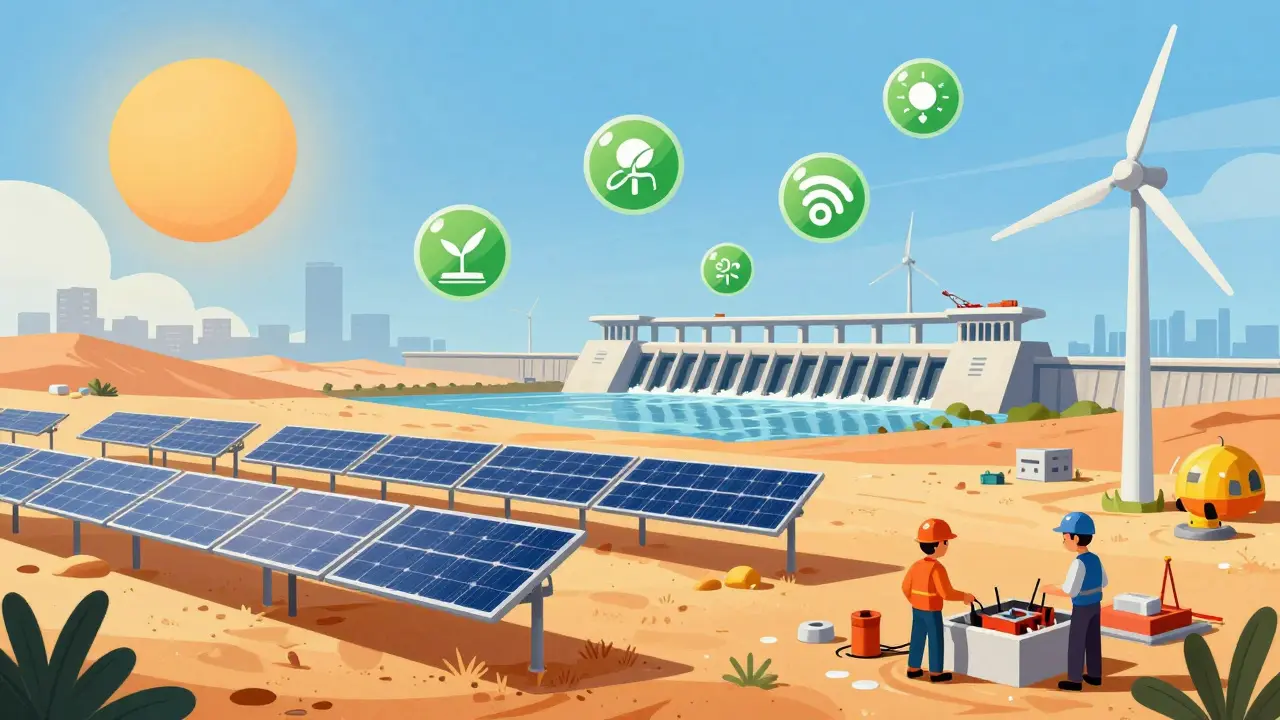
It is easy to assume this ban will last forever, but the reality is nuanced. The root cause is infrastructure. President João Lourenço met with representatives from Solax Power in late 2025 to discuss solar pilots. The catch remains the grid. Officials are clear that any return of mining activities must not rely on the national grid. With the proposed Cambambe III hydropower expansion set to complete in 2028, adding 1,150 megawatts to the system, analysts predict a potential shift in regulations around that timeframe.
However, the World Bank has committed funding to develop frameworks that could eventually accommodate high-priority users. Until then, experts project no regulated market will emerge. The $12 billion investment required for full grid modernization needs to happen first. Standard Bank analysts suggest we won't see a "safe" environment for compliant mining until grid reliability exceeds 90%, a threshold unlikely to be hit before 2027. For now, anyone attempting to mine in Angola risks becoming another statistic in a growing ledger of arrests.
Is trading cryptocurrency still legal in Angola?
Yes. The ban specifically targets the energy-intensive process of mining, not the buying or selling of tokens on exchanges. Residents can still trade, but they must avoid holding mining hardware.
What happens if I bring a graphics card into the country?
Customs agents actively scan for equipment capable of mining. While personal laptops are fine, large quantities of GPUs or ASIC devices may be seized if deemed intended for commercial mining operations.
Can I use my own solar panels to mine?
Currently, no. The ban extends to off-grid setups if they are suspected of feeding back into the grid or causing local interference. Exceptions are being discussed but are not yet codified.
Did the ban affect Bitcoin prices globally?
Not significantly. Angola accounted for only 0.8% of global hash rate before the ban. Other regions absorbed the displacement relatively quickly.
When might restrictions be lifted?
Analysts predict a potential relaxation around 2028 if the new dam expansion comes online and provides surplus energy capacity.
aravindsai pandla
March 27, 2026 AT 18:34The decision regarding the mining ban reflects a clear prioritization of essential services over speculative markets. Authorities have successfully demonstrated that the grid cannot sustain industrial loads alongside residential needs. Protecting hospital operations takes precedence when infrastructure limits become evident during peak usage times. It is reasonable to implement strict penalties for unauthorized equipment usage given the severity of the power deficit. The international coordination shows this is a significant regional security concern rather than just local law enforcement work.
Kevin Da silva
March 29, 2026 AT 13:43grid stability always comes first before any speculation happens
Florence Pardo
March 31, 2026 AT 12:50It is heartbreaking to see the lights go out for families just because some greedy investors wanted to mine digital coins.
You really have to wonder about the human cost when electricity prices skyrocket for regular citizens.
Imagine being a mother in Sambizanga trying to run a ventilator while neighbors plug in industrial machines.
The government made a choice that feels painful but necessary for survival.
We often forget how fragile national grids actually are until they break completely.
Seeing hospitals lose power is worse than seeing profits drop for foreign miners.
Maybe the crackdown feels harsh on paper but it saves lives in practice.
The infrastructure just cannot handle modern demands without severe degradation elsewhere.
I worry that the displaced operators moving to Namibia will drain resources there too soon.
It creates a regional domino effect that nobody planned for carefully enough.
Local communities deserve stability over speculative financial instruments every time.
The decision to repurpose seized hardware for universities is a bright spot in this mess.
Education builds capacity while mining depletes it faster than it generates value.
Hopefully the 2028 dam expansion provides the breathing room everyone hopes for soon.
Until then we must respect the priority placed on basic human needs over profit margins.
Annette Gilbert
March 31, 2026 AT 15:48Surely someone thought this through better than simply confiscating millions in hardware.
It smells like incompetence dressed up as emergency action.
The Chinese nationals were likely operating within their own corporate mandates while locals pay the price.
Drama queens love pointing fingers at energy thieves when the real issue lies in mismanagement.
This ban is just another way to control capital flow without addressing root infrastructure failures.
Lorna Gornik
April 1, 2026 AT 22:45Honestly that is super intense right now 😬
I mean power goes out anyway but this adds a new layer to things 👋
Hope people stay safe though! ✌️
Kayla Thompson
April 1, 2026 AT 23:45Those who claim regulation saves infrastructure are deluding themselves fundamentally.
The state simply lacks the competency to manage the grid regardless of miner presence.
Banning the activity does not fix the aging transmission lines or reservoir losses.
We are witnessing a redistribution of suffering rather than a solution to the crisis.
Few elites will ever understand why their convenience requires sacrificing public utility integrity.
Brijendra Kumar
April 2, 2026 AT 00:50Your ignorance regarding grid physics is appalling considering the severity of the situation.
Illegal consumption literally caused transformer explosions in medical districts recently.
Moral superiority means nothing when patients cannot receive care during blackouts.
The criminals did not care about the greater good so neither should you defend them.
Stop romanticizing greed disguised as technological innovation.
Mansoor ahamed
April 2, 2026 AT 21:12Infrastructure development timelines suggest a 2028 reopening window.
Current legal frameworks criminalize possession above ten kilowatts.
Renewable pilots remain disconnected from main distribution networks entirely.
vu phung
April 3, 2026 AT 21:54The technical specs indicate hash rate displacement is minimal on a global scale though.
Operators will pivot to regions with higher margin tolerance eventually.
It creates a fascinating case study in decentralized resource allocation constraints.
Market forces usually find a workaround despite heavy-handed regulatory measures here.
Positive outcomes include the hardware going to schools which boosts local talent pipeline significantly.
Jeannie LaCroix
April 4, 2026 AT 15:21This tragedy exposes the worst aspects of unregulated capitalism invading sovereign territory.
Every seizure represents a life potentially lost to preventable grid failure events.
The audacity of bringing thousands of ASIC units into a fragile ecosystem is shocking indeed.
Justice requires full restitution to the communities that suffered the highest tariffs.
Angola must rebuild its energy independence without relying on such dangerous external actors.
Domenic Dawson
April 6, 2026 AT 03:57It is crucial to remember that safety protocols were likely violated heavily here.
Many workers involved had no idea the equipment posed such a severe hazard.
The community deserves support during the transition period ahead.
Repurposing the gear for education offers a constructive path forward definitely.
Everyone wants stability for the future regardless of past mistakes.
Kevion Daley
April 6, 2026 AT 18:45The geopolitical implications warrant further analysis among policy circles today :(
Namibia becoming a haven suggests regulatory arbitrage is still alive unfortunately.
These nations struggle to balance revenue needs against physical limitations constantly.
Global south economies face disproportionate pressure from volatile assets frequently.
Andrew Midwood
April 8, 2026 AT 07:19Thermal imaging drones are pretty neat tech actually 😄
They help authorities spot heat signatures way easier than manual checks.
Cool stuff for security but tough on privacy rights a bit though.
Maybe AI could predict load spikes before mines even install rigs next time.
Efficiency gains are the real goal here for everyone involved.
Andrea Zaszczynski
April 8, 2026 AT 18:44Why would anyone risk prison time for a coin that has zero intrinsic value.
The math behind off-grid operation seems impossible for most individuals realistically.
Perhaps there was collusion between officials and mining firms initially.
We should focus on why the grid was so weak in the first place though.
Joshua T Berglan
April 10, 2026 AT 11:34True story!! 😃
YANG YUE
April 12, 2026 AT 06:50Power is the blood of modern society and it runs thick through wires.
To block that blood for coin is to starve the body of light.
Balance returns when nature dictates the rhythm once more.
The sun will rise regardless of what miners decide to dig underground.
People need warmth and hospitals need humors more than charts.