Are Crypto Payments Allowed in Iran? 2026 Rules, Restrictions, and Reality
 Feb, 10 2026
Can you use Bitcoin or Ethereum to pay for goods in Iran? The answer isn’t simple. It’s not a straight yes or no. As of 2026, crypto payments in Iran are not officially allowed for everyday transactions - but they’re not completely banned either. The government walks a tightrope: it wants to control the flow of digital money, stop the rial from collapsing, and still benefit from mining revenue. The result? A system full of loopholes, surveillance, and contradictions.
What’s Actually Legal? Mining Yes, Payments No
Iran is one of the top five countries in the world for cryptocurrency mining. It produces about 4.5% of all Bitcoin mined globally. Why? Because electricity is cheap. The government realized early on that mining could bring in hard currency - especially when international sanctions blocked access to banks. So in 2019, they legalized it. But here’s the catch: if you mine Bitcoin in Iran, you’re not allowed to keep it. Licensed miners must sell their coins directly to the Central Bank of Iran (CBI) at fixed rates. The bank then sells them abroad for dollars or euros. This isn’t about helping miners get rich - it’s about funneling foreign cash into the state’s coffers. As for payments? Forget using crypto to buy groceries, pay rent, or order online. The CBI shut down all domestic crypto-to-rial payment gateways in late 2024. That means no app, no website, no platform can let you swap Bitcoin for Iranian rials inside the country - unless it’s one of the few government-approved exchanges.The Government’s Surveillance Machine
In January 2025, the CBI didn’t just ban payments - it built a digital cage. All crypto exchanges operating in Iran now have to connect to a government-controlled API. Every transaction, every wallet address, every user login is logged and monitored. No exceptions. Even if you use a licensed exchange like Nobitex, your identity is tied to your rial account. The bank knows exactly who you are, how much you bought, and when you sold. This isn’t privacy-friendly finance - it’s state-controlled finance with a crypto skin. The CBI also requires all participants - individuals, businesses, even freelancers - to get licenses just to hold crypto. Unlicensed trading? That’s a legal gray zone, but enforcement is harsh. Authorities have raided homes, seized mining rigs, and frozen bank accounts for people caught trading without permits.Why the Ban on Payments?
You might wonder: if mining is legal, why not let people use crypto to pay? The answer is the rial. Iran’s currency has lost over 90% of its value since 2018. Inflation is above 50%. People are desperate to protect their savings. If crypto payments were allowed freely, the rial could collapse faster. Imagine millions switching to Bitcoin or USDT for daily spending - the demand for rials would plummet, prices would skyrocket, and the government would lose control. That’s why they’ve made it nearly impossible. Instead, they’re pushing the Digital Rial is a central bank digital currency (CBDC) designed to replace physical cash and bring all digital transactions under government control. It’s not decentralized. It’s not anonymous. It’s just the rial with a digital wrapper. The pilot is already live on Kish Island - a tourist zone where foreign visitors can use it to pay for hotels and taxis. The goal? Replace dollar usage, not crypto.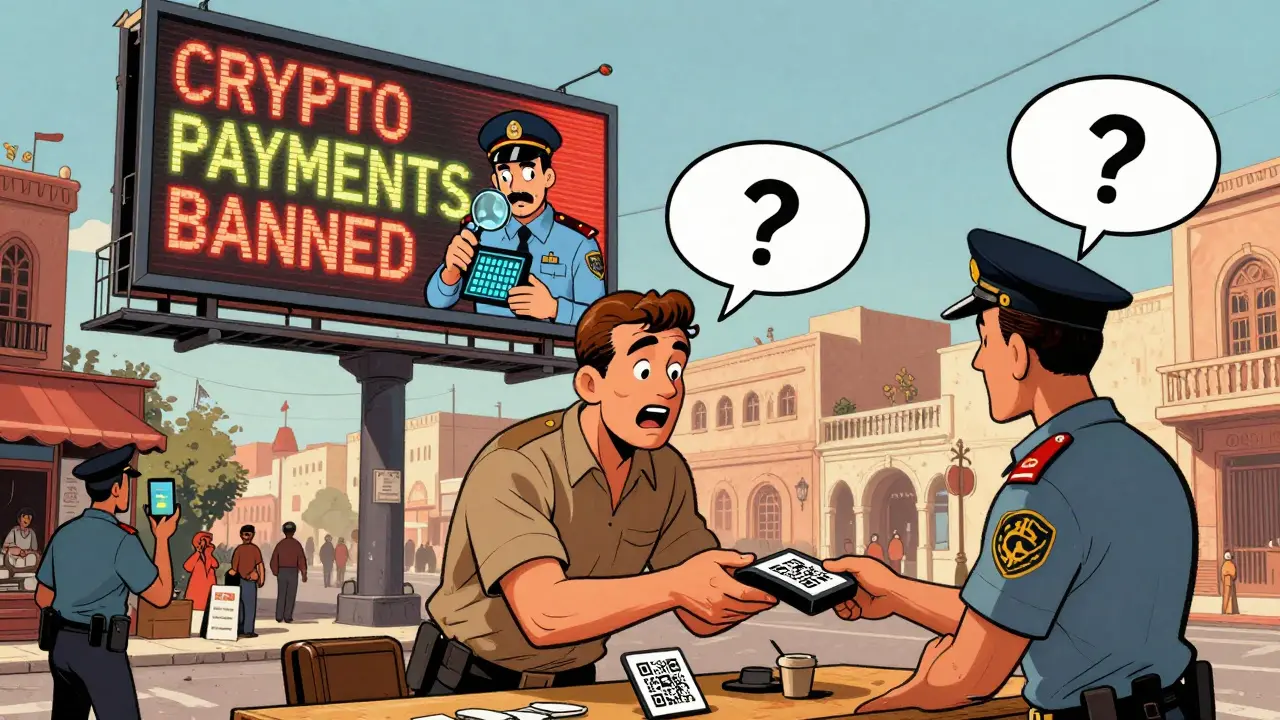
What About Advertising?
In February 2025, Iran banned all crypto advertising - everywhere. No more YouTube videos. No more billboards. No more Instagram ads. Even online forums got cleaned up. The government didn’t just want to control transactions - they wanted to control perception. Why? Because they don’t want people thinking crypto is safe, easy, or profitable. They want you to believe it’s risky, illegal, and dangerous. That way, fewer people try to use it - and the ones who do are easier to track.How Do Iranians Still Use Crypto?
Despite the rules, Iranians are still using crypto - just not the way the government wants. Most people use VPNs are tools that mask internet traffic to bypass government censorship and access foreign cryptocurrency exchanges. to reach global platforms like Binance, Kraken, or Bybit. They buy crypto overseas, hold it in wallets, and trade peer-to-peer using local messaging apps like Telegram. There’s a whole underground economy built on this. A freelancer in Tehran might get paid in USDT via a Telegram bot. A shop owner might accept Bitcoin from a customer who uses a foreign wallet - then immediately cash out through a local broker who takes a 10% cut. These aren’t legal, but they’re common. The problem? These transactions leave no paper trail. That’s why international regulators are stepping in. In July 2025, Tether froze 42 Iranian-linked addresses - over half tied to Nobitex. That’s not just a technical move - it’s a warning. If you’re using crypto to bypass sanctions, you’re on a global watchlist.Who’s Behind the Scenes?
The Islamic Revolutionary Guard Corps (IRGC) is a military and economic force in Iran with confirmed involvement in cryptocurrency mining and trading operations. Multiple reports from financial intelligence units show IRGC-linked wallets moving millions in crypto. These aren’t random users - they’re state-backed actors using digital assets to move money outside the traditional banking system. This is why the U.S. and EU have targeted Iranian crypto activity. It’s not just about money laundering - it’s about sanctions evasion. The government may claim it’s trying to control crypto, but its own agents are using it to keep the economy afloat.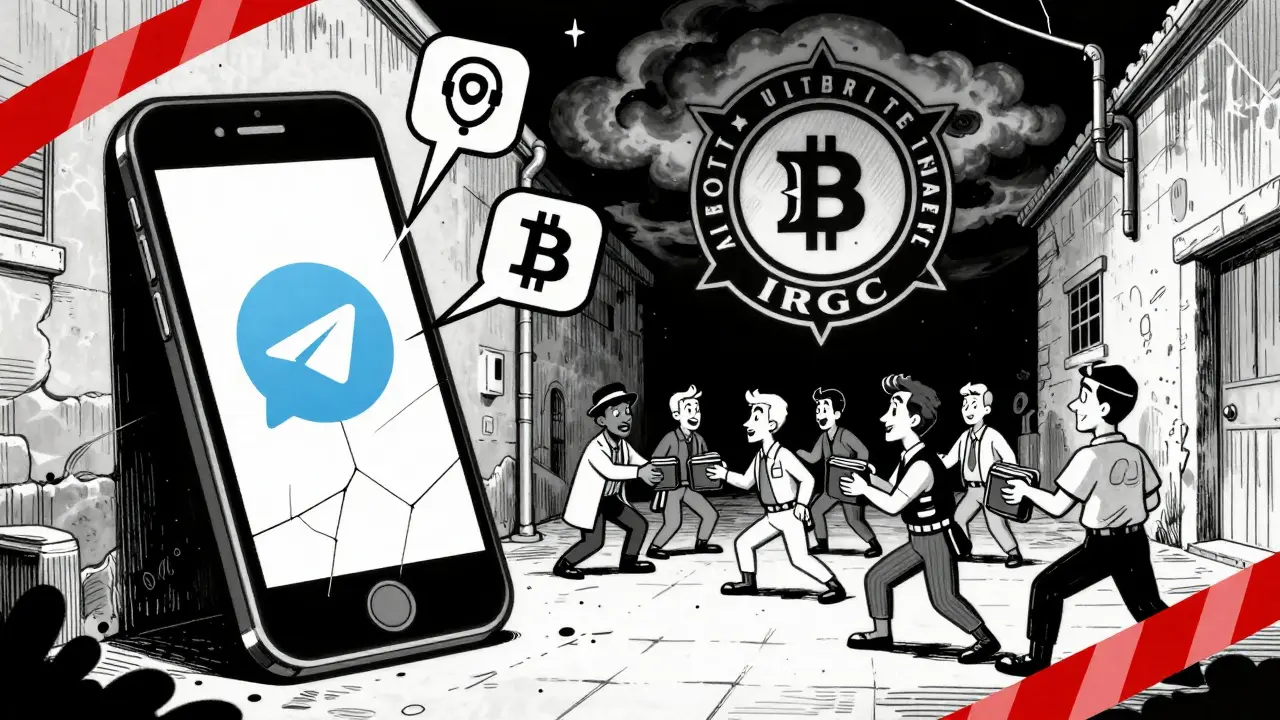
Is There a Future for Crypto in Iran?
The government’s strategy is clear: mine it, control it, monetize it, but never let it free. They’ll keep allowing mining - as long as miners hand over their coins. They’ll keep letting people trade on licensed platforms - as long as every click is tracked. And they’ll keep blocking direct payments - because letting crypto replace the rial would mean losing power. The real question isn’t whether crypto is allowed. It’s whether Iranians will keep finding ways around the rules. Right now, they are. Millions of people still use it. They don’t care about the law - they care about survival. The digital rial might become the official currency. But until the rial regains trust, crypto will keep running in the shadows - quietly, illegally, and everywhere.What About Mining? Is It Still Worth It?
Mining used to be profitable. Electricity cost as little as $0.02 per kWh. But in 2025, the government raised tariffs for miners to $0.08 - and still required them to sell coins to the CBI at fixed prices. That killed most legal mining operations. Only large industrial farms with government backing can survive. Smaller miners? They’ve gone underground - running rigs in basements, warehouses, even mosques. Some are caught. Others keep going. If you’re thinking about mining in Iran today, you’re not just investing in hardware - you’re risking arrest.Final Reality Check
Crypto payments aren’t allowed in Iran. Not officially. But they’re everywhere. The government doesn’t want you to use them. It wants to control every step - who you are, what you buy, how much you trade. And it’s watching. For now, Iranians use crypto the way they’ve always used it: as a lifeline. Not as a currency. Not as a revolution. Just as a way to keep their money from disappearing. The system is broken. But people are still finding a way.Can I legally use Bitcoin to pay for goods in Iran?
No. As of 2026, direct peer-to-peer cryptocurrency payments for goods or services are banned by the Central Bank of Iran. All transactions must go through government-approved exchanges that report every detail to authorities. Using crypto for everyday purchases without going through these channels is considered illegal.
Is cryptocurrency mining legal in Iran?
Yes, but only under strict government control. Miners must obtain licenses from the Ministry of Industry, Mine and Trade, use approved hardware, pay high electricity tariffs, and sell all mined coins directly to the Central Bank of Iran. Most small-scale miners operate illegally due to these restrictions.
Why did Iran ban crypto advertising?
Iran banned all crypto advertising in February 2025 to reduce public interest and prevent mass adoption that could destabilize the rial. The government wants to limit exposure to digital assets while maintaining tight control over those who still use them.
Can I use a VPN to access foreign crypto exchanges in Iran?
Yes, many Iranians use VPNs to access exchanges like Binance or Kraken. While using a VPN isn’t illegal per se, trading crypto outside government-approved channels is. Authorities monitor internet traffic and have cracked down on users caught doing so, especially if large sums are involved.
What is the Digital Rial, and how does it differ from Bitcoin?
The Digital Rial is Iran’s central bank digital currency (CBDC), fully controlled by the Central Bank of Iran. Unlike Bitcoin, it’s not decentralized, not mineable, and not anonymous. Every transaction is tracked, and the supply is fixed by the government. It’s designed to replace cash and reduce dollar usage - not to compete with crypto.
Are Iranian crypto transactions monitored by foreign governments?
Yes. International entities like Tether have frozen Iranian-linked wallets, and U.S. and EU regulators actively track crypto flows tied to Iran. The involvement of the IRGC in crypto trading has led to sanctions on specific wallets and exchanges, making it risky for Iranians to use crypto for international transfers.
What happens if I’m caught trading crypto without a license in Iran?
Penalties vary but can include fines, seizure of mining equipment, freezing of bank accounts, and even criminal charges. Authorities have raided homes and businesses, especially during periods of energy shortages or increased surveillance. The risk is real, especially for those moving large amounts.
blake blackner
February 11, 2026 AT 13:38Andrea Atzori
February 12, 2026 AT 16:12Joe Osowski
February 14, 2026 AT 13:35Gaurav Mathur
February 15, 2026 AT 05:10Jeremy Lim
February 15, 2026 AT 11:04kelvin joseph-kanyin
February 15, 2026 AT 19:13Elizabeth Choe
February 16, 2026 AT 14:53Grace Mugambi
February 17, 2026 AT 13:56Crystal McCoun
February 19, 2026 AT 07:06Elijah Young
February 19, 2026 AT 12:52Beth Trittschuh
February 19, 2026 AT 22:45Donna Patters
February 20, 2026 AT 21:53Michelle Cochran
February 21, 2026 AT 04:00Peggi shabaaz
February 22, 2026 AT 16:32Sanchita Nahar
February 23, 2026 AT 01:33Ben Pintilie
February 24, 2026 AT 14:06Sakshi Arora
February 26, 2026 AT 05:45bala murali
February 28, 2026 AT 02:03Ekaterina Sergeevna
February 28, 2026 AT 06:39Claire Sannen
March 1, 2026 AT 05:18