Argentine Peso Instability and Crypto Adoption: Why Argentines Choose Stablecoins
 Sep, 18 2026
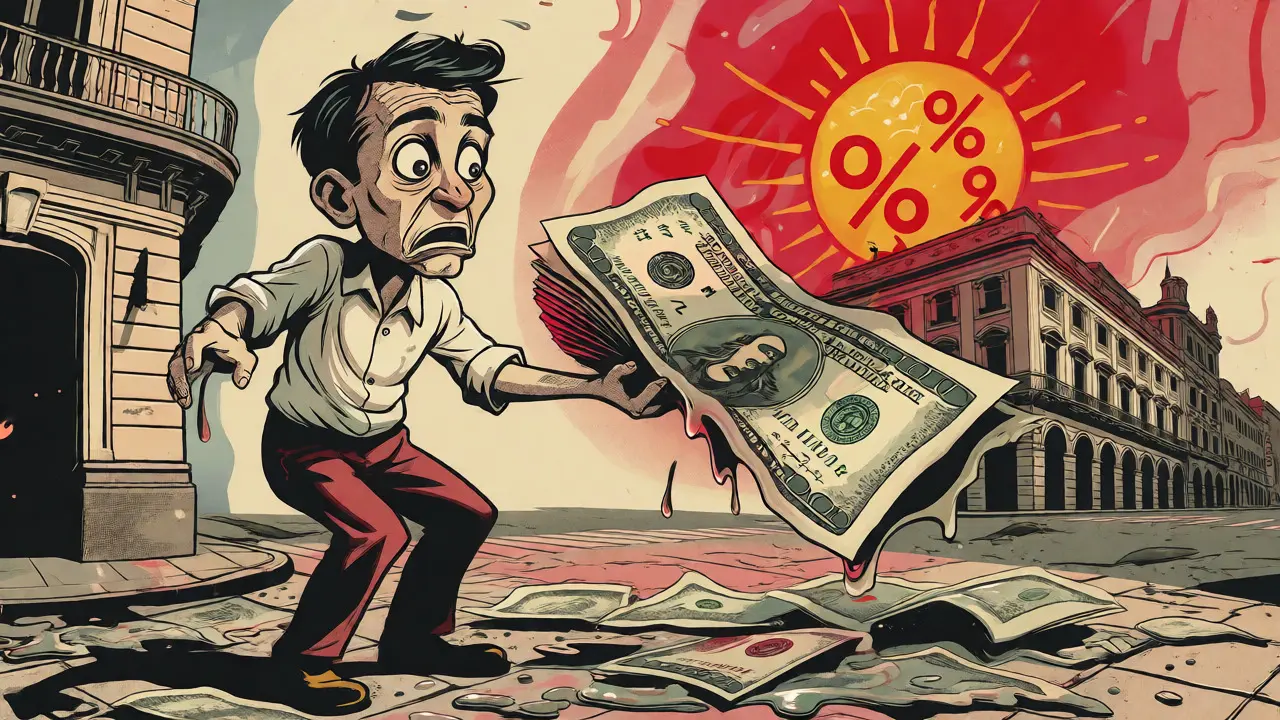
Imagine watching your life savings lose half its buying power in a single year. For millions of Argentines, this isn't a hypothetical nightmare-it's their Tuesday afternoon routine. While the rest of the world debates whether cryptocurrency is a speculative bubble or the future of finance, Argentina has already voted with its wallets. The Argentine peso is the official currency of Argentina, which has suffered from chronic hyperinflation and severe devaluation, driving citizens toward digital alternatives. This economic pressure cooker has turned the country into one of the most fascinating real-world laboratories for crypto adoption on the planet.
You might think people buy Bitcoin because they want to get rich quick. In Buenos Aires, that’s rarely the case. People buy it-or more accurately, stablecoins-because they need to survive. When the local currency melts away, holding dollars becomes a privilege restricted by law, but holding USDT or USDC becomes a necessity. Let’s look at why this specific combination of monetary chaos and technological access created a perfect storm for digital assets in Latin America’s second-largest economy.
The Weight of Hyperinflation
To understand the crypto boom, you have to respect the pain causing it. Argentina’s inflation didn’t just spike; it exploded. In 2023, annual inflation exceeded 200%, meaning prices doubled roughly every six months. By mid-2024, the central bank was burning through billions trying to hold the line, spending $1.1 billion in defense efforts just to keep the peso within a managed band against the US dollar. Yet, despite these interventions, the gap between the official exchange rate and the parallel "blue dollar" market remained massive.
This instability destroys trust. If you earn pesos today, you know that tomorrow they will buy less bread, less fuel, and less rent. Traditional banking solutions failed here. Banks couldn’t offer interest rates that beat inflation, and saving in pesos felt like pouring water into a leaky bucket. So, where did people go? They looked for stability. And since buying physical US dollars is heavily restricted, they found it on the blockchain.
Stablecoins Are King, Not Bitcoin
Here is a fact that surprises many outsiders: Argentines aren’t primarily buying Bitcoin to speculate on price swings. They are buying stablecoins. Data shows that 89% of Argentine peso activity on centralized exchanges is directed toward acquiring stablecoins like USDT (Tether) and USDC (USD Coin). This makes Argentina one of the highest stablecoin-preferring markets globally, trailing only Colombia.
Why the obsession with stablecoins? Because they act as digital dollars. Unlike the volatile Bitcoin, which can drop 10% in a day, stablecoins are pegged 1:1 to the US dollar. For an Argentine family, converting pesos to USDT is functionally identical to exchanging them for paper dollars, but without the bureaucratic headaches. It’s a workaround for a broken system.
| Currency Option | Accessibility | Volatility Risk | Primary Use Case |
|---|---|---|---|
| Argentine Peso | High (Official Currency) | Extreme (Hyperinflation) | Daily transactions, wages |
| Paper USD | Low ($200/month cap) | None (vs. USD) | Savings, black market trades |
| USDT/USDC | High (Digital Access) | Low (Pegged to USD) | Hedging, transfers, savings |
| Bitcoin | Moderate | High | Long-term store of value |

Capital Controls Force Innovation
You might ask, "Why not just buy dollars at the bank?" That’s the million-dollar question. The Argentine government imposes strict capital controls to prevent capital flight. Currently, citizens are limited to purchasing only $200 per month through official banking channels at the official exchange rate. If you want more than that, you’re pushed into the informal market-the famous "blue dollar"-where rates are significantly higher and less predictable.
Cryptocurrency bypasses these gates. There is no central authority telling you how many tokens you can buy. Platforms like Lemon, a popular local exchange, saw record daily volumes during periods of political uncertainty, such as around election times. When voters feared a shift in policy, they rushed to convert pesos into stablecoins. It wasn’t speculation; it was panic management. The ability to move wealth out of the peso instantly, without waiting for a bank appointment or hitting a monthly quota, gave ordinary citizens a sense of financial agency they hadn’t felt in decades.

From Speculation to Infrastructure
While early adopters might have been tech enthusiasts, the current wave includes grandmothers, small business owners, and freelancers. Chainalysis research highlights that households and businesses use stablecoins to hedge against chronic inflation. But it goes beyond savings. Freelancers working for international clients often receive payments in USDC directly, avoiding the slow and expensive wire transfer fees associated with traditional banks. Small importers use crypto to pay suppliers abroad when getting foreign currency through official channels takes weeks.
This shift represents a fundamental change in perception. Crypto isn’t seen as a casino anymore. It’s viewed as essential infrastructure. In a country where the postal service might be slow and the banking system restrictive, blockchain rails offer speed and transparency. For example, DAI, a decentralized stablecoin, has gained traction because its collateral is visible on the Ethereum blockchain. Users appreciate the auditability compared to opaque bank reserves.
Regional Context and Future Outlook
Argentina doesn’t exist in a vacuum. It sits within a broader Latin American trend where economic volatility drives digital adoption. With $93.9 billion in transaction volume, Argentina ranks as the second-largest crypto market in the region, behind Brazil but ahead of Mexico and Venezuela. However, the drivers differ. While Mexico’s adoption is fueled largely by remittances from the United States, Argentina’s is driven by domestic preservation of wealth.
The regulatory environment is slowly catching up. The government has implemented a regulatory sandbox and issued licenses for Virtual Asset Service Providers (VASPs), providing some legal clarity. This institutional acceptance signals that crypto isn’t going away. As long as the peso remains unstable, the demand for digital dollars will persist. Even if inflation cools down, the habit has formed. Once people realize they can transact globally with near-zero friction, returning to the old way feels archaic.
So, what does this mean for you? If you’re watching global markets, Argentina serves as a warning and a blueprint. It proves that when fiat money fails its basic duty-to store value-people will find alternatives. Whether those alternatives are gold, Swiss francs, or Tether depends on accessibility. In Argentina, the answer was clear: digital dollars won because they were easier to get than paper ones.
Why do Argentines prefer stablecoins over Bitcoin?
Argentines prioritize stability over speculation. Stablecoins like USDT and USDC are pegged to the US dollar, offering a direct hedge against peso devaluation without the price volatility associated with Bitcoin. Approximately 89% of crypto activity in Argentina involves stablecoins, reflecting a need for wealth preservation rather than investment growth.
How do capital controls affect crypto usage in Argentina?
Strict limits on purchasing physical US dollars (currently capped at $200 per month officially) force citizens to seek alternatives. Cryptocurrency provides unrestricted access to dollar-denominated assets, allowing users to bypass banking restrictions and avoid the high spreads of the informal "blue dollar" market.
Is crypto adoption in Argentina driven by speculation or necessity?
It is primarily driven by necessity. High inflation rates, which exceeded 200% in 2023, erode the purchasing power of the peso rapidly. Citizens use crypto to protect their savings and facilitate international payments, treating it as essential financial infrastructure rather than a speculative asset class.
What role does the "Blue Dollar" play in this dynamic?
The "Blue Dollar" is the informal exchange rate for US dollars in Argentina, typically much higher than the official rate. While it offers a hedge, it carries risks related to liquidity and legality. Stablecoins often track closer to the blue dollar rate but offer greater ease of transfer and security, making them a preferred alternative for many.
Which cryptocurrencies are most popular in Argentina?
Tether (USDT) and USD Coin (USDC) dominate the market due to their utility as digital dollars. Bitcoin also holds significant share as a long-term store of value, particularly among users who view it as "digital gold." Decentralized stablecoins like DAI are gaining traction due to their transparent collateralization on the Ethereum blockchain.