Bibox Crypto Exchange Review: Features, Fees, and Red Flags in 2025
 Dec, 24 2025
If you're looking for a crypto exchange with hundreds of coins and high leverage trading, Bibox might catch your eye. But here’s the real question: is it safe to use in 2025? After digging into user reports, fee structures, and trust scores, the answer isn’t as simple as it seems.
What Bibox Actually Offers
Bibox launched in 2017 and markets itself as an AI-powered crypto exchange. It supports over 500 cryptocurrencies, including popular ones like Bitcoin, Ethereum, and Solana, plus hundreds of smaller altcoins. You can trade spot pairs, use leverage up to 1:150 on futures and margin trades, and even buy NFTs directly on the platform.
One of the few things Bibox does well is variety. If you’re into obscure tokens or want to dabble in options trading, Bibox has more options than most mid-tier exchanges. It also offers passive income tools like staking and savings accounts, which is useful if you’re not actively trading.
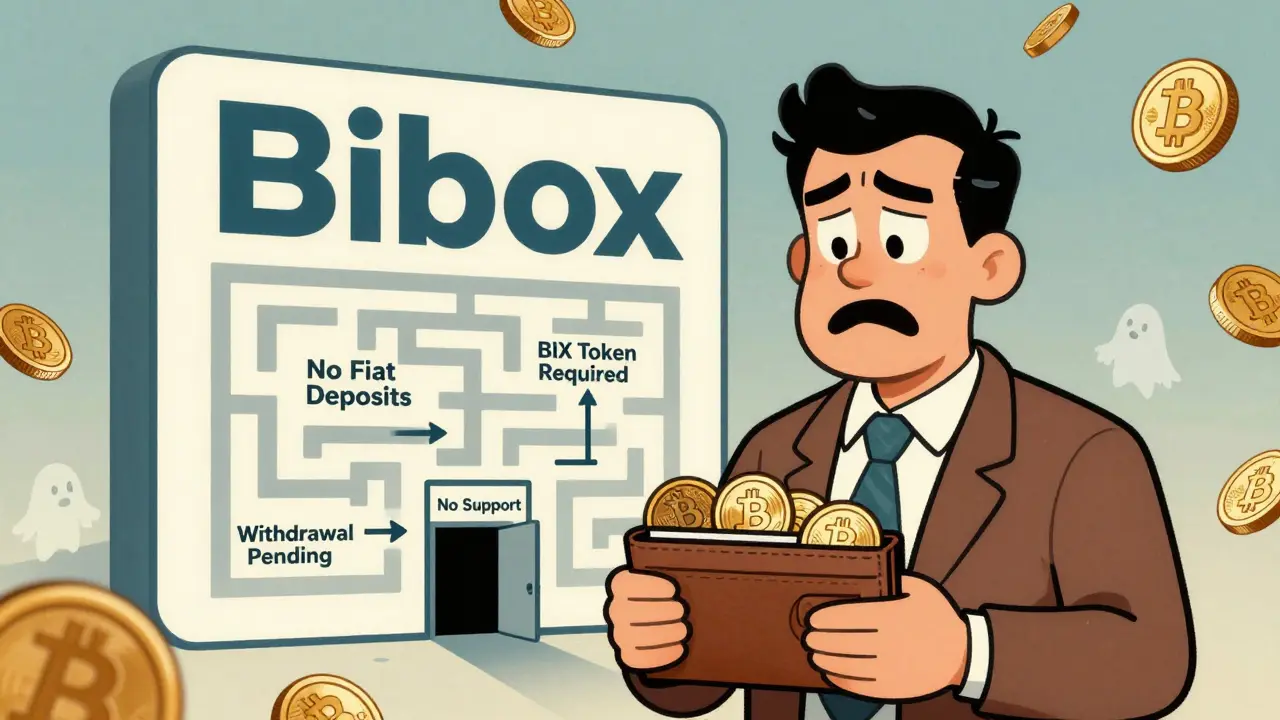
But here’s the catch: Bibox doesn’t let you deposit fiat currency. No bank transfers, no credit cards, no PayPal. You need to already own crypto to use it. That means you have to buy Bitcoin or USDT on another exchange first - like Binance or Coinbase - then send it over. For new users, that’s a major roadblock.
How Bibox Charges You
Bibox doesn’t use traditional user tiers based on verification levels. Instead, its entire fee system revolves around one thing: holding BIX tokens.
Spot trading fees start at 0.1%, but if you hold enough BIX, you can drop that to 0.01%. Futures trading is cheaper to begin with - 0.04% to 0.06% - and can also be reduced with BIX. The more BIX you hold, the lower your fees. It’s a loyalty program, but it’s also a way to push users to buy and hold their native token.
Withdrawal fees vary by coin. For Bitcoin, it’s usually around 0.0005 BTC. For Ethereum, it’s about 0.01 ETH. These are average rates, but they’re not hidden - you can see them before you confirm any withdrawal.
Here’s the problem: the fee discounts only matter if you’re trading large volumes. If you’re a casual trader putting in $500 a month, you won’t save much. And if you’re buying BIX just to get lower fees, you’re essentially paying more upfront to save pennies later.
Trust Issues You Can’t Ignore
This is where Bibox falls apart.
On Trustpilot, Bibox has a 1.1 out of 5 stars rating based on over 170 reviews. That’s not a fluke. The most common complaints? Withdrawals that never arrive. Customer support that doesn’t reply. Accounts frozen during market swings.
ScamAdviser gives Bibox a 70/100 trust score - which sounds okay until you realize that means it’s flagged as moderate risk. Traders Union, which has reviewed over 3,800 financial platforms, rates Bibox at 3.37 out of 10 and explicitly warns users to proceed with caution.
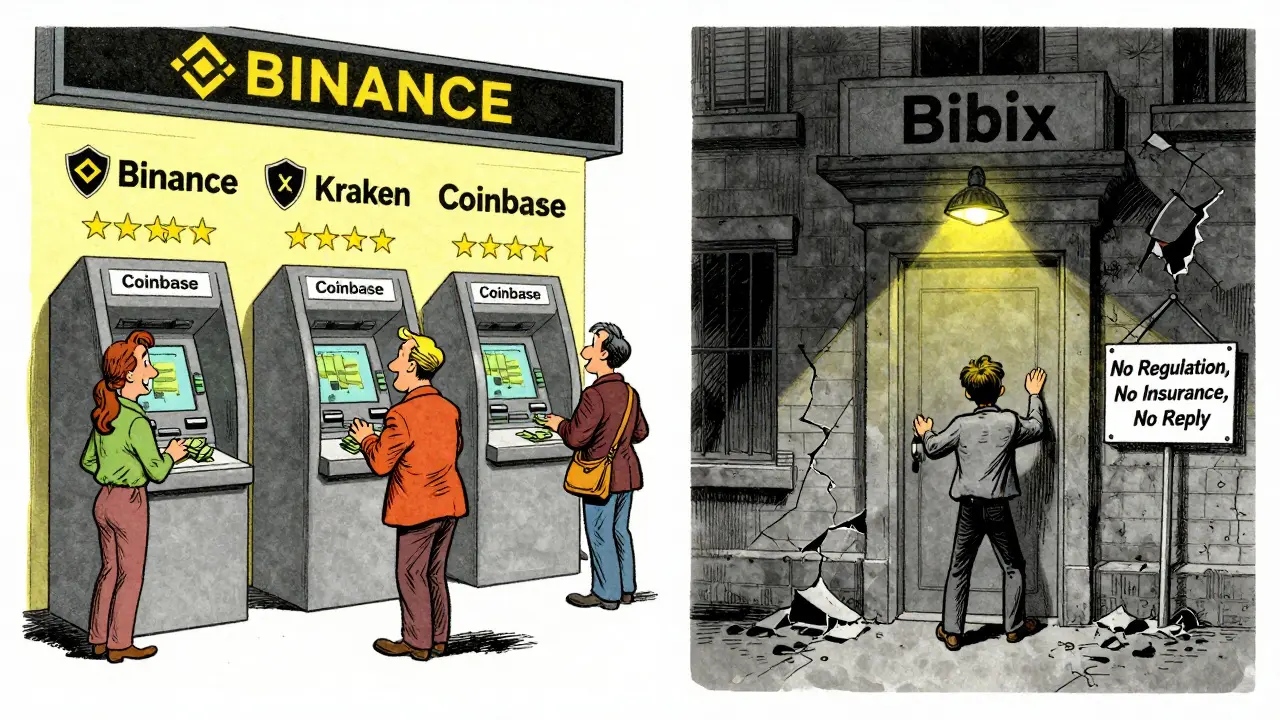
Compare that to Binance (4.7/5 on Trustpilot), Coinbase (4.5/5), or Kraken (4.6/5). Those platforms have millions of users and decades of operational history. Bibox has fewer than 500,000 active users, according to industry estimates. That’s less than 1% of Binance’s user base.
And there’s no regulatory license. Not from the U.S., not from the EU, not from the UK. No financial authority oversees Bibox. That means if something goes wrong - if the exchange gets hacked, if funds disappear, if they shut down - you have no legal recourse. No insurance. No protection.
User Experiences: What People Are Really Saying
Reddit threads and crypto forums are full of Bibox horror stories.
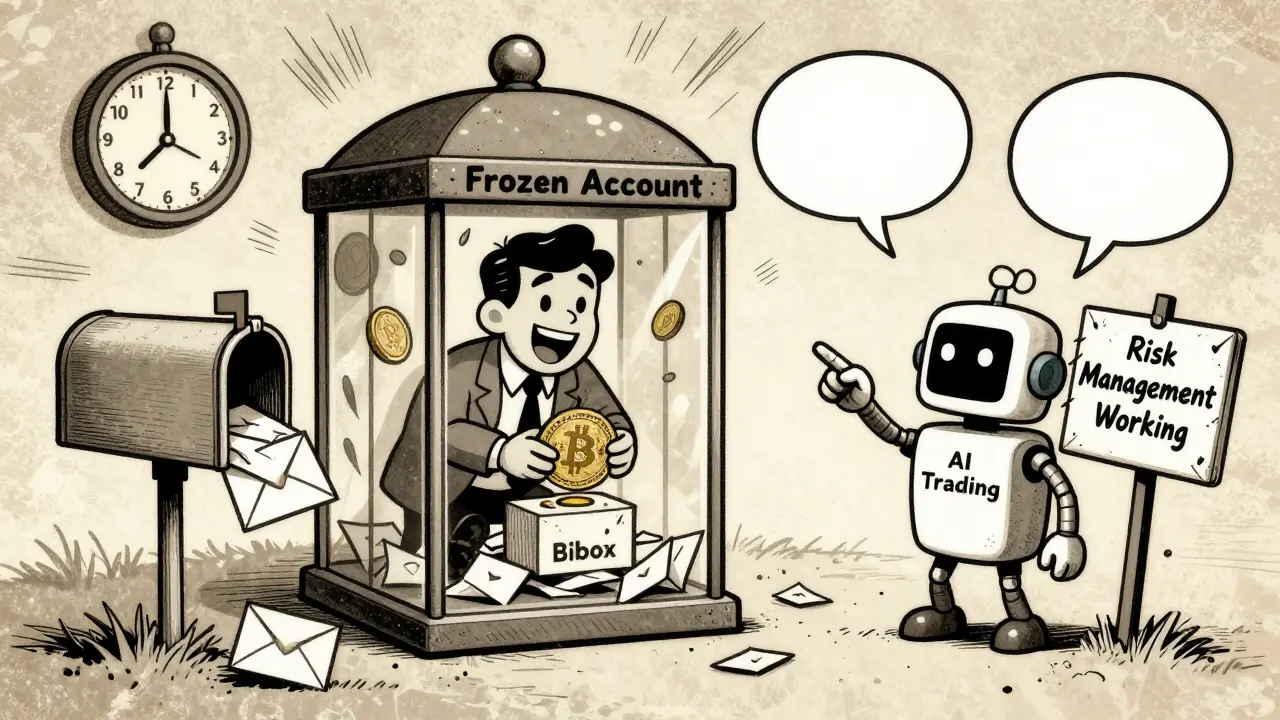
One user posted in November 2025 that they tried to withdraw 2.5 ETH. The request showed as “processing” for 14 days. They emailed support three times. No reply. They finally got a response after two weeks: “Your withdrawal is under review.” No explanation. No timeline.
Another user said they couldn’t access their account for three days during a Bitcoin crash. When they finally got in, their margin position had been liquidated - and they couldn’t reach anyone to find out why.
Even the registration process, which is quick and easy, becomes a trap. You sign up with an email, verify it, complete KYC with a photo ID - all in under 10 minutes. Then you deposit your crypto. And that’s when the silence starts.
Customer support only works via email. No live chat. No phone. No help desk. If you have a problem, you’re on your own until someone - maybe - replies in a few days.
Is Bibox’s Tech Any Good?
Bibox claims to use AI to improve trading signals and risk management. But there’s no public data, no whitepaper, no third-party audit to prove it. No one outside the company has verified how the AI works or if it even delivers results.
The platform does offer TradingView integration, which is nice. If you’re used to charting on TradingView, you’ll feel right at home. The mobile apps for iOS and Android are functional, but users report crashes and slow load times during high volatility.
The interface is clean, but not intuitive. The fee system based on BIX holdings is confusing for beginners. There’s no tutorial explaining how to maximize discounts. No FAQ section that answers common withdrawal issues. Documentation is thin, and the community forums are barely active.
Compared to exchanges like Bybit or OKX, which offer detailed educational content, webinars, and active Discord communities, Bibox feels like a ghost town.
Who Should Use Bibox - And Who Should Avoid It
There’s one scenario where Bibox might make sense: you’re an experienced trader who already holds a large amount of crypto, you’re comfortable with high-risk leverage trades, and you’re okay with the risk of losing access to your funds for days or weeks.
But if you’re new to crypto, if you want to deposit with a bank card, if you care about getting your money out quickly, or if you value customer support - avoid Bibox.
There are better alternatives. Binance has lower fees, more liquidity, and 24/7 support. Kraken is regulated in multiple countries. Coinbase is the most trusted name in the U.S. Even Bybit, which also offers 1:150 leverage, has a better reputation and faster withdrawals.
Bibox’s biggest selling point - 500+ coins - isn’t worth the risk. Most of those tokens are low-volume, low-liquidity, and prone to pump-and-dump schemes. You’re better off trading the top 20 coins on a trusted exchange.
The Bottom Line
Bibox isn’t a scam - at least, not in the classic sense. It’s still operating. It still processes trades. But it’s a high-risk platform with no safety net. The low trust scores, the withdrawal delays, the lack of regulation, and the silent support team aren’t bugs. They’re features.
If you’re looking for a place to trade crypto with confidence, Bibox isn’t it. The platform might look tempting with its high leverage and low fees, but those benefits vanish when you can’t get your money out. And in crypto, liquidity means nothing if you can’t access it.
Stick with exchanges that have proven track records. Your funds - and your peace of mind - will thank you.
Aaron Heaps
December 24, 2025 AT 14:22Tristan Bertles
December 25, 2025 AT 07:47Megan O'Brien
December 26, 2025 AT 17:35Earlene Dollie
December 26, 2025 AT 23:41Dusty Rogers
December 28, 2025 AT 03:15Kevin Karpiak
December 28, 2025 AT 12:54Helen Pieracacos
December 30, 2025 AT 03:24Dustin Bright
December 30, 2025 AT 21:13Melissa Black
December 31, 2025 AT 18:02Rishav Ranjan
January 1, 2026 AT 08:41Sophia Wade
January 3, 2026 AT 08:27SHEFFIN ANTONY
January 5, 2026 AT 00:37Zavier McGuire
January 6, 2026 AT 03:52