BitBlinx Review: Is This Crypto Exchange Safe to Use?
 Apr, 22 2026
You've probably come across a new platform promising high returns or easy trading, and now you're wondering if BitBlinx is the right place for your money. In the fast-moving world of digital assets, the difference between a goldmine and a total loss usually comes down to one thing: legitimacy. If you can't find a platform in the major industry directories, it's usually a reason to stop and think before hitting the deposit button.
The Verdict on BitBlinx
Here is the bottom line: there is no credible evidence that BitBlinx is a legitimate, regulated trading platform. As of April 2026, this platform does not appear in any professional reviews from trusted financial outlets, nor is it listed in the directories of major industry watchdogs. When a crypto exchange safety check comes up empty, it is a massive red flag.
Legitimate platforms spend millions on compliance, licensing, and marketing. If a site claims to be a global powerhouse but lacks a footprint in reputable financial press, you aren't looking at a "hidden gem"-you're likely looking at a risk. Most established exchanges in 2026 have clear regulatory filings and a transparent history of operations. BitBlinx has neither.
Spotting the Red Flags
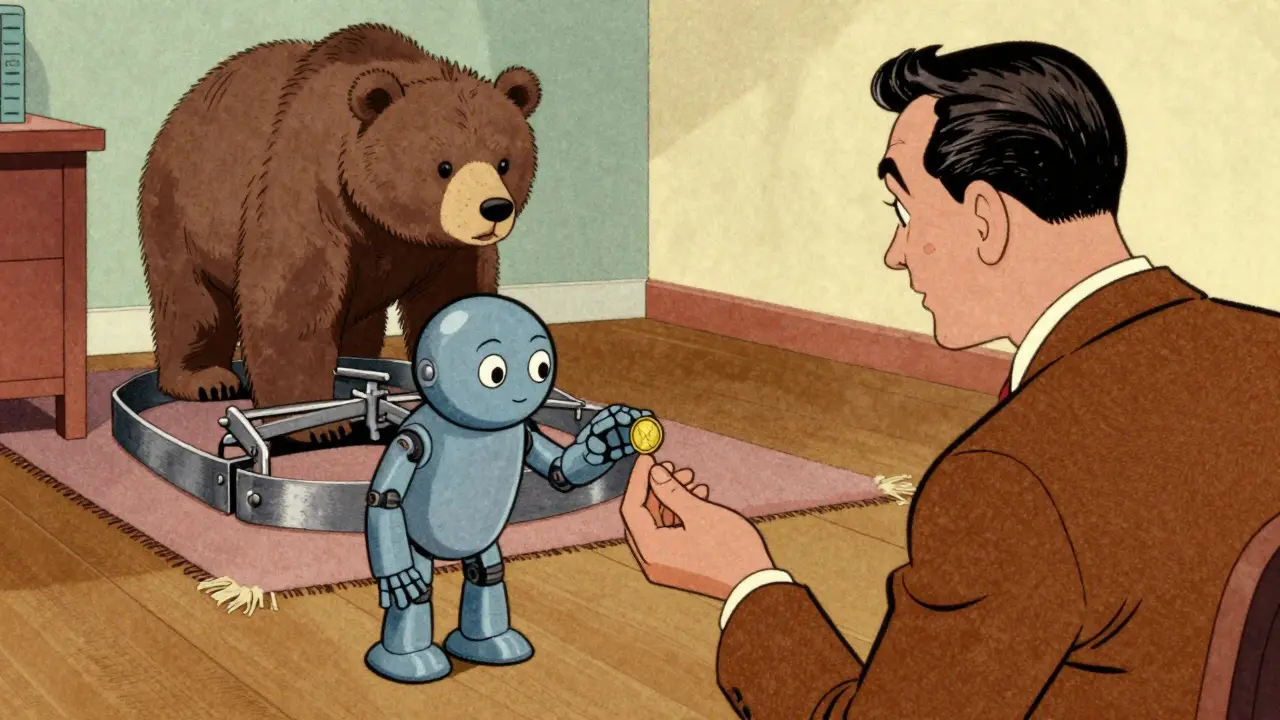
Fraudulent platforms often follow a specific playbook to trick users. They don't just steal your money immediately; they build a fake sense of trust. One common tactic is allowing you to make a small initial withdrawal. This makes you believe the system works, encouraging you to deposit much larger sums.
The trap snaps shut when you try to take your profits out. You might be told you need to pay a "risk premium," a "gas fee," or a "tax clearance fee" before your funds can be released. For example, the California Department of Financial Protection and Innovation has tracked cases where users were asked for a 10% "risk premium" on a massive account balance just to withdraw their own money. Real exchanges subtract fees from your balance; they never ask for more money to let you withdraw what you already have.
Check these warning signs before you sign up for any obscure platform:
- Anonymous Ownership: No clear information about who runs the company or where their headquarters are located.
- Too-Good-To-Be-True Promises: Guaranteed returns or an absence of risk.
- Pressure Tactics: Agents urging you to deposit more money quickly to "catch a market move."
- Lack of KYC: Legitimate U.S.-based exchanges always require Know Your Customer (KYC) a mandatory process of verifying the identity of clients to prevent money laundering and fraud verification.
Comparing Legit Platforms vs. Unknown Sites
If you are looking for a place to trade, you're better off sticking with platforms that have a proven track record. Let's look at how the heavy hitters compare to the "ghost" platforms like BitBlinx.
| Feature | Established Exchanges (e.g., Coinbase, Kraken) | Unverified Platforms (e.g., BitBlinx) |
|---|---|---|
| Regulatory Status | Licensed in multiple jurisdictions | Unknown or claimed only |
| Fee Transparency | Publicly listed fee schedules | Hidden or changing fees |
| Withdrawal Process | Standard processing times | Demands "premiums" or "taxes" |
| User Reviews | Thousands of independent reviews | None or only fake positive ones |
Reliable Alternatives for 2026
Instead of risking your capital on an unverified site, consider these industry leaders. Each has a different strength depending on whether you are a beginner or a pro.
Coinbase remains a top choice for beginners due to its intuitive interface and availability across all U.S. states. While their fees can be higher (up to 3.99%), the security and ease of use are worth the trade-off for those just starting. They currently support over 235 cryptocurrencies, making it a one-stop shop for diversifying a portfolio.
If you want lower costs and a wider selection, Kraken is a powerhouse. With fees as low as 0% to 0.4% and support for over 350 cryptocurrencies, it's built for people who trade more frequently. It's a great example of a platform that balances accessibility with professional-grade tools.
For those who already use a brokerage app, Robinhood offers a zero-fee entry point for a smaller selection of around 25 cryptocurrencies. While it lacks the depth of a dedicated exchange, it removes the friction of setting up a new account if you're already trading stocks.
How to Protect Your Digital Assets
The best way to avoid scams is to develop a strict vetting process. Before you send a single Satoshi to a new platform, run through this checklist:
- Search for "[Platform Name] scam" or "[Platform Name] withdrawal issues." If you see people complaining about not being able to withdraw, run the other way.
- Check the URL carefully. Scammers often create "clone" sites that look exactly like a real exchange but have one letter changed in the domain.
- Test with a tiny amount. If you absolutely must try a new service, deposit the smallest amount possible and try to withdraw it immediately.
- Use Two-Factor Authentication (2FA). Always use an app-based authenticator rather than SMS, as SIM-swapping is a common way hackers get into accounts.
Remember, the goal of a scam platform is to make you feel like you're making money. Your dashboard might show your balance growing rapidly, but those numbers are just pixels on a screen. The only real proof of profit is when the money is safely back in your personal bank account.
Is BitBlinx a legitimate cryptocurrency exchange?
There is no evidence from reputable financial sources, regulatory bodies, or independent review sites to suggest that BitBlinx is a legitimate exchange. The lack of transparency and professional footprints makes it a high-risk platform that should be avoided.
What should I do if I already deposited money into BitBlinx?
Attempt to withdraw your funds immediately. If the platform asks for a "tax," "fee," or "premium" to release your money, do not pay it. Paying these fees rarely results in getting your money back and usually leads to more demands for money. Report the site to your local financial authorities and the FTC.
How can I tell if a crypto exchange is a scam?
Common signs include a lack of KYC requirements, promises of guaranteed high returns, anonymous ownership, and demands for additional payments to process withdrawals. Legitimate exchanges are transparent about their fees and regulatory compliance.
Are Coinbase and Kraken safer than new, unknown exchanges?
Yes. Established exchanges like Coinbase and Kraken have undergone years of public scrutiny, hold necessary licenses, and have transparent security protocols. While no platform is 100% risk-free, they are infinitely safer than unverified platforms that have no regulatory oversight.
What is a "risk premium" fee in crypto withdrawals?
A "risk premium" is a fake fee used by fraudulent platforms to steal more money from victims. Legitimate exchanges deduct their fees from the trade or the balance; they never ask a user to send additional external funds to "unlock" a withdrawal.
Gloris Young
April 24, 2026 AT 05:09Stay safe everyone. Better to be cautious than sorry!
Greg Reynolds
April 24, 2026 AT 20:57The irony is that most people ignore these warnings until their balance hits zero. It's not even rocket science; if there is no regulatory footprint, the risk is mathematically obvious. People just love the idea of a "hidden gem" because they think they're smarter than the average retail investor.
Robert Mosolygo
April 25, 2026 AT 03:30This is just the tip of the iceberg. The real game is how these platforms are often linked to larger shell companies designed to bypass international sanctions while bleeding the middle class dry. I've spent months analyzing the traffic patterns of these "ghost" exchanges and they all lead back to the same clusters of servers in regions where law enforcement can't reach. It's a coordinated effort to liquidate individual portfolios into untraceable mixers. You think you're trading, but you're actually just funding a shadow network. The systemic failure of current oversight is a joke.
Eric Raines
April 25, 2026 AT 15:28Everyone knows the "risk premium" thing is the oldest trick in the book. I've seen this exact same script a hundred times with different names. It's honestly embarrassing that people still fall for it in 2026. Just do a basic search and you'll see the same pattern everywhere.
Benjamin Forg
April 26, 2026 AT 15:51of course the big exchanges are pushed here lol they probably paid for this post you ever wonder why the government lets a few giants hold all the keys while the small guys get called scams its all a control mechanism to track every single satoshi you own stop trusting the system
Jennifer Taylor
April 28, 2026 AT 01:05I knew this place smelled fishy. My gut told me to stay away from anything that doesn't have a real address. These people are just predators looking for a way into your wallet and they don't care who they hurt. Stay away or you'll be sorry.
Yvette P
April 28, 2026 AT 10:56Oh look, another groundbreaking discovery that a site with zero transparency is actually a scam! Truly revolutionary. Maybe next we can discuss how "guaranteed returns" are a total oxymoron in a volatile asset class. If you're actually trying to optimize your slippage and avoid predatory liquidity pools, you'd know that the order book transparency on these ghost sites is completely fabricated via an API that just mimics a real market. It's basic market making simulation meant to lure in the retail crowd who think they've found a loophole in the arbitrage game. Seriously, the level of financial illiteracy is just staggering these days.
Hannah Rubia
April 28, 2026 AT 22:26It is most prudent to maintain a rigorous verification process. One might also suggest checking the domain registration date via WHOIS to see if a "ten-year-old company" was actually registered last Tuesday.
Alex Wan
April 29, 2026 AT 06:00OH MY GOODNESS!! This is la a critical warnign for all our dear friends!! We must hold hands and protect one another from these devillish traps!!! It is simply heart-breaking to see such greed in the world but we can overcom it together through educaition and love!! Plese please please do not let your money go to these monsters!! We are all in this journey of growth together and we must be vigiliant!! Stay strong and stay safe everyone!!
Gary Lingrel
April 29, 2026 AT 15:37imagine actually believing a company that doesnt even have a linkedin page :) lol what a joke some people just love losing money i guess
Candace Sherrard
May 1, 2026 AT 04:04It's interesting how the desire for quick wealth often blinds us to the most basic logic of trust and verification. We live in an era where the digital facade is so polished that it overrides our instinct for caution, leading us to believe that a sleek user interface is a substitute for legal accountability. The psychological pull of a "hidden gem" is really just a manifestation of our own hope against evidence. It makes me wonder if the lure of the scam is more about the money or the feeling of being "in" on a secret that others haven't found yet.
Sarah Fisher
May 2, 2026 AT 06:22I agree with the sentiment here. There is a certain peace of mind that comes from using platforms that are open about their flaws and fees rather than promising perfection.
Mary Tawfall
May 3, 2026 AT 10:10I'm so glad this was posted to warn others. It's always better to be safe and start slow than to lose everything in a heartbeat.
Tara Aman
May 4, 2026 AT 05:11Let's all just stick to the basics! No one ever got rich by ignoring red flags. Keep that energy high and your funds safe!
debashish sahu
May 5, 2026 AT 17:57It is very helpful to have a comparison table like this. In many regions, people are very tempted by these high returns without knowing the risks.