BitMEX Crypto Exchange Review: Pros, Cons, and Who It’s For
 Sep, 17 2026
Ever tried to trade Bitcoin with 100x leverage on a platform that feels more like a cockpit than an app? That’s BitMEX, or the Bitcoin Mercantile Exchange. Founded in 2014 by Arthur Hayes and his team, it wasn’t just another exchange; it was the birthplace of perpetual swaps. If you’ve ever wondered why everyone talks about "funding rates," you’re likely talking about what BitMEX invented.
But here’s the thing: BitMEX isn’t for everyone. It’s not the place where you casually buy $50 worth of Dogecoin. It’s a high-stakes arena for traders who understand liquidation prices and funding intervals. With over $1.5 trillion in cumulative trading volume processed, it remains a heavyweight in the derivatives space. Yet, after regulatory hurdles and a $100 million settlement with the U.S. Commodity Futures Trading Commission (CFTC), many ask: Is BitMEX still safe? And is it worth your time in 2026?
What Makes BitMEX Different From Binance or Coinbase?
If you’re coming from Coinbase or even Binance, BitMEX will feel different immediately. Most exchanges are spot-first-they let you buy and sell actual coins. BitMEX is derivatives-first. This means you’re mostly trading contracts based on the price of Bitcoin, not holding the Bitcoin itself. While they added spot trading later, their DNA is all about leverage.
Their flagship product, the XBTUSD perpetual swap, allows up to 100x leverage. Imagine betting $100 but controlling $10,000 worth of Bitcoin. If the price moves 1% in your favor, you double your money. If it moves 1% against you, you lose everything. That’s the thrill-and the danger-of BitMEX.
Unlike Binance, which offers thousands of altcoins, BitMEX keeps its list tight. They focus on liquidity in major pairs like BTC/USDC and ETH/USDC. This isn’t a bug; it’s a feature. High liquidity means tighter spreads for big trades. If you’re moving large amounts, you don’t want slippage eating your profits.
Fees and Costs: What You’ll Actually Pay
Let’s talk money. Nobody likes hidden costs. BitMEX uses a maker-taker model, which is standard in professional trading circles. Here’s how it breaks down for their most popular product, perpetual swaps:
- Maker Fee: -0.025%. Yes, negative. If you place a limit order that sits on the book (you “make” liquidity), they pay you. This encourages market depth.
- Taker Fee: 0.075%. If you hit a market order (you “take” liquidity), you pay this fee.
Compare this to Bybit, which often has similar taker fees but fewer maker incentives. Or look at Kraken Pro, where fees can be higher unless you have massive volume. BitMEX’s structure rewards patience. If you use limit orders wisely, you might actually make money on fees while waiting for your trade to execute.
Deposits and withdrawals? No platform fees. You only pay the blockchain network fee. Whether you’re sending Bitcoin or USDT, BitMEX doesn’t add a markup. This is a huge plus for frequent movers. Just remember, network fees vary depending on congestion. During busy times, withdrawing Bitcoin can cost more than usual, regardless of the exchange.
Is BitMEX Safe? Security and Proof of Reserves
Safety is the elephant in the room. After the FTX collapse, everyone asks, "Do you really hold my funds?" BitMEX says yes, and they prove it. Since February 2021, they’ve published regular Proof of Reserves audits conducted by Armanino LLP, a reputable accounting firm. These quarterly attestations show that customer assets match the liabilities on their books.
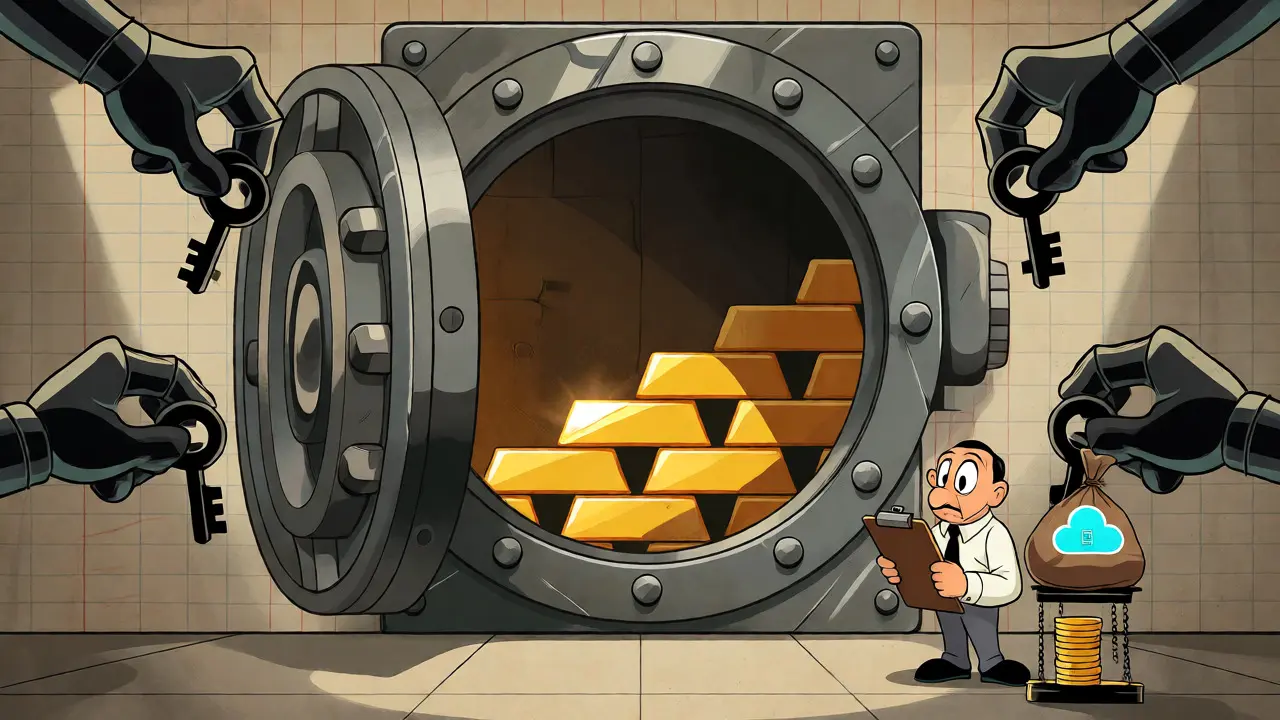
Technically, their security is robust. About 98% of funds sit in cold storage-offline wallets inaccessible to hackers. Accessing these requires multi-signature keys. Think of it like a bank vault that needs three out of five specific people to turn their keys simultaneously before opening. Hardware Security Modules (HSMs) protect those keys, and biometric controls guard the physical servers.
Have they been hacked? Surprisingly, no significant loss of customer funds due to security breaches since inception. The biggest scare wasn’t a hack, but regulatory pressure. In 2022, they settled with the CFTC for anti-money laundering violations. But crucially, no user funds were seized or lost in that process. They exited the U.S. market voluntarily to comply, protecting their global operations.
Who Should Use BitMEX? (And Who Should Avoid It)
BitMEX is a specialized tool. Using it for casual investing is like using a scalpel to cut bread-it works, but there are better tools.
| Feature | BitMEX | Binance | Bybit |
|---|---|---|---|
| Primary Focus | Derivatives & Perpetual Swaps | All-in-One Ecosystem | User-Friendly Derivatives |
| Leverage Options | Up to 100x | Up to 125x (varies) | Up to 100x |
| Spot Market Depth | Limited (Major Pairs Only) | Extensive (1,500+ Pairs) | Moderate |
| Beginner Friendliness | Low (Steep Learning Curve) | Medium (Simple Mode Available) | High (Clean Interface) |
| U.S. Availability | No | Via Binance.US | No |
You should use BitMEX if:
- You are an experienced trader comfortable with leverage.
- You need deep liquidity for large BTC or ETH positions.
- You want advanced charting tools (they support up to 16 charts simultaneously).
- You prefer negative maker fees to reduce trading costs.
You should avoid BitMEX if:
- You are a beginner buying your first Bitcoin.
- You live in the United States (it’s restricted there).
- You want to stake coins for passive income (limited options here).
- You hate complex interfaces and long KYC processes.

The User Experience: Charts, Bots, and Pain Points
Once you log in, you’re greeted by a dense interface. It’s powerful but overwhelming. The Multicharting feature lets you view multiple timeframes and assets side-by-side. For technical analysts, this is gold. You can spot divergences between Bitcoin and Ethereum instantly.
They also offer Trading Bots. Not the flashy AI bots you see on TikTok, but solid, pre-built strategies like grid trading. You set the parameters, and the bot executes them. It’s great for sideways markets where you want to profit from volatility without watching the screen 24/7.
However, the learning curve is real. A survey of active traders suggested it takes 15-20 hours to truly master the platform’s features. New users often struggle with understanding mark price versus last traded price. Misunderstanding this leads to unexpected liquidations. If you’re new, start with low leverage (2x or 3x) until you grasp how funding rates affect your position overnight.
Customer support is another pain point. Users report average resolution times of 72 hours. For a day trader, that’s an eternity. If you encounter a withdrawal delay during high volatility, you might wait a full day for answers. This isn’t unique to BitMEX, but it’s noticeable when compared to exchanges with live chat agents.
Final Verdict: Is BitMEX Worth It in 2026?
BitMEX remains a premier choice for serious derivatives traders. Its infrastructure is battle-tested, processing 100,000 orders per second with near-perfect uptime. The shift toward transparency via Proof of Reserves has rebuilt trust after the regulatory scares.
It’s not trying to be everything to everyone. It doesn’t have the vast altcoin selection of Binance or the easy staking of Coinbase. Instead, it doubles down on what it does best: providing a professional-grade environment for leveraged trading. If you fit that profile, BitMEX is hard to beat. If you’re just starting out, look elsewhere. Save BitMEX for when you’re ready to play in the big leagues.
Can I use BitMEX in the United States?
No. Due to regulatory restrictions and a settlement with the CFTC, BitMEX does not serve customers residing in the United States. They exited the U.S. market to ensure compliance with local laws.
Is BitMEX safe to use today?
Yes, generally considered safe. BitMEX holds 98% of funds in cold storage and publishes regular Proof of Reserves audits verified by Armanino LLP. There have been no major incidents of customer fund losses due to hacks since its inception.
What are the fees for trading on BitMEX?
For perpetual swaps, makers receive a rebate of -0.025%, while takers pay 0.075%. There are no deposit or withdrawal fees charged by BitMEX, though standard blockchain network fees apply.
Does BitMEX offer spot trading?
Yes, BitMEX offers spot trading for major pairs like BTC/USDC and ETH/USDC. However, their primary strength and focus remain on derivatives products like perpetual swaps and futures.
How long does KYC verification take?
Verification typically takes 24-72 hours for basic accounts. Accounts requiring video KYC (usually for higher limits) may take longer. Delays can occur if documents are unclear or submitted incorrectly.