Blockchain Identity Authentication Benefits: Why Decentralized IDs Beat Passwords
 Sep, 30 2026
Imagine walking into a bar, proving you're over 21 without handing over your driver's license. You don't show them your address, your height, or your license number. You just prove one fact: age. This isn't sci-fi; it's the core promise of blockchain identity authentication, a system that lets you control your personal data instead of leaving it in corporate databases. For years, we've traded our privacy for convenience, storing sensitive info on servers that get hacked regularly. The 2017 Equifax breach exposed 147 million people because one central database failed. Blockchain changes the game by removing that single point of failure.
If you're wondering why tech giants like Microsoft and banks are suddenly obsessed with this, it’s not just hype. It’s about efficiency and trust. Traditional identity checks are slow, expensive, and fragmented. You verify yourself separately for every bank, hospital, and online service. Blockchain-based systems aim to fix this by creating a universal, portable identity. But does it actually work better than what we have now? Let's break down the real benefits, the technical reality, and where this technology is heading in 2026.
The End of Single Points of Failure
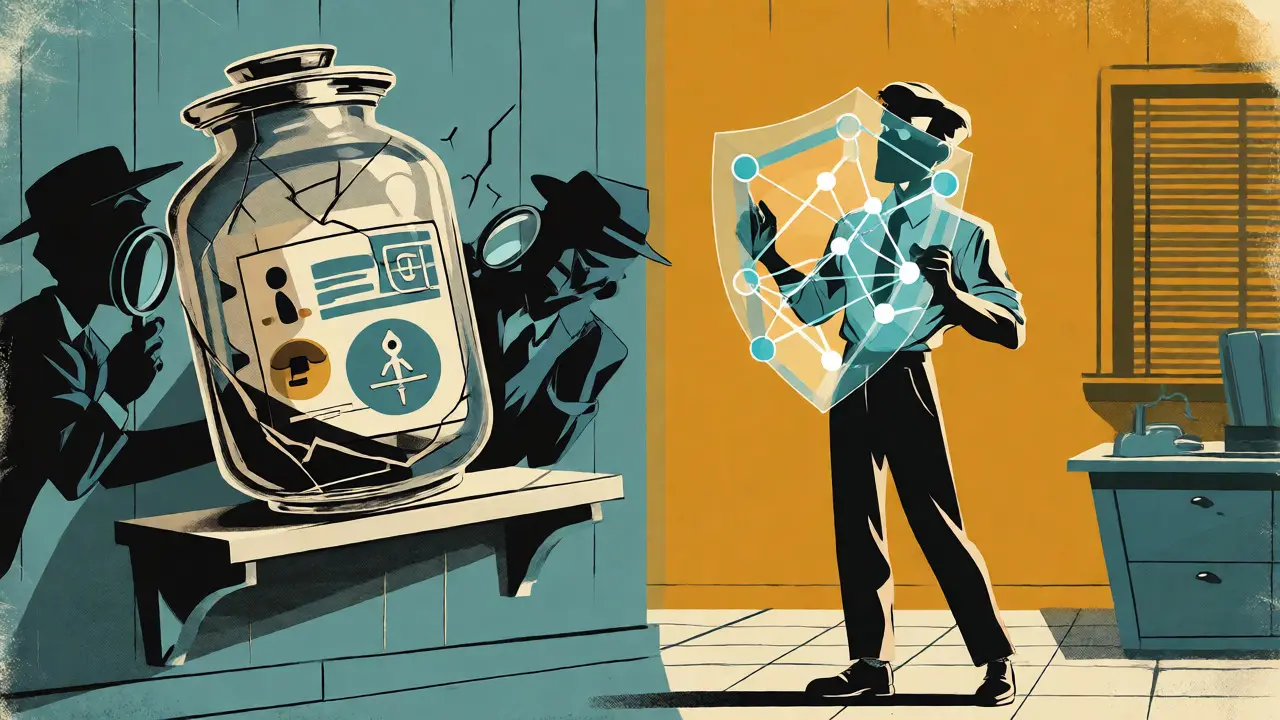
The biggest flaw in traditional identity management is centralization. When you sign up for a service, they store your name, email, and password on their server. If that server gets breached, your data is gone forever. You can change your password, but you can't change your date of birth or social security number. Decentralized architecture distributes identity verification across multiple nodes, meaning no single entity holds all your data. Instead of one company holding your keys, the network validates who you are using cryptographic proofs.
This shift eliminates the "honeypot" effect. Hackers love centralized databases because one attack yields millions of records. In a blockchain model, your identity attributes aren't stored in a massive table owned by one corporation. They are verified through distributed ledgers. According to recent industry analysis, this approach reduces the risk of mass data breaches significantly. You still need to protect your private keys, sure, but you aren't putting your entire life history at the mercy of one IT department's security budget.
Self-Sovereign Identity Puts You in Control
You might have heard the term Self-Sovereign Identity (SSI) a framework where individuals maintain full ownership and control over their identity data without relying on central authorities. It sounds buzzword-heavy, but the concept is simple: you own your data. In the current web, companies own your profile. If Facebook bans you, you lose your social graph. With SSI, your identity lives in your digital wallet. You decide who sees what.
Let's look at how this works in practice. Suppose you apply for a loan. Traditionally, you hand over pay stubs, tax returns, and ID copies. The bank stores these files indefinitely. With blockchain identity, you share verifiable credentials digital attestations issued by trusted entities that prove specific claims about you without revealing underlying documents. Your employer issues a credential saying "John Doe earns $80k/year." You present this proof to the bank. The bank verifies the signature against the blockchain. They know the claim is true, but they never see your actual pay stub PDF. This minimizes data exposure and speeds up processing.
Speed and Cost Efficiency Are Real
It’s not just about privacy; it’s about time and money. Traditional Know Your Customer (KYC) processes in finance are notorious bottlenecks. J.P. Morgan reports that verifying a mortgage applicant can take days. Blockchain solutions cut this down dramatically. Optimized systems can process 98% of verifications in under two seconds. That’s a massive jump from the 24-72 hour average for standard checks.
Cost savings follow suit. Dock Labs estimates that blockchain identity reduces verification costs by 65%. Why? Because you stop paying for redundant checks. Once an entity verifies your identity, that verification can be reused across different services if you consent. There’s no need to re-upload documents for every new app. This interoperability is key. The World Wide Web Consortium standardized Decentralized Identifiers (DIDs) unique identifiers that enable verifiable, self-sovereign digital identities in 2022, providing a common language for these systems to talk to each other.
| Feature | Traditional Centralized System | Blockchain Identity System |
|---|---|---|
| Data Storage | Single corporate database | Distributed ledger / User wallet |
| Vulnerability | High (Single point of failure) | Low (No single target) |
| Verification Speed | Hours to Days | Seconds |
| User Control | Company owns data | User owns data (SSI) |
| Interoperability | Siloed per platform | Cross-platform via DIDs |
| Privacy | Full data disclosure often required | Selective disclosure possible |

Selective Disclosure: Sharing Only What’s Necessary
One of the coolest features enabled by blockchain cryptography is zero-knowledge proofs cryptographic methods that allow one party to prove to another that a statement is true without revealing any information beyond the validity of the statement itself. This allows for selective disclosure. You can prove you are over 18 without revealing your exact birthdate. You can prove you have a valid passport without showing the passport number.
This solves a huge pain point for users. We constantly overshare data because forms ask for everything. A website doesn’t need your home address to let you buy a t-shirt, yet many checkout flows demand it. With blockchain identity, you grant access only to the specific attribute needed. This reduces the surface area for data misuse. If a retailer leaks your data, they only leak the fact that you bought something, not your entire financial history.
Challenges You Can’t Ignore
It would be dishonest to say this tech is perfect right now. Adoption is still in its early stages. Gartner placed decentralized identity at the "Peak of Inflated Expectations" in their 2024 Hype Cycle, predicting mainstream adoption within 5-10 years. That means we are currently in the messy middle phase.
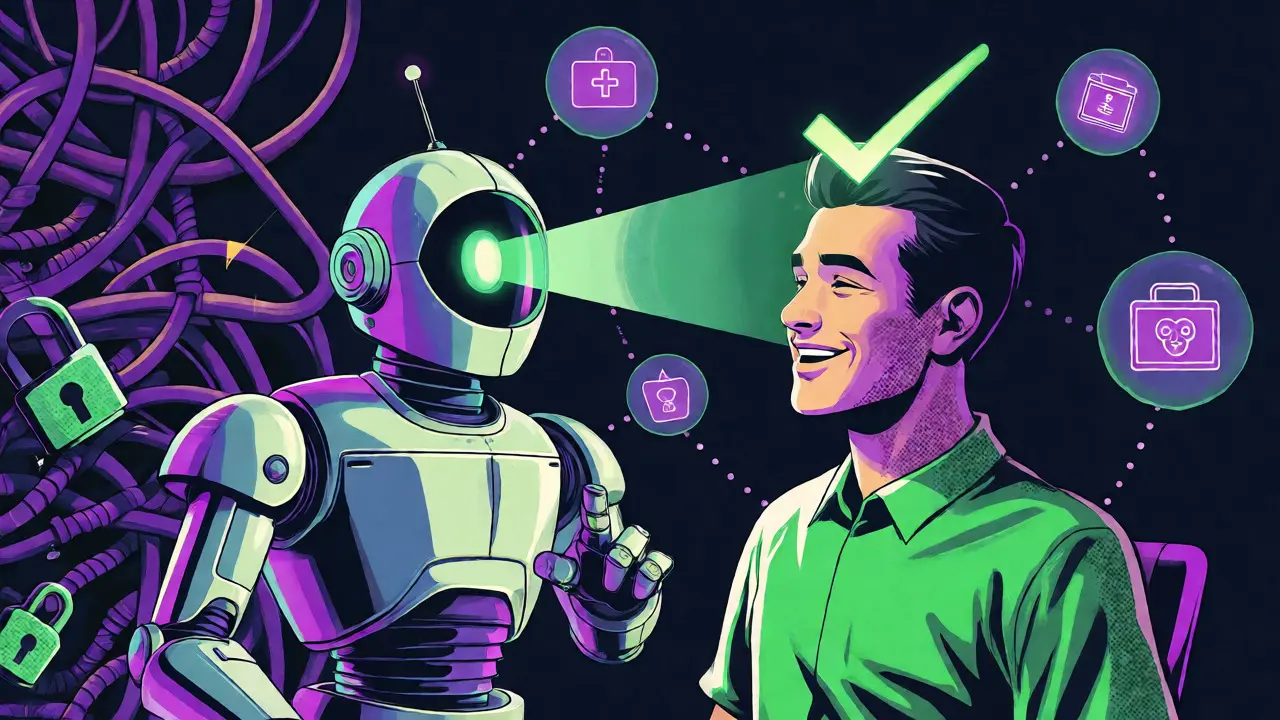
The biggest hurdle is user experience. Managing cryptographic keys is harder than resetting a password. If you lose your phone and haven't set up recovery properly, you could lose access to your digital identity. HackerNews discussions frequently highlight this fear. Unlike a password reset link sent to your email, key recovery requires careful setup. Solutions like multi-factor recovery systems are improving this, but it’s still a friction point for non-technical users.
Another issue is the "chicken-and-egg" problem. Blockchain identity is most useful when everyone uses it. But companies won't adopt it until enough users have wallets, and users won't create wallets until enough companies accept them. Regulatory frameworks are also catching up. While the EU's eIDAS 2.0 regulation recognizes blockchain identities as legally valid in 2026, the US lacks a comprehensive federal framework, though states are making progress.
Who Is Using This Right Now?
Despite the challenges, real-world implementations are happening. Financial services lead the pack, accounting for 42% of current implementations. Banks use it for KYC compliance, cutting onboarding times from days to hours. Healthcare follows closely, using secure identity to manage patient records across providers without exposing data unnecessarily.
Governments are also jumping in. Estonia has long been a pioneer, but newer initiatives like the European Blockchain Services Infrastructure went live in mid-2024, enabling cross-border digital identities for EU citizens. In New Zealand, while less prominent globally, there is growing interest in using similar principles for government service delivery, focusing on reducing bureaucracy and enhancing citizen privacy.
Enterprise vendors like Microsoft Entra Verified ID and IBM Verify Credentials offer ready-made solutions for businesses wanting to integrate this tech without building from scratch. These platforms handle the complex backend interactions, presenting a simpler interface to end-users.
The Future Outlook for 2026 and Beyond
The market for blockchain identity management is projected to grow from $1.23 billion in 2023 to $8.64 billion by 2028. That’s a compound annual growth rate of nearly 47%. This growth isn't just speculation; it's driven by tangible needs. As AI becomes more prevalent, distinguishing humans from bots will require robust, tamper-proof identity proofs. Blockchain provides that foundation.
Looking ahead, integration with AI will allow for adaptive identity assurance levels. Imagine your system automatically requesting stronger proof of identity when you log in from a new device in a different country. Quantum-resistant cryptography is also on the roadmap, expected to be fully implemented by 2026 according to NIST guidelines, ensuring these systems remain secure against future computing threats.
By 2027, analysts predict that 30% of consumer digital identities will be blockchain-based, up from just 5% in 2023. This shift suggests that while we aren't there yet, the trajectory is clear. The benefits of security, speed, and user control are too significant to ignore.
Frequently Asked Questions
Is blockchain identity safer than passwords?
Yes, generally speaking. Passwords are vulnerable to phishing, brute-force attacks, and reuse across sites. Blockchain identity uses cryptographic keys. Even if a hacker steals your public identifier, they cannot impersonate you without your private key. However, safety depends on how well you manage your private keys. If you lose them without a backup, you lose access, which is a different kind of risk than forgetting a password.
Do I need to understand coding to use blockchain identity?
Not necessarily. Modern digital wallets abstract away the complexity. You interact with apps similarly to how you use banking apps today. You scan QR codes or approve prompts. The underlying code handles the cryptography. However, understanding basic concepts like what a private key is helps you avoid mistakes, such as sharing it with anyone.
Can blockchain identity replace my physical ID card?
In some jurisdictions, yes. Countries like Estonia and parts of the EU already accept digital identities for government services. However, widespread replacement of physical IDs for all scenarios (like police checks in all countries) is still evolving. It works best for digital-first interactions like online banking, healthcare portals, and age verification at venues.
What happens if I lose my digital wallet?
This is a critical concern. Most modern solutions offer recovery mechanisms, such as social recovery (where trusted friends help restore access) or cloud backups encrypted with your key. Without a recovery method, losing your wallet is like losing your house keys with no spare. Always set up recovery options immediately after creating your identity.
Is blockchain identity legal everywhere?
Legal recognition varies by region. The EU's eIDAS 2.0 regulation explicitly recognizes blockchain-based digital identities as legally valid. In the US, there is no single federal law, but many states have enacted legislation supporting it. Always check local regulations if you plan to use digital identity for official legal matters.