Blockchain Identity Standards: A Guide to Decentralized IDs and Verifiable Credentials
 Apr, 29 2026
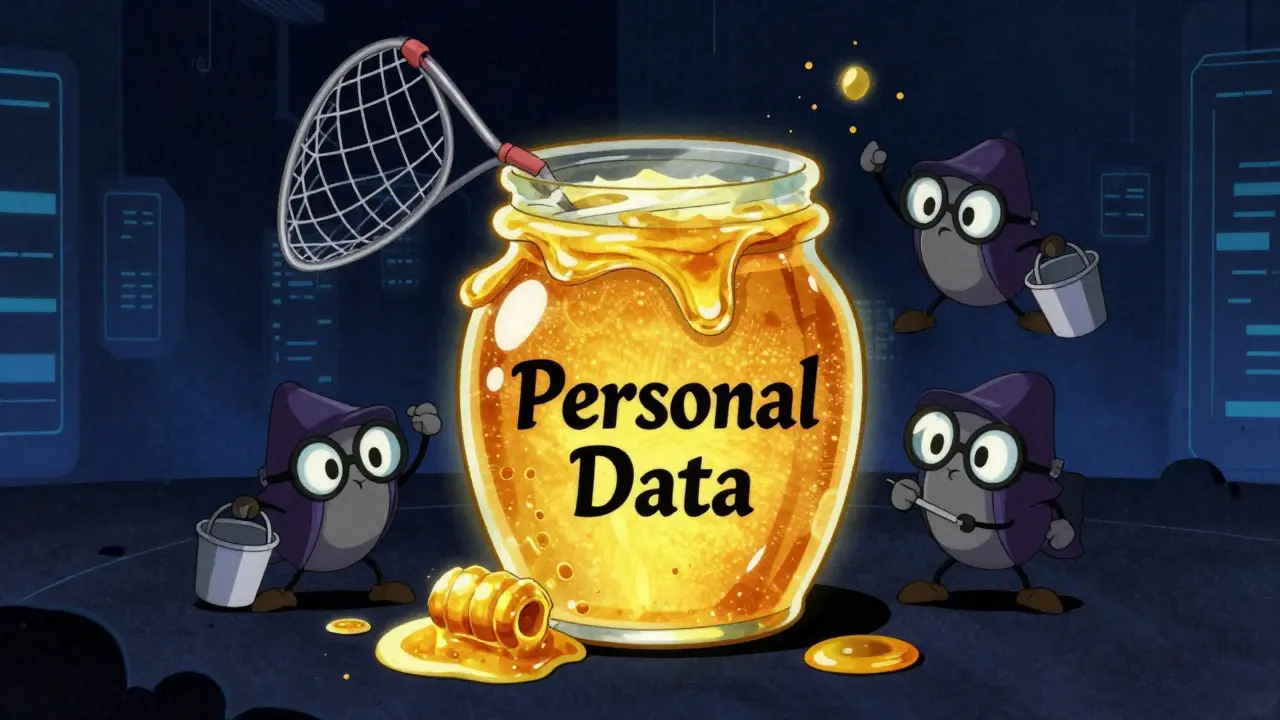
Think about how much of your personal data is scattered across the web. Your bank has your financial history, your doctor has your medical records, and a dozen different social media sites have your contact info. The problem is that 83% of identity theft breaches happen because this data is stored in giant, centralized honeypots that hackers love. blockchain identity standards are flipping this script by moving the keys to your identity from a corporate server directly into your pocket.
The Shift to User-Controlled Identity
For decades, we've relied on "federated" identity-think of those "Login with Google" buttons. While convenient, you don't actually own that identity; Google does. If they ban your account, you lose your digital existence. Blockchain identity standards introduce a concept called Self-Sovereign Identity (SSI). This allows you to prove who you are without needing a middleman to vouch for you every single time.
The movement really picked up speed around 2016, led by the Decentralized Identity Foundation (DIF), a group started by heavyweights like Microsoft, IBM, and ConsenSys. They worked alongside the World Wide Web Consortium (W3C) to create a set of rules so that different identity systems could actually talk to each other. Without these standards, we'd just have a bunch of "digital islands" where your ID from one app wouldn't work in another.
The Technical Pillars: DIDs and Verifiable Credentials
To understand how this works, you need to know two core pieces of tech: Decentralized Identifiers (DIDs) and Verifiable Credentials (VCs).
Decentralized Identifiers (DIDs) are basically permanent web addresses for your identity. Instead of a username like "User123" stored in a database, a DID looks like a long string of characters: did:method:identifier. As of late 2024, there are about 37 different "methods" for these, such as did:ion for the ION network or did:sov for Sovrin. The magic here is that you control the private key associated with that DID, meaning you are the only one who can prove you own it.
While the DID is your "address," Verifiable Credentials are the "documents" you carry. Imagine a digital version of your driver's license or university degree. These are cryptographically signed by the issuer (like your college). The coolest part? They allow for "selective disclosure." Using zero-knowledge proofs, you can prove you're over 21 without revealing your exact birthdate or home address. You're sharing a "truth," not the raw data.
| Feature | Hyperledger Indy | Sovrin Network | Ethereum (ENS) | Microsoft ION |
|---|---|---|---|---|
| Type | Permissioned | Permissioned | Public | Public (Sidetree) |
| Performance | High (1,000+ TPS) | High | Low (~15 TPS) | Scalable |
| Control | Governed | Governed | Decentralized | User-Centric |
| Best For | Enterprise/Gov | Global Ecosystems | Web3/Social | Mass Adoption |
Public vs. Permissioned: The Great Trade-off
Not all blockchain identity systems are built the same. You'll generally see a split between permissioned (private) and public networks. Permissioned networks, like Hyperledger Indy or R3 Corda, are the favorites for banks and governments. Why? Because they're fast-handling over 1,000 transactions per second-and they allow for regulatory compliance. If a government needs to ensure only vetted entities run the nodes, a permissioned chain is the only way to go.
On the flip side, public networks like Ethereum offer the ultimate version of decentralization. There's no single entity that can shut you down. However, they struggle with speed. For example, the Sovrin Network has processed millions more identities than the Ethereum Name Service (ENS) simply because it's optimized for this specific job. Most enterprises are choosing the permissioned route, which is expected to hold about 71% of the market in 2025.
Real-World Wins and Hard Truths
This isn't just theoretical. In the Philippines, the Department of Social Welfare used a Hyperledger Indy system to cut identity fraud by 94% in their cash assistance programs. That's a massive win for people who actually need help. In Europe, banks using R3 Corda have slashed KYC (Know Your Customer) onboarding time from 72 hours down to just 20. That's a lot of paperwork gone.
But it's not all sunshine. The biggest hurdle is the "human element." Many people struggle with digital wallets. Australia tried a blockchain identity pilot with myGovID, but they had to scrap it because 68% of users over 55 found the interface too confusing. Then there's the nightmare of key management. If you lose your recovery phrase for a blockchain wallet, you don't just lose some crypto-you lose your identity. 63% of negative reviews for identity wallets cite this irreversible loss as their main pain point.
The Road to 2027 and Beyond
We're heading toward a world where blockchain identity is invisible. You won't "log in" to a site; your wallet will simply share a verified credential in the background. Regulatory pressure is speeding this up. The EU's eIDAS 2.0, coming into full effect by June 2026, will basically force member states to recognize these blockchain-based identities.
One exciting trend is the use of NFTs for identity. About 37% of new identity startups in 2024 are using non-fungible tokens to represent credentials. Instead of a boring text file, your professional certification becomes a unique digital asset you can display and verify instantly.
The big question now isn't whether the tech works-the W3C standards have largely solved the technical side. The real battle is over governance. Who decides who is a "trusted issuer"? If Microsoft and IBM decide who is trusted, have we actually escaped centralization, or have we just traded one set of landlords for another? As we integrate AI into these systems for fraud detection, we'll also have to ensure that the algorithms don't introduce new biases into who gets "verified" and who doesn't.
What is the difference between a DID and a traditional username?
A traditional username is owned by the service provider (like Facebook or Google) and stored in their database. A DID (Decentralized Identifier) is a unique URI created and controlled by the user via private keys. It doesn't require a central registry to exist, meaning no single company can take it away from you.
How do Verifiable Credentials protect my privacy?
They use selective disclosure and zero-knowledge proofs. Instead of handing over your entire ID card (which shows your address, full name, and birthdate) to prove you're 21, a Verifiable Credential allows you to provide a cryptographic proof that only answers the specific question "Is this person over 21?" without revealing any other data.
What happens if I lose my private keys for my blockchain identity?
In basic implementations, losing your keys means losing access to your identity permanently. However, newer standards are introducing social recovery and biometric-bound credentials (meeting ISO/IEC 30107-1 standards) to allow users to recover their identities through trusted contacts or biometric verification.
Why do enterprises prefer permissioned blockchains for identity?
Permissioned blockchains offer much higher throughput (1,000+ transactions per second compared to Ethereum's ~15 TPS) and allow organizations to control who can validate transactions. This is critical for meeting strict legal requirements like GDPR in Europe or HIPAA in US healthcare.
Is blockchain identity legally recognized?
It's becoming recognized. The EU's eIDAS 2.0 framework mandates the recognition of qualified electronic identities, including those based on blockchain. In the US, NIST is actively developing standards to align blockchain identity with federal digital identity guidelines (SP 800-63B).
Next Steps for Implementation
If you're a developer looking to build with these standards, don't start from scratch. Using an SDK like Truvera can reduce your deployment time from several months to just a couple of weeks. Focus on the W3C Verifiable Credentials data model, as it's the most widely adopted standard (around 78% of enterprise use).
For business owners, the first step is a gap analysis. Look at your KYC and onboarding processes. If you're spending thousands of hours on manual verification, a blockchain identity pilot in a permissioned environment (like Hyperledger Indy) is usually the safest way to start without risking regulatory non-compliance.
Aaron Zeiler
May 2, 2026 AT 02:32true but the recovery issue is the biggest dealbreaker for the average person who isnt a tech wizard
Noel Mandotah
May 2, 2026 AT 02:51Oh, absolutely. Because nothing says "decentralized freedom" like relying on Microsoft and IBM to decide who is a trusted issuer. Pure genius! 🙄
Michael Repak
May 4, 2026 AT 00:23I think the potential for social recovery is going to be the game changer here!!! It's so important that we make this accessible for everyone, not just the elite tech crowd!!!
Tracy McBurney
May 4, 2026 AT 01:07The assertion that 83% of breaches occur due to centralized honeypots is a convenient statistic, yet it ignores the vulnerability of the endpoint device. If the private key is stored on a compromised smartphone, the decentralization of the ledger becomes irrelevant.
Sri Astuti
May 4, 2026 AT 02:52Honestly, this whole push for SSI feels like another way for tech giants to pretend they are giving us power while they actually just standardize the pipes so they can migrate our data more easily across their own proprietary ecosystems, and the fact that we are pretending this is a revolution in privacy is just laughable 🙄💅
Elle Kharitou
May 5, 2026 AT 03:03It is so beautiful to think about a world where we can prove our worth and our identity without stripping ourselves bare of all our private details 🌿. I truly believe that as we evolve, we will realize that true identity isn't a set of data points in a database, but a living breath of trust between humans, and these tools are just the stepping stones to a more empathetic digital society where the elderly are not left behind by confusing interfaces ✨💖!
Livvy Cooper
May 6, 2026 AT 01:29Just seems like a lot of fancy words for a digital ID card. Why bother?
Arun Prabhu
May 7, 2026 AT 20:44The pedestrian mind clings to the simplest utility, failing to grasp the ontological shift in sovereignty that a DID represents. It is a symphony of cryptography, though I suspect most users will merely see it as a shiny new button to press.
Jehan ZA
May 8, 2026 AT 07:20The implementation in the Philippines demonstrates a tangible benefit for social welfare distribution. It is encouraging to see the theory translate into actual fraud reduction.
Chloe Fletcher
May 8, 2026 AT 21:14I love how we're talking about the human element! 🌸 We really need to push for better UX design because if grandma can't use it, it's not actually inclusive, right? 💅✨
Lex Harley
May 9, 2026 AT 23:05idk maybe we need some kind of hybrid L2 soluton for the throughput issues... the latency on mainnet is just too high for real-time VCs. maybe some zk-rollup stuff could optimize the state transitions without losing the trustless nature of the system, though the gas costs are still a huge barrier for micro-credentials
Tony Phan
May 11, 2026 AT 20:00This stuff is wild! I just want my keys in a vault so I don't lose my whole life because I dropped my phone in a toilet!
Bevon Findley
May 12, 2026 AT 13:50Cashing in on NFTs for credentials is a bit mid, but efficient. 😉
Kristi Swartz
May 14, 2026 AT 00:51It is simply a fact that centralization provides a safety net for those who cannot manage their own security. Most people prefer a password reset button over total sovereignty
Alex Mazonowicz
May 14, 2026 AT 21:15The eIDAS 2.0 news is so exciting!!! This is going to open up so many possibilities for travel and work across borders!!!
Robert Smith
May 16, 2026 AT 01:17Cool tech. 🚀
edie rosa
May 16, 2026 AT 20:17The moral failure here is that we are building these systems for the wealthy and the tech-literate while the truly marginalized are just more data points for AI-driven fraud detection algorithms that will probably just flag them as suspicious anyway.
Rachel S
May 16, 2026 AT 23:45It is quite fascinating to observe the tension between security and usability! 🌟 I must say, the prospect of zero-knowledge proofs allowing for selective disclosure is a magnificent leap forward for personal privacy! 🥂 It truly is an era of transformation! ✨