Caduceus CMP Airdrop Details: How the Old Event Worked and What Happened After
 Dec, 29 2025
The CMP airdrop from Caduceus was never a simple free token giveaway. It was a carefully structured community-building move by a project trying to break into the crowded metaverse space. Back in 2022, after raising $4.17 million across 10 funding rounds, Caduceus launched its Caduceus Metaverse Protocol (CMP) token and ran multiple airdrop campaigns across major platforms like MEXC and CoinMarketCap. These weren’t random giveaways-they were designed to attract real users, not just speculators.
How the CMP Airdrop Actually Worked
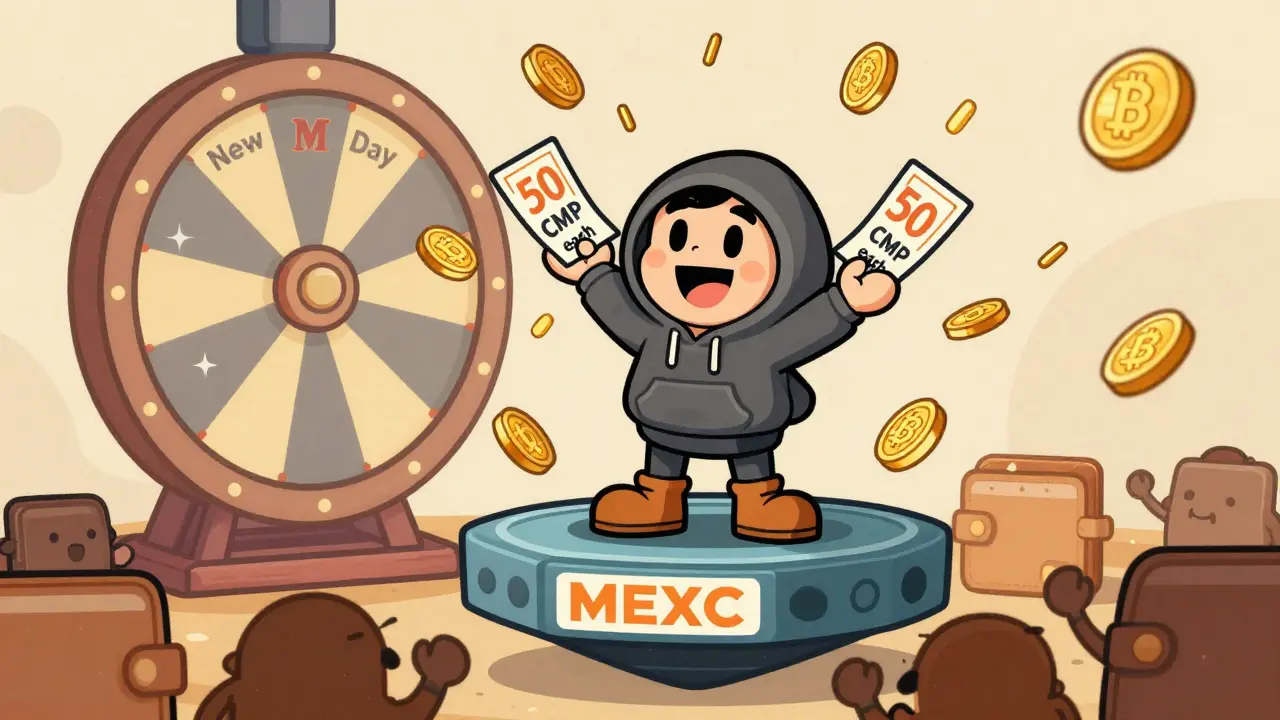
There were three main airdrop events tied to CMP, each with different rules and rewards. The most notable ones happened on MEXC and CoinMarketCap, and they targeted completely different audiences.On MEXC, the first campaign was called New M-Day. It offered 62,000 CMP tokens total, split into 950 lottery tickets. Each ticket gave you 50 CMP tokens. To enter, you had to hold MX tokens-MEXC’s native token-and the more you held, the more tickets you got. You didn’t need to trade or deposit anything else. Just holding MX between 1,000 and 500,000 tokens made you eligible. Winners were picked randomly, and the distribution was instant once the event ended. This wasn’t about volume or activity-it was about commitment. If you already used MEXC and held MX, you were already part of the ecosystem.
The second MEXC campaign was for CAD (Caduceus Protocol), not CMP. It had a 50,000 USDT prize pool and required voting with MX tokens. This was more about listing pressure-MEXC let users vote on which new tokens should be listed, and Caduceus won that vote. That campaign didn’t give out CMP tokens at all, but it helped raise awareness for the broader Caduceus brand.
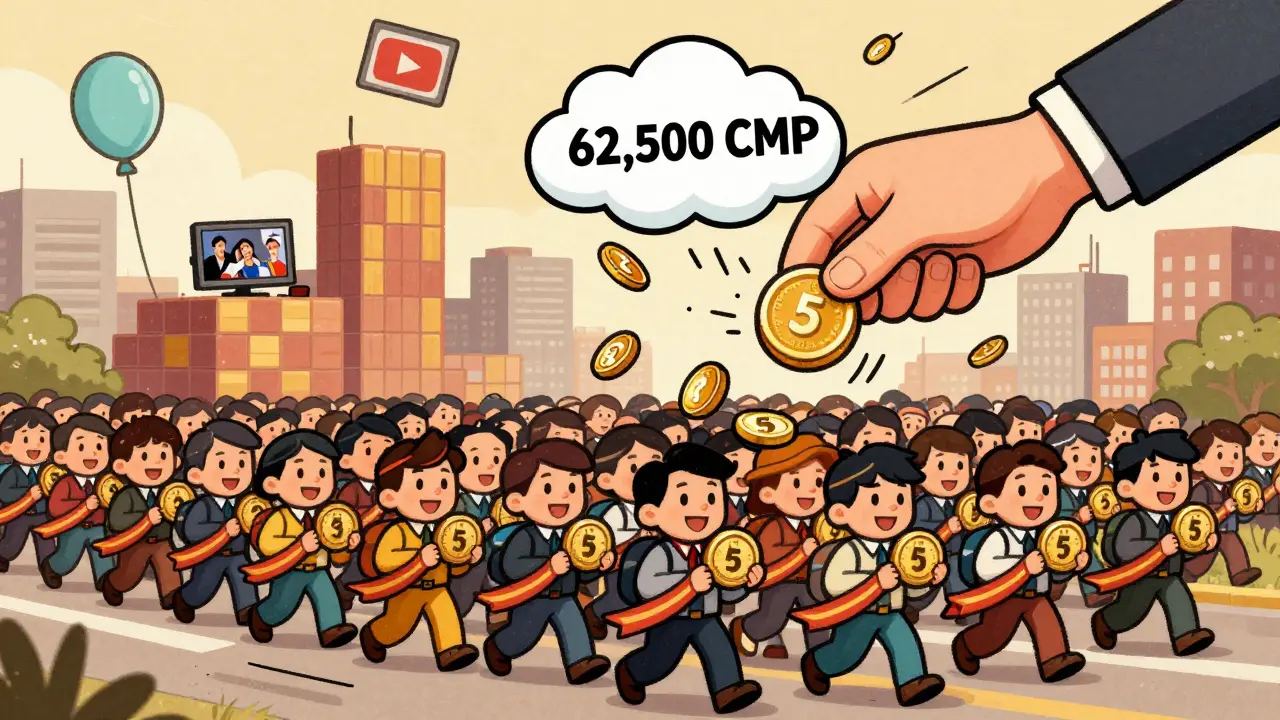
The biggest public airdrop came from CoinMarketCap. They gave out 62,500 CMP tokens to 12,500 winners. Each winner got exactly 5 CMP tokens. No lottery. No holding requirements. Just sign up, verify your account, and you were in. This was a classic mass-market move: low individual reward, high participation. It pulled in thousands of new users who might have never heard of Caduceus before. YouTube tutorials popped up within days showing people how to claim it-proof that the campaign went viral in crypto circles.
What Happened to the Tokens After the Airdrop?
The CMP token launched on July 26, 2022, with a Token Generation Event (TGE). By then, the core team had already unlocked 82.27 million out of 90 million total CMP tokens-over 91% of the supply. That meant most of the tokens were already in circulation before the airdrops even started. The airdrops weren’t meant to distribute the majority of supply-they were meant to spread it.At launch, the price of CMP hovered around $0.006225. That might sound tiny, but with 90 million total tokens, the full supply was worth about $560,000. The project’s market cap at the time was reported at just $86,000, which suggests the circulating supply was far smaller than the total. The 24-hour trading volume was around $72,000, meaning the token had modest liquidity but wasn’t moving aggressively.
After the airdrops, most recipients didn’t hold long. Crypto airdrops like this usually see a 70-90% sell-off within the first week. The 5 CMP tokens from CoinMarketCap were worth about $0.03 at launch-barely enough to cover gas fees on Ethereum. Many users just sold them immediately for a few cents. The MEXC winners got 50 CMP each, worth roughly $0.31. Still not much, but enough to make people check the price daily. Some held hoping for a listing on bigger exchanges. None came.
Why the Project Struggled After the Airdrops
Caduceus positioned itself as the first metaverse protocol with decentralized edge rendering-a fancy way of saying they claimed to solve lag and high latency in blockchain games. That’s a real problem. But they never released a working product. No game. No demo. No developer tools. Just whitepapers and token sales.Compare that to competitors like The Sandbox or Decentraland. Both had playable worlds before they launched tokens. Caduceus launched tokens before they had a world. That’s backwards. The airdrops looked like marketing smoke and mirrors: big numbers, flashy campaigns, but no substance to back them up.
Even the tokenomics were confusing. There were two tokens: CAD and CMP. CAD was for the protocol layer. CMP was for the metaverse. But no one could tell you the difference in practice. The website didn’t explain it clearly. The Discord was quiet. The GitHub repo had little activity. The team never posted updates. By late 2023, the project had vanished from most crypto news sites. The last known price update was in 2022.
What You Should Know Today
If you’re reading this in late 2025, the CMP airdrop is long over. The tokens are essentially worthless. The project has no active development, no exchange listings beyond MEXC, and no community engagement. The market cap is likely under $10,000 now-if it’s even tracked anymore.But here’s what you can learn from it:
- Airdrops don’t create value-they just spread tokens. Real value comes from products.
- Projects that focus on marketing before building rarely last.
- Don’t chase airdrops just because they’re free. Check if the project has a working product, active devs, and clear use cases.
- Token unlock rates above 90% before launch are a red flag. It means insiders control almost everything.
The Caduceus CMP airdrop was a textbook example of how not to build a metaverse project. It had the money. It had the reach. It had the timing. But it didn’t have the execution. And in crypto, execution always wins.
What Happened to the Other Tokens?
The CAD token, linked to the protocol layer, also faded into obscurity. It never got listed on major exchanges like Binance or KuCoin. Its trading volume dropped to near zero by mid-2023. The team behind Caduceus never released a roadmap update after Q3 2022. No team member gave interviews. No blog posts. No GitHub commits. The domain eventually stopped resolving.Some people still hold CMP tokens in wallets from 2022. Most don’t even remember why. A few collectors keep them as historical artifacts-like digital relics from the 2022 metaverse hype cycle. But they’re not usable for anything. No staking. No governance. No access to any platform. Just a balance in a wallet that won’t move.
Why This Matters for Future Airdrops
You’ll see more airdrops like this in 2025. Projects will promise metaverses, AI agents, and decentralized gaming-then drop tokens before they have a single line of code. The pattern is always the same: big airdrop, big hype, quiet death.If you’re considering participating in an airdrop today, ask yourself:
- Does this project have a live product or just a whitepaper?
- Are the core team members publicly known and active?
- Is there open-source code on GitHub with recent commits?
- What percentage of tokens are already unlocked?
- Has this project been mentioned by any credible crypto analysts or media?
If you can’t answer yes to at least three of these, treat the airdrop like a lottery ticket-not an investment.
The Caduceus CMP airdrop is now a case study in how not to launch a blockchain project. It didn’t fail because the tech was bad. It failed because no one believed in it. And in crypto, belief only lasts as long as the product does.
Andy Reynolds
December 30, 2025 AT 17:41Man, I remember when everyone was chasing these airdrops like they were free pizza. Caduceus was the poster child for ‘build the token first, ask questions later.’ The 5 CMP tokens? Worth less than a coffee at Starbucks. But hey, at least we got a good story out of it.
Now I check every project like a hawk-no GitHub commits? Skip. No team names? Skip. Token unlock at 90% before launch? That’s not a project, that’s a exit scam with a whitepaper.
Still, I give them credit for the CoinMarketCap campaign. That was pure marketing genius. Thousands of new wallets, zero product. Classic crypto theater.
Alex Strachan
December 31, 2025 AT 20:39LOL at people still holding CMP tokens like they’re Bitcoin.
Bro, that’s not a crypto asset, that’s a digital tombstone. 🪦
Rajappa Manohar
December 31, 2025 AT 23:12they forgot to build anything and just ran airdrops. i saw the posts back then. everyone was excited. now? silence. no updates. no devs. just ghost town.
Jacky Baltes
January 1, 2026 AT 14:03There’s a deeper philosophical layer here, isn’t there? The airdrop wasn’t just a distribution mechanism-it was a mirror. It reflected the collective delusion that value could be conjured through tokenomics alone, divorced from utility, from presence, from tangible contribution to the digital ecosystem.
Caduceus didn’t fail because the tech was flawed. It failed because it mistook attention for legitimacy. And in the end, attention is the most ephemeral of all assets.
Ryan Husain
January 2, 2026 AT 08:17I’ve seen this pattern too many times. Projects spend 90% of their budget on marketing and 10% on dev. Then they wonder why no one cares after the hype dies.
Compare Caduceus to something like Arbitrum or Polygon-both had real tech, real teams, real roadmaps. Caduceus had a website, a token, and a dream. That’s not enough.
And yes, 90% token unlock before launch? That’s not just a red flag-it’s a full-on siren.
Antonio Snoddy
January 3, 2026 AT 12:50It’s not about the tokens. It’s about the myth. The myth of the metaverse. The myth of decentralization. The myth that we, as a species, can build a digital utopia without first building trust.
Caduceus didn’t collapse because the code was bad. It collapsed because the belief was hollow. And belief-real belief-is the only thing that survives when the charts go to zero.
Now I look at every new airdrop and I ask: who is this for? The users? Or the insiders?
The answer is always the same. And it breaks my heart every time.
Phil McGinnis
January 3, 2026 AT 21:54The entire episode was a textbook case of American crypto arrogance. You raise millions, launch a token before you have a single line of working code, then act surprised when the world doesn’t care. We didn’t need another metaverse project. We needed one that could render a simple 3D object without lag.
And yet, somehow, the same people who got burned by this are now chasing the next ‘revolutionary’ airdrop. The cycle never ends. It’s not ignorance. It’s willful blindness.
Daniel Verreault
January 5, 2026 AT 08:20Man, I remember claiming that CMP airdrop like it was free money. Got my 5 tokens, checked the price daily for a week. $0.03? Nah. Sold it for 0.002 ETH on a DEX and forgot about it.
But here’s the kicker-the team never even bothered to update their Discord. Zero engagement. Zero roadmap. Meanwhile, competitors were dropping beta builds and dev logs.
TL;DR: If your project doesn’t have a GitHub commit in 3 months, it’s already dead. And you’re just holding a digital ghost.
Rick Hengehold
January 6, 2026 AT 02:14Stop chasing free tokens. Check the code. Check the team. Check the unlocks. If you can’t answer those three, you’re not investing-you’re gambling.
This isn’t rocket science. It’s basic due diligence.
Johnny Delirious
January 7, 2026 AT 21:07Let me be the first to say this: Caduceus didn’t fail because of bad tech. It failed because it never had any tech to begin with.
That’s not a startup. That’s a marketing funnel disguised as a blockchain project.
And yet, here we are in 2025, still seeing the same playbook. The lesson? Never trust a project that sells you a dream before it builds a door.
Brandon Woodard
January 9, 2026 AT 18:57It’s tragic, really. Caduceus had the funding, the timing, the platform partnerships. They had everything except the one thing that matters: integrity.
They didn’t build a metaverse. They built a Ponzi of perception.
And now? The only thing left is a wallet balance no one remembers how to access.
Next time, ask: Who’s really getting rich here?
prashant choudhari
January 10, 2026 AT 16:39airdrop is not investment its lottery ticket
Gavin Hill
January 11, 2026 AT 11:14People still talk about this like it’s some cautionary tale
It’s not a tale it’s a trend
Willis Shane
January 13, 2026 AT 10:55The real tragedy isn’t the lost tokens. It’s the wasted potential.
Imagine if that $4.17 million had gone into actual infrastructure instead of marketing campaigns.
What if they’d built a decentralized edge-rendering engine that actually worked?
We wouldn’t be talking about a dead token. We’d be talking about a breakthrough.
But instead, they chose spectacle over substance.
And in crypto, that’s the most expensive mistake you can make.
SUMIT RAI
January 13, 2026 AT 20:37Wait wait wait-you’re telling me the metaverse project didn’t have a metaverse?
Then what was the point? 🤔
Oh right. The airdrop. The token. The exit.
Classic. I’m shocked. NOT.
nayan keshari
January 14, 2026 AT 22:05they raised 4 million and couldnt even make a loading screen
the whole thing was a joke
Ian Koerich Maciel
January 16, 2026 AT 18:30It is with a profound sense of solemnity that I reflect upon the Caduceus CMP episode. The project, in its aspiration, sought to transcend the limitations of contemporary blockchain infrastructure; however, its execution, or rather, its absence thereof, represents a fundamental misalignment between rhetorical ambition and empirical reality.
One must consider: Is the proliferation of tokens a measure of decentralization, or merely a reflection of centralized capital allocation? The tokenomics, as presented, reveal a structure wherein 91% of supply was pre-unlocked-a structural imbalance that renders the concept of community ownership a semantic fiction.
Moreover, the absence of demonstrable product development, coupled with the cessation of all public communication, suggests not merely neglect, but deliberate abandonment.
One cannot help but observe that the airdrop, while superficially democratizing, functioned as a mechanism for liquidity extraction, not value creation.
Thus, we are reminded: In the absence of substance, even the most elegantly constructed narrative is but a mirage.
And mirages, as we know, vanish when approached.
Abhisekh Chakraborty
January 18, 2026 AT 07:47bro why are you even reading this? just buy the next airdrop and hope.
we all know what’s gonna happen.
but still... we click.
that’s the real crypto game.