China's Complete Crypto Ban: What It Means for Bitcoin Holders
 Jan, 18 2026
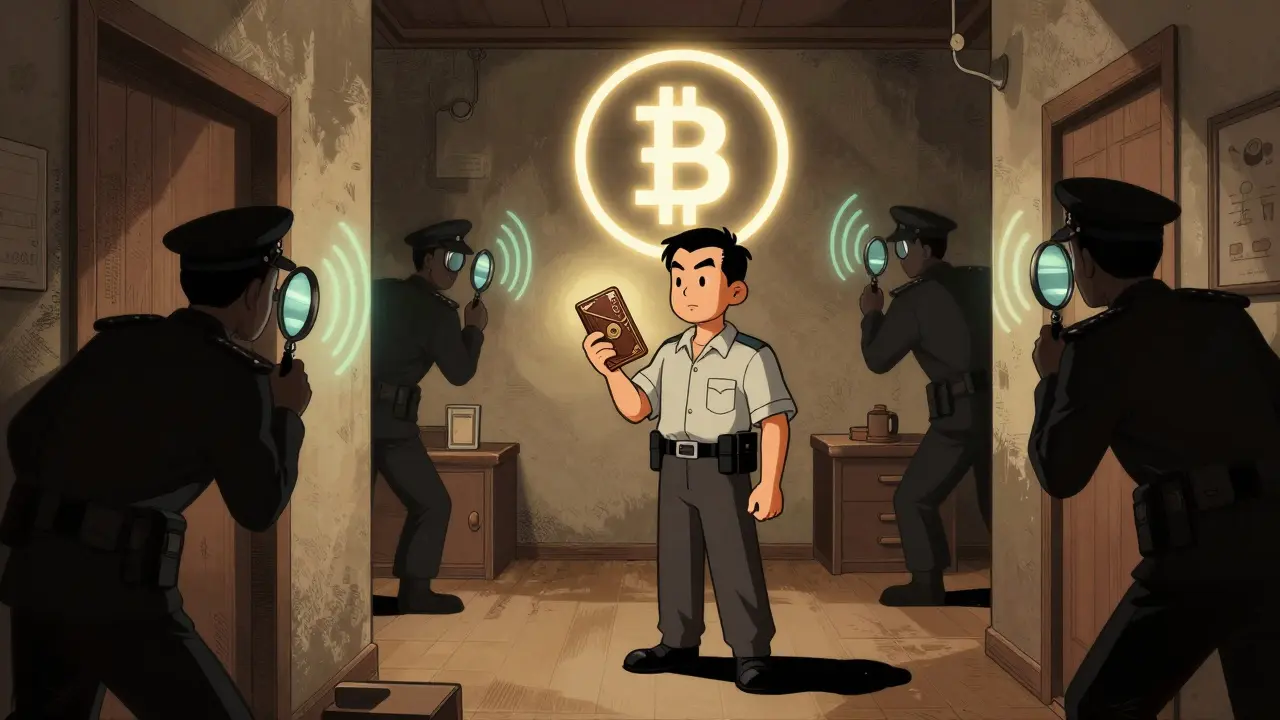
China doesn’t just regulate cryptocurrency-it bans it. Fully. Completely. Since 2021, every form of crypto trading, mining, and exchange service has been illegal on Chinese soil. If you hold Bitcoin in China, you’re not breaking the law just by owning it. But if you try to sell it, trade it, or even use it to pay for something, you’re stepping into a legal gray zone with serious consequences.
What exactly is banned?
The Chinese government didn’t just shut down a few exchanges. They tore down the entire infrastructure. In May 2021, the Financial Stability and Development Committee ordered a total crackdown on Bitcoin mining and trading. Mining farms were shut off. Exchanges like Huobi and OKX had to pull out of China. Banks were told: no crypto accounts, no crypto transfers, no crypto-related services. Ever.
It didn’t stop there. Internet companies like Tencent and Baidu were forced to block crypto-related content. Overseas exchanges like Binance and Coinbase were told: if you serve a Chinese resident, you’re breaking Chinese law. Even using a VPN to access a foreign exchange can get you flagged by regulators.
It’s not just about trading. The People’s Bank of China made it clear in 2024: Bitcoin and other cryptocurrencies are not legal tender. You can’t use them to pay your rent, buy groceries, or settle debts. And if you try to convert Bitcoin into yuan through a bank, you’re likely to trigger an AML alert. The Ministry of Public Security monitors every transaction that looks even remotely like crypto activity-online and offline.
But people still hold Bitcoin in China
Here’s the contradiction: despite the ban, Bitcoin ownership is still common. A 2025 survey by a Beijing-based blockchain research group estimated that over 3 million Chinese citizens still hold cryptocurrency. Most of them bought it before 2021. Others bought it through peer-to-peer trades or offshore wallets they never disclosed.
How? Because enforcement isn’t perfect. You can’t police every wallet. You can’t track every private key. And many people store their Bitcoin in hardware wallets or cold storage-no internet, no trace. The government can shut down exchanges, but it can’t seize what it can’t find.
But here’s the catch: holding it is one thing. Doing anything with it is another. If you try to cash out through a P2P platform like LocalBitcoins, you risk getting scammed. If you try to use a Chinese bank to transfer funds tied to crypto, you could get your account frozen. And if you’re caught running a mining rig-even at home-you could face fines or worse.
What happens if you get caught trading?
There’s no public record of people being jailed for simply holding Bitcoin. But there are plenty of cases where people lost everything because they tried to move it.
In 2023, a man in Shanghai tried to sell 12 Bitcoin through a local broker. The broker turned out to be a scammer. The man lost his coins and his money. When he went to the police, they told him: “We can’t help you. Cryptocurrency transactions are illegal.” No investigation. No recovery. No recourse.
Another case in Guangdong involved a man who used his business bank account to pay for Bitcoin purchases. The bank flagged the transactions, froze his account, and reported him to the central bank. He was fined 50,000 yuan and barred from opening any new accounts for five years.
There’s no legal protection for crypto holders in China. No courts will hear a case about stolen Bitcoin. No contracts involving crypto are enforceable. If you’re scammed, you’re on your own.
Why does China hate Bitcoin so much?
It’s not about technology. It’s about control.
China’s government doesn’t fear Bitcoin because it’s volatile. They fear it because it’s decentralized. It operates outside their financial system. It lets people move money without approval. It lets them bypass capital controls. And in a country where the state monitors every yuan movement, that’s a threat.
That’s why they’re building their own digital currency-the Digital Yuan (e-CNY). It’s not Bitcoin. It’s the opposite. Every transaction is tracked. Every user is identified. Every flow of money is logged. The government doesn’t want to replace cash with crypto. They want to replace crypto with state-controlled digital money.
Think of it this way: Bitcoin gives power to the individual. The Digital Yuan gives power to the state. China chose the latter.
What about mining?
China used to mine more than 70% of the world’s Bitcoin. In 2020, the country had more mining rigs than the rest of the world combined. Then came the 2021 ban.
Within six months, 90% of Chinese mining operations shut down. Power plants stopped supplying electricity to mining farms. Local governments tore down equipment. Miners fled to Kazakhstan, the U.S., and Russia.
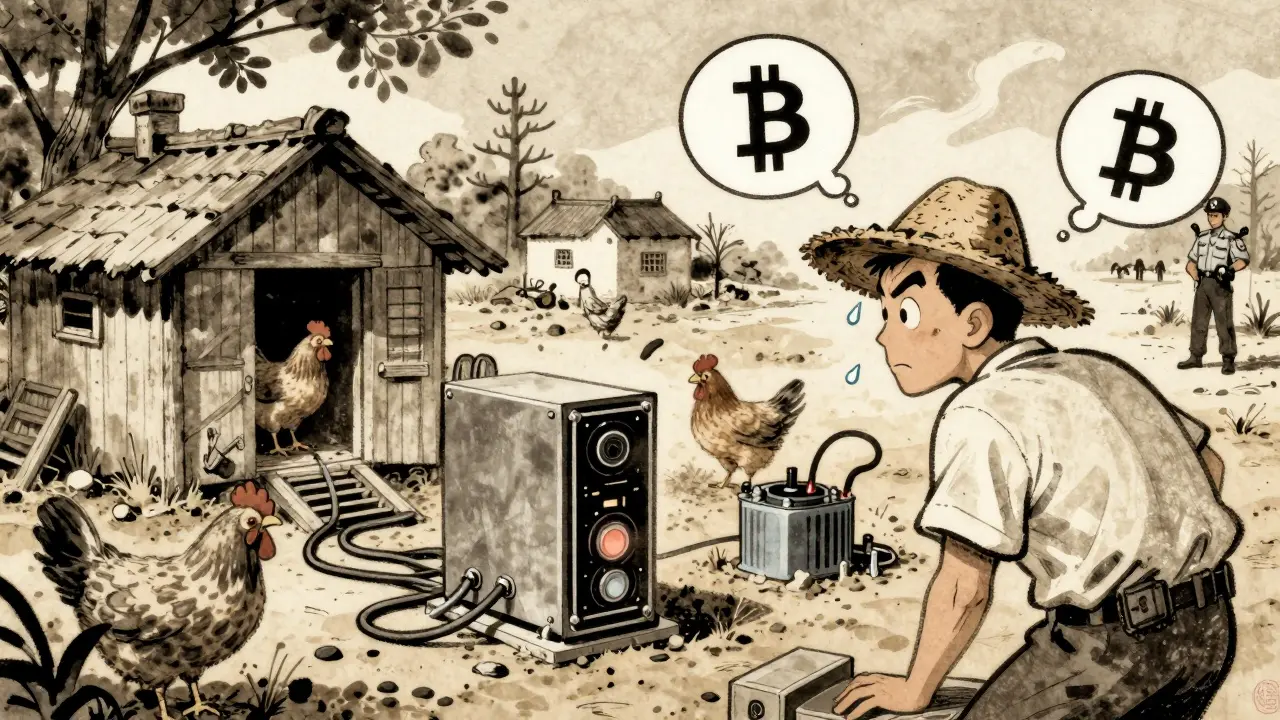
But here’s something most people don’t know: some mining equipment is still running. Not in large farms, but in small, hidden setups. Some miners use leftover industrial generators. Others run rigs in remote villages where power is cheap and oversight is weak. These are high-risk operations. One raid, and you lose everything.
And even if you’re not mining, owning mining hardware can get you in trouble. In 2024, a man in Sichuan was fined for possessing 15 ASIC miners-even though he claimed they were for “educational purposes.” The government doesn’t care about your excuse.
What about Bitcoin prices?
China’s ban doesn’t directly affect Bitcoin’s price. But it affects demand. And demand drives price.
When China cracked down in 2021, Bitcoin dropped 50% in a month. Why? Because Chinese investors were selling. They had no choice. Exchanges were gone. Banks were blocked. The only way out was panic selling.
But here’s the twist: Chinese demand never disappeared. It just went underground. Today, Chinese investors still account for an estimated 15-20% of global Bitcoin trading volume-just not through official channels. They use overseas wallets, P2P networks, and offshore exchanges. And if China ever lifted the ban, even partially, the surge in demand could send Bitcoin prices skyrocketing.
That’s why global traders watch every rumor about China. When fake news spread in early 2025 that China was lifting the ban, Bitcoin jumped 18% in 48 hours. The rumor was false. But the market reacted anyway. Because the fear of missing out is real.
What should Bitcoin holders in China do?
If you’re holding Bitcoin in China, your goal isn’t to get rich. It’s to stay safe.
- Don’t use Chinese banks to buy, sell, or transfer crypto. Even if you think you’re being clever, the monitoring systems are too advanced.
- Use hardware wallets like Ledger or Trezor. Keep your private keys offline. Don’t store them on your phone or computer.
- Avoid P2P platforms with Chinese users. The risk of scams is too high, and there’s no legal recourse.
- Don’t advertise your holdings. No social media posts. No forums. No discussions with friends or coworkers.
- Consider moving your assets to a jurisdiction with clearer rules-like Singapore, Switzerland, or even New Zealand. It’s not easy, but it’s safer.
And if you’re thinking of investing now? Don’t. China’s ban isn’t going away. Not in 2026. Not in 2030. The government is doubling down on the Digital Yuan. Bitcoin is seen as a threat, not an opportunity.
Is there any hope for change?
Some analysts say yes. They point to China’s economic slowdown and the need for new sources of capital. Others say the government will never allow decentralized money to compete with its own digital currency.
The truth? No one knows. But the pattern is clear: China moves slowly, but it moves decisively. Once a policy is set, it rarely changes. The ban on crypto isn’t temporary. It’s structural.
The real question isn’t whether China will lift the ban. It’s whether you’re willing to risk your savings on a bet that they might.
Global impact
China’s ban didn’t just affect its own citizens. It reshaped the entire crypto world.
Miners scattered across the globe. Exchanges moved headquarters. Venture capital shifted away from China-based crypto startups. Even Bitcoin’s energy profile changed-mining moved from coal-powered plants in Inner Mongolia to hydro-powered farms in Canada and Texas.
China’s ban forced the industry to become more decentralized. And that’s probably the one thing the government didn’t expect.
Bitcoin didn’t die in China. It just went quiet. And it’s still out there-waiting, watching, and growing.
Is it illegal to own Bitcoin in China?
No, owning Bitcoin is not illegal in China. The ban targets trading, mining, and exchange services-not personal possession. However, if you try to convert Bitcoin into yuan, use it to pay for goods, or trade it through any platform, you’re violating the law. You can hold it, but you can’t use it.
Can Chinese citizens use Binance or Coinbase?
Technically, no. Chinese law bans overseas exchanges from serving Chinese residents. Binance, Coinbase, and others have blocked Chinese IP addresses and restricted account access for users with Chinese IDs. But many still use VPNs to bypass these blocks. Doing so violates the law and puts your funds at risk-there’s no customer support or legal protection if something goes wrong.
What happens if I try to cash out Bitcoin through a Chinese bank?
Your bank will likely freeze your account. Financial institutions in China are required to monitor transactions for crypto links. If they detect a pattern-like frequent transfers to P2P platforms or foreign wallets-they’ll report you to the People’s Bank of China. You could face fines, account closures, or even being blacklisted from the banking system for years.
Are there any legal ways to trade Bitcoin in China?
No. All crypto exchanges, derivatives markets, and trading platforms are banned. Even peer-to-peer trading is legally risky. The government considers any form of crypto trading a violation of financial regulations. There are no licensed exchanges. No legal loopholes. No exceptions.
Did China ban crypto in 2025?
No. Rumors about a new ban in 2025 were fake news. They spread through social media, Telegram, and financial influencers, but they had no official source. China’s current ban dates back to 2021 and remains unchanged. The government has not issued any new crypto restrictions since then.
Can I mine Bitcoin at home in China?
No. Mining Bitcoin is illegal in China. The government shut down all large-scale mining operations in 2021 and has since cracked down on smaller setups. Possessing mining hardware-even if unused-can lead to fines or confiscation. Power companies also monitor electricity usage for abnormal spikes, which can trigger investigations.
What is China’s Digital Yuan, and how is it different from Bitcoin?
The Digital Yuan (e-CNY) is China’s state-controlled digital currency. Unlike Bitcoin, it’s not decentralized. Every transaction is tracked by the government. Users must verify their identity. There’s no anonymity. The government can freeze funds, limit spending, or monitor behavior. Bitcoin gives users control. The Digital Yuan gives the government control.
Will Bitcoin prices rise if China lifts the ban?
Almost certainly. China has millions of potential investors who still hold Bitcoin but can’t access markets. If even a fraction of them were allowed to trade legally, demand would spike. Historical data shows that Chinese market activity can move Bitcoin by 15-30% in days. A full reopening would likely trigger a major bull run.
Final thoughts
China’s crypto ban isn’t just a policy. It’s a statement. The state doesn’t want decentralized money. It wants total control. And for now, that’s not changing.
If you’re a Bitcoin holder in China, you’re not just holding an asset. You’re holding a risk. A quiet, invisible risk. One that could vanish overnight if the government decides to act.
There’s no safety net. No legal backup. No second chance.
Know the rules. Respect the risks. And if you can, plan your exit.
Katherine Melgarejo
January 18, 2026 AT 12:34Patricia Chakeres
January 19, 2026 AT 00:35kristina tina
January 19, 2026 AT 15:20Stephen Gaskell
January 20, 2026 AT 01:58Hannah Campbell
January 21, 2026 AT 13:16Anna Gringhuis
January 21, 2026 AT 17:40Dustin Secrest
January 23, 2026 AT 09:45Jason Zhang
January 24, 2026 AT 03:13Pramod Sharma
January 24, 2026 AT 16:09Josh V
January 25, 2026 AT 03:13myrna stovel
January 26, 2026 AT 17:00Ashlea Zirk
January 27, 2026 AT 11:04Chris O'Carroll
January 27, 2026 AT 11:51Michael Jones
January 27, 2026 AT 17:09