Crypto in Morocco: How Users Bypass the Ban and What’s Next
 May, 8 2026
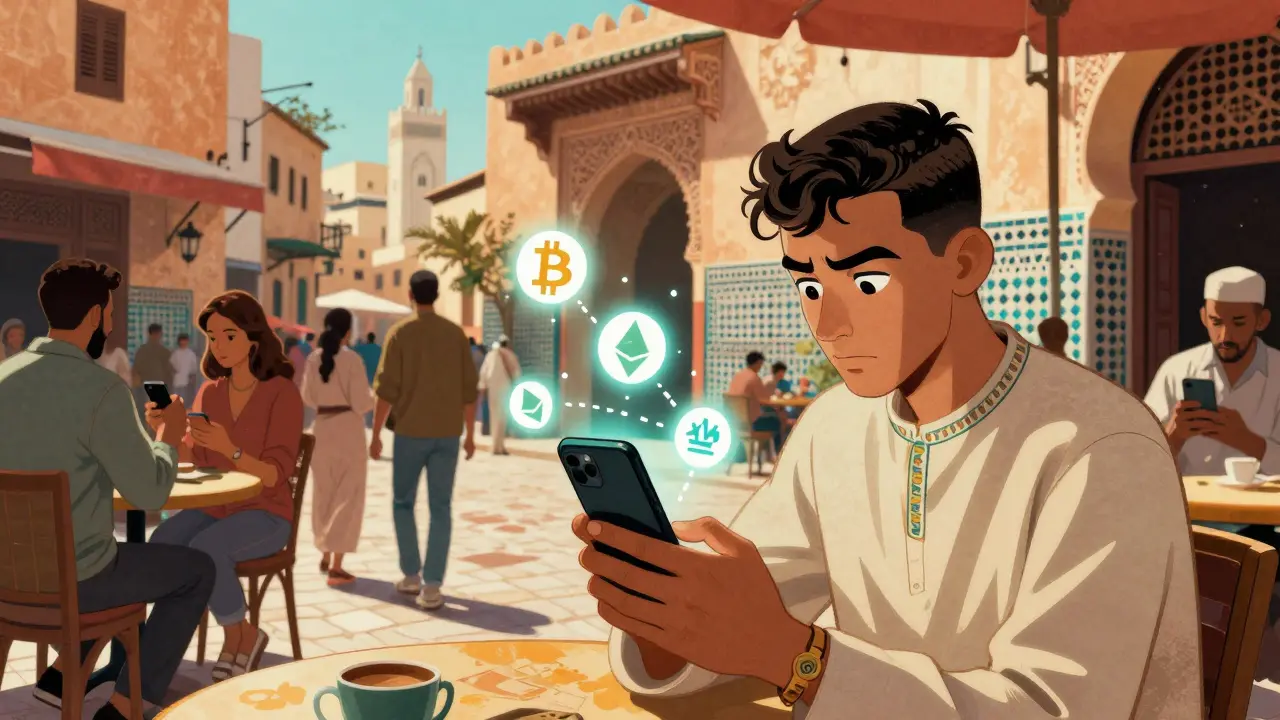
You can’t legally buy Bitcoin in Morocco. The government banned it in 2017, citing threats to monetary sovereignty and foreign exchange controls. Yet, if you walk through the tech hubs of Casablanca or Rabat, you’ll find people trading digital assets daily. They aren’t breaking the law out of rebellion; they’re doing it because they need a way to send money home, hedge against inflation, or simply participate in the global economy. This contradiction-where prohibition fuels growth rather than stopping it-is what experts call the "Crypto Paradox."
Despite the ban, the underground market has grown steadily. By 2026, this hidden ecosystem is projected to reach nearly $300 million. For millions of Moroccans, cryptocurrency isn’t just an investment; it’s a necessity. But navigating this gray area comes with high risks, steep fees, and constant vigilance. Here is how the underground market works, why users keep coming back, and what the upcoming regulatory changes mean for your wallet.
The Reality of Trading Underground
When the Moroccan Exchange Office and Bank Al-Maghrib declared all crypto activities illegal in November 2017, they aimed to stop capital flight. They feared that decentralized currencies would undermine their control over the Dirham. However, instead of killing demand, the ban pushed the market into the shadows.
Today, approximately 1.2 million Moroccans engage with cryptocurrency. That’s about 3.2% of the population. These users don’t use local banks to buy tokens. Instead, they rely on a complex web of peer-to-peer (P2P) networks. About 82% of these transactions happen via mobile apps from international exchanges like Binance, Bybit, or OKX. Since these platforms are often geo-blocked or restricted within Morocco, most users access them through Virtual Private Networks (VPNs). NordVPN and ExpressVPN are popular choices, costing users roughly MAD 120-180 per month just to get online.
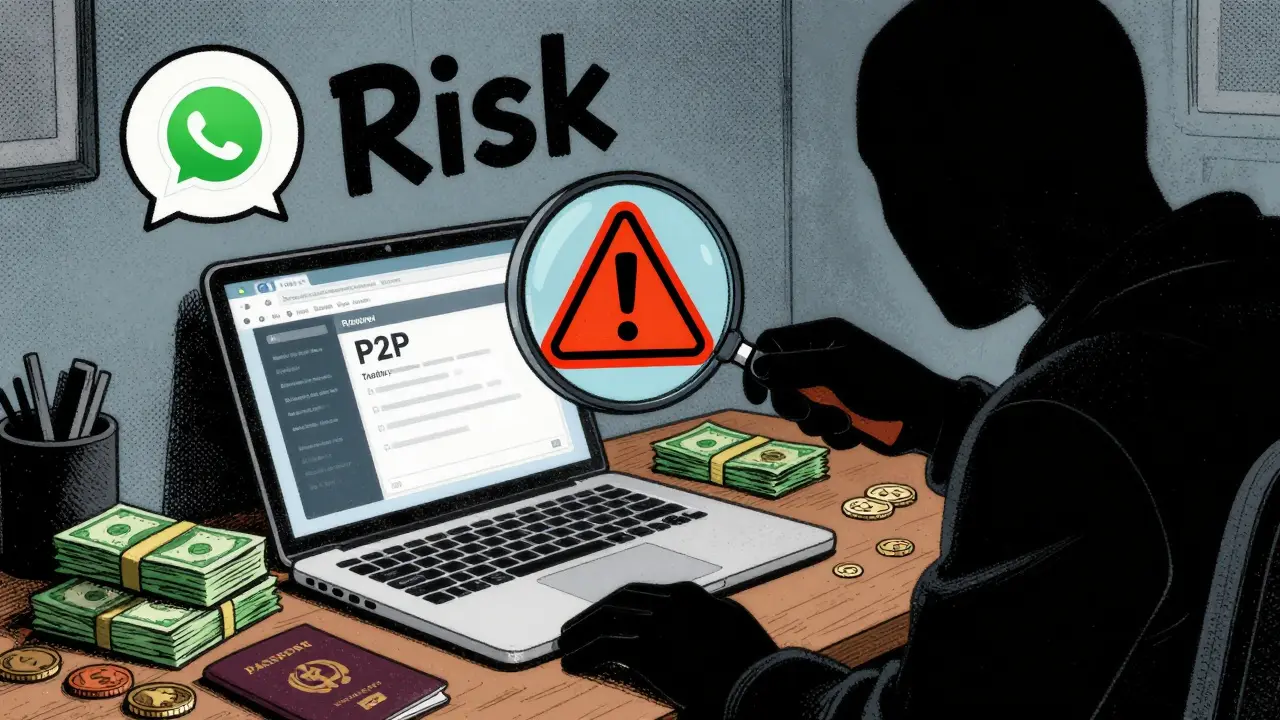
The infrastructure is informal but highly organized. According to recent compliance analyses, 68% of transactions are coordinated through WhatsApp groups and Telegram channels. These groups act as trust networks. Users verify each other’s identities manually, share references, and sometimes use intermediaries to facilitate trades. It’s a system built on reputation rather than legal recourse.
| Feature | Underground Market (Current) | Regulated Market (Projected) |
|---|---|---|
| Average Fees | 3.8% - 5.2% | 0.1% - 0.5% |
| Settlement Time | ~72 hours | Near-instant |
| Consumer Protection | None (High scam risk) | AML/KYC Compliance |
| Legal Status | Illegal | Licensed & Taxed |
Why Moroccans Keep Using Crypto Despite the Risks
If the risks are high, why do people continue? The answer lies in three main drivers: remittances, speculation, and e-commerce.
Remittances are the biggest factor. Over 44% of crypto transactions in Morocco are used to receive money from abroad. Traditional banking transfers can take days and incur significant fees. Crypto offers a faster alternative. A worker in France can send USDT (a stablecoin pegged to the US Dollar) to their family in Marrakech almost instantly. Once received, the family converts it to Dirhams through a local P2P trader. This bypasses traditional bank delays and reduces the cost of sending money home.
Speculation drives the second wave. Younger demographics, particularly those aged 18-35, are drawn to the potential for profit. Bitcoin dominates this segment, accounting for 57.3% of trading volume, followed by Ethereum at 22.1%. For many urban professionals earning above MAD 10,000 monthly, crypto is a way to diversify assets beyond real estate and stocks.
Cross-border e-commerce is the third driver. With limited merchant acceptance domestically, only 8% of crypto usage is for local purchases. However, 17% of users utilize crypto for buying goods from international websites that accept digital payments, avoiding currency conversion fees entirely.
The Hidden Costs and Dangers
Operating outside the law isn’t cheap or safe. The underground market imposes heavy costs on users who have no legal protection.
Fees are exorbitant. In regulated markets, transaction fees might be around 0.1%. In Morocco’s OTC (Over-the-Counter) network, fees average between 3.8% and 5.2%. This is due to the premium traders charge for taking on legal risk and the complexity of converting fiat to crypto without triggering bank alerts.
Scams are rampant. Trust is fragile. On forums like r/CryptoMorocco, users frequently report fraud. Approximately 32% of participants have encountered non-delivery scams, where a seller takes payment but never sends the crypto. One user reported losing MAD 3,500 after a counterparty disappeared post-payment. Another 12% experienced account freezes when trying to convert profits back to Dirhams, leaving their funds stuck in limbo.
Legal threats persist. While mass arrests are rare, authorities do monitor suspicious activity. Nine percent of surveyed users reported facing legal threats or inquiries from officials. The fear of being labeled involved in money laundering or tax evasion keeps many users anxious, even if they are merely trying to save money.
How the Underground Network Actually Works
For a newcomer, entering this ecosystem is daunting. It requires more than just downloading an app. You need a toolkit and a network.
- Secure Access: First, you need a reliable VPN. Without it, accessing major exchanges like Binance is difficult or impossible. Most users subscribe to premium services to ensure speed and security.
- Find a Group: Next, you join local WhatsApp or Telegram groups. These groups vary in size from 50 to 200 members. New users must build a reputation slowly. Starting with small amounts helps establish trust.
- Verify Counterparties: Before trading, users check feedback scores within the group. For larger transactions, some use multi-person verification, where a trusted community member vouches for both parties.
- Execute the Trade: Trades are usually settled via bank transfer or cash deposit. The seller releases crypto only after confirming receipt of funds. Settlement can take up to 72 hours due to manual checks.
This process has a steep learning curve. It takes an average of 8.2 weeks for a new user to become proficient in safe transaction practices. Experienced traders often earn a "network fee" of 1.5-2.5% for facilitating deals, acting as de facto brokers.
The Regulatory Shift: From Ban to Framework
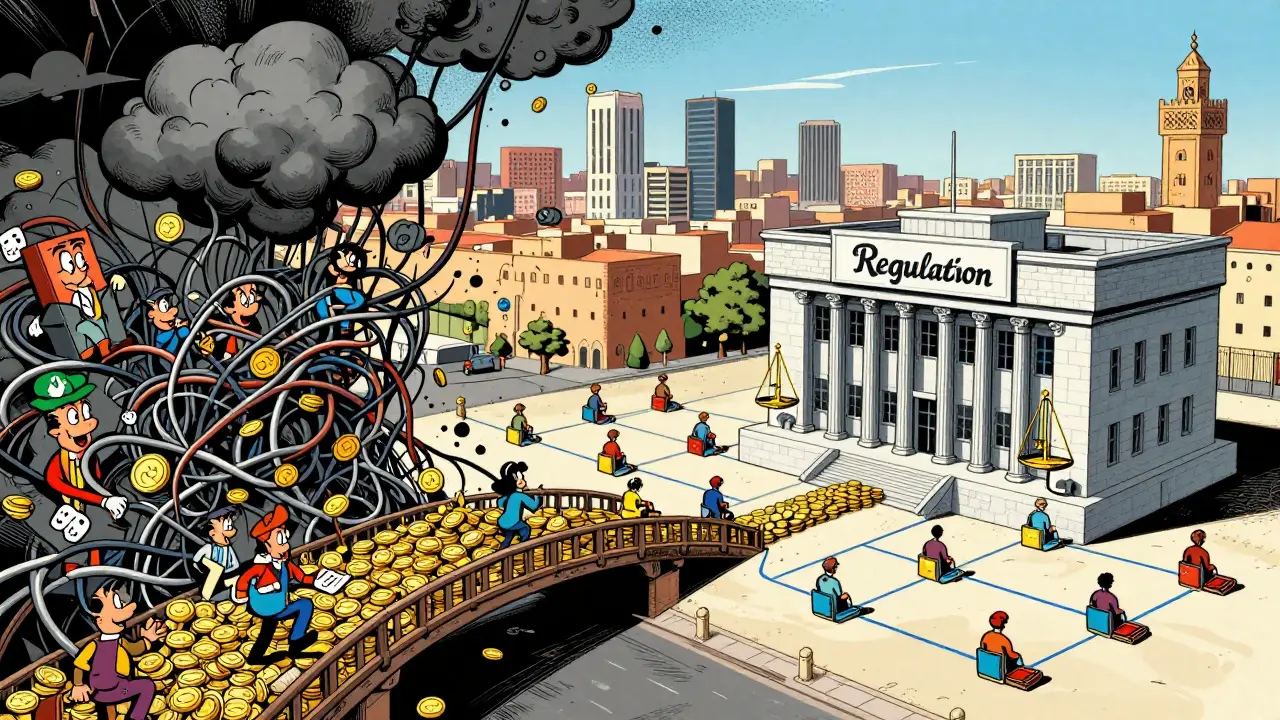
The landscape is changing. After years of prohibition, the government realized that banning crypto didn’t stop it-it just made it harder to regulate. In November 2024, Bank Al-Maghrib Governor Abdellatif Jouahri announced a draft law to regulate cryptocurrency. This marks a strategic pivot from suppression to oversight.
The proposed framework addresses the original concerns that led to the 2017 ban: money laundering, consumer protection, and capital flight. Key components include:
- Mandatory Licensing: Exchanges will need licenses from Bank Al-Maghrib, with application costs estimated between MAD 150,000 and MAD 200,000.
- Strict KYC/AML Rules: All transactions will require Know Your Customer (KYC) verification and Anti-Money Laundering (AML) compliance. Suspicious activities must be reported.
- Taxation: A 15% capital gains tax will apply to crypto profits, bringing digital assets into the formal tax net.
- Oversight: The Moroccan Capital Market Authority (AMMC) will oversee Initial Coin Offerings (ICOs) and security tokens.
However, one restriction remains: cryptocurrencies cannot be used for commercial payments. Businesses must still use traditional banking channels for international trade. This ensures that the Dirham remains the primary medium of exchange for domestic commerce.
What This Means for Users in 2026
The transition to regulation is expected to complete by Q3 2025, with full implementation impacting the market in 2026. For users, this brings both opportunities and challenges.
Lower Risks, Higher Transparency: Formal regulation should reduce scam rates significantly. With licensed exchanges, users will have recourse if something goes wrong. Consumer risk exposure is projected to drop by 62%.
Market Growth: Analysts predict that formal regulation could increase the market size by 35-40% within 18 months. As fears subside, more mainstream investors may enter the space, boosting liquidity.
New Costs: Taxes and licensing fees will likely trickle down to consumers. Transaction fees may decrease due to competition among licensed entities, but the 15% capital gains tax means profits will be lower than in the wild west era.
Dr. Fatima Zahra El Moudni, a professor of financial regulation, notes that this shift acknowledges reality: "Prohibition failed to suppress demand. Regulation allows us to manage the risks while harnessing the technology."
Regional Context: Morocco vs. Neighbors
While Morocco moves toward regulation, its neighbors are taking different paths. Algeria and Tunisia maintain strict bans similar to Morocco’s pre-2024 stance. Egypt, however, launched a regulatory sandbox in late 2023, creating a competitive pressure on Morocco to formalize its approach quickly.
Currently, Morocco’s underground market represents 18.7% of North Africa’s total crypto activity, second only to Egypt’s regulated market at 52.3%. If Morocco successfully implements its framework, it aims to become a regional fintech hub, attracting investment and talent away from less regulated jurisdictions.
Is it legal to own Bitcoin in Morocco?
As of early 2026, owning Bitcoin exists in a legal gray area. The 2017 ban prohibited active trading, mining, and using crypto for payments. However, the new draft law under implementation focuses on regulating exchanges and taxing profits rather than criminalizing individual ownership. Until the final law is fully enforced, holding crypto is not actively prosecuted, but using it for commercial payments remains strictly illegal.
How do Moroccans buy crypto if it’s banned?
Most users rely on Peer-to-Peer (P2P) platforms like Binance P2P, Bybit, or OKX. They access these sites via VPNs to bypass geo-restrictions. Transactions are coordinated through local WhatsApp or Telegram groups where buyers and sellers agree on rates and execute trades via bank transfers or cash deposits.
What are the risks of trading crypto underground?
The primary risks include fraud (non-delivery scams), high transaction fees (3.8-5.2%), long settlement times (up to 72 hours), and lack of legal recourse. Additionally, users face potential account freezes from banks monitoring suspicious large transfers and possible legal inquiries from authorities.
Will the new regulations make crypto cheaper to use?
Transaction fees are likely to decrease as licensed exchanges compete openly, potentially dropping to 0.1-0.5%. However, users will now pay a 15% capital gains tax on profits. The overall cost structure shifts from high hidden fees to transparent taxes and lower trading costs.
Can I use crypto to pay for goods in Morocco?
No. Even under the new regulatory framework, the use of cryptocurrency for commercial payments and settlements is prohibited. Businesses must continue using traditional banking channels for international and domestic trade. Crypto is treated as an investment asset, not a currency.