Cuba Cryptocurrency Regulation: What’s Really Happening in 2025
 Dec, 14 2025
Cuba Remittance Calculator
Send Money to Cuba
Most people think Cuba bans cryptocurrency. They’re wrong. In fact, Cuba is one of only two countries in the world that officially lets people use Bitcoin and other digital currencies as legal payment methods - and it’s been doing so since August 2021. This isn’t a loophole. It’s policy. And it’s not about tech hype. It’s about survival.
Why Cuba Let Cryptocurrency In
For over 60 years, U.S. sanctions have choked Cuba’s economy. No PayPal. No Amazon. No Western Union. After Western Union shut down its 400+ outlets in Cuba in 2020, families lost their main way to receive money from relatives abroad. Credit cards? Blocked. Bank transfers? Nearly impossible. The Cuban government couldn’t fix this - but it could adapt. That’s when Resolution 215 dropped. Published in the Official Gazette, it didn’t ban crypto. It licensed it. The Central Bank of Cuba was given power to regulate digital assets, not outlaw them. The reason? "Reasons of socio-economic interest." In plain terms: people needed a way to pay for food, medicine, and internet access - and crypto was the only tool left.How It Works Now
You can’t just start a crypto exchange in Havana tomorrow. You need a license. The Central Bank of Cuba reviews every application based on legality and whether it serves the public good. Licenses are issued for one year at a time, with strict anti-money laundering (AML) rules and customer verification requirements. Service providers must report suspicious activity, just like banks do elsewhere. But here’s the twist: regular Cubans don’t need a license to use crypto. If you have a phone and internet, you can buy Bitcoin on a peer-to-peer app, send it to a family member in Miami, or pay for an online order from a store in Spain. No bank approval needed. No intermediary. No waiting weeks for a wire to clear.Who’s Using It?
About 100,000 to 200,000 Cubans - roughly 1% to 2% of the population - are actively using cryptocurrencies. That might sound small. But consider this: mobile internet only became widely available in 2018. In five years, nearly two hundred thousand people learned how to use digital wallets, navigate exchange platforms, and avoid scams. That’s not a trend. That’s a revolution. Most users rely on Bitcoin, Ethereum, and Avalanche. Why? Because they’re globally recognized, easy to transfer, and accepted by international platforms. Cubans use crypto to buy groceries from online stores, pay for medical supplies, send remittances, and even pay for remote freelance work. One woman in Santiago de Cuba told a journalist she used Bitcoin to pay for her daughter’s university textbooks - shipped from Mexico - because no bank would process the payment.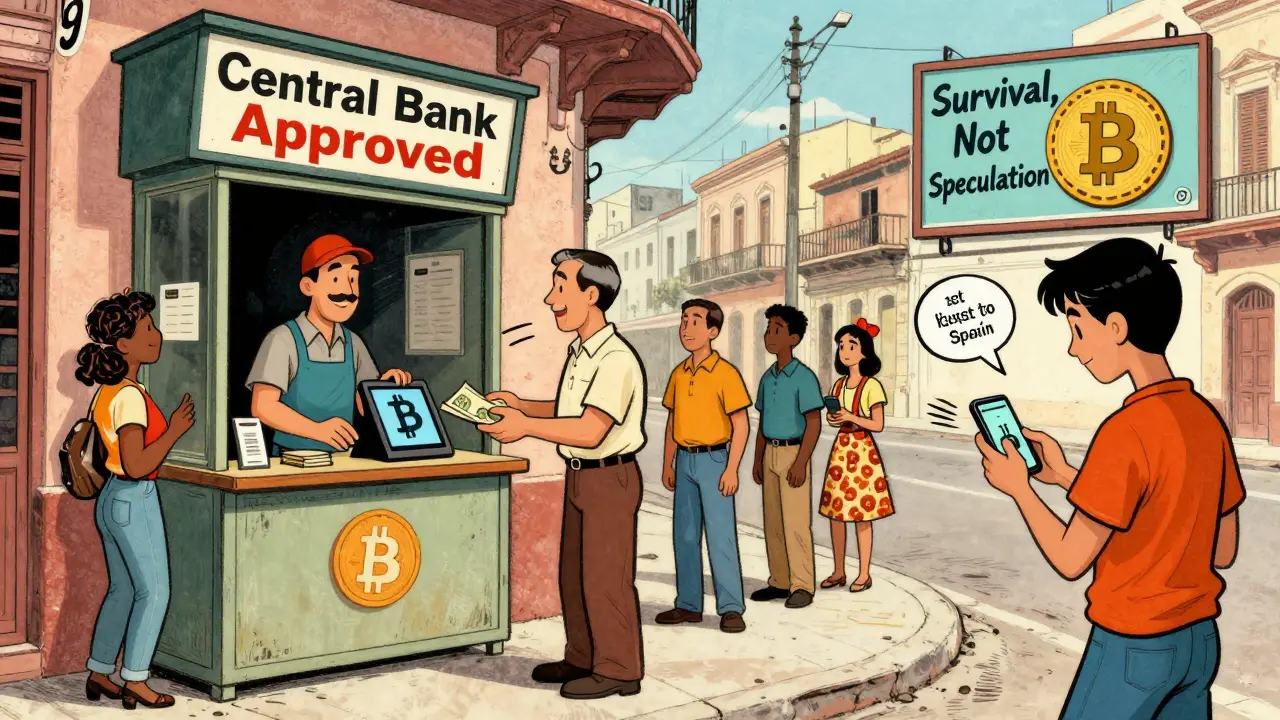
What’s Not Allowed
Cuba doesn’t ban crypto. But it does control it. You can’t use crypto to evade taxes. You can’t use it for illegal goods. And you can’t operate a crypto business without a license. The government doesn’t want chaos. It wants oversight. There’s also no official Cuban cryptocurrency. No state-backed coin. No digital peso. The government isn’t trying to replace the peso. It’s letting people use global digital assets to bypass the global financial system that’s locked them out.How It Compares to Other Countries
While China crushed crypto mining and trading, Cuba opened the door. While El Salvador made Bitcoin legal tender as a publicity stunt, Cuba did it out of necessity. And unlike Venezuela, where crypto use exploded but the government still controls currency access, Cuba’s approach is more balanced: allow the people to use crypto, but regulate the companies that enable it. This isn’t just about money. It’s about autonomy. For Cubans, crypto isn’t an investment. It’s a lifeline.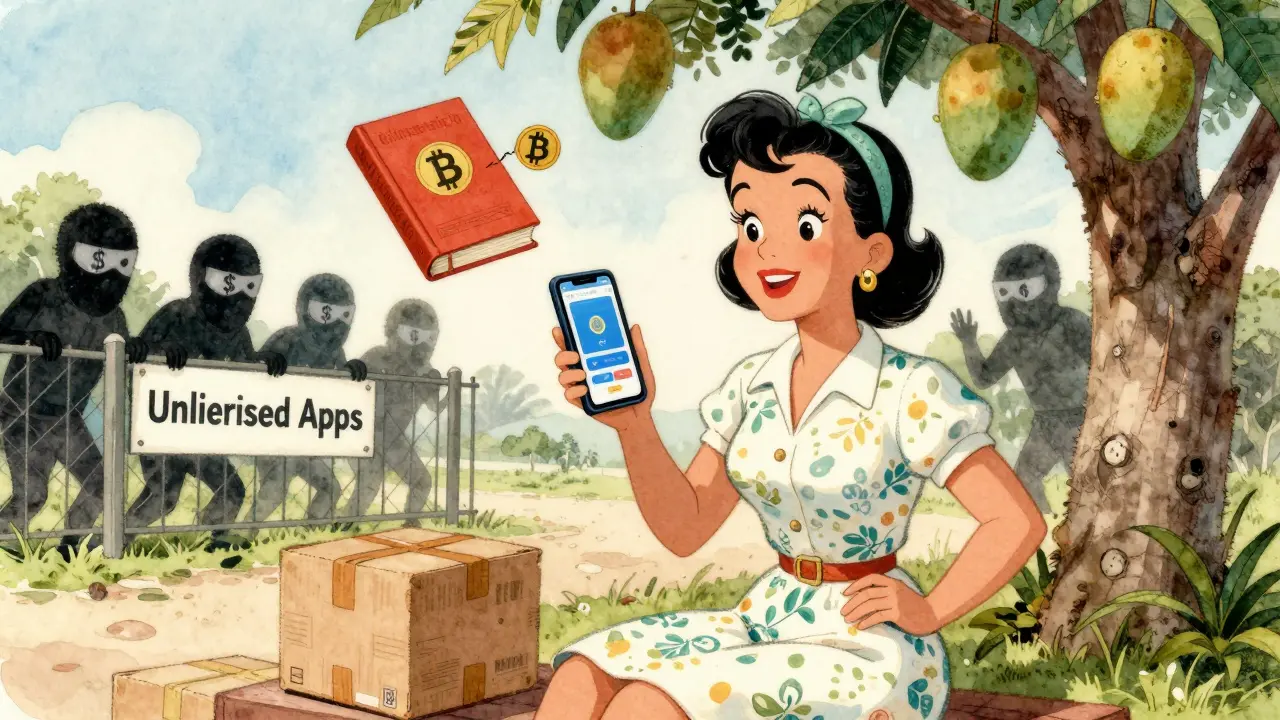
Challenges Still Facing Users
It’s not perfect. Internet access is still spotty in rural areas. Many older Cubans don’t understand how wallets work. Scammers target newcomers with fake apps and phishing links. And the licensing process for businesses is slow - some wait over six months for approval. Still, the ecosystem is growing. Local crypto kiosks are popping up in Havana. Telegram groups help users learn how to send Bitcoin safely. And Cuban developers are building tools tailored to the island’s needs - like apps that convert crypto to pesos at real-time rates without needing a bank account.What’s Next?
The Central Bank of Cuba continues issuing licenses. No signs of reversal. No talk of banning. In fact, officials have quietly expanded the list of approved digital assets to include stablecoins like USDT and USDC - because they’re more stable for everyday use than volatile Bitcoin. Experts believe Cuba’s model could become a blueprint for other nations under sanctions: Iran, Venezuela, North Korea. If you can’t access SWIFT, you build your own financial layer. Crypto isn’t the future here - it’s the present.Why This Matters to You
Even if you’re not in Cuba, this story changes how you think about crypto. It’s not just about speculation. It’s not just about decentralization. It’s about people finding ways to survive when the system refuses to work for them. Cuba didn’t adopt crypto because it was trendy. It did it because it had no other choice. And in doing so, it created one of the most practical, real-world uses of digital money on the planet.Is cryptocurrency illegal in Cuba?
No, cryptocurrency is not illegal in Cuba. Since August 2021, the Cuban government has officially recognized Bitcoin and other digital currencies as legal payment methods under Resolution 215. Individuals can use crypto for personal transactions without a license. Only businesses that provide crypto services need to be licensed by the Central Bank of Cuba.
Can I send Bitcoin to someone in Cuba?
Yes, you can send Bitcoin or other cryptocurrencies to someone in Cuba. Many Cubans rely on crypto remittances from family abroad, especially since traditional services like Western Union shut down in 2020. As long as the recipient has a digital wallet and internet access, they can receive funds directly without bank involvement.
Does Cuba have its own cryptocurrency?
No, Cuba does not have its own state-backed cryptocurrency. The government is not issuing a digital peso or national digital coin. Instead, it allows the use of existing global cryptocurrencies like Bitcoin, Ethereum, and stablecoins such as USDT and USDC for everyday transactions and business payments.
Why did Cuba allow cryptocurrency when other countries banned it?
Cuba allowed cryptocurrency because U.S. sanctions blocked access to global financial systems - including PayPal, credit cards, and international money transfers. With no other way to receive remittances or buy goods online, crypto became a necessity. Unlike China, which banned crypto to control capital flow, Cuba chose regulation over prohibition to give its people economic freedom within tight constraints.
Are crypto exchanges legal in Cuba?
Crypto exchanges and service providers can operate legally in Cuba - but only if they get a license from the Central Bank of Cuba. The bank evaluates each applicant for compliance with anti-money laundering rules and socioeconomic impact. Unlicensed platforms are considered illegal, and users are advised to only use licensed providers to avoid fraud.
How many Cubans use cryptocurrency?
An estimated 100,000 to 200,000 Cubans use cryptocurrency regularly, which is about 1% to 2% of the population. This number has grown rapidly since 2021, especially among younger users and those with family abroad. Despite limited internet access, crypto adoption is one of the fastest-growing financial behaviors on the island.
Can Cubans use crypto to buy things online?
Yes, Cubans use crypto to buy goods and services online from international retailers, including medical supplies, electronics, books, and software. Many online stores that don’t accept traditional payments from Cuba now accept Bitcoin or USDT. Some Cuban freelancers also use crypto to receive payments from clients outside the country.
Is the Cuban government monitoring crypto transactions?
Yes. While individuals can transact privately, licensed crypto service providers must report suspicious activity and follow strict KYC and AML rules. The Central Bank of Cuba monitors transactions through these licensed platforms. The government doesn’t track every wallet, but it does require businesses to keep records and comply with financial oversight.
Ike McMahon
December 16, 2025 AT 11:14Cuba’s crypto move is one of the most practical uses of blockchain I’ve seen. Not for speculation, not for degens - for real people buying medicine and textbooks. This isn’t crypto bro stuff. It’s survival tech.
Sarah Luttrell
December 17, 2025 AT 07:16Oh wow 😍 so Cuba’s the new crypto utopia now? Next they’ll be handing out free Bitcoin with every ration card. Meanwhile in the US we’re still trying to figure out how to pay for avocado toast without getting flagged by FinCEN. 🙃
Jeremy Eugene
December 19, 2025 AT 05:08While the narrative is compelling, it’s important to acknowledge the regulatory framework isn’t about freedom - it’s about control. The state licenses providers, monitors transactions, and restricts usage. This isn’t decentralization. It’s centralized crypto with a Cuban flag.
Vidhi Kotak
December 20, 2025 AT 14:47My cousin in Delhi uses crypto to pay for her online English courses - same way Cubans do. It’s not about the country, it’s about people finding workarounds when the system fails. The real story? Tech doesn’t care about borders. People do.
Kim Throne
December 22, 2025 AT 11:18According to Resolution 215, Article 3, subsection (b), the Central Bank of Cuba retains exclusive authority over the licensing and operational compliance of digital asset service providers. This is a structured, state-supervised ecosystem - not an open-market free-for-all. The distinction matters.
Sue Gallaher
December 24, 2025 AT 02:27So let me get this straight - America sanctions Cuba so hard they can’t use PayPal but somehow Bitcoin is fine? Classic. We broke the system so they built their own. And now we’re supposed to be impressed? 🤷♀️
John Sebastian
December 25, 2025 AT 16:44People always romanticize resistance. But this isn’t rebellion - it’s adaptation under duress. The government still controls everything. They’re just letting people use tools they can’t ban. That’s not liberation. That’s damage control.
Abhishek Bansal
December 26, 2025 AT 10:39Wait so Cubans can use crypto but can’t buy a Tesla? Lmao. Sounds like a government-approved loophole for the rich. Also why is everyone acting like this is new? Venezuela did this in 2017.
Bridget Suhr
December 27, 2025 AT 04:17you know what’s wild? the fact that cubans are using avax to pay for textbooks. i mean… avax? really? but also… kinda genius? 🤔
Anselmo Buffet
December 28, 2025 AT 03:26My dad’s from Havana. He says the real win isn’t the tech - it’s the Telegram groups where old ladies teach each other how to scan QR codes for Bitcoin payments. That’s community building, not crypto hype.
JoAnne Geigner
December 29, 2025 AT 02:34It’s beautiful, in a tragic way… that the most functional, human-centered use of blockchain is happening in a place where the government has no choice but to let its people survive. We talk about decentralization like it’s a philosophy… but here, it’s just… breathing.
Joey Cacace
December 31, 2025 AT 01:10This is why I believe in crypto - not as a get-rich-quick scheme, but as a tool for dignity. When banks fail people, technology steps in. And Cuba? They’re not just using it… they’re redefining it. 🙏
Taylor Fallon
December 31, 2025 AT 06:56the fact that they’re using usdt instead of btc for groceries… that’s the quiet revolution right there. no one’s talking about it but stablecoins are the real MVPs here. also… anyone else miss the cuban coffee memes from 2022? those were golden 😭
Anselmo Buffet
January 1, 2026 AT 03:22That’s what I’m talking about. The stablecoins are the unsung heroes. Bitcoin’s too volatile for buying rice. USDT? That’s the new peso. Simple. Real. No fanfare.