Deflationary Cryptocurrency Examples: Bitcoin, Ethereum, and BNB Explained
 Aug, 5 2026
Most money you hold loses value every single day. Inflation eats away at your savings, meaning the $100 in your wallet today buys less than it did a year ago. Deflationary cryptocurrency is a digital asset designed to decrease in supply over time through mechanisms like token burning or hard caps, aiming to increase value as demand grows. This creates a financial environment where scarcity drives price appreciation rather than dilution. Instead of central banks printing more currency, these protocols permanently remove tokens from circulation. Understanding how this works is crucial for anyone looking to preserve wealth in the digital age.
How Deflationary Mechanisms Work
The core idea behind deflationary crypto is simple math: if supply drops while demand stays steady or rises, the price goes up. But how do developers actually reduce supply? There are three main methods used across the blockchain industry today.
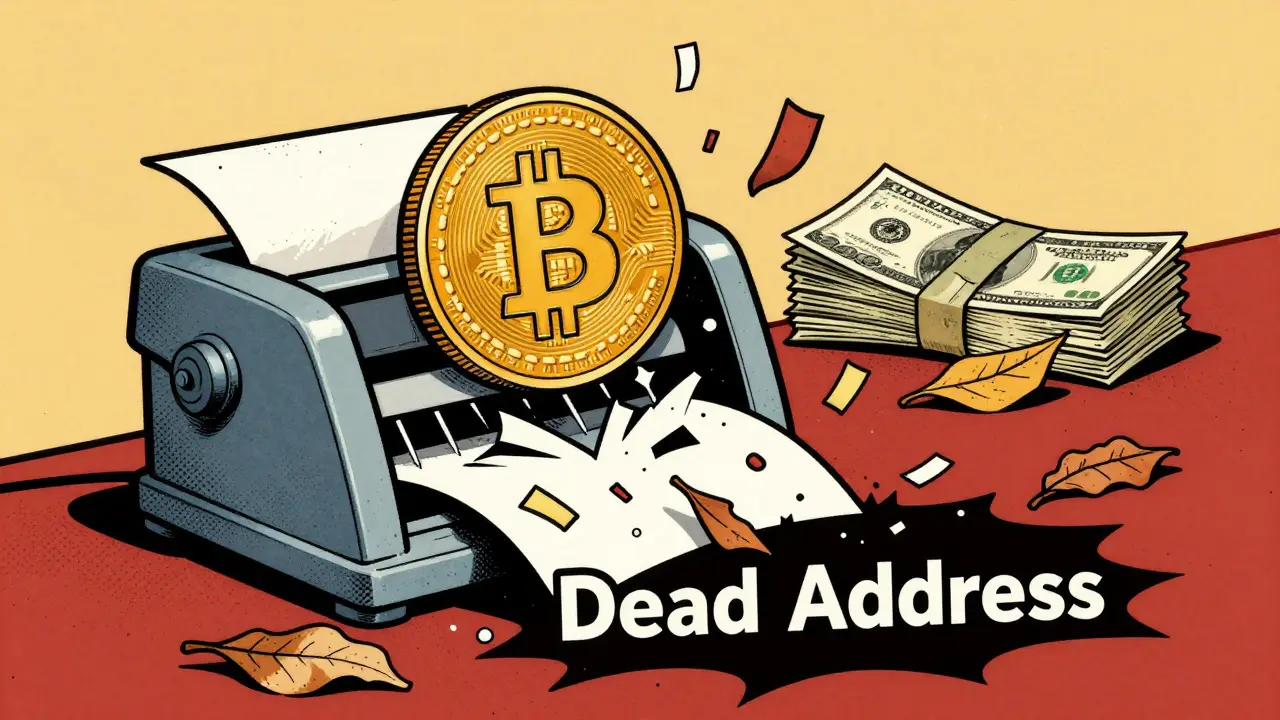
Token Burning: This is the most direct method. When a token is burned, it is sent to a "dead address"-a wallet with no known private key. Once there, those coins are gone forever. Think of it like shredding cash and throwing it into the ocean. Binance Coin (BNB) uses an automated quarterly burn mechanism that destroys tokens using 20% of Binance's profits until 50% of the initial supply is removed.
Capped Supply: Some cryptocurrencies have a hard limit on how many coins can ever exist. No matter how much demand increases, the supply cannot exceed this number. Bitcoin (BTC) has a fixed maximum supply of 21 million coins, creating artificial scarcity similar to gold.
Dynamic Fees: Other networks adjust their supply based on usage. If the network is busy, more fees are burned, reducing supply faster. Ethereum (ETH) implements EIP-1559, which burns a portion of transaction base fees, making the asset deflationary during periods of high network activity.
Top Deflationary Cryptocurrency Examples
Not all deflationary coins work the same way. Let’s look at the biggest players in the market and how their specific mechanisms impact investors.
1. Bitcoin (BTC): The Digital Gold Standard
Bitcoin is the original deflationary asset. Launched in 2009 by Satoshi Nakamoto, it introduced the world to the concept of a finite monetary supply. Unlike fiat currencies, Bitcoin has a strict cap of 21 million coins. You will never see a 21,000,001st Bitcoin.
But Bitcoin doesn’t just sit at a static supply. It uses a process called halving. Approximately every four years (or every 210,000 blocks), the reward miners get for securing the network is cut in half. The most recent halving occurred on April 19, 2024, dropping the block reward from 6.25 BTC to 3.125 BTC. This reduces the rate at which new Bitcoins enter the market. By 2140, the last Bitcoin will be mined. Currently, Bitcoin’s annual supply growth is only about 1.8%, and this figure shrinks after each halving event.
Investors love Bitcoin because its scarcity is predictable. Dr. Garrick Hileman, Head of Research at Blockchain.com, noted that Bitcoin’s fixed supply creates a resilient monetary policy proven through multiple economic cycles. However, critics like economist Nouriel Roubini argue that such extreme scarcity can encourage hoarding, potentially stifling spending in a broader economy.
2. Binance Coin (BNB): Utility Meets Scarcity
Binance Coin takes a different approach. While Bitcoin relies on algorithmic scarcity, BNB relies on active destruction. Launched in 2017, BNB was initially an inflationary token but shifted to a deflationary model through aggressive burning.
Binance, the exchange behind BNB, commits to burning 20% of its quarterly profits. They use this money to buy back BNB from the open market and send it to a dead address. This happens every quarter until 100 million BNB (half of the original 200 million supply) is destroyed. As of late 2023, Binance had already burned nearly 49 million tokens.
What makes BNB unique is its utility. Holding BNB gives users discounts on trading fees on the Binance platform. This creates constant demand for the token, while the burns create constant supply reduction. In December 2023, Binance announced a shift to real-time burning based on daily trading volume, moving away from the quarterly profit-based model to make the process more transparent and responsive to market conditions.
3. Ethereum (ETH): The Dynamic Burner
Ethereum underwent a massive transformation with the implementation of EIP-1559 in August 2021. Before this upgrade, all transaction fees went to miners. After the upgrade, a portion of every transaction fee-the "base fee"-is burned.
This means Ethereum’s supply isn’t just capped; it actively shrinks when the network is busy. During peak usage in mid-2023, Ethereum burned over 1,200 ETH per hour. When gas prices are low, the burn rate slows down. According to data from Ultrasound.money, Ethereum has been net-deflationary (burning more than it issues) on roughly 63% of days since the upgrade. This dynamic nature ties the coin’s scarcity directly to its usefulness. The more people use Ethereum apps, the more ETH is destroyed.
| Cryptocurrency | Primary Mechanism | Supply Cap | Key Advantage | Main Risk |
|---|---|---|---|---|
| Bitcoin (BTC) | Halving events & Hard Cap | 21 Million | Predictable, established track record | Slow deflation rate; high energy usage |
| Binance Coin (BNB) | Quarterly/Real-time Burns | 100 Million (Target) | High utility within Binance ecosystem | Centralized control by one company |
| Ethereum (ETH) | Transaction Fee Burning (EIP-1559) | No Hard Cap (Dynamic) | Scarcity linked to network usage | Unpredictable burn rates |

Why Deflationary Crypto Matters in 2026
In a world where traditional inflation remains a concern, deflationary assets offer a hedge against currency devaluation. The global deflationary cryptocurrency market reached $856.6 billion in late 2023, representing nearly half of the total crypto market cap. This trend is accelerating. Bernstein predicts that by 2027, 65% of the top 100 cryptocurrencies will include some form of deflationary mechanism.
Corporate adoption is also rising. A PwC survey found that 42% of Fortune 500 companies now hold deflationary cryptocurrencies, primarily Bitcoin, as treasury reserves. These companies view digital scarcity as a superior store of value compared to holding cash that loses purchasing power annually.
However, it’s not all smooth sailing. Regulatory bodies are watching closely. The EU’s MiCA framework treats certain deflationary tokens as "asset-referenced tokens," requiring strict disclosures. In the US, the SEC continues to scrutinize whether burn mechanisms constitute investment contracts under the Howey Test. Investors need to stay informed about legal changes in their jurisdiction.
Pitfalls and Risks to Avoid
While the theory of deflation sounds perfect, reality can be messy. Here are common traps investors fall into:
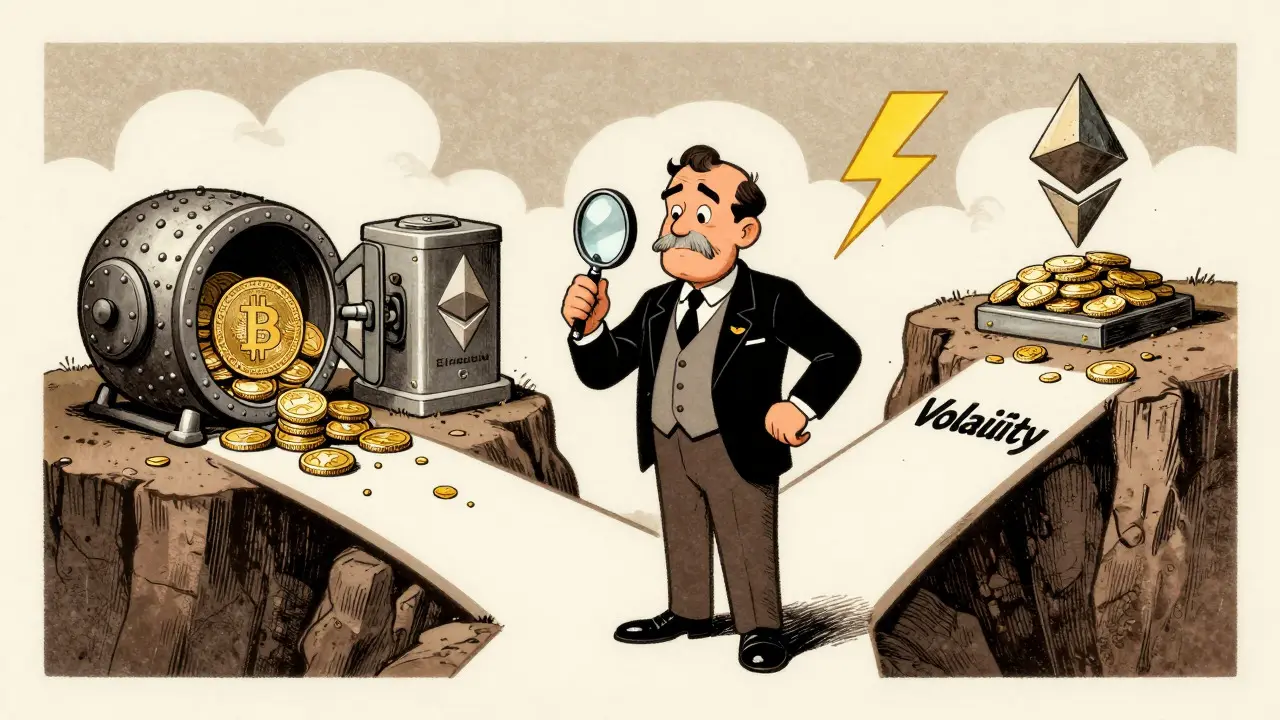
- Hoarding Behavior: If everyone believes the price will go up due to scarcity, they stop spending. This can kill liquidity. As user u/BlockchainNewbie noted on Bitcointalk, high burn fees on some smaller tokens made exiting positions impossible during market downturns.
- False Scarcity: Just because a token burns doesn’t mean it’s valuable. If no one wants to use the token, burning it does nothing. Always check the underlying utility before buying.
- Centralization Risks: Tokens like BNB rely on a single entity (Binance) to execute burns. If the company faces legal trouble or mismanagement, the burn schedule could be disrupted.
- Volatile Burn Rates: Ethereum’s deflation depends on network traffic. If activity drops, issuance might outpace burning, temporarily making ETH inflationary again.
How to Get Started with Deflationary Assets
If you want to invest in deflationary cryptocurrencies, follow these steps to minimize risk:
- Choose a Secure Wallet: Use a non-custodial wallet like Trust Wallet for BNB or MetaMask for ETH. Setup takes about 15 minutes. Never leave large amounts on exchanges.
- Understand the Tokenomics: Read the project’s whitepaper. Look for clear explanations of how supply is reduced. Is it automatic? Is it controlled by a team?
- Check Transparency: For projects like BNB, verify that burn events are publicly recorded on the blockchain. Binance publishes burn dates in advance, but always double-check on-chain data.
- Diversify: Don’t put all your eggs in one basket. Consider a mix of Bitcoin (for stability), Ethereum (for tech exposure), and perhaps a smaller utility token (for higher risk/reward).
- Monitor Halvings and Upgrades: Mark your calendar for major events like Bitcoin halvings or Ethereum upgrades (like Dencun). These often cause significant price volatility.
The learning curve for basic investing is typically 2-4 weeks. Take your time. Study blockchain fundamentals. Understand that deflationary pressure is a long-term game, not a get-rich-quick scheme.
Future Outlook: What’s Next?
The evolution of deflationary mechanisms is far from over. Bitcoin’s next halving in 2028 will further reduce supply growth to below 0.5%. Ethereum’s upcoming scalability upgrades aim to increase transaction volume, which could significantly boost burn rates. Meanwhile, new projects are experimenting with hybrid models that combine staking rewards with partial burns to balance incentives.
As central banks explore Central Bank Digital Currencies (CBDCs), many are looking at crypto’s deflationary principles. The World Economic Forum reported that 68% of central banks are interested in incorporating scarcity concepts into future digital currencies. Whether governments adopt these ideas or stick to inflationary fiat remains to be seen, but for now, deflationary cryptocurrencies offer a unique alternative for individuals seeking control over their financial destiny.
Is Bitcoin truly deflationary?
Yes, Bitcoin is considered deflationary due to its hard cap of 21 million coins and regular halving events that reduce the rate of new supply entering the market. While new coins are still being mined, the decreasing issuance rate combined with lost coins (estimated at 3-4 million BTC) makes the circulating supply effectively shrink over time relative to demand.
How does Ethereum become deflationary?
Ethereum became deflationary through the EIP-1559 upgrade, which introduced a base fee for transactions that is permanently burned. When network activity is high, the amount burned exceeds the new ETH issued to validators, resulting in a net decrease in total supply. This makes ETH deflationary during periods of high usage.
What is token burning in cryptocurrency?
Token burning is the process of sending cryptocurrency to a public address with no known private key, rendering the tokens inaccessible and unusable forever. This reduces the total supply of the token, creating artificial scarcity that can drive up price if demand remains constant or increases.
Are deflationary cryptocurrencies safer investments?
Not necessarily. While deflationary mechanisms protect against supply-side inflation, they do not guarantee price stability or growth. Market sentiment, regulatory news, and technological failures can still cause significant price drops. Additionally, extreme deflation can lead to hoarding, reducing liquidity and making it harder to sell assets quickly.
Which deflationary coin has the best utility?
Utility varies by use case. Binance Coin (BNB) offers strong utility within the Binance exchange ecosystem through fee discounts and launchpad access. Ethereum (ETH) provides utility as the fuel for decentralized applications, smart contracts, and NFTs. Bitcoin (BTC) serves primarily as a store of value and medium of exchange. The "best" utility depends on whether you prioritize trading, development, or savings.