Fan Engagement Through NFT Tickets: Transforming Live Events
 Apr, 4 2026
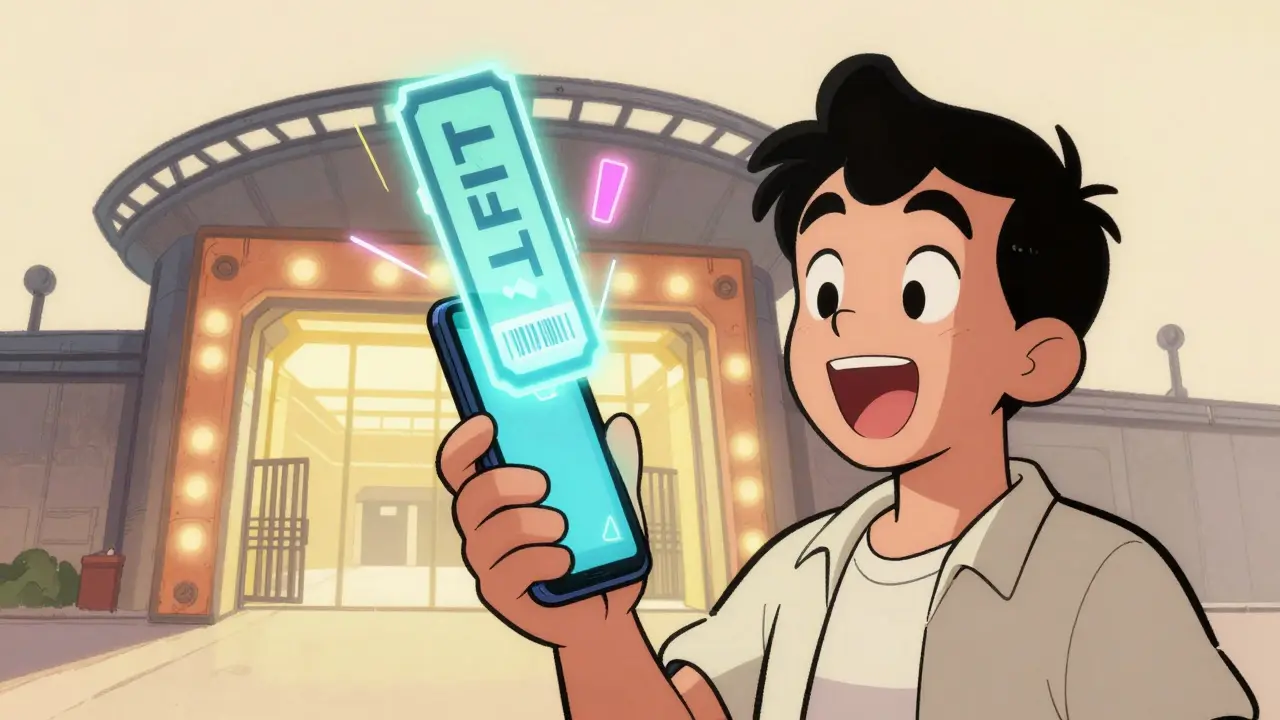
Imagine attending a championship game or a massive music festival and keeping more than just a faded piece of cardstock or a PDF on your phone. What if your ticket was a digital asset that didn't just get you through the gate, but unlocked a secret lounge, gave you a discount on the official jersey, and stayed in your digital wallet as a permanent trophy of the night? That is the reality of NFT tickets is non-fungible tokens used as verifiable, unique digital assets that grant access to events while serving as collectibles. By moving the entry process to the blockchain, organizers are turning a simple transaction into a long-term relationship with their fans.
Beyond the Turnstile: The New Fan Experience
Traditional ticketing is a one-and-done deal. You buy the ticket, you use it, and it becomes digital trash. Blockchain technology changes this by making the ticket a living entity. Because the ticket is an NFT, it can be programmed to provide value long after the lights go down. For example, a fan who holds a ticket from a 2026 tour might find a surprise discount code for the 2027 tour delivered directly to their wallet.
This creates a bridge between the physical event and the digital world. Organizers can use "airdrops"-sending digital assets directly to holders-to keep the hype alive. Imagine a sports team airdropping a limited-edition digital highlight clip to everyone who attended a game-winning play in person. It's a way to say, "You were there," and give the fan a digital badge of honor they can actually show off.
Killing the Scalper and Fixing the Secondary Market
We've all dealt with the nightmare of ticket bots and predatory resellers. When tickets are just barcodes, they are easy to duplicate or flip for 10x the price on shady websites. Smart contracts solve this by embedding the rules of the ticket directly into the code. An organizer can set a price ceiling on resales or mandate that a percentage of every secondary sale goes back to the artist or the venue.
This doesn't just stop fraud; it creates a fairer ecosystem. Since every transfer is recorded on a public ledger, the organizer knows exactly who owns the ticket. This eliminates the "fake ticket" scam entirely because the authenticity is verified by the network, not by a human checking an ID at the door. It turns the secondary market from a chaotic wild west into a controlled, transparent stream of revenue.
| Feature | Traditional Ticketing | NFT Ticketing |
|---|---|---|
| Authenticity | Easily forged/duplicated | Immutable & Cryptographically verified |
| Resale Control | None (Scalper dominant) | Programmable via Smart Contracts |
| Post-Event Value | Zero (Trash/Memorabilia) | High (Collectible/Access Token) |
| Fan Data | Limited to purchase info | Direct, ongoing wallet relationship |

Turning Attendees into a Digital Community
The real magic happens when you stop thinking of people as "customers" and start seeing them as "members." Using a Proof-of-Attendance Protocol (POAP), events can issue digital badges that act as verifiable certificates of attendance. If you've attended five different shows by the same artist, those five POAPs could automatically unlock a VIP meet-and-greet at the sixth show.
This shifts the power dynamic. Instead of the venue owning the relationship, the fan owns their history. This creates "alumni communities" where past attendees get priority access to new merchandise or voting rights on the setlist for the next tour. It's a loyalty program that actually feels rewarding because it's based on proven presence and passion, not just how much money was spent on a credit card.
Real-World Wins and Implementations
This isn't just theoretical. We're seeing massive adoption in high-energy sectors. For instance, the EXIT Festival partnered with NFT-Tix to move their entire ticketing system onto the blockchain, proving that even massive crowds can handle the transition. In the sports world, teams are using NFT tickets as a gateway to digital trading cards and exclusive behind-the-scenes footage, turning a game ticket into a multi-media experience.
Even smaller events are using these tools. A local art gallery might issue an NFT ticket that evolves-changing color or design-as the guest interacts with different exhibits. This level of interactivity is impossible with a QR code on a PDF. It transforms the act of entering a venue into the start of an interactive game.

The Hurdles: Wallets and Carbon Footprints
It's not all smooth sailing. The biggest barrier is the "wallet problem." Asking a casual fan to set up a seed phrase and manage a digital wallet can be a huge deterrent. For this to go mainstream, the technology needs to be invisible. We need "custodial wallets" where the fan can log in with an email, but the blockchain is still doing the heavy lifting in the background.
Then there's the environmental conversation. Early blockchain iterations were energy hogs, which rubbed many fans the wrong way. However, the shift toward more efficient consensus mechanisms-like Proof of Stake-has slashed energy use by over 99%. Most modern NFT ticketing projects now use low-carbon networks, making the "environmental cost" argument much less relevant than it was a few years ago.
The Bottom Line for Organizers
For those running the show, the data is the real goldmine. When you issue an NFT ticket, you gain a direct line to your most loyal fans without needing to rely on a third-party ticketing giant to share their email list. You can see exactly how tickets are moving through the market and who your "super-fans" are based on their wallet history.
More importantly, you open up new revenue streams. Royalties on secondary sales mean that if a ticket for a sold-out show spikes in value, the artist gets a cut of that windfall, not just some random bot on a resale site. It aligns the incentives of the creator and the fan, ensuring that the value created by the event stays within the community.
Do I need to own cryptocurrency to use an NFT ticket?
Not necessarily. Many modern platforms allow you to purchase NFT tickets using standard credit cards. The "NFT" part happens in the background, and the ticket is stored in a wallet that can be managed via an email login, so you don't need to trade crypto to get into the show.
What happens if I lose my digital wallet?
This depends on the platform. If you use a self-custody wallet and lose your keys, the ticket is generally gone. However, most event-focused NFT platforms use managed wallets that offer recovery options via email or phone verification to ensure fans aren't locked out of their events.
Can NFT tickets really stop scalping?
They can't stop people from trying to sell tickets, but they can stop predatory scalping. Organizers can set "price caps" in the smart contract, meaning a ticket cannot be resold for more than, say, 20% over the original price. Any attempt to sell it for more would be blocked by the blockchain.
Is an NFT ticket just a digital image?
No. While it might come with a cool image, the value is in the metadata and the smart contract. It is a digital key that proves ownership and grants specific permissions (like entry to a venue) that are verified in real-time by the blockchain.
How do POAPs differ from regular NFT tickets?
An NFT ticket is usually a prerequisite for entry (you buy it to get in). A POAP (Proof-of-Attendance Protocol) is a reward given *after* or *during* the event. It serves as a digital stamp in your passport, proving you were there and often unlocking future rewards.
Joshua Aldrich
April 4, 2026 AT 08:41blockchain is cool but people always forget about the edge cases. like what happens if the venue wifi is just absolute garbage and nobody can verify their nft ticket at the gate? its basically a recipe for a riot if the tech glitches out during a rush.’ve seen it happen with simpler qr systems so imagine this on a network layer
Emma Pease-Byron
April 4, 2026 AT 23:54Oh, how utterly quaint to believe that a smart contract will magically end the greed of scalpers. They will simply shift the arbitrage to a different layer of the stack, likely one involving social engineering or outright fraud. But please, continue believing that code is a substitute for human nature.
Hugo Lopez
April 5, 2026 AT 17:22I really love the idea of a digital trophy! 🏆 It sounds like a wonderful way to keep memories alive and feel connected to the artists we love. I hope this becomes the standard soon! ✨
Arlen Medina
April 6, 2026 AT 17:41Listen, as long as this tech is built and run by American companies, I'm all for it. We lead the world in innovation for a reason. About time we stop using prehistoric paper tickets and actually use the tech we invented to dominate the market. Get with the program people!
Earnest Mudzengi
April 7, 2026 AT 19:01Price ceilings? Give me a break. This is just a Trojan horse for total surveillance. They want your wallet address linked to your biometric ID at the gate so they can track your every move through the venue and sell that data to the highest bidder. It's a centralized ledger masquerading as decentralization to feed the beast. Wake up!
Carmelita Gonzales
April 8, 2026 AT 19:37it feels like a nice way to acknowledge the fans who really show up for the community without making it all about the money
Deepak Prusty
April 10, 2026 AT 11:02The implementation of POAPs is already well-documented in several DAO frameworks. The efficiency of this system depends entirely on the gas fees of the chosen Layer 2 solution, which the post barely touches upon. Without a scalable L2, the cost of minting these tokens would negate the profit for smaller organizers.
vijendra pal
April 10, 2026 AT 19:42totally agree with deepak!! l2 solutions like polygon make this so cheap and fast 🚀 just imagine the hype when everyone gets their airdrop mid-concert!! 🥳
Susan Wright
April 12, 2026 AT 03:26For those wondering about the setup, just look for platforms that offer 'social login'. You don't need to know what a private key is anymore; the app handles the encryption and you just use your Google or Apple ID. It's basically like a loyalty app but on the blockchain.
Trish Swanson
April 13, 2026 AT 20:25Wait... so the venue gets a cut of the resale??? That's actually wild!!!
david head
April 14, 2026 AT 03:35yeah thats the best part 🤩 artists finally get paid what they deserve instead of some bot in a basement 💯
Taylor Meadows
April 14, 2026 AT 16:25You're all just chasing a trend. Most of you don't even understand the philosophy of ownership you're claiming to support. You're just swapping one corporate master for a digital one while pretending it's a revolution. Pathetic.
Suzanne Robitaille
April 15, 2026 AT 22:49There is something truly poetic about a ticket that evolves as you experience the art. It transforms a mere entry permit into a living mirror of our own journey through the exhibit! How breathtaking!
Nicholas Whooley
April 17, 2026 AT 15:30It is heartening to see such a focus on inclusivity. By lowering the technical barrier through custodial wallets, we can ensure that everyone, regardless of their tech-savviness, can participate in these new experiences. I believe this path will lead to a more equitable fan-artist relationship.
alex rodea
April 18, 2026 AT 12:30Keep it simple. Just works.
Patty Levino
April 18, 2026 AT 21:32I've seen a few people struggle with the concept of 'burning' a ticket after use, but most just treat them as digital stickers. If you're having trouble with your wallet, just check if the event has a help desk at the entrance, they usually have staff to help you get your NFT to show up on your screen.