Favorable Crypto Tax Framework in Malta: How to Legally Pay 0% on Crypto Gains
 Jan, 20 2026
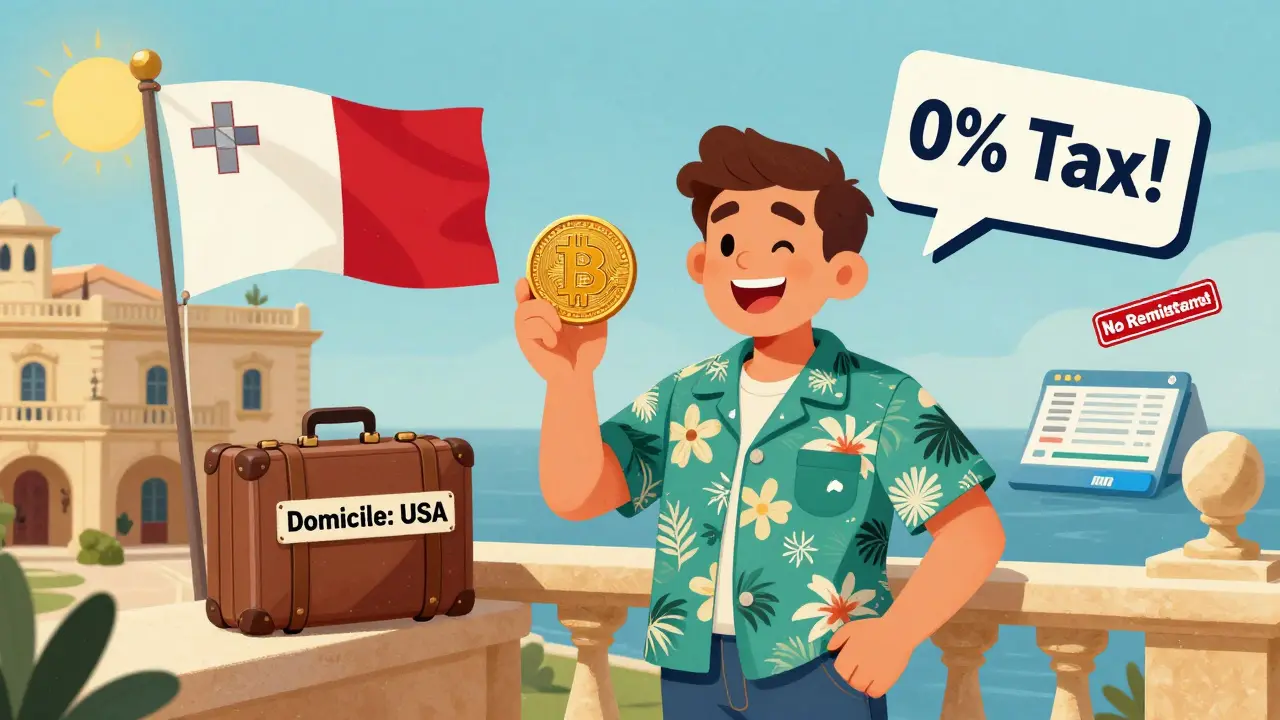
Malta doesn’t just allow cryptocurrency-it actively invites it. While most countries scramble to tax every trade, transfer, and staking reward, Malta has built a system where you can legally pay 0% tax on crypto gains. Not through loopholes. Not through secrecy. Through a legal residency structure that’s been around for decades and now perfectly fits digital asset holders.
How Malta Lets You Pay 0% on Crypto Gains
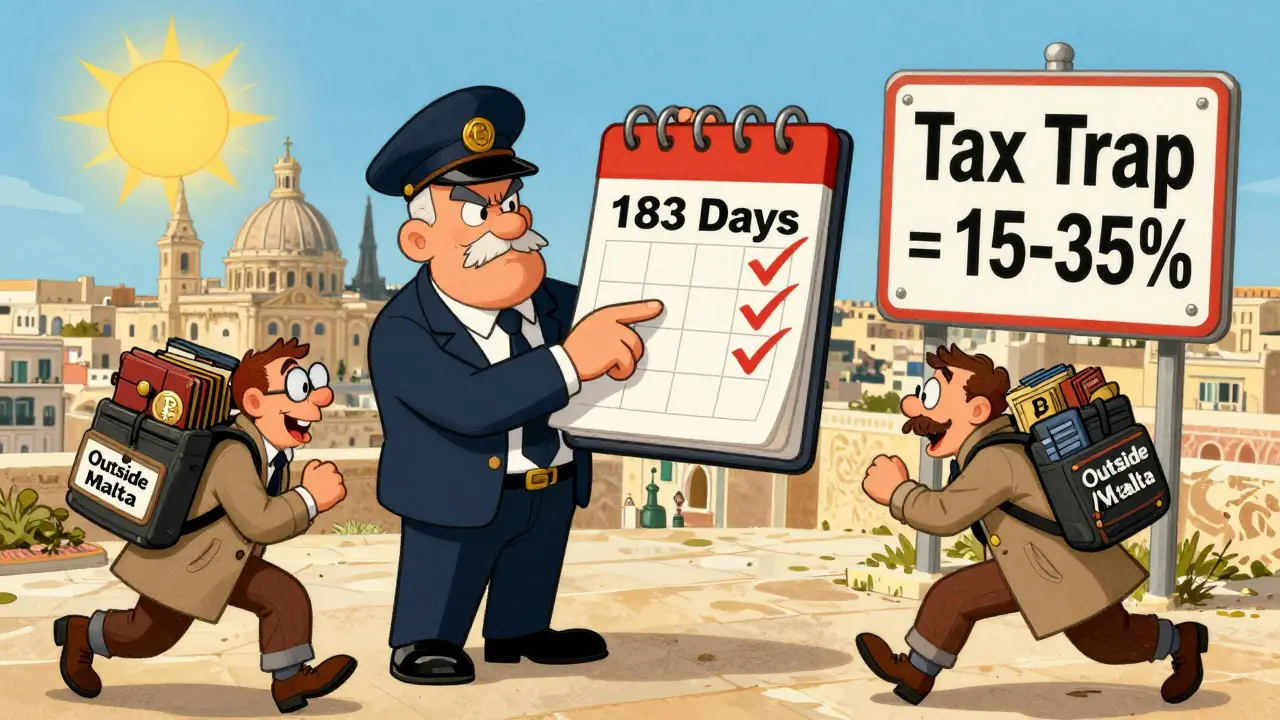
The secret isn’t hidden in a blockchain protocol. It’s in the tax code. Malta doesn’t tax capital gains on investments-crypto or stocks-if you’re not a tax resident. But here’s the twist: you can become a tax resident and still pay 0% on your crypto profits. How? By using the non-domiciled (non-dom) status. To qualify, you need three things:- Live in Malta for at least 183 days a year
- Keep your legal domicile (permanent home) outside Malta
- Only pay tax on money you bring into Malta
Who Actually Pays Tax in Malta?
If you don’t qualify for non-dom status, Malta’s standard tax rates kick in:- 15% on income over €9,000
- 35% on income over €60,000
What About Crypto-to-Crypto Trades?
This is where things get messy-and why you need a good advisor. Malta doesn’t have a clear law saying whether swapping Bitcoin for Ethereum is a taxable event. In many countries, that’s treated as a sale and trigger for capital gains. In Malta, it’s in a gray zone. The government has hinted at clarifying this in 2025, but as of now, there’s no official rule. Some tax professionals advise treating crypto-to-crypto trades as non-taxable unless you convert to fiat. Others say you should track every swap like a sale, just in case. The safe path? Keep detailed records of every transaction, including timestamps, values in EUR at the time of trade, and wallet addresses. If the tax office ever asks, you’ll have proof.How to Become a Tax Resident in Malta
You can’t just show up and claim 0% tax. You need legal residency. There are two main paths:- Rent a property: Minimum €8,750 per year in rent, plus administrative fees
- Buy a property: Minimum €220,000 purchase price, plus fees
What You Can Deduct
Malta doesn’t just give you a tax break-it helps you reduce your burden even further:- Deductions for startup costs if you’re launching a crypto business
- Research and development credits for blockchain tech
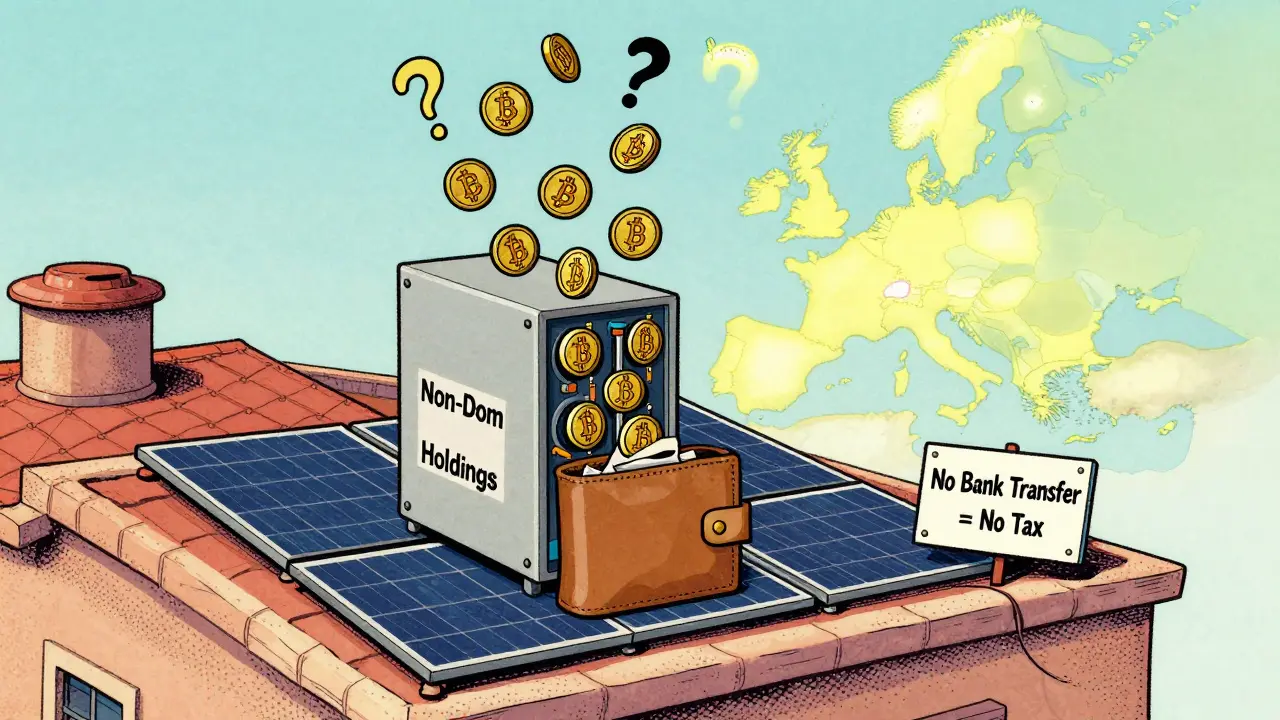
- Investment incentives for renewable energy (use solar to power your mining rig and get a break)
- Double taxation treaties with over 70 countries so you’re not taxed twice
Malta vs. Other Crypto Havens
People compare Malta to Portugal, Dubai, and Switzerland. Here’s how it stacks up:| Location | Crypto Capital Gains Tax | Residency Requirement | EU Access | Banking Ease |
|---|---|---|---|---|
| Malta | 0% if non-dom + no remittance | 183 days/year | Yes | Good |
| Portugal | 0% (until 2024, now restricted) | 183 days/year | Yes | Harder for crypto |
| Dubai | 0% | None | No | Improving |
| Switzerland | Varies by canton (0-24%) | Varies | Yes | Excellent |
The Hidden Costs
Don’t be fooled by YouTube videos that say, “Move to Malta and pay nothing.” It’s not that simple. The real cost isn’t just the rent or property price. It’s:- €5,000-€15,000 in legal and advisory fees to set up correctly
- Annual compliance costs for tax filings and reporting
- Time. You have to be there. 183 days. No skipping winters.
- Opportunity cost. You’re giving up your life elsewhere.
What You Must Do to Stay Safe
If you’re serious about using Malta’s system:- Get a tax advisor who specializes in crypto and Maltese law-not a general accountant
- Keep all transaction records: wallet addresses, dates, EUR values, trade IDs
- Never transfer crypto profits into Malta unless you’re ready to pay tax on them
- Use a non-Maltese bank for holding your crypto proceeds
- Document your domicile (e.g., property ownership, family ties, voter registration) outside Malta
- Plan your travel. 183 days isn’t a suggestion. It’s a requirement.
What’s Coming in 2026
Malta is preparing for more crypto businesses to arrive. The government is expected to:- Clarify crypto-to-crypto trade rules
- Introduce tax breaks for long-term crypto holders (hold 5+ years, pay 0% even if remitted)
- Expand support for DAOs and tokenized assets
- Strengthen CARF compliance (automatic reporting to other countries)
Final Thought
Malta isn’t a magic bullet. It’s a tool. A powerful one. But like any tool, it only works if you know how to use it. If you’re a long-term holder who never cashes out, it’s perfect. If you’re a trader who needs to move money around, it’s risky. If you want to live in Europe, run a crypto business, and pay zero tax on your gains-Malta is one of the few places on Earth that lets you do it legally. But don’t move there because you saw a TikTok video. Move there because you’ve read the rules, hired the right people, and are ready to live by them.Can I pay 0% tax on crypto in Malta if I’m not a resident?
No. To benefit from Malta’s 0% crypto tax rate, you must be a tax resident. Non-residents are taxed on Maltese-sourced income, and crypto gains from trading or mining done in Malta would be taxable. The 0% rate only applies to non-domiciled residents who keep their profits outside the country.
Is crypto trading taxed in Malta?
It depends. If you’re a casual investor holding crypto long-term and not remitting gains to Malta, you pay 0%. But if you trade frequently and are classified as a professional trader, your profits are treated as business income and taxed at 15-35%. Non-domiciled residents can avoid this tax by not bringing the profits into Malta.
Do I need to report crypto to the Maltese tax office?
Yes. All tax residents must file an annual tax return. Even if you pay 0% because you didn’t remit funds, you still need to declare your crypto holdings and transactions. Failure to report can trigger audits, penalties, or loss of non-dom status.
Are airdrops and ICOs taxable in Malta?
Yes. Receiving crypto through an airdrop or ICO is considered income when you gain control of the tokens. The value in EUR at the time of receipt is taxable as income. However, if you’re a non-dom and don’t remit the value to Malta, you won’t pay tax on it.
Can I use a crypto wallet outside Malta to avoid tax?
Yes. Holding your crypto in wallets outside Malta, and never transferring proceeds into Maltese bank accounts, is the key to paying 0% tax. The location of your wallet matters less than where the money flows. As long as your gains stay outside Malta’s financial system, they’re not taxable under the remittance basis.
What happens if I stay in Malta less than 183 days?
You lose your tax residency status. The Maltese tax authority uses flight records, utility bills, and banking activity to verify physical presence. If you’re found to be under 183 days, you’ll be taxed as a non-resident on any crypto gains generated in Malta, and you may face penalties for false claims of residency.
Is Malta’s crypto tax system at risk of changing?
It’s stable for now. Malta is aligned with EU regulations like MiCA and CARF, which require transparency, not higher taxes. The government has shown no interest in eliminating the non-dom system-it’s a key part of their economic strategy. Changes are more likely to clarify rules (like crypto swaps) than remove benefits.
steven sun
January 20, 2026 AT 07:45David Zinger
January 20, 2026 AT 22:57Mark Estareja
January 21, 2026 AT 21:30Chidimma Catherine
January 22, 2026 AT 02:37Melissa Contreras López
January 23, 2026 AT 22:11Deepu Verma
January 25, 2026 AT 21:54Abdulahi Oluwasegun Fagbayi
January 27, 2026 AT 13:32Taylor Mills
January 28, 2026 AT 23:47carol johnson
January 30, 2026 AT 17:29MICHELLE REICHARD
January 31, 2026 AT 11:25Dave Ellender
January 31, 2026 AT 12:52Roshmi Chatterjee
January 31, 2026 AT 15:50Adam Fularz
February 2, 2026 AT 06:17katie gibson
February 2, 2026 AT 07:18Nathan Drake
February 3, 2026 AT 17:01Brenda Platt
February 4, 2026 AT 02:34Linda Prehn
February 4, 2026 AT 13:39Barbara Rousseau-Osborn
February 5, 2026 AT 19:30Clark Dilworth
February 6, 2026 AT 03:35Arnaud Landry
February 7, 2026 AT 17:50Matthew Kelly
February 8, 2026 AT 18:54Athena Mantle
February 9, 2026 AT 11:35Adam Lewkovitz
February 10, 2026 AT 08:08