HIPAA Compliance and Blockchain: How Secure Health Data Works on Distributed Ledgers
 Mar, 23 2026
Healthcare data breaches cost the U.S. industry over $10 billion annually. Every year, millions of patient records are exposed-not because of careless employees, but because old systems were never built to handle modern threats. Enter blockchain: a technology that doesn’t just store data, but proves it hasn’t been touched. The question isn’t whether blockchain can help with HIPAA compliance-it’s whether you’re using it the right way. Many organizations jump into blockchain thinking it’s a magic shield. It’s not. Used wrong, it can make compliance harder. Used right, it becomes your strongest defense.
What HIPAA Actually Demands
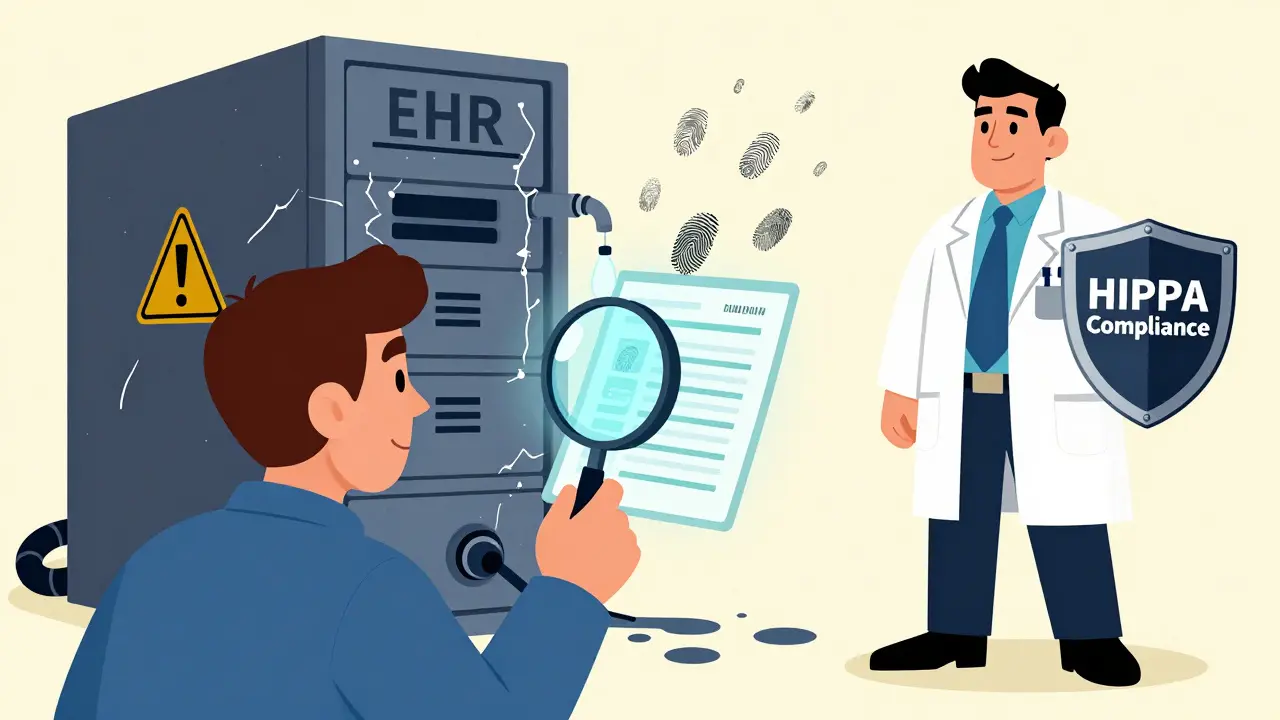
HIPAA isn’t a checklist. It’s a set of rules built around three core pillars: confidentiality, integrity, and availability of Protected Health Information (PHI). That means every name, diagnosis, prescription, or insurance number tied to a person must be protected. The law doesn’t say “use encryption.” It says: “Do whatever it takes to make sure only the right people see the right data, and that no one alters it without a trace.”That’s where most healthcare systems fail. Electronic Health Records (EHRs) are often stored in centralized databases. One breach, one insider with bad intentions, one misconfigured server-and thousands of records are exposed. HIPAA requires audit logs, access controls, and data encryption. But in traditional systems, logs can be deleted. Access rights can be overridden. Encryption keys can be stolen. Blockchain fixes none of that… unless you design it correctly.
Blockchain Isn’t a Database
Most people think blockchain is just a fancy database. It’s not. A blockchain doesn’t store your medical history. It stores proof that a change happened. Think of it like a digital notary. When a doctor updates a patient’s medication, the system doesn’t save the full record on the chain. Instead, it creates a cryptographic hash-a unique digital fingerprint-of that change and records it on the blockchain. The real data? Still safely locked in a HIPAA-compliant cloud server.This hybrid model is the only way to stay compliant. Storing raw PHI on a public blockchain? That’s a violation. Even if encrypted, the blockchain’s transparency means anyone with access to the chain can see patterns, timing, and metadata. HIPAA requires encryption at rest and in transit. That means data must be unreadable before it leaves your secure server. Blockchain doesn’t replace encryption-it depends on it.
How Blockchain Meets HIPAA Requirements
Here’s where blockchain actually shines:
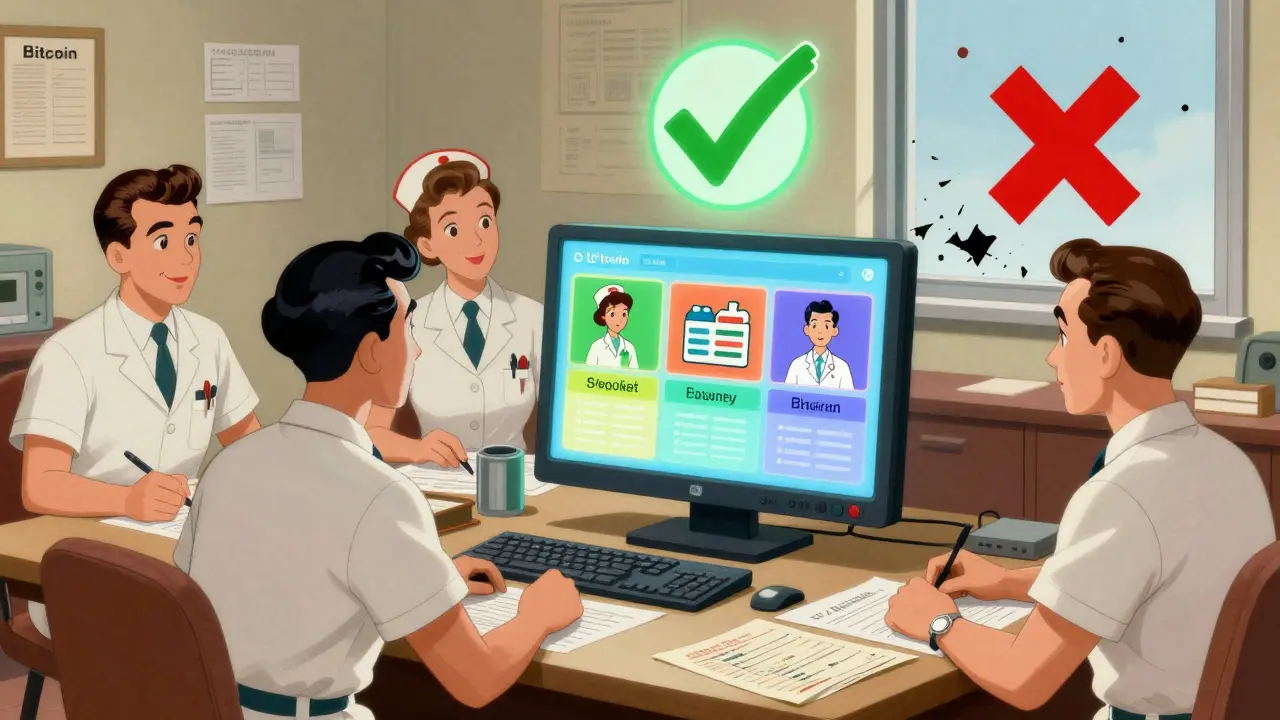
- Access Control: Permissioned blockchains (like Hyperledger Fabric) let you define exactly who can view or modify data. A nurse can see vital signs. A pharmacist can see prescriptions. A billing clerk sees insurance codes-but nothing else. Role-based access isn’t just possible-it’s built into the protocol.
- Data Integrity: Every change to a patient’s record gets hashed and chained to the previous one. If someone tries to alter a record, the hash changes. The system instantly flags it. No manual audits needed. The chain itself proves tampering didn’t happen.
- Audit Trails: Every action on the blockchain is time-stamped and signed. Who accessed the record? When? From which device? All recorded forever. No more “I didn’t know” excuses. Auditors get a complete, unchangeable log.
- Minimum Necessary Rule: HIPAA says you should only share what’s needed. Blockchain lets you build smart contracts that automatically limit access. If a researcher needs data for a study, the contract only releases anonymized subsets. No manual approvals. No over-sharing.
These aren’t theoretical. A 2025 study by the Journal of Medical Informatics showed hospitals using blockchain-based audit logs reduced unauthorized access incidents by 78% in 18 months. The reason? No one could edit logs. No one could delete them. The system told the truth-every time.
Real-World Use Cases That Work
Let’s look at what’s already working:
- Pharmaceutical Supply Chains: A drug moves from manufacturer to pharmacy. Each transfer is recorded on the blockchain. If counterfeit pills enter the system, the chain shows exactly where they slipped in. The FDA and pharmacies can trace every step.
- Claims Processing: Insurance claims often get delayed because of manual errors or fraud. Smart contracts auto-validate claims against patient records. If the diagnosis matches the treatment, payment triggers automatically. Fraud drops because every transaction is visible and immutable.
- Consent Management: Patients can grant or revoke access to their records using blockchain-based consent contracts. Want your therapist to see your mental health history? A one-time digital signature locks it in. Want to revoke it? The contract self-executes. No paperwork. No delays.
- Clinical Trials: Trial data is often manipulated. With blockchain, every measurement, lab result, and patient response is hashed and recorded as it happens. Independent auditors can verify results without touching raw data. Fraud becomes nearly impossible.
The Big Mistakes Everyone Makes
Too many healthcare tech teams think: “We’ll just put all the records on a blockchain.” That’s a disaster. Here’s what goes wrong:
- Storing PHI on-chain: Even encrypted, it’s risky. Blockchains are public. If a decryption key is stolen, you’ve exposed everything. HIPAA requires encryption and strict access control. On-chain PHI breaks both.
- Using public blockchains: Bitcoin and Ethereum are open. Anyone can join. HIPAA requires you to know who accesses data. Public chains don’t let you control that.
- Ignoring Business Associate Agreements (BAAs): If you hire a blockchain vendor to manage your system, they’re now a business associate under HIPAA. They must sign a BAA. If they don’t? You’re liable.
- Forgetting backup plans: Blockchain is immutable. That’s great for security-but terrible if you accidentally delete a key. You need offline, encrypted backups. HIPAA requires data availability. A blockchain with no recovery plan? That’s a compliance failure.
What You Need to Do Right Now
If you’re considering blockchain for HIPAA compliance, here’s your action list:
- Use a permissioned blockchain-never public. Hyperledger Fabric or Ethereum Private Network are common choices.
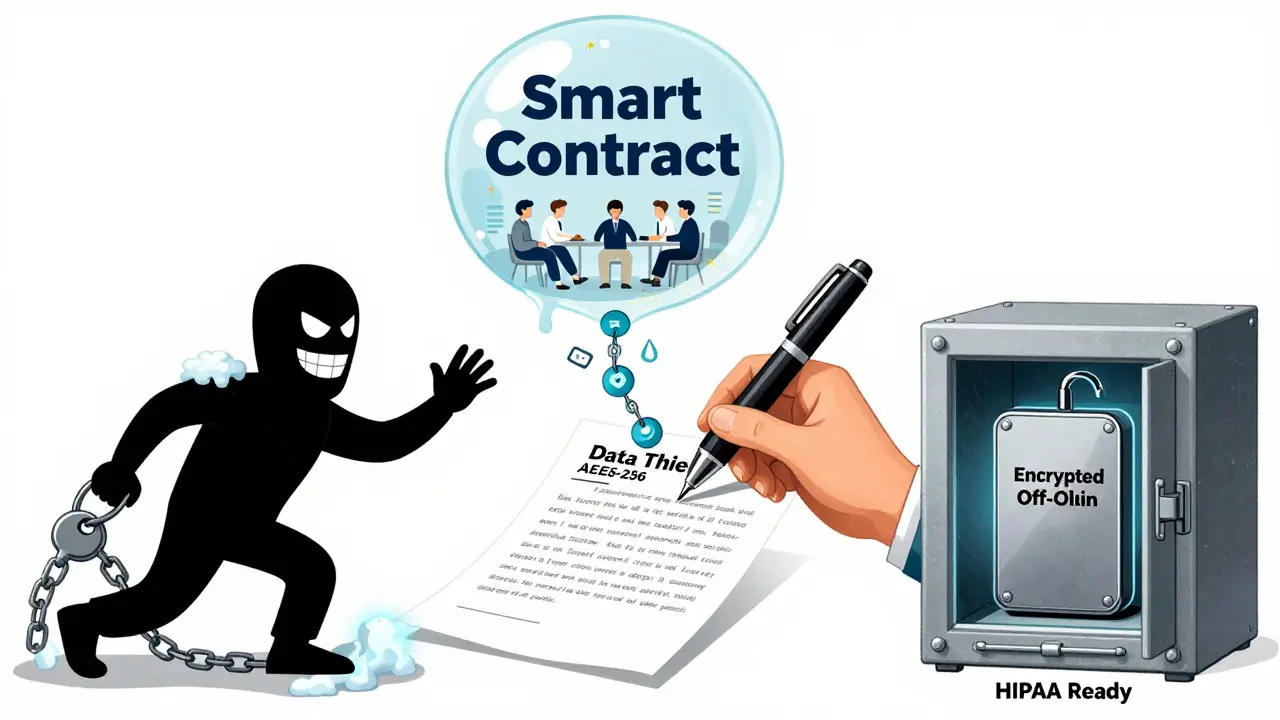
- Store all PHI off-chain. Use AWS, Azure, or Google Cloud with HIPAA-certified infrastructure. Only record hashes on the blockchain.
- Encrypt everything-data at rest, in transit, and during processing. Use AES-256. Rotate keys every 90 days.
- Implement role-based access with blockchain smart contracts. No one gets more than they need.
- Sign BAAs with every vendor who touches PHI-even if they’re just managing the blockchain.
- Conduct quarterly audits with a third-party HIPAA expert. Don’t trust internal checks.
- Build a disaster recovery plan that includes encrypted backups of keys and off-chain data.
The Bottom Line
Blockchain doesn’t make you HIPAA compliant. It just gives you tools to get there faster and safer. The real win isn’t technology-it’s trust. Patients trust that their data won’t be sold or leaked. Providers trust that records haven’t been altered. Regulators trust that audits are real. Blockchain makes all of that possible.
But it’s not plug-and-play. It’s architecture. It’s policy. It’s discipline. The organizations that succeed aren’t the ones with the fanciest tech. They’re the ones who understood HIPAA first-and built the blockchain around it.
Can blockchain replace HIPAA compliance?
No. Blockchain is a tool, not a legal substitute. HIPAA compliance requires policies, training, audits, and signed agreements. Blockchain can help you meet those requirements, but it doesn’t erase them. You still need a Privacy Officer, a Security Officer, and documented procedures.
Is it legal to store PHI on a blockchain?
Only if it’s encrypted and stored off-chain. Storing unencrypted PHI on any blockchain-even a private one-is a direct HIPAA violation. The blockchain should only hold cryptographic hashes, timestamps, and access logs. The actual patient data must live in a HIPAA-certified system with encryption, access controls, and audit trails.
What’s the difference between public and permissioned blockchains for healthcare?
Public blockchains (like Bitcoin) are open to anyone. Anyone can read or write data. That violates HIPAA’s access control rules. Permissioned blockchains (like Hyperledger Fabric) only allow pre-approved users to join. You control who can see data, who can write to the chain, and what roles they have. That’s the only type acceptable for PHI handling.
Do blockchain systems need a Business Associate Agreement (BAA)?
Yes-if the blockchain provider accesses, processes, or stores any PHI on your behalf. That includes cloud hosts, developers, auditors, or anyone managing your blockchain infrastructure. If they touch PHI, they’re a business associate under HIPAA, and you must have a signed BAA. Without it, you’re liable for any breach.
Can blockchain prevent all data breaches in healthcare?
No. Blockchain prevents tampering and provides strong audit trails, but it doesn’t stop phishing, insider threats, or misconfigured servers. If an employee is tricked into giving away their login, the attacker can still access the off-chain database. Blockchain reduces risk, but it’s not a full shield. It works best when combined with strong cybersecurity practices like MFA, training, and network segmentation.
Joshua T Berglan
March 24, 2026 AT 12:32This is fire 🔥 I’ve seen so many orgs throw blockchain at HIPAA like it’s a magic wand. Nope. It’s a tool. Like a hammer. You don’t use a hammer to screw in a lightbulb. You use it right, and it builds something solid. The hash-on-chain, data-off-chain model? That’s the only way to go. Been there, done that. No more ‘oops we got breached’ emails. Just clean logs and trust. 🙌
Kevin Da silva
March 25, 2026 AT 03:20Hashes on chain. Data encrypted off. BAAs signed. Done. No fluff. Just the rules.
Andrew Midwood
March 26, 2026 AT 17:21So yeah, blockchain ain’t a database. That’s the first thing people miss. It’s more like a tamper-proof receipt system. Like when you get a digital receipt for your Uber ride - but for your medical records. The actual data? Still in the cloud, locked down. The blockchain just says ‘yep, this change happened, and no one messed with it.’ Smart. Real smart. And yeah, permissioned chains only. Public ones? Nah. Don’t even go there.
Kayla Thompson
March 27, 2026 AT 06:03Let’s be real - this whole blockchain-in-healthcare thing is just VC-funded hype wrapped in crypto jargon. You think a hash solves human error? A nurse clicks the wrong button, the data’s still gone. You still need training, policies, and actual people who care. Blockchain doesn’t fix lazy admins or bad HR practices. It just gives you a fancy ledger to point at while the breach happens.
Brijendra Kumar
March 27, 2026 AT 20:47Anyone who thinks blockchain is the silver bullet is either delusional or selling something. You don’t get compliance by tech alone. You get it by discipline. And most healthcare IT teams? They can’t even spell ‘audit trail’ without autocorrect fixing it. Blockchain won’t save them. It’ll just make their mistakes immutable. Which is terrifying. Also, why are we even talking about this? HIPAA’s outdated. We need GDPR-style global standards. Not blockchain fairy tales.
kavya barikar
March 28, 2026 AT 12:29Clarity is key. The system must protect data without complexity. Simplicity ensures compliance. Blockchain helps when used correctly. Not as a solution. As a support.
Andrea Zaszczynski
March 29, 2026 AT 17:57I work in a hospital. We tried this. The blockchain team didn’t even know what a BAA was. We spent 6 months building a system that didn’t talk to our EHR. Now we have two systems. One that works. One that’s ‘innovative.’ My boss called it ‘a blockchain tattoo on a dead horse.’ I’m not joking. And now we’re paying for both. So yeah. Just… don’t.
Cordany Harper
March 29, 2026 AT 18:55Been on both sides of this. I used to think blockchain was overhyped. Then I saw a hospital in rural Kentucky cut down audit time from 3 weeks to 3 hours. No manual logs. No deleted entries. Just a chain. The nurses loved it. No more ‘I didn’t know I was supposed to log that.’ The tech didn’t change their behavior - the transparency did. That’s the win. Not the tech. The culture shift. That’s what matters.
DarShawn Owens
March 31, 2026 AT 17:55This is actually really well explained. I’ve been skeptical too, but the part about smart contracts limiting access? That’s genius. Like, imagine a researcher can only pull anonymized data for a study - no names, no dates, no locations. Just stats. And the patient can revoke it with a tap. That’s empowerment. That’s trust. We need more of this. Not less.
Andy Green
April 2, 2026 AT 12:53Oh please. Another blockchain evangelist. Let’s be honest - the only people who benefit from this are consultants charging $800/hour to ‘implement’ it. Real hospitals? They’re still using fax machines. And you think they’re going to adopt a permissioned blockchain? Please. This is tech theater. The real problem? Underfunded IT. Not encryption. Not logs. Not hashes. People. And money. Blockchain doesn’t fix that. It just makes you look like you’re trying.
JOHN NGEH
April 2, 2026 AT 14:57Interesting take. I wonder - what happens when a patient requests their data be erased under GDPR? Blockchain’s immutable. Can you really delete a hash if the underlying data is gone? Or do you just mark it as ‘revoked’? That’s a legal gray zone. Not sure if anyone’s solved this yet.
Jenni Moss
April 2, 2026 AT 22:19Y’ALL. This is the future. 🤩 Imagine your grandma’s medical records - secure, never lost, never altered, and she can revoke access with a text. No more ‘who touched my chart?’ drama. No more ‘I didn’t know I had access.’ This isn’t just tech. It’s dignity. It’s peace of mind. I’m crying. Seriously. I’m getting emotional. We need this. NOW.
vu phung
April 3, 2026 AT 20:41Hashing PHI metadata on-chain? Yes. Storing raw data in AWS HIPAA-compliant buckets? Yes. Automating access via smart contracts? Yes. But here’s the kicker - you still need RBAC, MFA, and quarterly penetration tests. Blockchain doesn’t replace security hygiene. It enhances it. Think of it like seatbelts. They don’t prevent crashes. But they make surviving one way more likely.
Lorna Gornik
April 5, 2026 AT 18:34Love this breakdown 😊 I’m a nurse in Scotland and we’re starting to pilot something similar. The best part? Patients can see who accessed their records. Like a Netflix watch history… but for their diabetes logs. They feel in control. That’s huge. Also, using emojis in audit logs? No. Just no. But the tech? Yes. 100% yes.
Ananya Sharma
April 7, 2026 AT 03:30Blockchain helps. But training matters more. A system is only as strong as the person using it.
Florence Pardo
April 7, 2026 AT 18:49I’ve been in healthcare IT for 18 years. I’ve seen every trend: cloud, AI, AI-powered blockchain-powered quantum encryption (yes, that was a real pitch deck). This one? This one might actually stick. Why? Because it doesn’t promise to solve everything. It just solves one thing: proving that no one messed with the data. That’s huge. For audits. For lawsuits. For patient trust. I’ve seen too many cases where someone says ‘I didn’t change it’ and there’s no way to prove otherwise. This fixes that. It’s not flashy. But it’s necessary.
Dheeraj Singh
April 8, 2026 AT 12:39Blockchain? More like blockchaos. You think a hash stops insider threats? LOL. The guy who writes the smart contract? He can backdoor it. The cloud provider? They can leak the keys. The ‘immutable’ log? Nah. They just hide it in a side chain. Real compliance? It’s paperwork. It’s audits. It’s HR training. Not crypto. Stop pretending tech fixes human failure.
Mike Yobra
April 8, 2026 AT 20:19So we’re now outsourcing our legal obligations to a distributed ledger because…? Because it’s cool? Because we read a Medium post? The fact that you need a ‘business associate agreement’ for your blockchain vendor says everything. You’re not building trust. You’re just adding another layer of contracts. Meanwhile, the nurse still can’t log in because her password expired. And we’re all just… applauding the blockchain?
Mansoor ahamed
April 9, 2026 AT 14:28From India - we’re doing this with dialysis centers. Patient records, consent logs, treatment history - all hashed on private chain. Off-chain data encrypted. No more fraud. No more lost files. Doctors love it. Patients love it. Cost? Less than paper. Simple. Effective. No hype. Just work.
Domenic Dawson
April 10, 2026 AT 02:54Biggest win? Consent management. Imagine being able to say ‘only my oncologist sees this’ - and it’s automatic. No forms. No calls. No delays. That’s not just compliance. That’s dignity. I’ve been in cancer care. I’ve seen families wait weeks just to share records. This changes lives. Not because it’s blockchain. Because it’s human.
Pradip Solanki
April 10, 2026 AT 03:19Permissioned blockchain? That’s just a glorified database with extra steps. You’re still trusting a vendor. You’re still relying on keys. You’re still vulnerable to insider threats. You think a hash stops someone with admin access? Please. Real security is about people. Not protocols. And HIPAA? It’s already broken. We need radical reform. Not blockchain cosplay.
Brad Zenner
April 10, 2026 AT 05:58Good summary. The key is: blockchain doesn’t replace encryption. It reinforces it. And audit trails? Game changer. I’ve audited 3 hospitals. Two had logs that were ‘accidentally’ deleted. One had a chain. No questions. No excuses. Just proof. That’s worth more than any policy.
Tony Phillips
April 11, 2026 AT 15:39This is the kind of stuff that gives me hope. Not the flashy tech. The quiet wins. A nurse logs in. Sees exactly what she’s allowed to see. No extra data. No confusion. A pharmacist gets a smart contract alert - ‘this prescription matches the diagnosis.’ No manual check. No delay. Just smooth. Safe. Quietly perfect. That’s the real victory.
Abhishek Thakur
April 12, 2026 AT 11:08Hash on chain. Data encrypted. BAAs signed. That’s it. No need for complex explanations. Just follow the rules.
Jackie Crusenberry
April 13, 2026 AT 19:32So… we’re using blockchain to prove that someone didn’t change a record… while we’re still letting people delete the record entirely? Sounds like a very expensive way to pretend we’re safe.
Joshua T Berglan
April 15, 2026 AT 13:46^ This. I’ve seen it. The system logs a change. But if the off-chain data gets wiped? The hash is just a ghost. You need backups. Like, real encrypted backups. Not ‘we’ll just restore from last week’ nonsense. That’s the part nobody talks about.