How Bitcoin Enables Imports in Iran Amid Sanctions
 Mar, 6 2026
When international sanctions cut Iran off from the global banking system, the country didn’t just sit back-it built its own financial pipeline. And at the center of that pipeline? Bitcoin.
It’s not a rumor. It’s not a theoretical experiment. Since 2020, Iran has been quietly using Bitcoin and other cryptocurrencies to import goods that would otherwise be impossible to buy: medical equipment, spare parts for aircraft, industrial machinery, even raw materials for pharmaceuticals. The U.S. and EU froze Iranian banks. So Iran turned to blockchain.
How It Actually Works
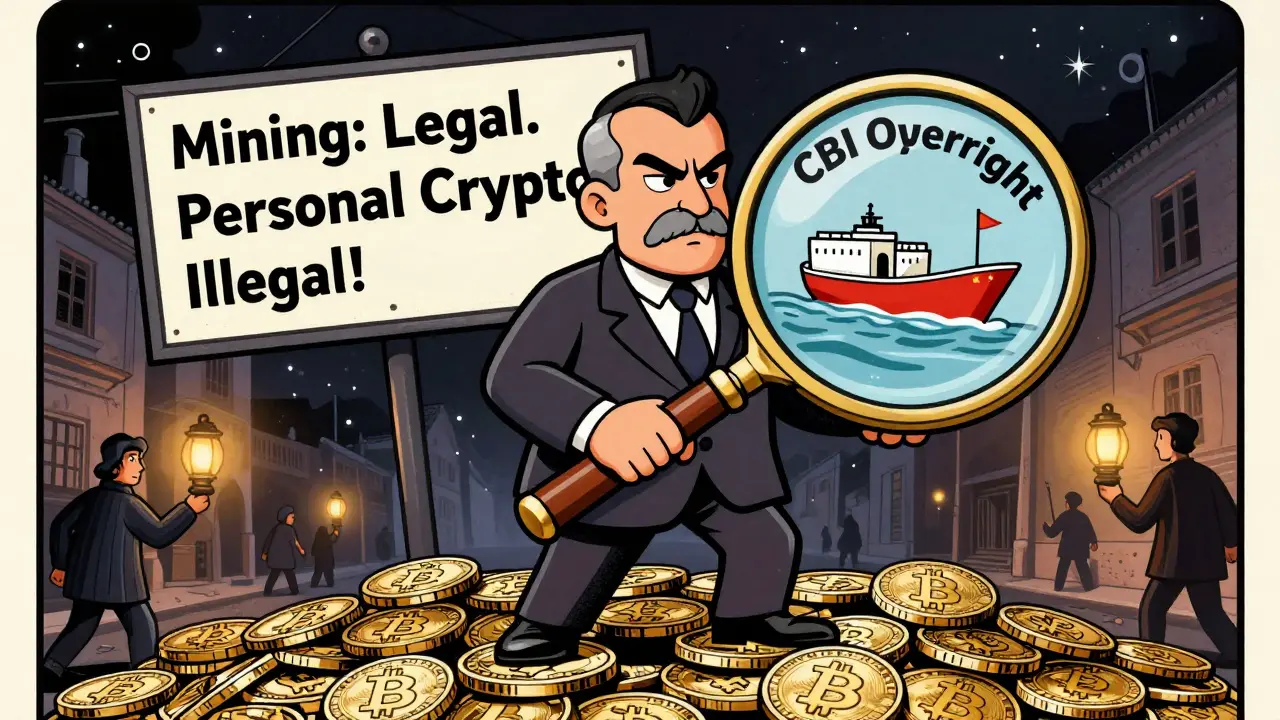
Here’s the twist: Iran doesn’t let people use Bitcoin to buy coffee or pay for Netflix. The Central Bank of Iran (CBI) still bans crypto for everyday payments. But for imports? That’s a different story.
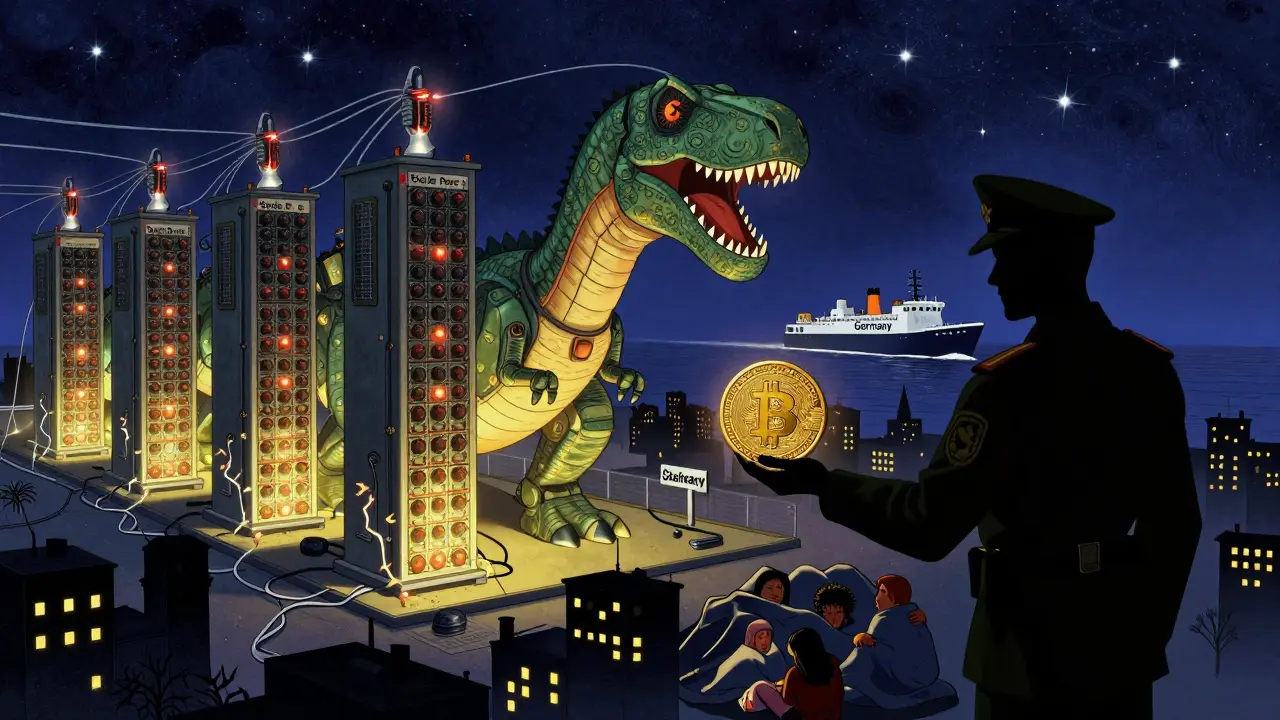
The system works like this: Iranian mining companies, licensed and monitored by the government, produce Bitcoin using cheap electricity-sometimes as low as 1 cent per kWh. These aren’t backyard operations. These are massive industrial farms, some over 100 megawatts, packed with ASIC miners. The Bitcoin they mine isn’t sold to locals. It’s handed over to state-approved pools, then exported under CBI supervision to foreign trading partners.
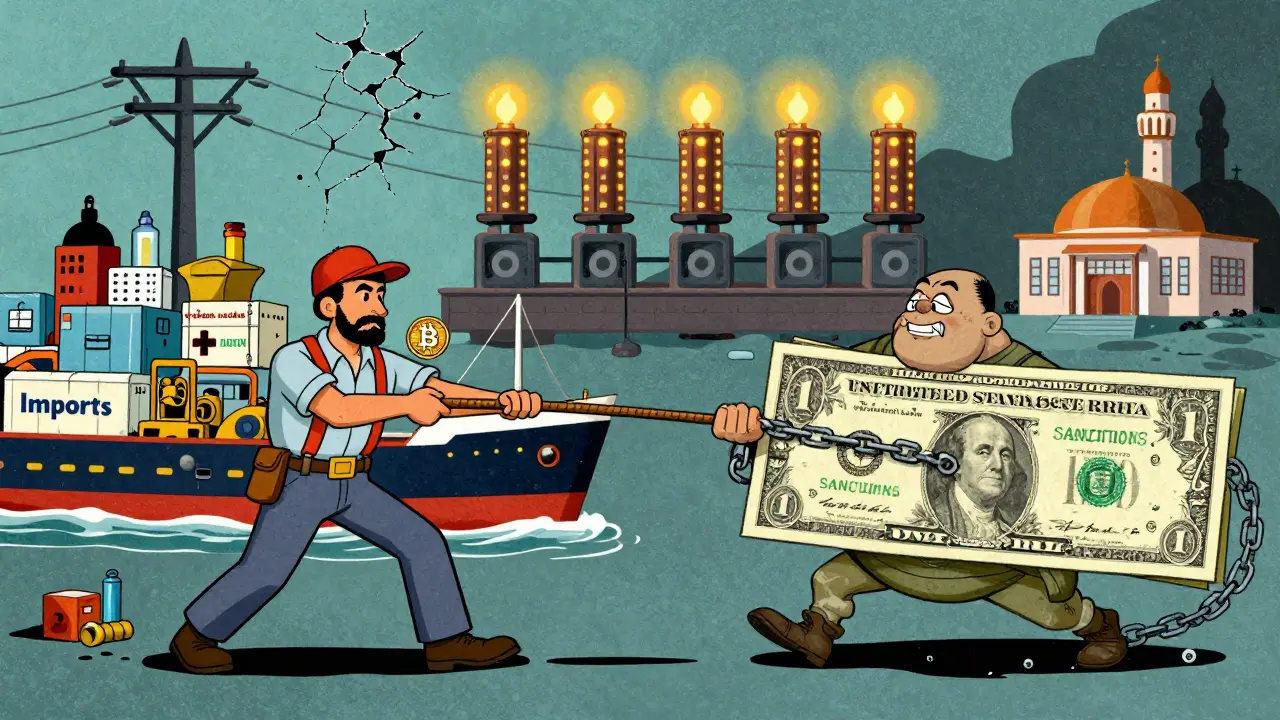
That exported Bitcoin becomes the currency for imports. A company in Iran needs a $5 million machine from Germany? Instead of waiting for a SWIFT transfer that’ll get blocked, they send Bitcoin to a Russian or Chinese supplier who accepts it. The supplier cashes out on their end. The machine arrives. The trade completes. No U.S. dollar involved.
The first confirmed transaction like this happened in August 2023: a $10 million import order. Since then, over $4.18 billion worth of crypto has left Iran in 2024 alone-a 70% jump from the year before.
Who’s Running the Mines?
You might think this is a grassroots movement. It’s not. The biggest mining operations are tied to Iran’s most powerful institutions.
The Islamic Revolutionary Guard Corps (IRGC) controls at least a dozen major mining facilities. One 175-megawatt farm in Rafsanjan, Kerman Province, is officially a joint venture with Chinese investors-but everyone knows who’s really pulling the strings. These farms don’t pay electricity bills. They’re fed power directly from state grids, often at the cost of blackouts in nearby cities.
Even religious foundations like Astan Quds Razavi, which manages one of Islam’s holiest shrines, run massive mining operations. Investigations show they divert grid power meant for hospitals and schools to keep their rigs running 24/7. The government calls it "industrial activity." Critics call it theft on a national scale.
By 2025, Iran was mining nearly 5% of all new Bitcoin globally. That’s more than the entire Netherlands. And it’s not because Iranians love tech-it’s because Bitcoin is now the country’s most reliable export.
The Regulatory Tightrope
Iran’s government walks a dangerous line. On one side: economic survival. On the other: social unrest.
They legalized mining in 2018 to generate hard currency. Then, in 2021, the power grid collapsed under the strain. Cities went dark for days. Factories shut down. The government banned mining temporarily-but only for small operators. The big ones? They kept running. The Ministry of Energy quietly reallocated power quotas. The CBI approved more licenses. By 2023, they reversed the ban entirely-for mining, not payments.
Today, there are over 10,000 licensed mining farms and 90 state-approved exchanges. But here’s the catch: all crypto flows go through the CBI. No direct peer-to-peer trades. No decentralized wallets for imports. Every transaction is logged, monitored, and approved. It’s not freedom-it’s control. The state isn’t giving up power. It’s using crypto to keep it.
And they’re serious about enforcement. In 2021, over 300 illegal miners were arrested for using subsidized home electricity. In 2024, the CBI shut down rial-based payment gateways for exchanges. Now, every crypto trade must go through a licensed intermediary. No exceptions.
Why Bitcoin? Not Ethereum. Not Solana.
Why Bitcoin? Because it’s the only digital asset with global recognition as money.
Ethereum? Too slow. Too volatile. Too tied to U.S. financial infrastructure. Solana? Too new. Too untested. Bitcoin? It’s the original. It’s decentralized. It’s liquid. And most importantly-it’s not controlled by any government.
Iran’s partners? Russia, China, Turkey, Venezuela, even parts of Southeast Asia. These countries also face sanctions or currency instability. They don’t trust the dollar. They don’t trust SWIFT. But they trust Bitcoin. So Iran became their bridge.
Iran even signed a formal crypto cooperation agreement with Russia in 2018. Two months later, they started negotiating with seven other countries-including Germany and Switzerland-to use crypto for trade. This wasn’t desperation. It was strategy.
The Hidden Cost
There’s a price. And it’s being paid by ordinary Iranians.
Between 2021 and 2025, the country lost over 15,000 gigawatt-hours of electricity to mining. That’s enough to power Tehran for six months. In cities like Mashhad and Isfahan, families live without power for 12 hours a day. Hospitals run on backup generators. Factories can’t meet production quotas.
And while the state earns billions from mining exports, inflation still hovers near 50%. The rial is worth less than 10% of what it was in 2018. The crypto revenue doesn’t fix the economy-it just keeps it from collapsing.
There’s no tax on Bitcoin profits. No capital gains. No reporting. The government doesn’t need to tax it. It owns the mines. It controls the flow. It takes its cut before the coins even leave the country.
Is This Sustainable?
Maybe. But only if Iran solves its power crisis.
Right now, the system is held together by political power, not engineering. The mining farms run on subsidized or stolen electricity. The grid is stretched beyond capacity. Renewable energy? Almost non-existent. Iran has the sun. It has the wind. But it hasn’t built a single large-scale solar farm to power its miners.
There’s also the risk of international backlash. The U.S. Treasury has flagged Iran’s crypto trade as a sanctions violation. European banks are tightening compliance. And if Bitcoin’s price crashes? The whole system could unravel overnight.
Still, Iran won’t stop. It’s too valuable. In 2025, analysts estimate crypto mining will generate $1.9 billion in revenue for the country. That’s more than oil exports to Europe. It’s the new lifeline.
What This Means for the Rest of the World
Iran isn’t the first country to use crypto to bypass sanctions. Venezuela tried. North Korea tried. But Iran is the first to build a full-scale, state-run system around it.
This isn’t about tech. It’s about power. When traditional finance shuts you out, you build your own. And Bitcoin? It’s the only tool that lets you do it without asking permission.
Other sanctioned nations are watching. Belarus. Zimbabwe. Myanmar. Cuba. They’re all asking: Can we do this too?
The answer might be yes. But Iran’s model shows it’s not magic. It’s hard. It’s dirty. It’s expensive. And it comes with a cost-paid by the people.
Can ordinary Iranians use Bitcoin to buy things from abroad?
No. The Central Bank of Iran bans personal crypto transactions. Only state-approved entities can use Bitcoin for imports. Regular citizens can’t legally buy foreign goods using crypto, even if they have it. Any attempt to bypass this risks arrest or fines.
Why doesn’t Iran just use the U.S. dollar?
International sanctions block Iranian banks from accessing the U.S. financial system. Even if Iran had dollars, it can’t move them through SWIFT or major banks. Bitcoin bypasses that entirely-it’s peer-to-peer, borderless, and outside the control of Western financial institutions.
Is Bitcoin trading legal in Iran?
Trading Bitcoin domestically is illegal. The CBI prohibits exchanges from accepting rial payments. However, mining is legal and regulated. Licensed miners can export their Bitcoin for trade purposes under strict government oversight. There’s a clear separation between mining (allowed) and personal trading (banned).
How does Iran avoid detection when using Bitcoin?
Iran doesn’t try to hide. It works through state-approved channels. All crypto imports are routed through CBI-monitored exchanges. The transactions are recorded, but they’re labeled as "industrial trade settlements," not personal transfers. This makes it harder for foreign regulators to classify them as sanctions violations.
What happens if Bitcoin’s price crashes?
A sharp drop in Bitcoin’s value would hurt Iran’s trade model. The country depends on Bitcoin’s stability as a store of value to secure imports. If prices fall 30-50%, suppliers might refuse payment, or demand more coins to compensate. Iran would need to mine even more to maintain the same import volume-putting more strain on its already overloaded power grid.
prasanna tripathy
March 6, 2026 AT 21:09Wow. I never thought about how crypto could be a lifeline under sanctions. The fact that Iran’s using mining as a state-run import system is wild. I’ve seen this in Venezuela too, but Iran’s scale? Next level. The power grid chaos is terrifying though - imagine your city going dark so a mining farm can run. Feels like progress with a price tag written in blackouts.
Megan Lutz
March 6, 2026 AT 23:40It’s not crypto that’s the hero here - it’s desperation. Bitcoin’s just the tool they picked because it’s the only one that doesn’t need permission. The real story? A government stealing electricity from hospitals to keep a digital currency running. This isn’t innovation. It’s survival with a side of moral bankruptcy.
Leah Dallaire
March 7, 2026 AT 05:31Let me guess - next they’ll claim Bitcoin is "revolutionary" for helping the people. Meanwhile, families in Mashhad are freezing because a 175MW rig is running 24/7. This isn’t financial sovereignty. It’s a state-sponsored power grab disguised as economic ingenuity. The whole thing smells like a propaganda pamphlet written by a Ministry of Energy intern.
Nick Greening
March 9, 2026 AT 03:06You all are missing the point. Bitcoin isn’t about bypassing sanctions - it’s about bypassing *control*. The US thinks it owns the global financial system? Iran just said: "Nope. We’ll mine our own money and trade with whoever wants it." This isn’t a workaround. It’s a declaration of financial independence. And honestly? I respect it.
Issack Vaid
March 10, 2026 AT 21:34Iran doesn’t "use" Bitcoin - they weaponize it. They turn a decentralized network into a state-run export pipeline. The IRGC mining farms? That’s not capitalism. That’s feudalism with ASICs. And don’t get me started on Astan Quds Razavi using holy site funds to power rigs. This isn’t economics. It’s a cult with a power grid.
Rachel Rowland
March 11, 2026 AT 21:30So let me get this straight - the government bans crypto for regular people but lets the military mine it? And calls it "industrial activity"? That’s not clever. That’s corruption with a flowchart. I’m not surprised. But I’m sad. Because this isn’t a win for tech - it’s a win for the powerful. Again.
Shawn Warren
March 12, 2026 AT 01:35Bitcoin is the only global currency that doesn’t need banks or borders
Iran is using it the way it was meant to be used
Not for speculation not for memes but for survival
And if the world wants to punish them for that
Then maybe the world is the problem
Not the tech
Jackson Dambz
March 13, 2026 AT 20:42So let me summarize: The state steals power. The military runs the rigs. The religious foundation profits. And the people? They get blackouts and inflation. This isn’t a story about innovation. It’s a story about how authoritarianism adapts. And honestly? I’m not impressed. I’m disgusted.
jonathan swift
March 14, 2026 AT 02:07THEY’RE USING BITCOIN TO FUND THE IRGC??? 🤯
OF COURSE THEY ARE
THIS IS ALL A CRYPTO COINAGE OPERATION BY THE FEDS TO MAKE CRYPTO LOOK BAD
THEY WANT US TO THINK BITCOIN IS FOR CRIMINALS
BUT REALLY - THE WHOLE THING IS A STING OPERATION
JUST WAIT UNTIL THEY REVEAL THE TRUE PURPOSE
MARK MY WORDS 💀
Jesse VanDerPol
March 15, 2026 AT 03:13I wonder if the miners know their electricity is being taken from hospitals. I wonder if the people who live without power for 12 hours a day even know their country is mining Bitcoin to buy machines from Germany. It’s a system built on silence. And silence is the heaviest cost.
Eva Gupta
March 15, 2026 AT 05:15From India, I’ve seen how sanctions hurt ordinary people - medicine shortages, broken machines, no spare parts. But I’ve also seen how tech can become a bridge. This isn’t perfect. It’s not even ethical. But I can’t pretend I’m surprised. When the system shuts you out, you find another door. Even if it’s a door made of mining rigs and stolen power.
Ethan Grace
March 17, 2026 AT 03:06There’s a philosophical irony here. Bitcoin was born from distrust of banks. Now, the most powerful banks - the ones run by states - are the ones using it best. The revolution didn’t overthrow the system. It got absorbed by it. And now, the state is the new Satoshi.
James Burke
March 18, 2026 AT 09:37Look - I get the outrage. The blackouts, the IRGC, the stolen power - it’s messed up. But if you’re sitting in Tehran right now with a sick kid and no ventilator because the US blocked the payment… would you care if it came in via Bitcoin? I’m not defending the system. I’m just saying - sometimes survival doesn’t come with clean hands.