How Blockchain Fixes Broken Digital Rights Management (DRM)
 Aug, 4 2026
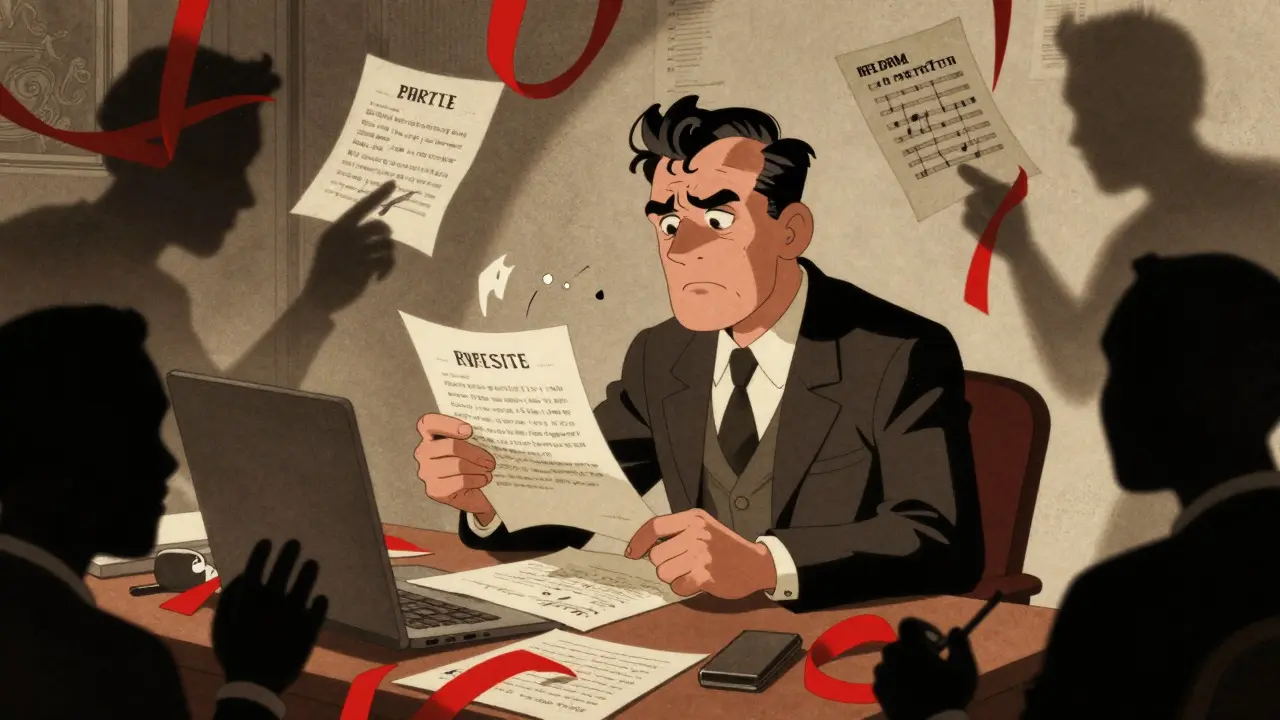
Imagine spending months creating a song, only to watch it get ripped apart, remixed, and sold by strangers while you wait six months for a royalty statement that doesn't add up. For decades, Digital Rights Management (DRM) has been the industry's answer to this problem. But traditional DRM is clunky, centralized, and often more annoying to honest fans than it is effective against pirates. Enter blockchain technology. By moving rights management onto a decentralized ledger, creators can finally prove ownership instantly, automate payments with smart contracts, and cut out the middlemen who take huge cuts of their revenue.
This isn't just theoretical hype anymore. We are seeing real-world shifts in how music, film, and art are protected and monetized. If you are a creator or a media executive, understanding how blockchain changes the game for digital rights is no longer optional-it’s essential for staying competitive in 2026.
The Problem With Traditional DRM
To understand why blockchain matters, we first have to look at what’s broken with the current system. Traditional DRM relies on centralized servers controlled by big tech companies like Apple or Google. These systems use encryption to restrict how you access content. It works, but it has major flaws.
First, there is the issue of trust. When your rights are managed by a single company, you have to trust them to keep your data safe and pay you fairly. Between 2018 and 2022, major centralized DRM servers experienced 14 significant security breaches according to DMCA compliance reports. Second, transparency is non-existent. Royalty tracking is notoriously opaque. A study by IBM found that 43% of content creators lose revenue simply because they cannot track where their work is being used. Finally, speed is terrible. Processing a simple rights transaction in traditional systems can take 24 to 72 hours. In an instant-gratification world, that delay kills momentum.
How Blockchain Solves These Issues
Blockchain technology is a decentralized, immutable ledger that records transactions across many computers so that any involved record cannot be altered retroactively without the alteration of all subsequent blocks and the consensus of the network. When applied to DRM, this creates a permanent, tamper-proof record of who owns what.
Here is how it works in practice:
- Immutable Proof of Ownership: Once you register your work on the blockchain, the timestamp and hash create an irrefutable chain of custody. As noted by the Silicon Valley Center, once data is recorded, it cannot be altered or deleted. This provides robust evidence in copyright disputes.
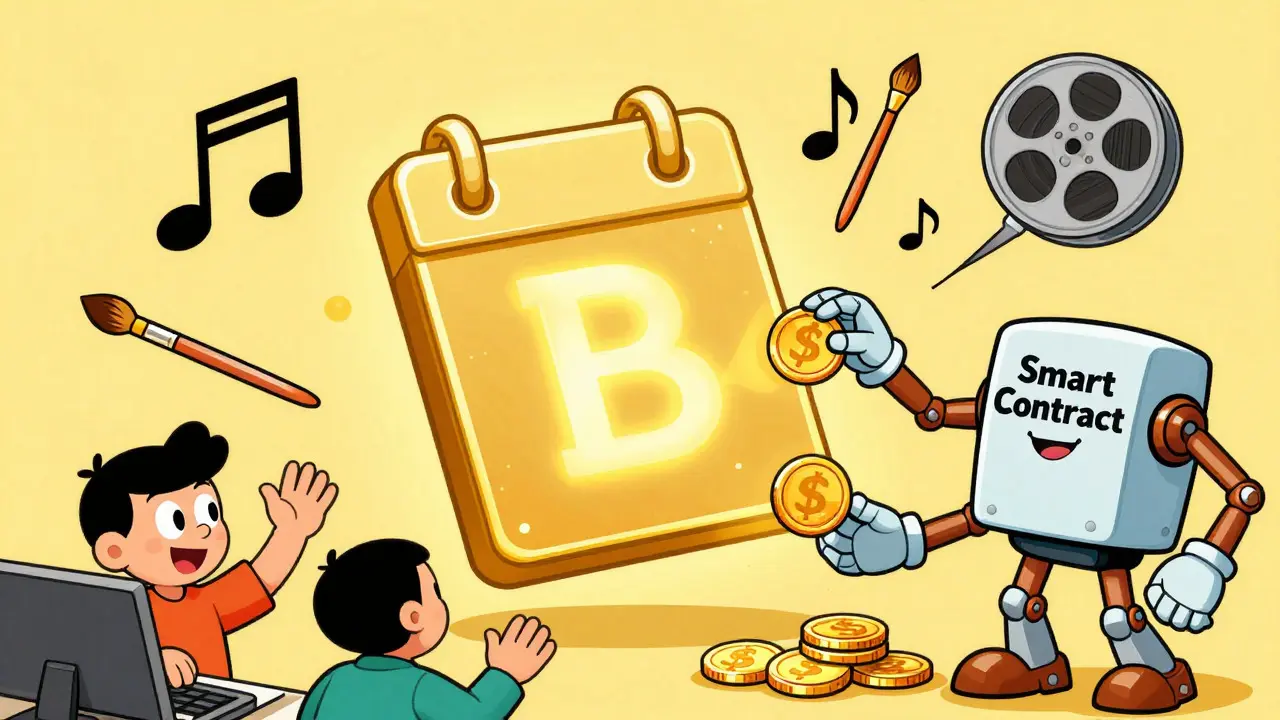
- Automated Royalties via Smart Contracts: Instead of waiting for quarterly statements, you write code called Smart Contracts. These are self-executing contracts with the terms of the agreement directly written into code. When someone buys or streams your content, the contract automatically splits the payment and sends it to your wallet. No bank fees, no delays.
- Decentralization: There is no single point of failure. If one server goes down, the network keeps running. This eliminates the risk of total system collapse seen in centralized models.
The result? Faster processing times. IBM case studies show blockchain DRM implementations can process rights transactions in 2-5 seconds, compared to the days-long waits of legacy systems.
Key Applications in the Creative Industry
Blockchain-based DRM isn't a one-size-fits-all solution. It addresses specific pain points across different types of digital assets. Here are the six main areas where this technology is making an impact:
- Digital Content Management: Implementing strict access controls to limit reproduction and distribution without relying on a central authority.
- Content Rights and Royalties: Automating the complex web of payouts. For example, if a song has four writers and two producers, the smart contract can split the money instantly according to predefined percentages.
- Fact-Checking Systems: Establishing traceability for news and images. You can verify the original source of a photo to combat deepfakes and misinformation.
- Automated Identity Verification: Using protocols that execute without centralized authority, ensuring that only verified users access premium content.
- Automated Licensing: Managing copyright licenses dynamically. A user can buy a license for personal use, and the blockchain tracks exactly what they are allowed to do.
- Self-Sovereign Identity (SSI): Allowing users to store identity data on their own devices and share only specific portions with third parties, enhancing privacy.
Blockchain vs. Traditional DRM: A Comparison
| Feature | Traditional DRM | Blockchain-Based DRM |
|---|---|---|
| Architecture | Centralized Servers | Decentralized Ledger |
| Transaction Speed | 24-72 Hours | 2-5 Seconds |
| Initial Setup Cost | $250,000 - $500,000 | $180,000 - $350,000 |
| Annual Maintenance | 15-20% | 8-12% |
| Royalty Transparency | Low (Opaque) | High (Visible to all parties) |
| Revocation Speed | Near-instantaneous | 2-15 Minutes |
As you can see, blockchain wins on speed, cost-efficiency over time, and transparency. However, traditional DRM still holds an edge in immediate revocation capabilities. If you need to pull content offline instantly due to a legal threat, centralized systems act faster. Blockchain requires a few minutes to propagate the change across the network.
Real-World Success Stories and Failures
It is easy to talk about theory, but does it work in practice? The answer is yes, but with caveats.
On the positive side, independent musician Sarah Johnson reported a 37% increase in royalty payments after switching to Audius, a blockchain-based music platform. She noted that administrative time dropped by 80%. Similarly, the Norwegian Grammy Awards implemented blockchain DRM in 2022, reducing royalty distribution errors from 12% to just 0.3% and cutting payment times from nine months to 14 days.
However, it is not all smooth sailing. Film producer Michael Torres highlighted the issue of "gas fees"-the transaction costs on networks like Ethereum. During periods of high congestion, these fees consumed 22% of his micro-transaction revenue. This is a critical lesson: choosing the right blockchain layer matters. Platforms like Polygon, which offer near-zero gas fees and high throughput, are becoming preferred choices for high-volume, low-value transactions.
Failure cases also exist. Startup RightsChain collapsed in 2021 after its DRM system failed to interoperate with major streaming platforms. This highlights a key barrier: interoperability. Your blockchain solution must play nice with existing ecosystems like Adobe Creative Cloud or Apple FairPlay.

Implementation Challenges and Costs
If you are considering adopting blockchain DRM, you need to be realistic about the hurdles. The average implementation cost ranges from $180,000 to $350,000. While this is lower than traditional DRM setup costs, it is still prohibitive for 72% of independent creators.
Integration takes time. Expect a 3-to-6-month timeline for full integration. You will also face a learning curve. According to Oodles.io, 78% of creators need 20-40 hours of training to understand cryptographic keys and wallet management. Documentation quality varies wildly between providers, so choose a partner with strong support resources.
Another challenge is jurisdictional complexity. Copyright laws differ by country. Mapping these nuances into smart contracts is difficult. Successful implementations often use modular architectures that allow for jurisdiction-specific rules to be added as plugins.
The Future of Digital Rights
The market for blockchain DRM is growing fast, projected to reach $1.2 billion by 2027. Major players like IBM and emerging specialists like Verisart are leading the charge. Regulatory bodies are catching up too; the EU’s Digital Services Act now recognizes blockchain records as valid evidence in copyright disputes.
Looking ahead, expect to see more hybrid models. Pure blockchain solutions may not replace traditional DRM entirely, but they will likely become the backend infrastructure for rights tracking and payment distribution. As interoperability standards improve and energy consumption drops (thanks to Proof-of-Stake transitions), blockchain DRM will become the default for serious creators.
Is blockchain DRM legally binding?
Yes, increasingly so. The European Union's Digital Services Act amendments recognize blockchain records as valid evidence in copyright disputes. However, the U.S. Copyright Office notes that blockchain registration does not replace formal copyright registration for certain legal enforcement actions. It serves as powerful proof of ownership and timestamping.
Which blockchain is best for DRM?
It depends on your needs. Ethereum offers robust security but higher gas fees. Polygon and other Layer-2 solutions provide high speed and near-zero fees, making them ideal for micro-transactions like streaming royalties. Hyperledger Fabric is popular for enterprise-grade, permissioned private networks.
Can blockchain stop piracy completely?
No technology can stop piracy 100%. Professor Alan Grant of Stanford Law argues that blockchain solves the verification problem but not the enforcement problem. However, it makes tracking infringement much easier and automates the collection of owed royalties, turning some "pirated" usage into paid usage through automated licensing.
How long does it take to implement blockchain DRM?
Typically 3 to 6 months for full integration. This includes mapping rights structures to smart contracts, integrating with existing CMS platforms, and training staff. Deloitte's analysis suggests that complex legacy integrations can take up to 9 months.
What are the costs associated with blockchain DRM?
Initial setup costs range from $180,000 to $350,000. Annual maintenance is typically 8-12%, which is lower than traditional DRM's 15-20%. Additionally, there are transaction fees (gas fees) depending on the blockchain network used, though Layer-2 solutions minimize these costs significantly.