How Cuba Adopted Crypto to Bypass Sanctions: The Real Story
 Jun, 29 2026
Imagine living in a country where you cannot use PayPal, Western Union shut down its doors, and buying something online from Amazon is impossible. For decades, this was the daily reality for millions of Cubans due to strict U.S. economic sanctions. You might assume that in such an isolated environment, cryptocurrency would be banned or heavily restricted. Surprisingly, the opposite happened. Cuba did not ban digital assets; it embraced them.
In August 2021, Cuba became the second nation in the world to officially recognize Bitcoin and other cryptocurrencies as legal payment methods. This move wasn't about chasing tech trends. It was a survival strategy. By legalizing crypto, the Cuban government created a lifeline for citizens cut off from the global financial system. Today, hundreds of thousands of Cubans use digital currencies to send money home, buy goods, and participate in the digital economy.
Why Cuba Chose Crypto Over Restrictions
To understand why Cuba adopted crypto, you have to look at the pressure cooker of its economy. For over 60 years, U.S. sanctions have blocked basic financial services. When Western Union closed more than 400 locations in Cuba in 2020, the impact was immediate. Families who relied on remittances from relatives abroad suddenly had no reliable way to receive cash. Traditional banks were hesitant to process transactions involving Cuba due to complex compliance risks and fear of violating Office of Foreign Assets Control (OFAC) rules.
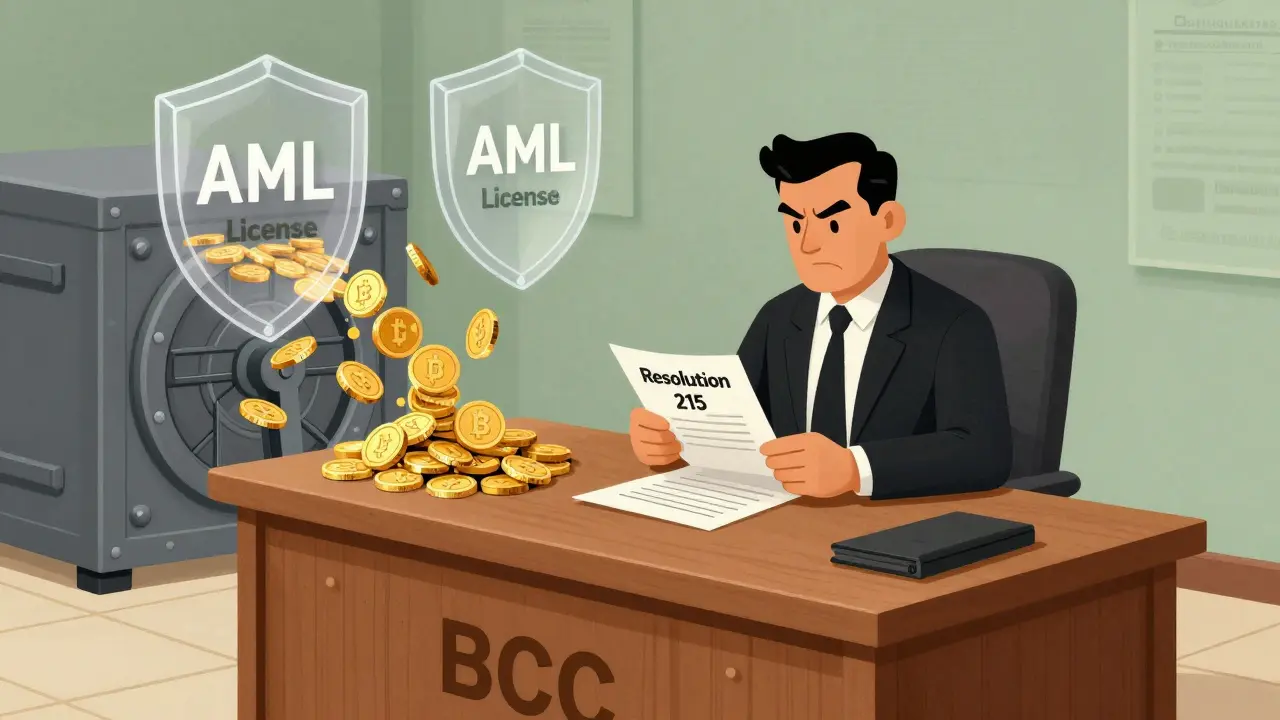
The Cuban government saw this crisis as an opportunity. Instead of restricting access to new technologies, they decided to regulate them. The Cuban Central Bank (BCC) published Resolution 215 in the Official Gazette. This resolution granted the bank the power to regulate digital currencies and license service providers. The official reason cited was "socio-economic interest." In plain English, the government needed a way to keep money flowing into the country without relying on traditional banking channels that were effectively frozen by international politics.
This approach contrasts sharply with countries like China or Vietnam, which initially cracked down on crypto trading. Cuba’s strategy was pragmatic. They recognized that blockchain technology could bypass the choke points created by sanctions. By bringing crypto into the light, they could monitor it, tax it, and ensure it served the national economy rather than disappearing into the black market.
The Regulatory Framework: How It Works
Legalization does not mean a free-for-all. Cuba established a strict regulatory framework to control how cryptocurrencies are used. As of May 2022, the BCC issued a decree law outlining specific procedures for virtual asset service providers. Here is how the system operates:
- Licensing Authority: Only the Cuban Central Bank can approve licenses for individuals or companies wanting to operate as crypto service providers. No private entity can just open a crypto exchange without state approval.
- Compliance Requirements: License holders must follow rigorous anti-money laundering (AML) rules. They must report suspicious activities and comply with regulations designed to prevent terrorism financing and weapons proliferation.
- Oversight Body: Applications for licenses require approval from the General Directorate of Investigation of Financial Operations within the BCC. This body evaluates the legality, opportunity, and socioeconomic interest of each proposal.
- Asset Approval: The BCC maintains the authority to determine which specific cryptocurrencies can be listed on Cuban exchanges. Not every token is allowed; only those deemed safe and useful by the central bank make the cut.
This structure ensures that while citizens can use crypto, the state retains significant control over the flow of capital. It is a model of state-supervised decentralization. The government gets transparency, and citizens get access to global markets. However, this also means that privacy advocates often criticize the system, arguing that true decentralization requires freedom from state oversight.
Crypto Mining: From Illegal to Industrial
One of the most surprising developments in Cuba’s crypto journey is the legalization of mining. For years, mining was viewed with suspicion due to high energy consumption. But by 2025, the landscape had changed completely. The government explicitly legalized mining operations under specific regulations.
Miners in Cuba now operate under a clear set of rules. They must obtain licenses, adhere to energy consumption caps, and meet international cybersecurity standards. Recognizing the strain on the national grid, the government encouraged miners to use renewable energy sources. Several mining farms were established in 2023 in regions with abundant solar and wind resources. This aligns with global trends toward sustainable mining but also addresses local infrastructure limitations.
The government even partnered with international tech companies to develop the necessary infrastructure for large-scale operations. These partnerships include training programs to upskill the local workforce. Instead of banning miners, Cuba turned them into a source of technical expertise and potential export revenue. This shift demonstrates a mature understanding of how blockchain technology can contribute to industrial development, not just speculation.
Who Is Using Crypto in Cuba?
Adoption numbers tell a compelling story. Estimates suggest that between 100,000 and 200,000 Cubans actively use cryptocurrencies. While this represents only 1-2% of the population, it is a massive figure for a nation that only recently gained widespread mobile internet access. The growth has been rapid because the need is urgent.
The primary users fall into three categories:
- Remittance Recipients: Families receiving money from relatives in the U.S., Spain, or Canada use stablecoins or Bitcoin to avoid high fees and delays associated with traditional transfer methods.
- Online Shoppers: Citizens use crypto to purchase goods from international websites that do not accept Cuban credit cards. Since most Cubans lack access to Visa or Mastercard, crypto acts as their global wallet.
- Freelancers and Developers: A growing class of tech workers earns income in cryptocurrency from global clients. This allows them to bypass banking restrictions and save value in a currency that does not suffer from local inflation.
Popular assets include Bitcoin, Ethereum, and Avalanche. These networks offer relatively low transaction fees and fast settlement times, which are crucial for everyday transactions. The use of stablecoins pegged to the U.S. dollar is also prevalent, providing a hedge against the volatility of the Cuban peso.

Challenges and Risks
Despite the legal framework, using crypto in Cuba is not without hurdles. Infrastructure remains a major bottleneck. Internet connectivity can be slow and expensive, making real-time trading difficult. Power outages are frequent, posing a risk to miners and users alike who need constant uptime.
Another challenge is the complexity of U.S. sanctions. Even though Cuba has legalized crypto, American companies are still largely prohibited from engaging in transactions with Cuban entities. This creates a gray area. If a Cuban citizen sends Bitcoin to a U.S.-based exchange, they may face account freezes or legal scrutiny. Conversely, if a U.S. person sends crypto to Cuba, they risk violating OFAC regulations. This tension limits the seamless integration of Cuban crypto users into the global DeFi ecosystem.
Furthermore, the state-controlled nature of the industry raises concerns about censorship. If the BCC decides to delist a certain asset or block a specific type of transaction, users have little recourse. Unlike decentralized networks in unrestricted jurisdictions, Cuban crypto users operate within a walled garden defined by government policy.
| Feature | Cuba (2025) | Typically Restricted Nation |
|---|---|---|
| Legal Status | Legal & Regulated | Banned or Gray Area |
| Primary Driver | Sanctions Circumvention | Capital Flight / Speculation |
| Regulatory Body | Cuban Central Bank (BCC) | None or Criminal Justice |
| Mining | Legal with Licenses | Often Illegal |
| User Protection | State Oversight | No Protection |
The Future of Crypto in Cuba
As we move through 2026, Cuba’s crypto experiment continues to evolve. The government is focused on expanding legitimate use cases while maintaining strict compliance with international anti-money laundering standards. Partnerships with international tech firms are expected to deepen, particularly in the areas of renewable energy mining and blockchain education.
Industry experts view Cuba as a case study in resilience. It shows how a sanctioned nation can leverage digital assets to maintain economic connections. Whether this model will be replicated by other isolated economies remains to be seen. However, for the 200,000 Cubans currently using crypto, it is already a vital tool for survival and participation in the modern world. The narrative is no longer about restrictions; it is about adaptation. Cuba has proven that when traditional finance fails, blockchain can provide a bridge.
Is Bitcoin legal in Cuba?
Yes, Bitcoin and other cryptocurrencies are legal in Cuba. The country officially recognized them as legal payment methods in August 2021. However, operations must be conducted through licensed service providers approved by the Cuban Central Bank.
Can Americans send crypto to Cuba?
Sending crypto to Cuba is risky for Americans due to U.S. sanctions enforced by OFAC. While the technology itself may allow the transfer, engaging in financial transactions with Cuban residents can violate U.S. law unless specific exemptions apply. Most U.S.-based exchanges prohibit transfers to known Cuban IP addresses or entities.
How many people use crypto in Cuba?
Estimates suggest that between 100,000 and 200,000 Cubans actively use cryptocurrencies. This represents approximately 1-2% of the population, a significant number given the country's recent expansion of mobile internet access.
Is crypto mining legal in Cuba?
Yes, crypto mining is legal in Cuba as of 2025. Miners must obtain licenses from the government and adhere to energy consumption caps. Many mining operations utilize renewable energy sources like solar and wind power to comply with sustainability guidelines.
Why did Cuba legalize cryptocurrency?
Cuba legalized cryptocurrency primarily to circumvent U.S. economic sanctions that blocked access to traditional financial services like PayPal and Western Union. It provides a channel for remittances and allows citizens to participate in the global digital economy despite isolation.
Which cryptocurrencies are popular in Cuba?
Bitcoin, Ethereum, and Avalanche are among the most widely used cryptocurrencies in Cuba. Stablecoins pegged to the U.S. dollar are also popular for their price stability and utility in everyday transactions and savings.
Routh Middaugh
June 29, 2026 AT 18:16It is fascinating to see how necessity drives innovation in such a constrained environment; the Cuban approach to crypto is less about ideological purity and more about sheer survival. The fact that they legalized mining while simultaneously imposing strict energy caps shows a level of pragmatic regulation that many Western nations struggle to implement. I wonder if this model could be replicated in other sanctioned states, or if it is too unique to the specific geopolitical pressures Cuba faces. The use of stablecoins as a hedge against local inflation is particularly smart, given the volatility of the peso. It creates a parallel economy that functions independently of the state's monetary policy failures.
Ryan Peters
July 1, 2026 AT 02:14This is just another loophole for criminals to exploit, and frankly, it’s disgusting that anyone thinks bypassing sanctions is a noble goal. Sanctions exist for a reason, to pressure regimes that violate human rights, not to help them get rich quick with Bitcoin. The idea that this is a 'survival strategy' is laughable; it’s a subversion of international law. These so-called 'freelancers' are likely just money launderers or part of the regime’s black market operations. We should be shutting down these exchanges, not celebrating them as technological marvels. It’s weak-minded optimism to ignore the reality that this empowers a dictatorship.
Fiona Ellis
July 1, 2026 AT 04:48I must disagree with the previous sentiment entirely 😠. While the political context is undeniably complex, focusing on the individual Cubans who simply want to buy medicine or send money home to their families feels like a gross oversimplification. They are not criminals; they are people trying to navigate an impossible system. 🙄 To suggest that their financial survival is merely a tool for the regime ignores the agency of ordinary citizens. It is intrusive to judge their methods when you have never lived under those conditions. The technology itself is neutral, and its application here is humanitarian at its core. 💔
ross harris
July 2, 2026 AT 12:49The irony is thick enough to cut with a knife, isn't it? A communist state embracing the ultimate capitalist tool of decentralization, yet wrapping it in the red tape of central control. It’s a Frankenstein monster of finance: half blockchain, half bureaucracy. They call it 'state-supervised decentralization,' which is an oxymoron that would make a philosopher weep. But then again, truth is often stranger than fiction. The miners are using solar power because the grid is failing, turning desperation into digital gold. It’s a beautiful, tragic dance of adaptation.
Maurice Flynn
July 2, 2026 AT 19:18I’ve been following this story for a while, and it’s pretty wild how quickly things changed. One minute mining is illegal, the next it’s a licensed industry. It shows that governments will adapt if they have to. The renewable energy angle is interesting too, since Cuba has so much sun but terrible infrastructure. If they can crack the code on sustainable mining, it might actually benefit other developing nations. Just watching from the sidelines, but it’s definitely worth keeping an eye on.
nancy jarecki
July 4, 2026 AT 04:51Please, spare me the techno-utopian drivel. This is not a 'lifeline'; it is a controlled experiment in capital flight prevention disguised as progress. The Central Bank retains absolute veto power over which assets are listed, which means there is no real decentralization here. It is a walled garden, plain and simple. Those who think this is a victory for freedom are either naive or misinformed. The regulatory framework is draconian, requiring licenses for every single service provider. It is not crypto; it is digital fiat with extra steps. How utterly predictable.
Robert Hundley
July 4, 2026 AT 13:42Hey everyone! :D I think it’s awesome that people are finding ways to connect globally despite all the barriers. The fact that freelancers can now get paid directly without relying on broken banking systems is huge. It gives people hope and a way forward. Let’s keep supporting innovative solutions like this! Keep up the good work, world! :)
Melissa L
July 5, 2026 AT 15:43i mean its cool i guess but like do they really have internet for all this? seems kinda hard with the power outages. also why bitcoin? isnt it slow? maybe they should use something else lol. just curious cause i dont know much about crypto but it sounds complicated.
Rob Morton
July 6, 2026 AT 09:09It raises an important question about the nature of sovereignty in the digital age. When a nation is cut off from traditional SWIFT networks, does blockchain become the new diplomatic channel? The Cuban case suggests that yes, it can serve as a bridge, but one that is heavily monitored. I am curious to see if this leads to broader adoption in other isolated economies. The tension between OFAC regulations and decentralized protocols is a legal minefield that hasn’t fully exploded yet.
Trent Erman1
July 7, 2026 AT 16:47Great insights here! The key takeaway is that technology adapts to human needs, regardless of political boundaries. For those interested in the technical side, the shift to renewable energy for mining is crucial for long-term sustainability. It’s inspiring to see communities leverage available resources to overcome systemic challenges. Keep learning and stay curious!
Jon Milton
July 9, 2026 AT 15:10We need to look at this through a lens of cultural resilience rather than just economics. The Cuban people have always found ways to thrive despite adversity, and crypto is just the latest tool in their arsenal. It’s not about beating the system; it’s about living within it while maintaining dignity. However, we must acknowledge the risks. The government’s ability to delist assets at will means users are still vulnerable. It’s a fragile balance, but a necessary one for now.
Sajjad Ghorbani Moghaddam
July 11, 2026 AT 08:42Yeah, it’s pretty straightforward really. If you can’t use Visa, you use Bitcoin. Simple as that. The government probably likes it because they can track everything, unlike cash. So it’s a win-win for them, even if it’s risky for the users. Just my two cents.
Rebecca Shoniker
July 12, 2026 AT 12:56The narrative presented here is dangerously misleading. It glosses over the severe implications of state-controlled censorship. When the BCC decides to block a transaction, there is no recourse for the user. This is not freedom; it is digital surveillance capitalism wrapped in socialist rhetoric. Furthermore, the claim that this helps 'ordinary citizens' ignores the fact that only those with access to reliable internet and electricity can participate, thereby exacerbating existing inequalities. It is a flawed system built on sand.
Jay Sharma
July 14, 2026 AT 05:50Wake up sheeple! This is all part of the globalist agenda to normalize digital currency tracking worldwide. Cuba is just the test lab. Once they perfect the surveillance techniques there, they’ll roll it out everywhere. The 'sanctions' are a cover for controlling the flow of information and money. Don’t let them fool you with talk of 'freedom' and 'innovation.' It’s a trap. Always watch the shadows.
Nicole Woessner
July 15, 2026 AT 05:06As someone who has family in Latin America i can tell you that remittances are life or death for many households. Seeing Cuba find a way to keep those channels open is really heartwarming. Its not perfect and theres lots of risk involved but the fact that theyre trying is what matters. We should celebrate these small victories in connectivity and economic participation. Its about people helping people across borders.