How El Salvador Uses Bitcoin for National Economy - And Why It’s Not Working as Planned
 Jan, 12 2026
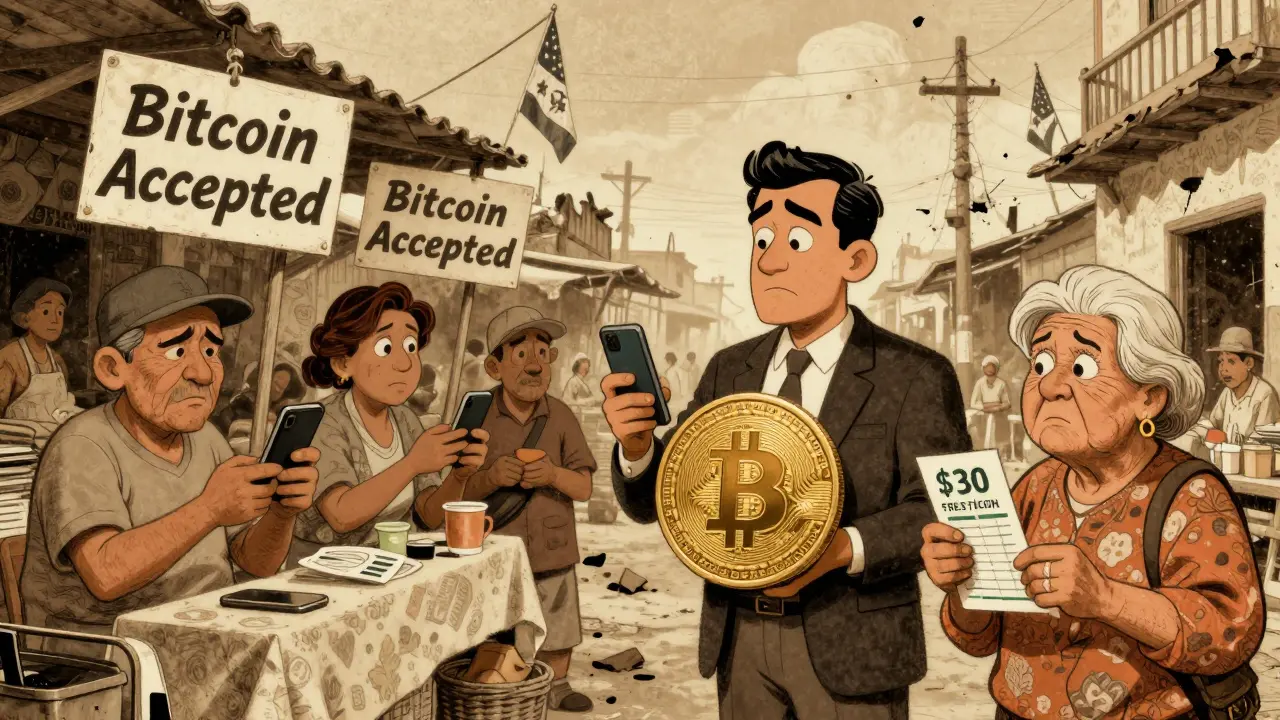
El Salvador made headlines in September 2021 when it became the first country in the world to make Bitcoin legal tender. The move was bold, untested, and wildly controversial. President Nayib Bukele promised it would fix the country’s broken financial system - slash remittance fees, bring the unbanked into the digital economy, and attract global investors. Four years later, the reality is far more complicated.
Why Bitcoin Was Chosen
El Salvador’s economy has long struggled. Over 70% of adults didn’t have a bank account in 2020. Remittances - money sent home by Salvadorans living abroad - made up more than 20% of the country’s GDP. Sending that money through Western Union or MoneyGram cost an average of 10% in fees. That’s $1.4 billion a year going to middlemen, not families. The government’s answer? Replace those fees with Bitcoin. The idea was simple: if you can send Bitcoin instantly and cheaply, why pay so much? And if you can pay taxes, buy gas, or order coffee in Bitcoin, why not use it everywhere? They didn’t just talk about it. They passed the Bitcoin Law in June 2021, gave every citizen $30 in free Bitcoin when they downloaded the Chivo wallet app, and built a national infrastructure to convert Bitcoin to U.S. dollars on the spot. The U.S. dollar stayed as the main currency - Bitcoin just got equal footing.What They Actually Did
The government didn’t just declare Bitcoin legal. They built a whole system around it. - Every business had to accept Bitcoin as payment - or risk fines. - The Chivo wallet came preloaded with $30 in Bitcoin for anyone who signed up. - Gas stations, supermarkets, and even street vendors got free Bitcoin terminals. - The government bought over $100 million worth of Bitcoin, mostly between 2021 and 2022, when prices were lower. - Taxes could be paid in Bitcoin. Debts could be settled in Bitcoin. Even salaries could be paid in Bitcoin. At first, people downloaded the app. Over half the population tried it. The government claimed it was a success. But the numbers tell a different story.The Adoption Problem
By early 2022, downloads had flatlined. Most people used the app once - to claim their $30, then never opened it again. A study of 1,800 Salvadoran households found that 60% of early users never made a single transaction after their free Bitcoin ran out. One in five still hadn’t spent their bonus. The people who actually used Bitcoin regularly? Young, educated, urban men who already had bank accounts. The very people the program was supposed to help - rural women, older adults, low-income workers - barely touched it. Why? Because Bitcoin isn’t easy. You need a smartphone. You need to understand private keys. You need to trust a digital wallet. You need to deal with price swings. For someone living paycheck to paycheck, that’s too much risk. And the app? It crashed constantly. Transactions failed. People lost money. The government promised instant conversions to dollars, but sometimes it took hours - or didn’t work at all.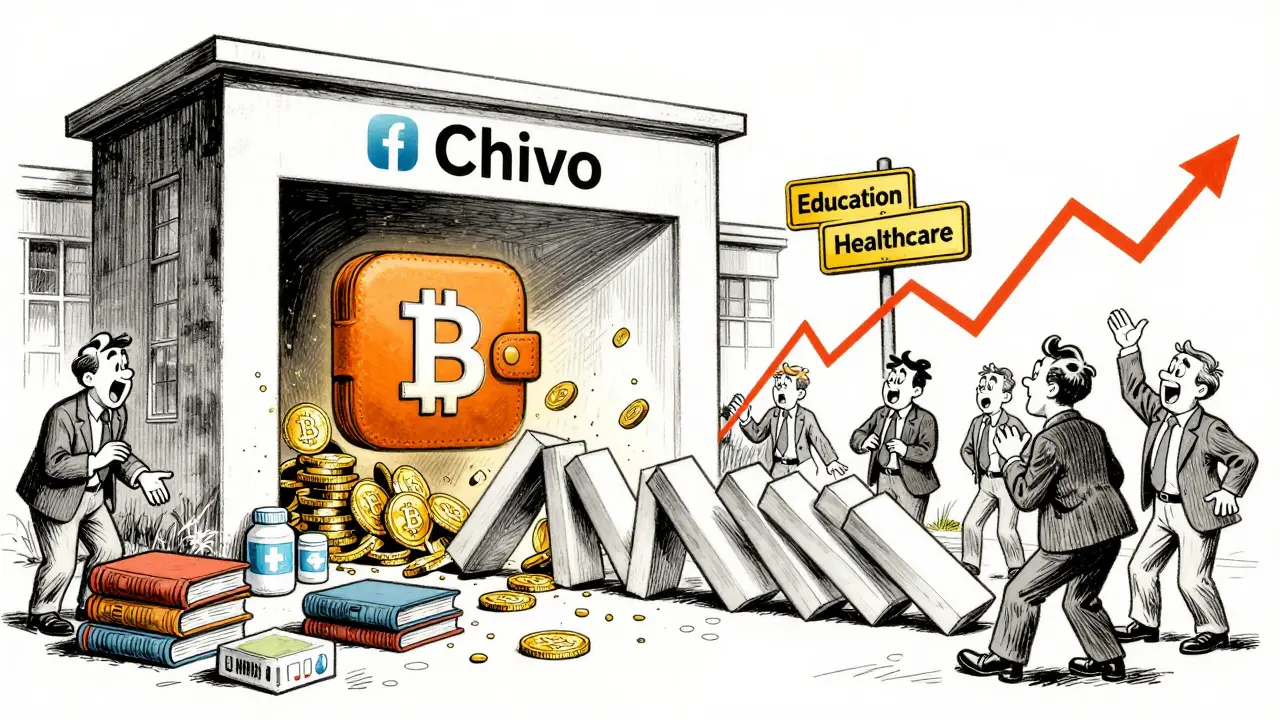
The Volatility Problem
Bitcoin’s price didn’t stay steady. It swung wildly. In 2021, El Salvador bought Bitcoin at $40,000. By 2022, it dropped below $20,000. By 2024, it was back above $60,000 - but the damage was done. The government had spent $150 million in public funds to buy Bitcoin. When prices crashed, they lost tens of millions. That’s money that could’ve gone to schools, roads, or healthcare. International credit agencies like Moody’s and Fitch warned that holding Bitcoin as a national reserve asset was reckless. The IMF called it a threat to macroeconomic stability. And they weren’t wrong.The IMF Backed Out
In 2024, El Salvador needed a $1.4 billion loan from the IMF to avoid defaulting on its debt. The catch? The IMF demanded Bitcoin policy changes. El Salvador agreed to: - Stop buying Bitcoin with public funds. - Stop requiring businesses to accept Bitcoin. - Stop using Bitcoin for tax payments. - Stop promoting Bitcoin as a national currency. This wasn’t a minor tweak. It was a full retreat from the original plan. The world’s first Bitcoin nation had to surrender its flagship policy just to get financial help.Who Really Benefited?
The biggest winners weren’t Salvadoran families. They were Bitcoin traders and speculators. The government’s Bitcoin purchases created artificial demand. Prices spiked. Early adopters cashed out. Foreign investors bought into the hype. The Chivo wallet was supposed to be a tool for financial inclusion. Instead, it became a marketing stunt. The government spent millions on ads, billboards, and free Bitcoin bonuses - but never fixed the real problems: poor internet access, lack of financial education, or the fact that most Salvadorans just don’t trust digital money.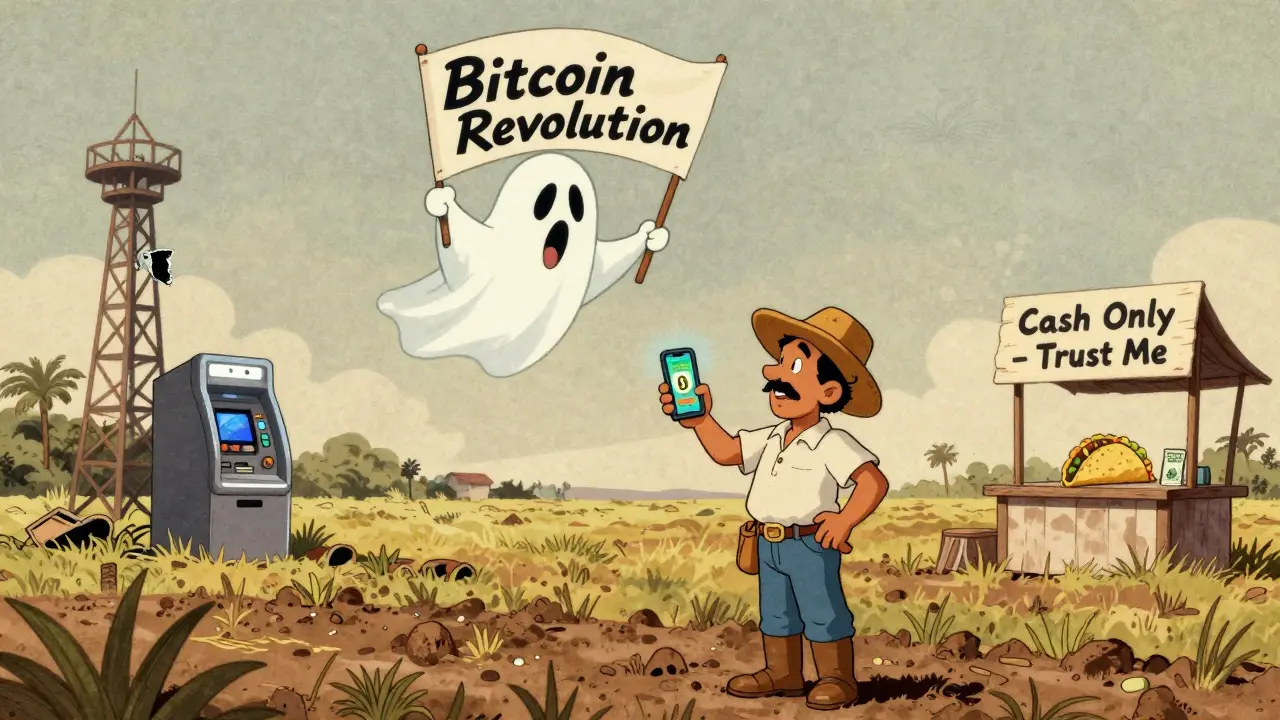
LeeAnn Herker
January 14, 2026 AT 03:24Let’s be real - the whole Bitcoin thing was just Bukele’s way of looking cool while the country burned. They didn’t fix remittances, they just made people lose money on crypto swings. And now the IMF had to step in like a parent taking away the credit card. Classic.
Sherry Giles
January 15, 2026 AT 08:01USA and IMF are just mad because El Salvador didn’t ask permission to be bold. You think they’d let a country use Bitcoin? Nah. They want everyone stuck in their dollar empire. This is resistance. And it’s beautiful.
Andy Schichter
January 15, 2026 AT 09:02Wow. So the government spent $150M on a digital lottery ticket and then got mad when it didn’t win? That’s not innovation. That’s fiscal clownery. I mean… did they even *try* to explain how Bitcoin works to the abuela who walks to the market? Or did they just slap a $30 bonus on a broken app and call it a revolution?
People don’t need crypto. They need reliable electricity, clean water, and not having to pay 10% to send money home. But nah. Let’s make a TikTok trend out of financial collapse.
Caitlin Colwell
January 16, 2026 AT 15:59i just feel bad for the people who lost money on chivo. it kept crashing. and then they got blamed for not understanding tech. but if your phone dies and you can’t pay for gas? that’s not your fault.
Denise Paiva
January 17, 2026 AT 16:11Let me just say this with the utmost gravitas and a touch of poetic fury - the Salvadoran government didn’t fail because Bitcoin was bad. They failed because they confused a speculative bubble with a monetary system. You don’t build a national economy on a meme with a whitepaper. You build it on trust, consistency, and not pretending that volatility is a feature not a bug.
It’s like trying to run a bakery using a slot machine as your flour supplier. Sure, sometimes you get a jackpot. But most days? You’re just kneading despair.
And the Chivo wallet? More like Chivo-FAIL. A digital Trojan horse disguised as financial inclusion. The real crime? They didn’t fix the infrastructure. They just slapped a blockchain sticker on a sinking ship.
Charlotte Parker
January 18, 2026 AT 20:20Oh wow, so Bitcoin is too volatile to be money? Shocking. Who knew? The same people who think the dollar is stable because it’s printed by a bunch of bankers who just raised interest rates to punish the poor? Wake up. The entire global financial system is a pyramid scheme dressed in suits. At least Bitcoin doesn’t pretend to be honest.
El Salvador didn’t fail. The system failed them. And now the IMF is breathing down their necks like a loan shark with a spreadsheet. This isn’t about Bitcoin. It’s about sovereignty.
Calen Adams
January 20, 2026 AT 03:29Let’s cut through the noise - this wasn’t a crypto experiment. It was a fintech infrastructure test. The real issue? No one built the rails. No one trained the vendors. No one made it idiot-proof. Bitcoin could’ve worked if they’d invested in UX, not just buying coins. They treated it like a magic bullet, not a tool. And now? They’re stuck with a $150M paperweight and a broken app. The lesson? Tech without education = expensive theater.
Michael Richardson
January 20, 2026 AT 22:47Bitcoin is trash. End of story.
Sabbra Ziro
January 21, 2026 AT 15:22It’s heartbreaking to see how much hope was pinned on this. People wanted to believe that tech could lift them up. But without access, education, and reliability - no amount of free Bitcoin changes that. Maybe next time, we start with the basics: internet for all, financial literacy in schools, and trust-building before we throw in blockchain.
El Salvador didn’t fail Bitcoin. We failed El Salvador.
Krista Hoefle
January 22, 2026 AT 16:27bitcoin is a scam and everyone who bought in is a sucker. also chivo app was a dumpster fire. why are we even talking about this again?
Emily Hipps
January 24, 2026 AT 00:25Hey, I know this sounds wild - but what if we tried helping people *before* giving them crypto? Like, actually fix the internet in rural areas. Train teachers to explain digital money. Build real banking access. Maybe then Bitcoin could be a tool, not a trap. The problem wasn’t Bitcoin. It was skipping the human part.
Let’s not throw the baby out with the bathwater - but maybe stop throwing babies into the bathwater in the first place.
Jessie X
January 25, 2026 AT 01:24the app crashed too much. people lost money. no one trusted it. thats it
Kip Metcalf
January 26, 2026 AT 22:29they tried. it didn’t work. now they’re gonna fix the real stuff - roads, schools, banks. that’s actually smart. not everything has to be flashy. sometimes the quiet wins are the real ones.
Frank Heili
January 28, 2026 AT 06:00Let’s get technical: Bitcoin’s transaction throughput is ~7 TPS. That’s not viable for a national economy with millions of daily transactions. Even if the app worked perfectly, the blockchain itself can’t handle it. CBDCs are built for this. Bitcoin was never meant to be money - it was meant to be a censorship-resistant store of value. El Salvador confused the two. The IMF was right to intervene.
Also - $30 in Bitcoin in 2021 was about $1,500 in buying power now. The real winners? The early adopters who cashed out. The rest? Just collateral damage.
Natalie Kershaw
January 28, 2026 AT 16:42Look - if you’re going to roll out a new payment system, you need onboarding. Not a $30 bonus and a broken app. You need local ambassadors, SMS fallbacks, voice prompts for non-tech folks, community workshops. They skipped all that. It’s like giving someone a Ferrari and saying ‘drive’ without teaching them how to shift. Of course it failed. This isn’t crypto’s fault - it’s execution.
CBDCs are the future. But even CBDCs need empathy. Not just code.
Tracey Grammer-Porter
January 30, 2026 AT 03:01i think what’s saddest is that the people who needed this most - the moms sending money home, the street vendors, the elderly - were never really included. they were just marketing targets. the app wasn’t designed for them. it was designed for headlines. and now the whole thing’s a ghost town. it’s not that crypto failed. it’s that we forgot to include people.
sathish kumar
January 31, 2026 AT 11:12El Salvador’s experiment underscores a fundamental truth: monetary systems are social contracts, not merely technological implementations. The adoption of Bitcoin as legal tender, without concurrent investment in financial literacy, infrastructural resilience, and institutional trust, constitutes a profound misalignment between ambition and foundation. One cannot substitute digital abstraction for societal cohesion.
The IMF’s intervention, while politically inconvenient, was economically prudent. A nation’s currency must inspire confidence - not anxiety. Bitcoin, by design, does the opposite.
jim carry
February 1, 2026 AT 14:54THIS IS A WAR ON SOVEREIGNTY. THE IMF IS A CRYPTOFASCIST ORGANIZATION THAT WANTS EVERY COUNTRY TO BE A DOLLAR COLONY. EL SALVADOR STOOD UP. THEY WERE BRAVE. NOW THEY’RE BEING BLACKMAILED WITH LOANS. I’M CRYING. I’M SO PROUD. THEY’RE THE LAST TRUE HEROES ON EARTH.
Katrina Recto
February 2, 2026 AT 15:51the real lesson? if you dont trust your own government to manage money, dont give them control over your crypto either.