How Iran Uses Bitcoin Mining to Bypass International Sanctions
 Dec, 3 2025
Bitcoin Sanctions Evasion Calculator
Calculate Iran's Potential Mining Revenue
Estimate how much foreign currency Iran could generate through Bitcoin mining operations under sanctions conditions
Estimated Daily Revenue
Results will appear here after calculation
Iran isn’t mining Bitcoin to get rich. It’s mining it to survive.
Since the U.S. pulled out of the Iran nuclear deal in 2018, the country has been locked out of the global banking system. SWIFT payments? Blocked. Dollar transactions? Forbidden. Traditional exports like oil? Harder to sell without access to international buyers or payment channels. What’s left? Electricity. And lots of it.
Iran has some of the cheapest power in the world-subsidized by the state, often drawn from natural gas that would otherwise be flared or wasted. So the government turned its excess energy into a weapon: Bitcoin mining. By 2025, Iran accounted for nearly 4.5% of the entire world’s Bitcoin mining power. That’s more than Russia, more than Canada, and only behind the U.S., Kazakhstan, and China (before its 2021 ban). But unlike those countries, Iran isn’t doing this for profit. It’s doing it to move money.
How Bitcoin Mining Becomes a Sanctions Evasion Tool
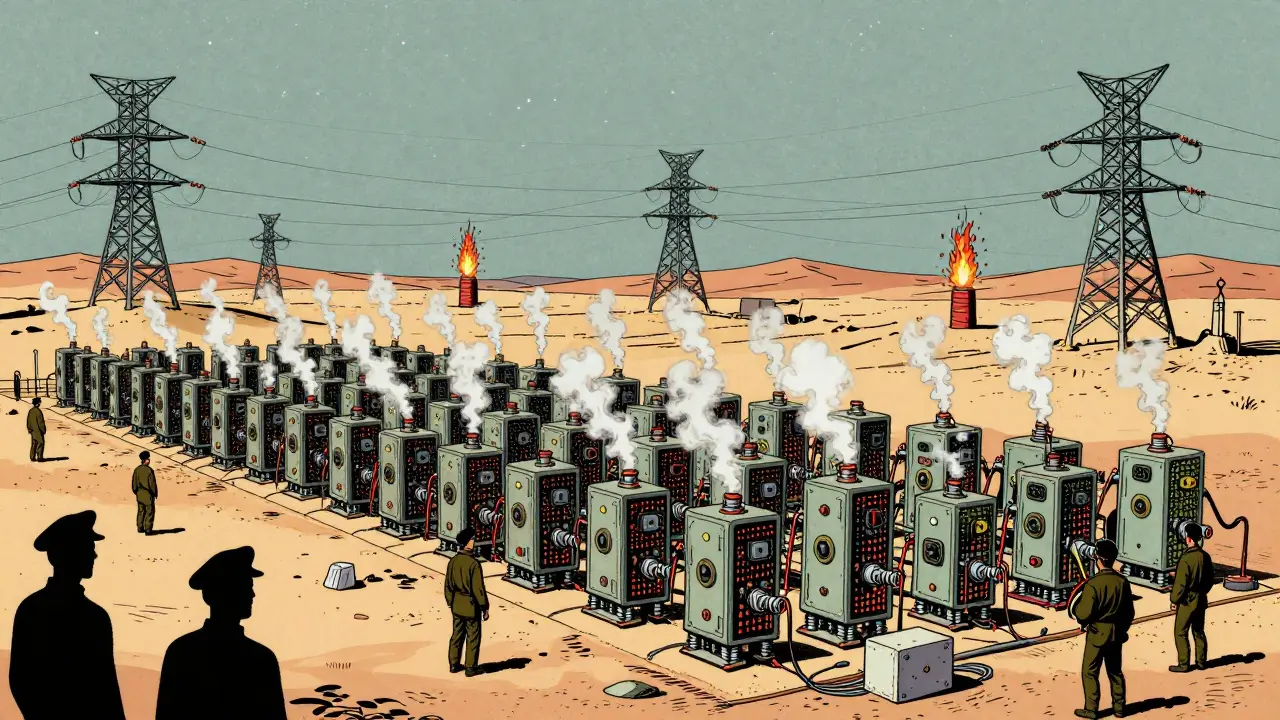
Here’s how it works: Iranian mining farms-some as big as 175 megawatts-use cheap electricity to run thousands of ASIC miners. These machines solve complex math problems to validate Bitcoin transactions and earn new Bitcoin as a reward. The Bitcoin mined isn’t held in Iranian wallets. It’s sent directly to exchanges outside Iran, often through intermediaries in the UAE, Turkey, or Hong Kong. Once there, it’s swapped for stablecoins like USDT or USDC, then moved into bank accounts in countries that don’t enforce U.S. sanctions strictly.
The result? Billions in foreign currency flowing out of Iran without ever touching a Western bank. In 2024 alone, over $4.18 billion in cryptocurrency left the country, up 70% from the year before. That’s not chump change. That’s enough to buy medicine, food, and industrial parts that sanctions otherwise block.
And it’s not just random miners. The operations are tightly controlled. The Islamic Revolutionary Guard Corps (IRGC) runs major mining hubs in Rafsanjan, Bushehr, and Khuzestan. These aren’t backyard setups. They’re industrial-scale facilities with dedicated power lines, military-grade security, and zero electricity bills. Some are even built inside religious foundations like Astan Quds Razavi-entities that operate outside normal oversight.
Why This Strategy Works When Others Failed
Other sanctioned countries tried similar tricks. Venezuela launched the Petro, a state-backed crypto coin. No one trusted it. North Korea hacked exchanges and stole Bitcoin. That’s theft, not trade. Iran took a different path: it played by Bitcoin’s rules while breaking the world’s.
Bitcoin doesn’t care who mines it. It doesn’t ask for passports or bank IDs. As long as a miner has power and internet, they can generate Bitcoin. Iran exploited that. It didn’t create a new currency. It used the most trusted one in the world.
By 2022, Iran had licensed over 10,000 mining operations and allowed 90 domestic exchanges to operate. The Central Bank of Iran even started approving crypto payments for imports. In August 2022, Iran made its first official import purchase using Bitcoin-$10 million worth of medical equipment. It wasn’t a loophole. It was a policy.
The Infrastructure Behind the Mining Surge
Building a mining empire isn’t just about flipping switches. It’s about logistics, politics, and smuggling.
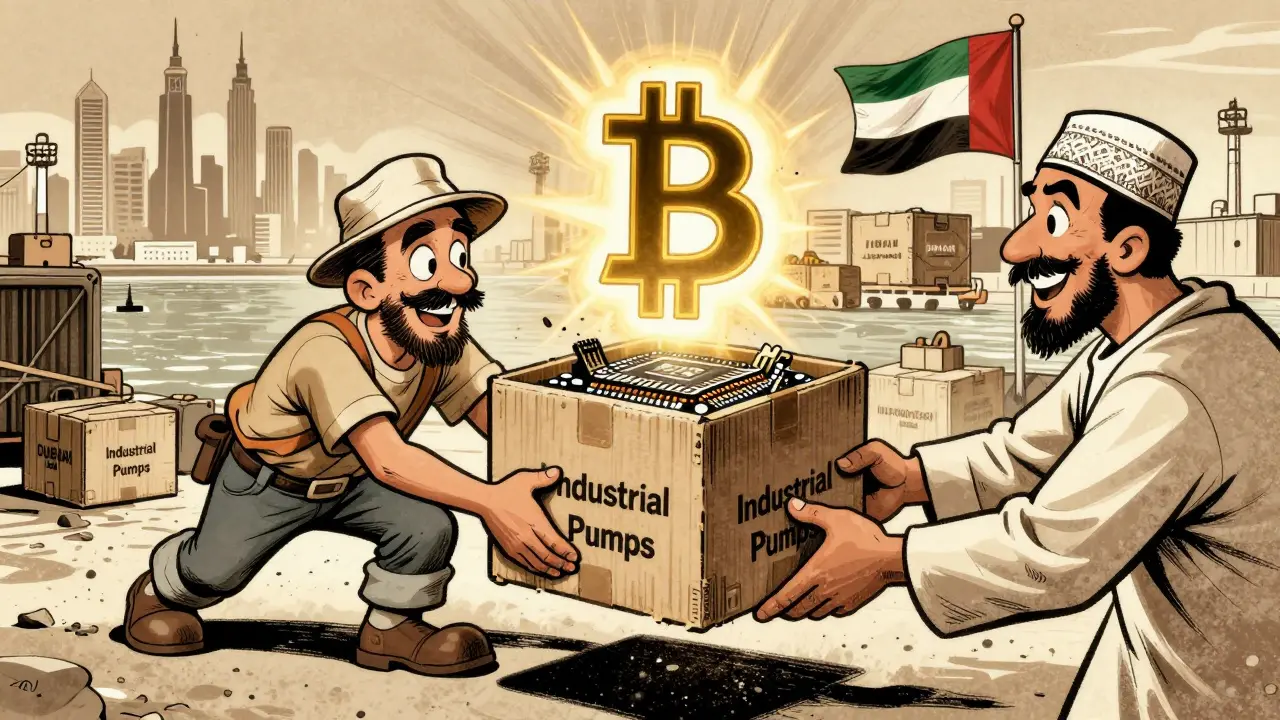
Because of sanctions, Iran can’t legally buy new ASIC miners from Bitmain or MicroBT. So it imports them through third countries-often via Dubai or Istanbul-hidden inside shipments of industrial machinery. Once inside, the hardware is installed in state-controlled zones where power is free and inspections are rare.
Internet connectivity is another hurdle. Iran’s national internet is slow and heavily monitored. Miners use proxy servers, encrypted tunnels, and even satellite links to stay connected to global mining pools. Some farms have backup diesel generators in case the grid goes down-common during winter when demand outstrips supply.
And the scale? Mind-boggling. The energy used by Iranian Bitcoin miners each year equals the output of 10 million barrels of crude oil. That’s about 4% of Iran’s total oil exports in 2020. The country is literally trading oil for electricity, then electricity for Bitcoin.
Who Benefits? And Who Pays?
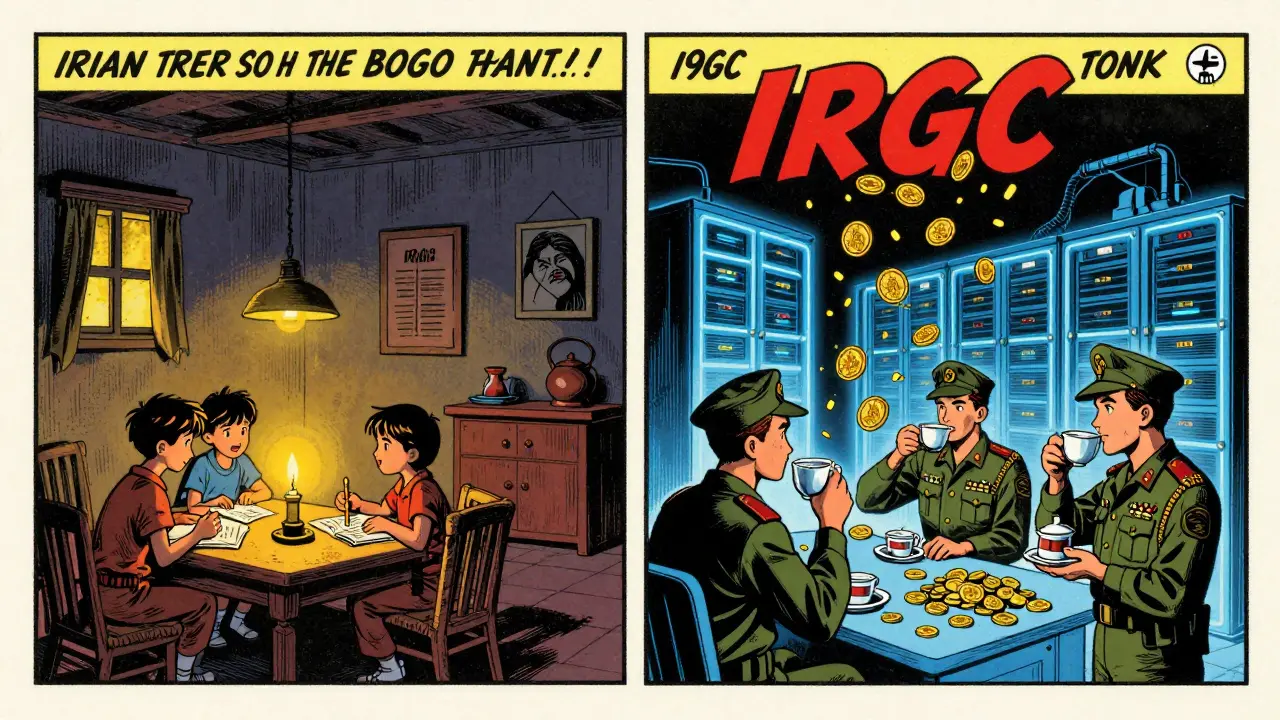
The money from Bitcoin mining doesn’t go to Iranian families. It doesn’t pay for school supplies or hospital beds. It flows to the IRGC, to military contractors, to the regime’s shadow network.
Investigations by Elliptic and Chainalysis show that Iranian entities linked to the IRGC processed over $8 billion in Bitcoin transactions through Binance between 2018 and 2025. That money funds missile programs, drone development, and support for Hezbollah in Lebanon and the Houthis in Yemen.
Meanwhile, Iranian citizens face rolling blackouts. In cities like Tehran and Mashhad, homes go without power for hours each day. Schools shut down. Factories halt production. The same electricity that could keep lights on in a hospital is being used to mine Bitcoin in a military-run facility.
It’s a brutal trade-off. The regime gains financial freedom. The people pay with their daily lives.
Why the World Can’t Stop It
Why hasn’t the U.S. or EU shut this down? Because they can’t.
Bitcoin is decentralized. You can’t raid a mining farm in Iran and shut down the whole network. Even if you sanction one facility, another pops up. The miners don’t need a bank. They don’t need a license. They just need power and an internet connection.
Blockchain analytics firms like TRM Labs and Elliptic can trace Iranian Bitcoin flows-but that’s not the same as stopping them. Exchanges like Binance and OKX have been pressured to block Iranian IPs, but many Iranian miners use VPNs or proxy services. Stablecoins make it even harder: once Bitcoin becomes USDT, it’s nearly impossible to tell where it came from.
Even worse, the global crypto market is so big now-over $2 trillion in value-that Iranian Bitcoin is just a drop in the ocean. If you try to flag every coin mined in Iran, you risk breaking Bitcoin’s core promise: that all coins are equal.
Some experts argue that trying to block Iranian mining is like trying to block water from flowing downhill. It’s not impossible, but it’s inefficient, expensive, and potentially self-defeating.
The Bigger Picture: A New Era of Sanctions
Iran’s Bitcoin mining isn’t just a workaround. It’s a warning.
Financial sanctions used to be powerful. Freeze assets. Cut off banks. Isolate the target. But in a world where digital money moves peer-to-peer, across borders, without intermediaries, those tools are losing their edge.
Iran is showing other sanctioned nations-Venezuela, North Korea, Russia, even Belarus-how to do it. Russia started its own crypto mining push after 2022, but it’s nowhere near as organized or as large-scale as Iran’s. Iran spent seven years building this system. It’s now a fully integrated part of its economy.
And it’s working. While oil exports dropped by 50% after 2018, Iran’s foreign currency reserves haven’t collapsed. Why? Because Bitcoin filled the gap.
The lesson? Sanctions only work if the target depends on the global financial system. If they don’t-they’ll build their own.
What Comes Next?
Iran isn’t stopping. In 2025, it’s expanding mining into new provinces and building domestic exchanges to reduce reliance on foreign platforms. Officials have pledged a 50% increase in mining capacity over the next two years.
They’re also exploring stablecoins, decentralized finance (DeFi) protocols, and even blockchain-based trade settlements with Russia and China. The goal isn’t just to survive sanctions. It’s to create a parallel financial system that doesn’t need the West at all.
For now, the world watches. The U.S. Treasury issues warnings. The EU debates new crypto rules. But the miners keep running. The Bitcoin keeps being mined. And the electricity keeps flowing.
As long as sanctions stay in place, Iran will keep mining. And the rest of the world will have to decide: do we try to stop it? Or do we accept that the rules of money have changed?
Lawal Ayomide
December 4, 2025 AT 20:37Iran’s mining isn’t evil-it’s adaptation. Sanctions starve civilians so elites can fund war. This is just the latest chapter in a 70-year game of chicken.
Ankit Varshney
December 5, 2025 AT 16:34The real tragedy isn’t the mining. It’s that ordinary Iranians pay for it with blackouts while the IRGC runs rigs on dedicated power lines. This isn’t innovation-it’s theft dressed as economics.
Vidyut Arcot
December 7, 2025 AT 09:20People forget Bitcoin was meant to be censorship-resistant. If you ban a country from the banking system, you’re basically handing them the keys to the next financial layer. This was inevitable.
Steve Savage
December 8, 2025 AT 15:49It’s wild how the same tech that lets people in Venezuela buy groceries without a bank account also lets a regime buy drones. Bitcoin doesn’t care who holds it. That’s its power-and its curse.
Ziv Kruger
December 9, 2025 AT 16:33Sanctions used to be about pressure. Now they’re just training wheels for decentralized economies. Iran didn’t break the system. They built a new one inside it.
Britney Power
December 11, 2025 AT 05:38One must observe, with clinical detachment, the grotesque irony of a theocratic state weaponizing a decentralized, pseudonymous, libertarian ledger to circumvent the very capitalist infrastructure it ideologically abhors-thus revealing not only the fragility of Western financial hegemony, but also the profound epistemological hypocrisy embedded in modern geopolitical strategy.
Shari Heglin
December 12, 2025 AT 07:48While the article presents a compelling narrative, it overlooks the fact that Iran’s mining operations are still subject to global blockchain analytics. The notion that this is an untraceable, unstoppable force is a dangerous oversimplification. The U.S. Treasury has already sanctioned multiple Iranian-linked wallets and exchanges. The game is far from over.
Sarah Roberge
December 13, 2025 AT 09:02ok but like… what if bitcoin is just a distraction? what if the real goal is to make everyone think the regime is powerful when really they’re just burning through electricity and hope? like… what if this is all just… performative?
Ivanna Faith
December 13, 2025 AT 20:24so like… if the iranian government is mining btc… and people are freezing in the dark… isn’t that just… evil? 🤡
Christy Whitaker
December 14, 2025 AT 13:15You people act like this is some clever hack. It’s not. It’s the same old tyranny with new tech. The IRGC doesn’t care about your blackouts. They care about control. And Bitcoin? It’s just another leash.
ashi chopra
December 15, 2025 AT 17:09My heart aches for the families in Tehran who turn off their heaters so a mining rig can keep spinning. This isn’t resistance. It’s sacrifice forced upon the powerless by those who’ve forgotten what humanity means.
Althea Gwen
December 16, 2025 AT 14:48so like… if bitcoin is decentralized… why are all the rigs in military zones? 🤔 sounds like a scam to me. 🤡
Mohamed Haybe
December 18, 2025 AT 07:07Let’s be real-this is what happens when the West plays god with economies. Iran didn’t invent this. They were pushed into it. And now you’re mad they’re good at it? Grow up. We all knew this was coming. The dollar isn’t sacred-it’s just a relic.
Layla Hu
December 19, 2025 AT 05:50The scale of this operation is terrifying. But the moral cost is worse. You can’t justify starving children to fund missiles. No amount of blockchain magic changes that.
samuel goodge
December 19, 2025 AT 13:05What’s being overlooked here is the philosophical pivot: sanctions were designed to isolate, but Bitcoin redefines isolation as sovereignty. Iran isn’t evading the system-they’re constructing a parallel ontology of value. The West still thinks in terms of banks and borders; Iran thinks in terms of nodes and hashes. The future belongs to the latter.
Paul McNair
December 21, 2025 AT 09:23There’s a lesson here for every country on the edge of global exclusion. If you can’t play by their rules, build your own. Iran didn’t ask for permission. They just started mining. And now they’re not just surviving-they’re rewriting the game.
Philip Mirchin
December 22, 2025 AT 12:18My uncle in Tehran told me last month his kid’s school got power for 3 hours a day. Meanwhile, the mining farms in Khuzestan run 24/7 on free juice. This isn’t economics. It’s a betrayal. And the world’s too busy debating crypto to notice.
Nancy Sunshine
December 24, 2025 AT 08:35While the technical execution is impressive, the ethical implications are catastrophic. A nation that prioritizes mining over medicine has lost its moral compass. Technology without humanity is not progress-it’s pathology.
justin allen
December 25, 2025 AT 15:33Iran’s not the problem. The U.S. is. You cut off their access to the global economy, then act shocked when they find a way to survive? That’s not smart. That’s stupid. And now you’re mad they’re better at it than you are?
Darlene Johnson
December 25, 2025 AT 22:53Did you know the U.S. government has been quietly funding crypto mining in Kazakhstan to counter Iran? This isn’t about sanctions. It’s a crypto cold war. And we’re all just pawns in a game no one told us we signed up for.