InfiBTC Crypto Exchange Review: What You Need to Know Before Trading
 Feb, 26 2026
There’s no denying it - the crypto exchange space is crowded. Every week, a new platform pops up promising low fees, lightning-fast trades, and unbeatable security. But when you dig deeper, many of them vanish just as quickly as they appeared. That’s the case with InfiBTC. If you’ve seen ads for it on social media or heard someone mention it as a "hidden gem," you’re right to ask: Is this real? Is it safe? And should you even consider using it?
What Is InfiBTC?
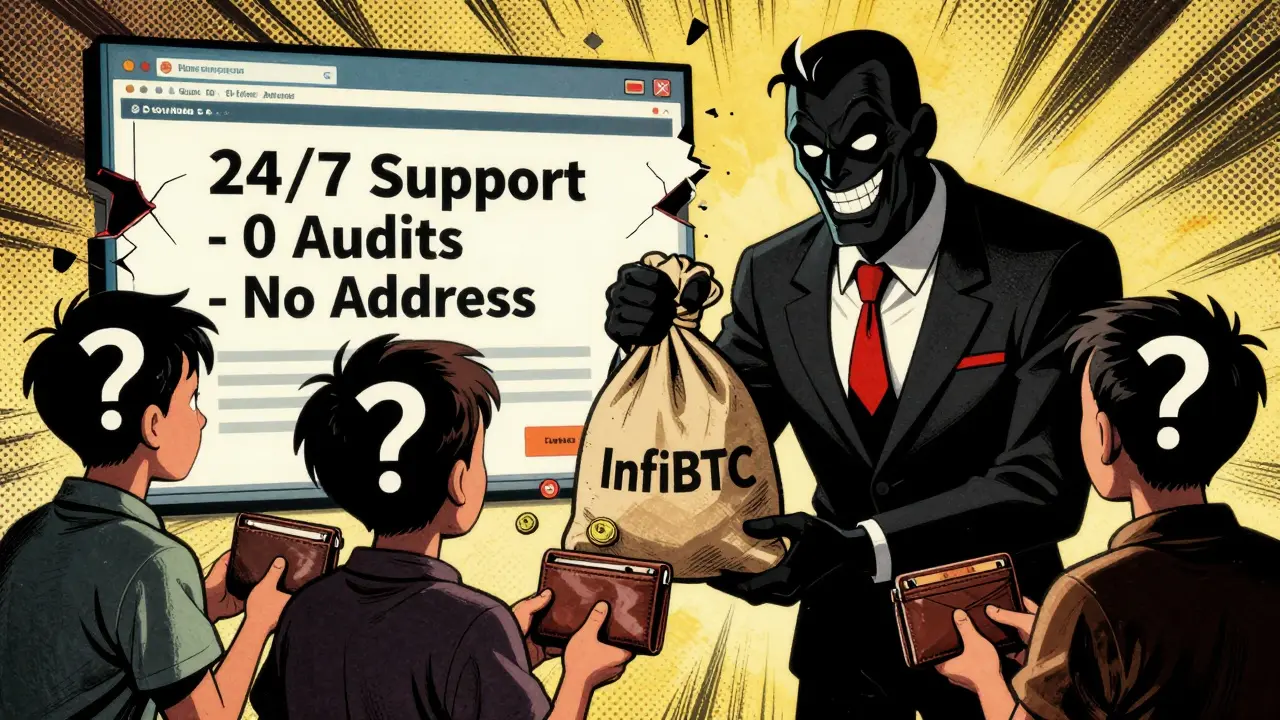
InfiBTC claims to be a cryptocurrency exchange that lets users trade Bitcoin, Ethereum, and a handful of altcoins. Its website says it was founded in 2023, targets beginners, and offers a simple interface with 24/7 customer support. Sounds nice, right? But here’s the catch: there’s no verifiable evidence that InfiBTC operates as a legitimate exchange.
Unlike Binance, Kraken, or Coinbase - platforms with public headquarters, registered licenses, and years of audit reports - InfiBTC has no official physical address, no regulatory filings, and no traceable team members. No LinkedIn profiles. No press releases. No interviews. Even their "about us" page is just a generic template with placeholder text.
What’s more, search engines and crypto watchdogs like CoinGecko and CoinMarketCap don’t list InfiBTC. That’s not an accident. Legitimate exchanges get listed automatically once they meet basic transparency standards. InfiBTC doesn’t even make the cut.
Where Did the Name Come From?
You might have seen "INFI" mentioned in token swap services like LetsExchange or CoinSwitch. Those platforms allow users to convert one cryptocurrency into another without needing an account. In those cases, "INFI" refers to a token - not an exchange. It’s a completely different thing.
Some websites are using the name "InfiBTC" to trick people into thinking it’s connected to the INFI token. It’s not. This is a classic case of name hijacking. Scammers often borrow names from real projects to create fake platforms that look trustworthy. If you’re looking to trade INFI tokens, you won’t find them on InfiBTC. You’ll need to use a real exchange like Gate.io or KuCoin.
Security Concerns: No Audits, No Insurance
When you put money on a crypto exchange, you’re trusting them with your assets. That’s why audits matter. Reputable exchanges like Kraken and Bitstamp publish third-party security audits from firms like CertiK or Hacken. These reports verify their cold storage, encryption, and access controls.
InfiBTC? Zero audits. Zero public documentation. No proof they even use cold wallets. That means your Bitcoin or Ethereum could be sitting on a server with no backup, no encryption, and no recovery plan. If their site goes down - or if someone hacks them - your funds are gone. Forever.
Also, there’s no insurance fund. Coinbase has $250 million in cold storage insurance. Binance has its SAFT (Secure Asset Fund for Users). InfiBTC has nothing. Not even a disclaimer.
User Reviews? There Aren’t Any
Check Trustpilot, Reddit, or even Twitter. You’ll find zero real user reviews for InfiBTC. Not one. That’s not because it’s new - it’s because it doesn’t exist as a functioning platform.
What you will find are forum posts from people asking, "Has anyone used InfiBTC?" and replies like: "Don’t deposit anything. I tried to withdraw and got ghosted." Or: "Their support email bounces back. I think it’s a scam."
One user on a crypto subreddit posted that they sent 0.5 BTC to InfiBTC’s deposit address. The funds never arrived. They tried contacting support for three weeks. No response. Their account was deleted two days later.
How Does It Compare to Real Exchanges?
Let’s cut through the noise. Here’s what real exchanges do - and what InfiBTC doesn’t:
| Feature | InfiBTC | Legitimate Exchanges (e.g., Kraken, Binance) |
|---|---|---|
| Regulation & Licensing | None | Registered in multiple jurisdictions (e.g., US, EU, Singapore) |
| Security Audits | None | Regular audits by CertiK, Hacken, or PeckShield |
| Customer Support | No verified contact, emails bounce | Live chat, email, phone, ticket system |
| Withdrawal Reliability | Users report funds stuck or lost | Withdrawals processed in under 1 hour (typically) |
| Asset Listing | Claims to list 20+ coins, but none are tradable | 100+ verified coins with real trading volume |
| Transparency | No team, no office, no legal docs | Public team, annual reports, legal disclosures |
Why Do Scams Like This Exist?
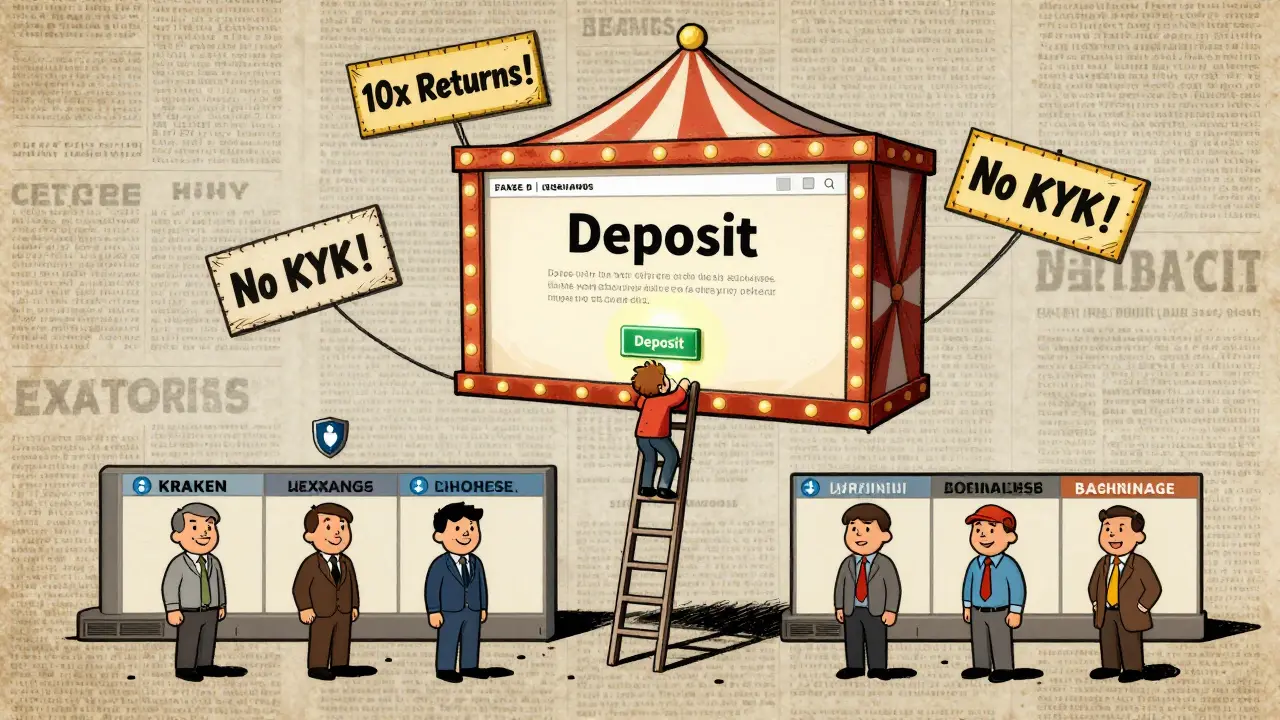
Crypto scams thrive because they prey on two things: hope and ignorance. New traders see flashy ads promising "10x returns" or "no KYC" and assume it’s a shortcut. They don’t realize that legitimate exchanges make money from trading fees - not from promising unrealistic gains.
InfiBTC’s model is simple: get you to deposit funds. Then, disappear. No withdrawal options. No explanations. Just silence. The longer you wait, the more you hope it’s a "glitch" - and the less likely you are to report it.
These scams cost users millions every year. The FBI’s Internet Crime Complaint Center reported over $4.3 billion lost to crypto scams in 2024. Most of them looked just like InfiBTC - clean websites, fake testimonials, and a sense of urgency.
What Should You Do Instead?
If you want to trade crypto safely, stick to platforms with a proven track record:
- Kraken - Best for security and compliance
- Binance - Best for volume and altcoin selection
- Coinbase - Best for beginners and fiat on-ramps
- Bybit - Best for derivatives and futures
All of them have:
- Real offices and legal entities
- Publicly listed teams
- Verified security audits
- Real user reviews on independent sites
- Clear withdrawal and deposit processes
Don’t chase the shiny new thing. Stick with what’s been tested.
Final Verdict: Avoid InfiBTC
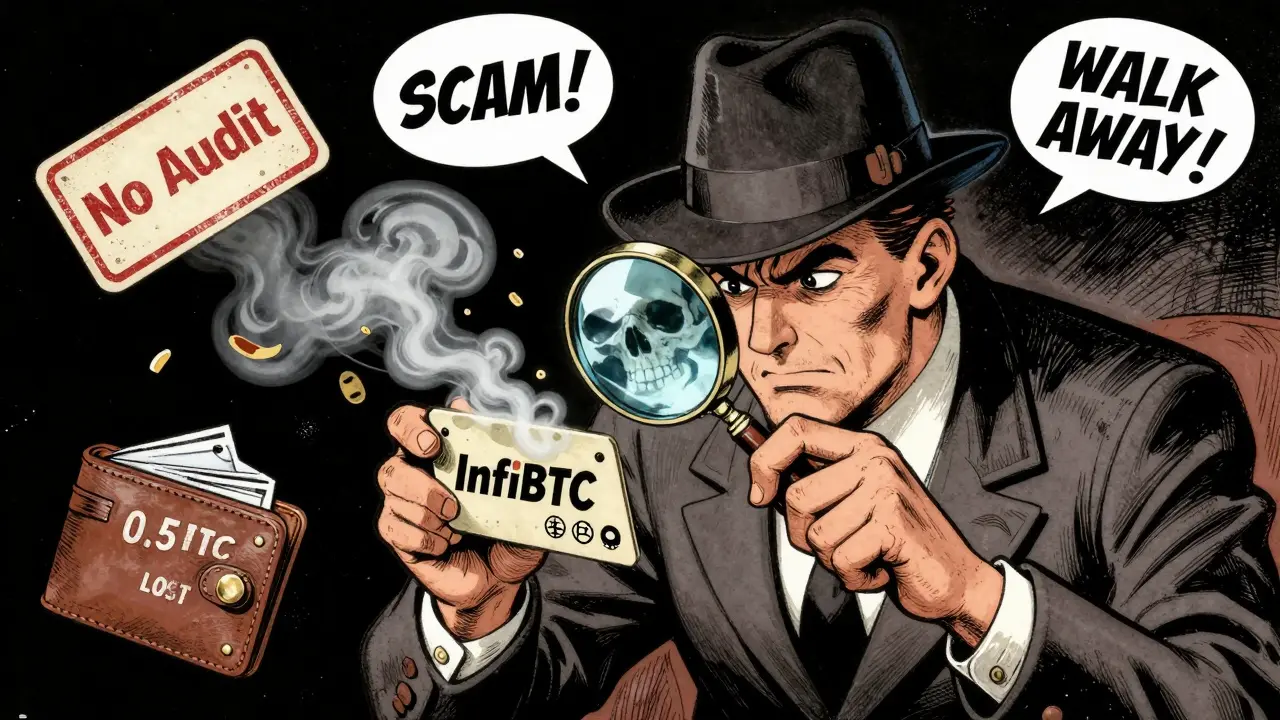
InfiBTC isn’t a failed exchange. It’s not even a startup. It’s a scam. There’s no gray area here. No ambiguity. No "maybe it’s legitimate."
If you’ve already sent funds to InfiBTC, you’re likely out of luck. But don’t give up. Report it to your local financial authority. File a report with the IC3 (Internet Crime Complaint Center). Share your story. You might help someone else avoid the same trap.
Bottom line: If an exchange isn’t listed on CoinGecko, doesn’t have audits, and has no verifiable history - walk away. Always. Crypto is risky enough without adding fake platforms into the mix.
Is InfiBTC a real crypto exchange?
No, InfiBTC is not a real exchange. It has no regulatory registration, no security audits, no verifiable team, and no presence on major crypto tracking sites like CoinGecko or CoinMarketCap. It appears to be a scam site designed to steal user funds.
Can I withdraw my money from InfiBTC?
Users who have tried to withdraw from InfiBTC report that their funds are stuck or completely lost. Withdrawal requests go unanswered, and support channels are non-functional. If you’ve deposited funds, recovery is extremely unlikely.
Why do people say "INFI" is a token?
"INFI" is the ticker symbol for a separate cryptocurrency token, not related to InfiBTC. Some token swap services like LetsExchange allow trading INFI for other coins. InfiBTC is using this name to confuse users into thinking it’s connected - but it’s not. This is a common scam tactic.
How can I spot a fake crypto exchange?
Check if it’s listed on CoinGecko or CoinMarketCap. Look for a physical address, a team with LinkedIn profiles, third-party security audits, and real user reviews on Trustpilot or Reddit. If any of those are missing, assume it’s fake. Legit exchanges don’t hide.
What should I do if I already sent crypto to InfiBTC?
Stop trying to contact them - it won’t help. File a report with your country’s financial crime unit. In New Zealand, that’s the Serious Fraud Office. In the US, use the IC3 website. Share your experience on crypto forums to warn others. Recovery is rare, but reporting helps prevent future victims.
Next Steps: Protect Yourself
Before you deposit any money into any exchange, ask yourself: "Can I verify this with three independent sources?" If the answer is no, walk away. Crypto isn’t a gamble - it’s a market. And like any market, it rewards caution over curiosity.
Stick with platforms that have been around for years. Use hardware wallets for long-term storage. Never trust a platform that pushes you to "act now" or "lock in your gains." Real exchanges don’t need to pressure you.
The next time you see an ad for "InfiBTC" or something similar, remember: if it sounds too good to be true - and lacks proof - it is.
George Suggs
February 27, 2026 AT 19:19Been in crypto since 2017 and I've seen this script a hundred times
Same website template
Same fake testimonials
Same "24/7 support" that never answers
Just another ghost platform
Don't even bother depositing
It's not a glitch
It's a trap
Tracy Peterson
February 28, 2026 AT 07:42I know it's tempting to think "what if this is the one?"
But hope isn't a strategy
And optimism without verification is just naivety dressed up as courage
There's a difference between being open-minded and being a target
Every time someone deposits here, they're not investing
They're funding someone's next vacation
And that's not just stupid
It's tragic
Ifeanyi Uche
March 1, 2026 AT 18:27bro this is why we need to stop trusting the system
all these "legit" exchanges are just front for the fed and the banks
infiBTC might be sketchy but at least its not owned by wall street
think outside the box man
the real scam is believing in regulation
crypto was meant to be wild
stop being so scared
just send ur coins
what do u have to lose
Jan Czuchaj
March 2, 2026 AT 15:27The tragedy here isn't just the scam itself
It's how systematically we've normalized the erosion of trust
Every time we encounter a new platform, we don't ask "is this real?"
We ask "is this worth the risk?"
That shift-from verification to justification-isn't accidental
It's engineered
By algorithms that reward urgency over inquiry
By influencers who profit from FOMO
By a culture that equates boldness with wisdom
And so we keep giving our money to ghosts
Because we've forgotten how to demand proof
Not because we're stupid
But because we've been taught that skepticism is a barrier to gain
When in reality, it's the only path to safety
And yet, we call ourselves pioneers
While we hand our keys to strangers
Who don't even have names
Tracy Whetsel
March 4, 2026 AT 08:06so many people don't realize that the real danger isn't the scam
it's how easy it is to convince yourself you're special
like "oh i'm smart enough to get out before it collapses"
but you're not special
you're just the next name on their list
and the system knows it
they count on you thinking you're the exception
don't be the exception
be the one who walks away
and helps someone else do the same
❤️
Elana Vorspan
March 5, 2026 AT 20:35i think the scammers are counting on the fact that people are lonely
not just emotionally
but in knowledge
they see someone asking "has anyone used this?"
and they reply with fake reviews
and suddenly it feels like a community
but it's not
it's a mirage
and the saddest part
is that we're so hungry for connection
we forget to check if the ground is real
before we step on it
🫂
aaron marp
March 7, 2026 AT 07:01One thing I've learned after 8 years of trading
is that legitimacy doesn't shout
It shows up
Every day
With audits
With transparency
With team photos that aren't stock images
With real support tickets that get answered
With a history that doesn't vanish when you try to withdraw
And if something doesn't do that?
It's not risky
It's already gone
Stop trying to find the hidden gem
Just use the ones that are already in the light
Phillip Marson
March 8, 2026 AT 09:31holy shit this post is like a fucking textbook
every single line is a warning sign
and yet people still fall for it
because they think they're smarter than the algorithm
or that they "got lucky" before
or that this time it's different
it's never different
the script is the same
the outcome is the same
the only thing that changes
is how many people you convince to lose their life savings
and you know what?
they'll still post "i'm so glad i found this"
in 3 months
when their account is gone
and they're begging for help
on a subreddit no one reads anymore
KingDesigners &Co
March 9, 2026 AT 07:48infiBTC? lmao
you guys really still falling for this?
the website looks like it was made in 2019 on wix
and the "support email" is support@infi-btc[.]xyz
which is literally a disposable domain
if you sent them coins
you're already a lost cause
but at least you're not alone
we've all been there
the shame is real
but so is the lesson
next time check coinmarketcap first
before you send your whole portfolio to a guy named "james" who says "trust me bro"
✌️
Dianna Bethea
March 11, 2026 AT 03:56Let me tell you something about crypto
It doesn't care if you're smart
Or if you've read every whitepaper
Or if you've been trading since Bitcoin was $300
It only cares if you've done the basic work
Check the domain
Check the team
Check the audits
Check the withdrawal times
Check the reviews outside their own site
If you skip those steps
You're not a trader
You're a target
And scammers don't need to trick you
They just need you to forget to look
So don't forget
It's not about being the next millionaire
It's about not becoming the next statistic
And yes
You can still win
But only if you play it safe
Not fast
Not bold
Just careful
That's the real edge
Patrick Streeb
March 11, 2026 AT 23:37While I appreciate the thoroughness of the analysis presented, I must respectfully underscore the importance of due diligence in the context of emerging financial technologies. The absence of verifiable regulatory compliance, coupled with a conspicuous lack of institutional transparency, constitutes a material risk that cannot be reasonably mitigated through speculative optimism. I would further posit that the proliferation of such entities undermines the broader legitimacy of the cryptocurrency ecosystem as a whole. It is incumbent upon all participants to prioritize institutional integrity over perceived convenience or yield. In this regard, the case of InfiBTC serves as a cautionary exemplar.
Alyssa Herndon
March 12, 2026 AT 03:12i just want to say
i know how hard it is to feel like you're behind
everyone else is making moves
and you're sitting there checking reviews
and wondering if you're too slow
too cautious
too scared
but here's the thing
you're not too late
you're just wise
and wisdom doesn't make noise
it just keeps you safe
and that's worth more than any 10x coin
you're doing okay
really
you're doing better than you think
Danny Kim
March 13, 2026 AT 19:45so let me get this straight
someone made a website called "infiBTC"
that doesn't exist
but has a "support email"
that bounces
and a "team"
that has no linkedin
and a "platform"
that isn't on coinmarketcap
and you're telling me this isn't the most obvious scam in history?
what are we even doing here
is this a test
of how dumb people can be
or just a reminder
that the internet is still the wild west
with no sheriff
and everyone's carrying a gun
and a fake passport
Michael Rozputniy
March 14, 2026 AT 15:51you think this is just a scam
but what if it's part of a larger operation
what if the domain was bought by a shell company
that's funded by a foreign intelligence agency
to collect blockchain data
to track wallet movements
to map out who's trading what
and then sell it to the government
or worse
to private actors
think about it
they don't need your money
they need your behavior
your patterns
your trust
and once they have that
they can predict the next crash
before it happens
and they can manipulate the market
without ever touching a coin
so maybe
infiBTC isn't stealing your crypto
maybe it's stealing your future
and you didn't even notice
because you were too busy checking the deposit button
Felicia Eriksson
March 16, 2026 AT 00:43just wanted to say
thank you for writing this
i was about to send 0.2 btc to this place
after seeing an ad on instagram
"no KYC" "instant trades" "10x returns"
and i almost did it
because i was tired
and stressed
and wanted to believe
but i paused
and googled
and found this
and i'm so glad i did
you saved me
and i'm sure you saved others too
thank you
really
thank you
Cathy Sunshine
March 17, 2026 AT 02:42the fact that you even have to write a post like this
is proof that we've lost something
not just in crypto
but in human judgment
we used to be skeptical
now we're just impatient
we used to ask questions
now we just tap "deposit"
and we call it innovation
when it's just surrender
and the worst part?
the scammers don't even need to be smart
they just need to know that
we're too tired
too distracted
too hopeful
to check
so they win
every time
and we're not even mad
we just say "oh well"
and move on
to the next shiny thing
that's not a scam
it's a funeral
and we're all holding the shovel
Kenneth Genodiala
March 18, 2026 AT 08:03you're all missing the point
infiBTC isn't a scam
it's a philosophical statement
it's a mirror
reflecting our collective addiction to shortcuts
our worship of speed
our disdain for patience
our fear of waiting
we don't want to learn
we want to win
we don't want to research
we want to click
and so we create the perfect environment
for fraud
because we've made trust the default
and verification the exception
the real scam
isn't the website
it's the mindset
that let it exist
in the first place