Iranian Central Bank Crypto Rules: Do Miners Have to Sell Their Bitcoin?
 Jul, 1 2026
You might have heard the rumor that miners in Iran is a country where cryptocurrency mining is legal but heavily regulated by the state to generate foreign currency revenue are forced to hand over their entire harvest to the government. It sounds like a dystopian nightmare for anyone who believes in self-custody. But the reality on the ground in 2026 is more complicated-and arguably just as controlling. The short answer? No, there is no blanket law saying "you must sell 100% of your mined coins." However, the regulatory web spun by the Central Bank of Iran (CBI) is the sole authority responsible for regulating the cryptocurrency market in Iran, established with exclusive jurisdiction in early 2025 makes it nearly impossible to keep or trade those coins without stepping into a minefield of compliance issues.
If you are looking at the Iranian crypto landscape from the outside, it looks like a paradox. On one hand, the government encourages mining because it earns hard currency (like US Dollars or Euros) which helps bypass international sanctions. On the other hand, they ban domestic citizens from using crypto for payments. This creates a specific set of rules that every miner, whether a small operation in a basement or a massive farm run by the military, has to navigate.
The Shift to Total State Control
To understand why people think miners have to "sell" everything, you have to look at what happened in early 2025. Before this, the rules were messy. Different agencies had different ideas about what was allowed. Then, President Masoud Pezeshkian issued a directive that changed the game completely. He designated the CBI as the single boss of all crypto activities.
This wasn't just a title change. The CBI now holds exclusive jurisdiction over licensing, oversight, and the conditions for holding digital assets. If you are mining in Iran today, you are not operating in a free market. You are operating in a state-controlled zone. The requirement isn't necessarily a direct confiscation of your wallet keys, but it is a requirement for total transparency. The CBI demands direct and unrestricted access to all data, statistics, and records related to your mining entity.
Think about what that means for a regular person. In most countries, your bank doesn't know how many satoshis you mined last Tuesday unless you deposit them. In Iran, under the current framework, the state expects to see the full picture. This level of surveillance acts as a de facto control mechanism. If the state can see exactly what you have, they can dictate what you do with it.
Licensing: The Gatekeeper to Mining
You cannot legally mine without a license. This is the first hurdle. The regulatory framework implemented in 2025 requires all participants-including individuals, legal entities, and businesses-to obtain licenses from the Central Bank. Without this license, your operation is considered illegal. And illegal mining in Iran carries heavy consequences, especially given the strain on the electrical grid.
Getting a license involves passing strict Anti-Money Laundering (AML) and Counter-Terrorism Financing (CTF) protocols. You also have to undergo Know Your Customer (KYC) checks. These aren't just form-filling exercises; they are designed to strengthen governmental control. Once you have the license, you are essentially signing up for a relationship with the state. You are allowed to mine, but you are expected to play by the state's rules regarding energy consumption and reporting.
| Feature | Licensed Miner (Legal) | Unlicensed Miner (Illegal) |
|---|---|---|
| Electricity Cost | Subsidized industrial rate (if within quota) | Risk of disconnection and fines |
| Data Privacy | Mandatory full disclosure to CBI | Hidden, but high risk of seizure |
| Selling Crypto | Must use approved exchanges with govt APIs | P2P only, high risk of arrest |
| Operational Risk | Low (compliance burden) | Very High (police raids, grid cuts) |
The Role of the IRGC and State Farms
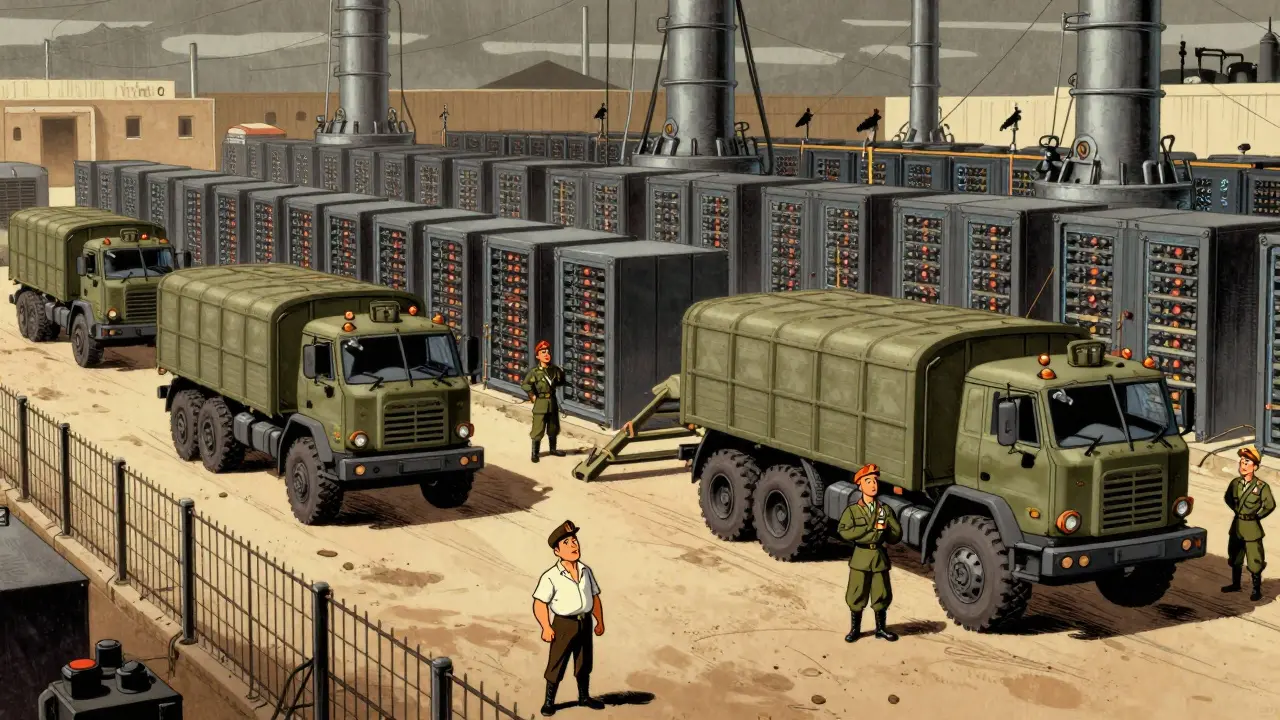
When people talk about "mandatory sales," they are often conflating private miners with state-affiliated operations. The Islamic Revolutionary Guard Corps (IRGC) has been a dominant force in Iran's mining landscape since around 2019-2020. Under directives from Supreme Leader Ali Khamenei, the IRGC partnered with Chinese companies to build massive mining farms. One famous example is the 175-megawatt Bitcoin farm in Rafsanjan, Kerman province.
These state-affiliated facilities operate differently. They often sit in special economic zones or on IRGC-controlled bases. They get dedicated power feeds that don't affect the civilian grid as much. For these operations, the "sale" of crypto is effectively managed by the state apparatus to convert Bitcoin into usable foreign currency for the regime. While private miners aren't legally required to give their coins to the IRGC, the sheer scale of state mining means that the government controls a significant portion of the supply chain. This dominance can create an environment where private miners feel pressured to align with state interests to avoid scrutiny.
The Trading Bottleneck: How You Actually Cash Out
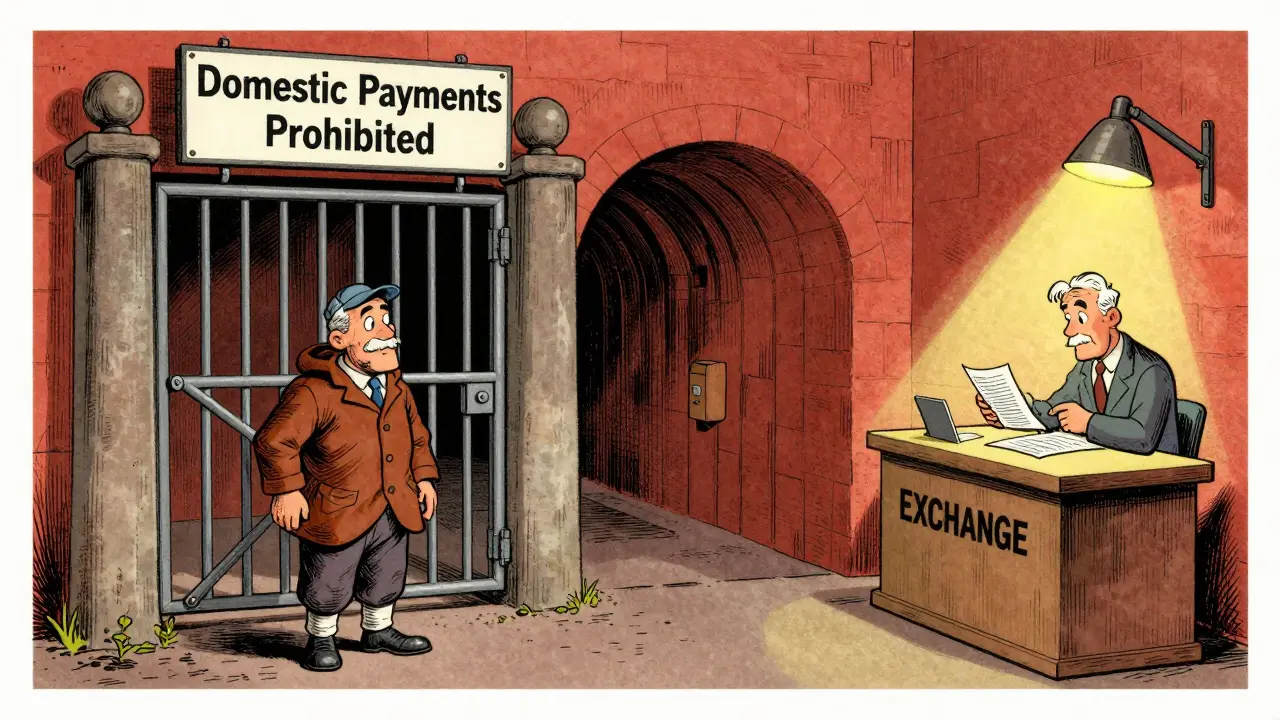
Here is where the "mandatory sale" myth gets its traction. Even if you keep your Bitcoin, how do you turn it into Rials to buy food or pay bills? The domestic use of digital assets for payments is prohibited. You can't walk into a shop and scan a QR code for Bitcoin.
In December 2024, the CBI blocked all crypto-to-rial payments through internet websites. By January 2025, they unblocked some exchanges, but with a catch: only those equipped with government APIs that provide full access to user data. This means if you want to sell your mined Bitcoin for Rials, you must use a centralized exchange that reports every transaction to the authorities. There is no anonymous way to cash out legally.
This creates a bottleneck. If you mine Bitcoin, you hold an asset that you cannot easily spend domestically without revealing your identity and transaction history to the state. For many, this feels like being forced to sell through state-sanctioned channels. The Iran Fintech Association has objected to these data-sharing requirements, calling them a "red line," but the pressure remains. If you refuse to share data, you can't use the legal exchanges. If you use P2P markets, you risk falling afoul of the advertising bans and anti-money laundering laws.
Energy Constraints and the Grid Crisis
Another reason miners face pressure is the electricity situation. Iran's mining sector accounts for about 4.5% of global activity. That’s huge. But it comes at a cost. The energy-intensive nature of mining strains the national electrical grid. In December 2024, rolling power outages hit multiple regions, and officials blamed unauthorized Bitcoin mining for making things worse.
The government uses energy quotas as a lever. Licensed miners get cheap electricity, but only up to a certain limit. If you exceed your quota, or if the grid is under stress during summer heatwaves, your power can be cut. This forces miners to either scale back or find ways to justify their energy usage. In practice, this means the state can indirectly control your output by controlling your power supply. If they want less mining, they restrict the grid. If they want more revenue, they relax the caps slightly for compliant operators.
What Does This Mean for Private Miners?
So, do you have to sell your crypto? Not directly. But the ecosystem is designed to funnel all value through state-monitored pipes. Here is the practical reality for a private miner in Iran in 2026:
- Transparency is Mandatory: You must report your mining yields and holdings to the CBI via your licensed status.
- Cashing Out is Tracked: To convert crypto to fiat, you must use exchanges that share your data with the government.
- No Domestic Spending: You cannot use your mined coins for local purchases; you must convert them first.
- Compliance Risks: Failure to adhere to AML/KYC rules or energy quotas can lead to license revocation or criminal charges.
The "mandatory sale" is less of a written law and more of a structural necessity. Because you cannot hide your activity, and because you cannot spend the coins locally, you are effectively pushed toward selling them through official channels where the state takes its cut (via taxes, fees, or simply knowing where the money went). It is a system of control rather than confiscation.
The Future: Digital Rial and Further Restrictions
Looking ahead, the government is pushing for a digital rial pilot program on Kish Island. This central bank digital currency (CBDC) aims to reduce dependency on the dollar and increase financial sovereignty. For miners, this signals a future where the state wants even tighter control over the flow of money. The goal is to keep wealth inside the system and prevent capital flight.
The February 2025 ban on cryptocurrency advertising further isolates the sector. By limiting public awareness and discussion, the government keeps the crypto community small and manageable. This benefits large, state-aligned players who can navigate the bureaucracy, while squeezing out smaller, independent operators who rely on community support and open information.
For anyone considering mining in Iran, the key takeaway is this: You are not just running computers; you are participating in a state-sanctioned economic strategy. The freedom to hold your own crypto exists on paper, but the walls around it are made of data requirements, energy limits, and trading restrictions. It is a high-reward, high-control environment.
Is cryptocurrency mining legal in Iran in 2026?
Yes, cryptocurrency mining is legal in Iran, but only if you have a license from the Central Bank of Iran (CBI). Unlicensed mining is illegal and can result in severe penalties, including equipment seizure and criminal charges. The government encourages licensed mining as a way to earn foreign currency to offset sanctions.
Do Iranian miners have to sell their Bitcoin to the government?
There is no explicit law forcing miners to hand over their physical Bitcoin to the state. However, miners must use state-approved exchanges to convert crypto to Rials, and these exchanges share full transaction data with the government. This creates a system where all sales are monitored and controlled, effectively limiting true financial privacy.
Can I use my mined crypto to pay for goods in Iran?
No. The domestic use of cryptocurrencies for payments is prohibited in Iran. You must convert your crypto into Iranian Rials through a licensed exchange before you can spend it. Direct crypto-to-goods transactions are not allowed under current regulations.
Who regulates cryptocurrency in Iran?
The Central Bank of Iran (CBI) is the sole authority responsible for regulating the cryptocurrency market. Since early 2025, the CBI has had exclusive jurisdiction over licensing, oversight, and data collection for all crypto activities, including mining and trading.
What happens if I mine without a license?
Mining without a license is considered illegal. Authorities may shut down your operation, seize your equipment, and impose fines. Additionally, unlicensed miners often contribute to power grid instability, which has led to increased police raids and judicial actions against unauthorized farms.
How does the IRGC fit into Iran's crypto mining scene?
The Islamic Revolutionary Guard Corps (IRGC) operates some of the largest mining farms in Iran, often in partnership with Chinese companies. These state-affiliated facilities benefit from dedicated power supplies and minimal scrutiny, allowing them to dominate the sector and generate significant revenue for the state.