Iranian Rial Crypto Trading Restrictions: The 2026 Reality
 Aug, 29 2026
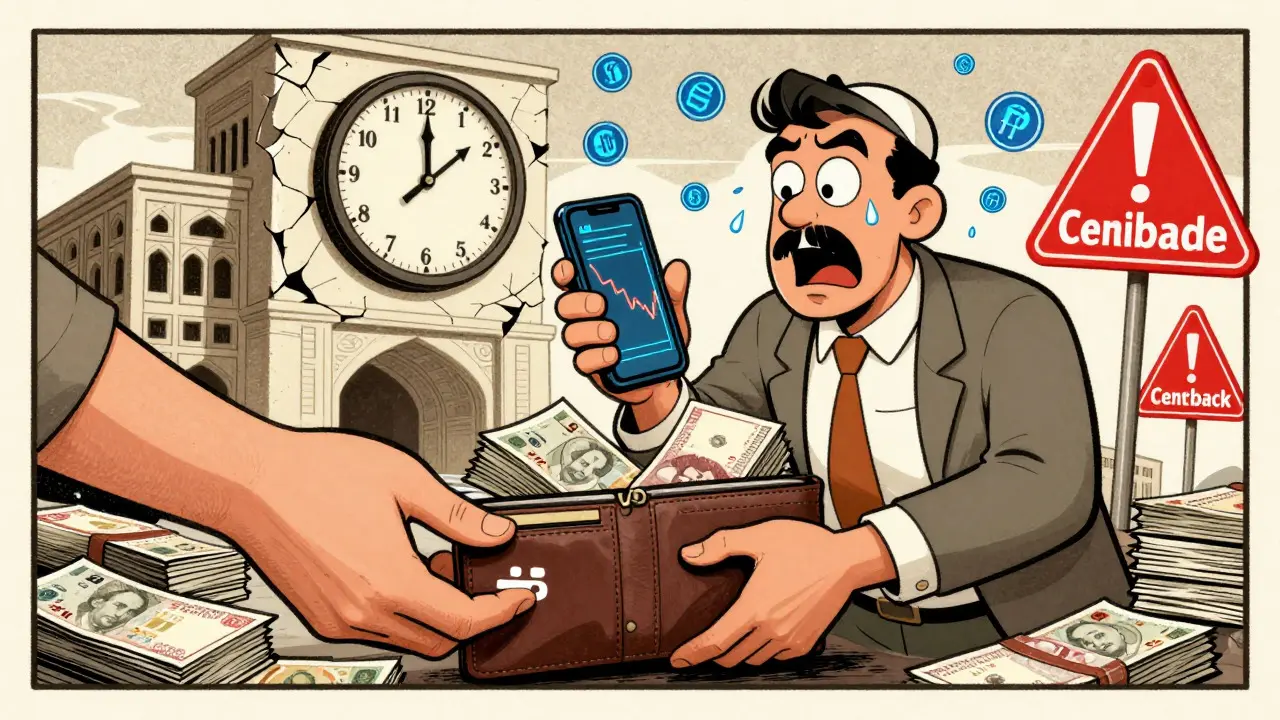
Imagine trying to protect your life savings from a currency that loses value by the hour. Now imagine the government telling you exactly how much of that protection you can hold, and then freezing half of it without warning. This isn't a hypothetical scenario for people in Iran; it’s their daily reality as we head into late 2026. If you’ve ever wondered why Iranian rial holders are scrambling to move assets off local exchanges, or why stablecoin purchases have hit a hard ceiling, you’re looking at one of the most aggressive regulatory crackdowns in the global crypto space.
The situation is complex because Iran plays both sides of the fence. On one hand, they want Bitcoin mining revenue to bypass international sanctions. On the other, they need to stop capital flight to keep the rial from collapsing further. For traders, this creates a minefield. You might have $10,000 in USDT today, but if you don’t convert it within a month, the state might force you to sell. Let’s break down exactly what these rules mean for you, whether you’re trading locally or holding Iranian-linked assets abroad.
The Great Stablecoin Squeeze
The most immediate pain point for Iranian traders right now comes from the Central Bank of Iran (CBI) directives issued in late September 2025. Just hours before UN sanctions were set to be reinstated, Asghar Abolhasani, deputy governor of the CBI, dropped a bombshell on state television. He announced strict caps on stablecoin holdings. Here is the rule: no individual or corporate entity can purchase more than $5,000 worth of stablecoins annually. Even more restrictive? Your total holdings cannot exceed $10,000 at any given time.
This wasn’t just a suggestion. The CBI gave existing holders a one-month transition period to comply. If you held $15,000 in USDT, you had thirty days to dump $5,000 back into rials or face penalties. This move was designed to stop ordinary citizens from using digital dollars to hedge against inflation. By capping exposure, the government forces liquidity back into the traditional banking system, hoping to stabilize the exchange rate. But does it work? Many argue it just pushes trading underground, where oversight disappears entirely.
Tether Freezes and the Nobitex Connection
If the domestic caps weren’t enough, external pressure has been relentless. In July 2025, Tether executed its largest-ever freeze of Iranian-linked funds. They targeted 42 specific cryptocurrency addresses. Why those addresses? A significant portion showed heavy interaction with Nobitex, the largest domestic exchange in Iran. Others had links to wallets affiliated with the Islamic Revolutionary Guard Corps (IRGC).
This event sent shockwaves through the community. Suddenly, users realized that holding USDT wasn’t safe if your transaction history looked suspicious to Tether’s compliance algorithms. Following the freeze, there was a coordinated push-likely backed by government-aligned channels-for Iranians to divest from USDT. The solution offered was migration to DAI via the Polygon network. This shift wasn’t just about avoiding freezes; it was about speed and lower fees. It shows how quickly the Iranian market adapts when forced by external enforcement actions.
Mining vs. Trading: A Tale of Two Policies
It seems contradictory, doesn’t it? The government bans domestic crypto payments and limits trading, yet they actively encourage mining. In fact, Iran accounts for roughly 4.5% of global Bitcoin mining activity, generating approximately $1 billion annually. The logic is simple: mining brings in foreign currency that can be used internationally, while domestic trading drains reserves and fuels speculation.
To manage this, the state legalized mining operations specifically for revenue generation. However, this success created a new problem: energy consumption. Mining rigs strain the electrical grid, leading to blackouts during peak seasons. Consequently, the government implemented consumption caps. So, while miners are legal, they operate under tight energy budgets. Meanwhile, the average trader faces advertising bans. Since February 2025, all cryptocurrency advertising-online and offline-is prohibited. You won’t see billboards for crypto exchanges in Tehran anymore. This suppresses public awareness and makes it harder for new users to enter the market legally.

The Rise of the Digital Rial Pilot
Amidst the chaos, the Central Bank of Iran launched its own answer to decentralized money: the "Rial Currency." Don’t confuse this with a typical altcoin. This is a Central Bank Digital Currency (CBDC). It is electronic cash, an exact digital twin of the paper banknotes you carry in your wallet. Unlike Bitcoin, you can’t mine it. Its supply is controlled entirely by the CBI, and its value is pegged directly to the traditional rial.
A pilot program is currently running on Kish Island. The goal here is strategic: reduce dependency on the US dollar for domestic transactions. If successful, this could eventually replace the need for stablecoins in everyday commerce. But for now, it’s a limited experiment. Most Iranians still prefer the anonymity and stability of crypto over a digital currency that the government can track and control instantly.
New Tax Laws Hit Speculators
In August 2025, Iran enacted the Law on Taxation of Speculation and Profiteering. This was a landmark moment. For the first time, cryptocurrency trading is subject to capital gains tax. Previously, digital assets existed in a gray area. Now, they are treated alongside gold, real estate, and foreign exchange. The implementation is phased, meaning the government is gradually integrating these taxes into the broader financial framework.
For traders, this changes the math. You aren’t just watching price charts; you’re calculating potential tax liabilities. The law targets "speculation," implying that short-term trading profits are now fair game for the treasury. This adds another layer of friction to an already difficult trading environment. Compliance requires detailed record-keeping, which many informal traders struggle to maintain.

Practical Implications for Traders
So, what does this mean for someone actually trying to trade in or out of Iran in 2026? The landscape is fragmented. Official exchanges like Nobitex operate under strict licensing and API monitoring. Every transaction is visible to the state. Unofficial markets thrive on peer-to-peer deals, often using Telegram groups or local meetups, but they carry high counterparty risk.
Here is a quick breakdown of the current constraints:
| Restriction Type | Limit/Rule | Impact |
|---|---|---|
| Stablecoin Purchase | $5,000 per year | Limits hedging capacity for individuals |
| Stablecoin Holdings | $10,000 max balance | Forces liquidation of excess assets |
| Advertising | Total Ban | Reduces market visibility and entry points |
| Payments | Prohibited domestically | Crypto is an asset, not currency |
| Mining | Legal with Energy Caps | State-controlled revenue source |
Notice the pattern? Everything is capped or banned except mining. The state wants the income from mining but fears the instability caused by retail adoption. If you are an outsider looking at Iranian crypto flows, remember that volume data from local exchanges may not reflect the true picture. Much of the activity happens off-book, driven by the urgent need to preserve wealth against a devaluing rial.
FAQ
Can I freely buy Bitcoin in Iran?
Technically, yes, but with caveats. While mining is legal, buying Bitcoin for investment purposes falls under general crypto regulations. You must use licensed exchanges that report to the Central Bank. However, using Bitcoin for direct payment of goods and services is strictly prohibited. Additionally, moving large amounts of fiat currency to buy crypto is restricted to prevent capital flight.
Why did Tether freeze Iranian addresses?
Tether froze 42 addresses in July 2025 due to compliance concerns linked to sanctioned entities, including connections to the IRGC and major exchanges like Nobitex. These freezes were part of broader efforts to ensure USDT remains compliant with international anti-money laundering standards, particularly regarding sanctions evasion.
What is the limit on stablecoin holdings for Iranians?
As of late 2025, the Central Bank of Iran imposed a cap of $10,000 on total stablecoin holdings per individual or entity. Furthermore, annual purchases are limited to $5,000. Holders exceeding these limits were required to reduce their positions within a one-month grace period.
Is cryptocurrency taxed in Iran?
Yes. Following the Law on Taxation of Speculation and Profiteering enacted in August 2025, capital gains from cryptocurrency trading are subject to taxation. This places crypto assets in the same category as gold, real estate, and foreign exchange for tax purposes.
What is the 'Rial Currency'?
The 'Rial Currency' is a Central Bank Digital Currency (CBDC) issued by the Central Bank of Iran. It is a digital version of the traditional paper rial, fully centralized and non-minable. A pilot program is underway on Kish Island to test its utility in reducing reliance on the US dollar for domestic transactions.
Laine Van Sickle
August 30, 2026 AT 03:00ugh this is so depressing i feel bad for them literally cant even save their money without the gov stealing it lol
also why do they ban ads? thats just weird control freak behavior imo