Iraq Crypto Mining Ban Since 2017: Rules, Risks & Underground Reality
 May, 31 2026
Imagine trying to send money across borders in a country where the official banking system is slow, bureaucratic, and heavily scrutinized. Now imagine doing it while dodging authorities because the method you chose is technically illegal. This is the daily reality for thousands of Iraqis involved in cryptocurrency activities. Since 2017, Iraq has maintained one of the strictest stances on digital assets in the world, banning both trading and mining. Yet, despite these prohibitions, an underground economy thrives, driven by necessity, profit, and a lack of viable alternatives.
The Origin of the Prohibition: Why 2017 Changed Everything
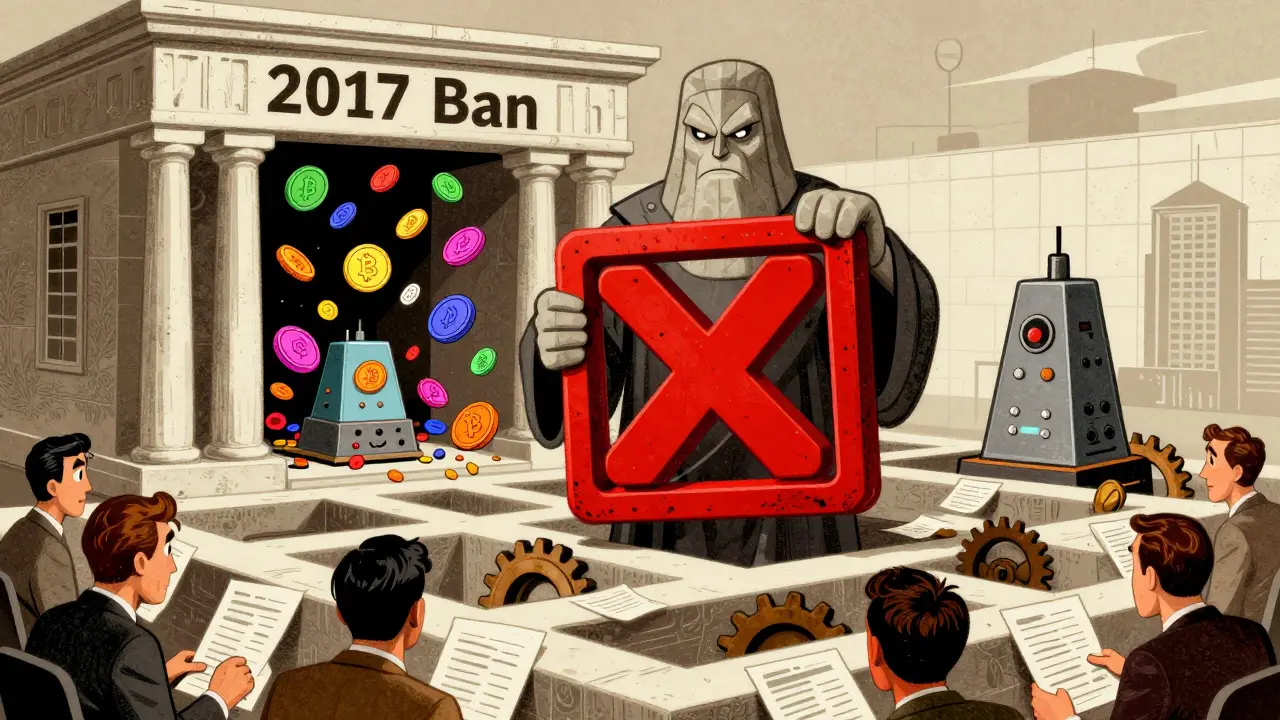
To understand the current landscape, we have to look back at the pivotal moment when the Central Bank of Iraq (CBI) drew a hard line in the sand. In 2017, the CBI issued a comprehensive directive prohibiting all banks and financial institutions from engaging in any transactions related to cryptocurrencies. This wasn't just a suggestion; it was a blanket ban that extended to using digital cards or electronic wallets for speculation in digital currencies.
The decision wasn't made in a vacuum. At the time, global concerns about money laundering, market volatility, and consumer protection were rising. For Iraq, a nation still rebuilding its economic infrastructure after years of conflict, the risks seemed too high. The CBI argued that cryptocurrencies are unregulated financial instruments that cannot be tracked or taxed effectively. Without legal legislation or monitoring frameworks, digital currencies posed a threat to the national financial system's stability.
This move placed Iraq in a small but significant group of countries with outright bans. As of 2025, only about ten nations worldwide prohibit cryptocurrency transactions entirely. Iraq joined peers like Bangladesh, which introduced criminal penalties for possession in 2017, and Egypt, which cited both economic and religious reasons for its prohibition. Even China, once home to nearly three-quarters of global Bitcoin mining capacity, shut down its industry in 2021 due to similar regulatory and climate concerns.
| Country | Ban Year | Primary Reason | Current Status (2026) |
|---|---|---|---|
| Iraq | 2017 | Financial crime, instability | Complete ban on trading/mining |
| China | 2021 | Climate goals, capital control | Mining banned, trading restricted |
| Bangladesh | 2017 | Criminal penalty focus | Strict ban with jail terms |
| Bolivia | 2014 (Reversed 2024) | Economic sovereignty | Regulated institutional access allowed |
The Role of Religious and Regional Authorities
In Iraq, the ban isn't solely a federal issue. The decentralized nature of governance means regional bodies also play a role in shaping public perception and enforcement. In 2018, the Kurdistan Regional Government's Supreme Fatwa Committee issued a ruling against OneCoin, a notorious Ponzi scheme disguised as a cryptocurrency. While this specific ruling targeted a fraudulent project, it reinforced a broader narrative that digital assets are suspicious or contrary to Islamic law (Sharia). Although not all cryptocurrencies are inherently non-compliant with Islamic finance principles, the association with scams and volatility has led many religious scholars to advise caution or outright rejection.
This unified governmental approach across different administrative regions creates a dense web of restriction. Whether you are in Baghdad or Erbil, the message from authorities remains consistent: stay away from digital currencies. However, this top-down pressure often clashes with the bottom-up demand for financial tools that work outside the traditional system.
The Underground Economy: How Trading Persists
If the ban is so strict, why does the activity continue? The answer lies in human ingenuity and necessity. Despite the official prohibition, informal cryptocurrency trading and mining activities persist throughout Iraq. This underground economy is not run by sophisticated syndicates alone; it includes everyday citizens looking for alternative income streams or ways to preserve wealth against inflation.
Take the case of "Ahmed Crypto," a pseudonym used by a 33-year-old Baghdad resident who manages $10,000 worth of digital currency through a discreet Facebook page. Ahmed previously operated from an office but was forced to go dark after receiving security warnings from authorities. He describes the Central Bank’s position as "backward," arguing that proper regulation could benefit both banks and traders. His story is not unique. Across cafes in Baghdad and Basra, miners and traders hold whispered meetings, speaking in hushed tones to avoid detection.
Enforcement has seen some teeth. Reports indicate that at least two individuals were detained for cryptocurrency-related activities. However, legal expert Hayan Al-Khayyat notes that he has not heard of formal trials specifically charging individuals with cryptocurrency trading or mining. This suggests that while arrests happen, the judicial process may be inconsistent or limited. The fear of prosecution keeps the community quiet, but it doesn't stop them. As Ahmed puts it, "Whatever you do, we will find alternative ways and precautions to avoid prosecution."
Environmental Concerns and Energy Consumption
Another layer to the ban involves environmental impact. Bitcoin mining is notoriously energy-intensive, relying on a Proof of Work mechanism that requires massive computational power. Organizations like Greenpeace USA have identified Iraq as one of the first countries to address this issue when the CBI issued its 2017 statement. With Iraq facing its own energy challenges, including frequent blackouts and strained power grids, allowing energy-hungry mining operations was seen as counterproductive.
By 2024, at least eight countries had outright bans on cryptocurrency mining, primarily targeting Bitcoin due to its carbon footprint. For Iraq, the ban serves a dual purpose: protecting financial integrity and conserving scarce electrical resources. This aligns with global trends where regulators increasingly view crypto mining through an environmental lens, not just a financial one.
Impact on Cross-Border Payments and Business
The most tangible effect of the ban is felt in cross-border payments. Iraq’s stringent Anti-Money Laundering (AML) framework, combined with the institutional prohibition on crypto, creates a complex compliance landscape for businesses. International trade relies on swift, reliable payment channels, but the elimination of cryptocurrencies forces reliance on slower, more bureaucratic traditional banking systems.
This results in payment delays, heightened scrutiny, and increased operational costs. Funds can be frozen or rejected without clear recourse, introducing friction into business operations. For freelancers, exporters, and importers, this means lost opportunities and cash flow problems. The disconnect between policy implementation and practical enforcement leaves businesses stuck in a limbo where they need modern financial tools but are legally barred from accessing them.
Why the Ban Isn't Going Away Anytime Soon
Unlike Bolivia, which reversed its 2014 ban in 2024 to allow regulated financial institutions to process crypto transactions, Iraq shows no signs of softening its stance. The government has not announced any plans to reconsider or modify its cryptocurrency policies. The Central Bank continues to actively warn against digital asset engagement, emphasizing the risks over potential benefits.
Members of the Iraqi crypto community, such as Ashur Al-Nuaimi, argue that financial institutions simply lack sufficient knowledge about blockchain system operations. This ignorance leads to fear and avoidance rather than informed regulation. The community suggests that legalization with proper oversight and commission structures could provide better control and revenue generation for the government. However, until there is a political will to bridge this knowledge gap, the status quo will remain.
Navigating the Risks: What You Need to Know
If you are considering engaging with cryptocurrencies in Iraq, understanding the risks is crucial. Here is what the current environment looks like:
- Legal Ambiguity: While formal trials are rare, the threat of detention exists. There is no clear legal pathway for dispute resolution if something goes wrong with your trades.
- Security Threats: Operating openly can attract unwanted attention from authorities or malicious actors. Most users operate in secrecy, which increases vulnerability to scams.
- Financial Isolation: You cannot use local banks to buy or sell crypto. All transactions must be peer-to-peer or through international platforms that may block Iraqi IP addresses.
- No Consumer Protection: If you lose funds due to hacking or fraud, there is no regulatory body to turn to for help.
The persistence of informal trading demonstrates the challenges governments face when attempting to completely eliminate decentralized digital asset activities. Iraq’s experience mirrors similar enforcement difficulties seen in other banned jurisdictions, where underground markets thrive despite official restrictions. The debate between prohibition and regulated acceptance remains unresolved, leaving users to navigate a gray area filled with both opportunity and danger.
Is it legal to mine Bitcoin in Iraq?
No, it is not legal. The Central Bank of Iraq banned cryptocurrency mining in 2017, citing concerns over energy consumption and financial stability. Engaging in mining activities can lead to confiscation of equipment and potential detention.
Can I use PayPal or Stripe in Iraq for crypto transactions?
Generally, no. Major international payment processors like PayPal and Stripe do not support direct cryptocurrency transactions, and their services in Iraq are limited due to strict AML regulations. Using them for crypto-related activities can result in account freezes.
Are there any exceptions for businesses?
Currently, there are no known exceptions for businesses. The ban applies to all entities, including financial institutions and private companies. Businesses seeking to engage in crypto must operate through offshore entities, which carries significant legal risk.
Why did Iraq ban cryptocurrencies?
The primary reasons include preventing money laundering, protecting consumers from market volatility, and preserving the stability of the national financial system. Additionally, environmental concerns regarding energy-intensive mining played a role.
Will the ban be lifted in the future?
There are no current indications that the ban will be lifted. Unlike some countries that have moved toward regulation, Iraq maintains a complete prohibition stance. Any change would require significant legislative reform and shifts in central bank policy.