Is Cryptocurrency Better Than Fiat Money? A Real-World Comparison
 Jun, 20 2026
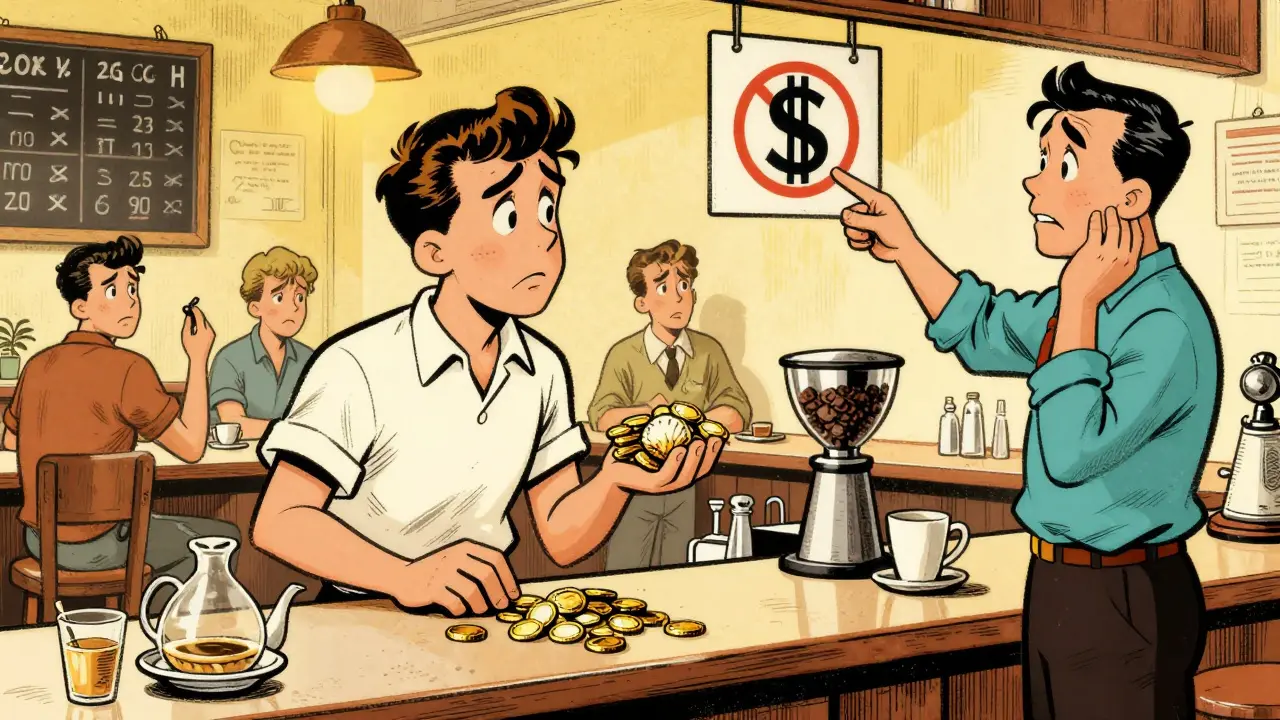
Imagine trying to buy a coffee in a shop where the barista only accepts a specific type of shell or gold coin. Now imagine the price of that coin doubling by lunchtime. This is the reality for many people living with unstable fiat money, and it highlights why the debate over whether cryptocurrency is better than traditional government-backed currency is so intense.
The short answer? It depends on what you need the money to do. If you want to pay your electric bill without worrying about the value changing overnight, fiat wins. But if you want to send $500 to a friend in another country without paying 10% in fees, cryptocurrency takes the lead. Neither system is perfect, but understanding their strengths helps you decide which one serves your financial goals best.
The Core Difference: Who Holds the Keys?
To understand why some people prefer crypto, we have to look at who controls the money. Fiat money is currency declared by a government to be legal tender, even though it is not backed by a physical commodity like gold or silver. Its value comes from trust in the government and the central bank that manages its supply. The US Dollar, Euro, and Japanese Yen are all fiat currencies.
In contrast, Bitcoin and other cryptocurrencies operate on a decentralized network called blockchain. There is no central bank deciding how much Bitcoin exists. Instead, the rules are coded into the software. For example, there will never be more than 21 million Bitcoins. This fixed supply stands in stark contrast to fiat money, which central banks can print endlessly, often leading to inflation that erodes purchasing power over time.
- Fiat: Centralized control by governments and central banks (e.g., Federal Reserve).
- Crypto: Decentralized control via code and consensus mechanisms.
- Supply: Fiat has unlimited potential supply; Bitcoin has a hard cap of 21 million.
Why Crypto Wins on Speed and Cost
One of the biggest pain points with traditional banking is moving money across borders. If you try to send money from the United States to the Philippines using a standard bank wire, you might wait three to five business days. On top of that, you could lose 3% to 7% of the total amount to intermediary fees and unfavorable exchange rates.
Cryptocurrency changes this dynamic completely. Because it operates on a peer-to-peer network, you can send funds anywhere in the world directly to another person’s wallet. Transactions on networks like Litecoin or Ripple can settle in seconds or minutes, regardless of distance. While Ethereum transaction fees can spike during high traffic, Layer-2 solutions and alternative blockchains keep costs low, often under $1 for international transfers.
This efficiency makes crypto ideal for freelancers working with global clients or families sending remittances home. You bypass the entire chain of correspondent banks that traditionally slow down and tax these transactions.

Transparency vs. Privacy: A Double-Edged Sword
When you swipe your credit card, the transaction data sits in private databases owned by Visa, Mastercard, and your bank. These institutions share data with advertisers and sometimes with government agencies. You have limited visibility into how your financial data is used.
With cryptocurrency, every transaction is recorded on a public ledger known as the blockchain. Anyone can view the history of any wallet address. This transparency builds trust because it prevents double-spending and makes fraud nearly impossible once a transaction is confirmed. However, it also means your financial activity is visible to everyone if they know your wallet address.
This creates a paradox: crypto offers pseudonymity (your name isn’t attached to the address) but lacks true anonymity. For businesses requiring audit trails or individuals wanting to avoid censorship, this openness is a feature. For those seeking complete privacy, coins like Monero offer enhanced confidentiality features that fiat systems simply cannot match.
The Stability Problem: Volatility vs. Inflation
If you asked someone to save their life savings in Bitcoin five years ago, they would likely laugh. The price of Bitcoin crashed from nearly $20,000 in late 2017 to around $3,000 shortly after. That kind of volatility makes it terrible for everyday purchases. You wouldn’t want to get paid in Bitcoin if the value dropped 20% before you could buy groceries.
However, fiat money has its own stability issues, just slower-moving ones. Inflation steadily eats away at the value of cash. In countries experiencing hyperinflation, like Venezuela or Argentina, holding local fiat currency is disastrous. Prices can double in weeks, rendering savings worthless. In these scenarios, cryptocurrency acts as a lifeline, allowing citizens to preserve wealth in a stable, global asset like Bitcoin or stablecoins pegged to the US Dollar.
For most developed economies, fiat remains superior for daily spending due to its relative price stability. But for long-term wealth preservation against government mismanagement, crypto offers a hedge that fiat does not provide.
| Feature | Cryptocurrency | Fiat Money |
|---|---|---|
| Control Structure | Decentralized (No central authority) | Centralized (Governments/Central Banks) |
| Transaction Speed (Cross-Border) | Minutes to Hours | Days to Weeks |
| Cost of Transfer | Variable (Often lower for large amounts) | High (Fixed fees + exchange margins) |
| Price Stability | Low (High volatility) | High (Subject to slow inflation) |
| Regulatory Protection | Limited (No insurance or recourse) | High (FDIC insurance, chargebacks) |
| Accessibility | Global (Internet access required) | Local (Bank account required) |

Security Risks: Hacking Banks vs. Losing Keys
Security works differently in both systems. With fiat money held in a bank, you benefit from institutional security measures and government insurance programs like the FDIC in the US, which covers up to $250,000 per depositor if the bank fails. If someone steals your credit card, you can dispute the charge and reverse the transaction.
Cryptocurrency puts the responsibility entirely on you. There is no customer service line to call if you forget your password. If you lose your private keys-the secret codes that unlock your wallet-your funds are gone forever. Similarly, if you send money to the wrong address, there is no way to reverse it. This "be your own bank" model appeals to those who distrust institutions, but it requires a high level of technical literacy and caution.
Furthermore, while blockchain ledgers themselves are incredibly secure and resistant to hacking, exchanges and wallets where users store their crypto are frequent targets for cybercriminals. High-profile hacks have resulted in billions of dollars in losses, highlighting the risks of centralized custodial services within the crypto ecosystem.
The Future: Coexistence Rather Than Replacement
Despite the hype, cryptocurrency is unlikely to completely replace fiat money anytime soon. Governments rely on monetary policy to manage economic cycles, and fiat provides the stability needed for complex modern economies. Instead, we are seeing a convergence. Central banks worldwide are exploring Central Bank Digital Currencies (CBDCs), which combine the digital efficiency of blockchain with the regulatory oversight of traditional fiat.
For now, the smartest approach is diversification. Use fiat for daily expenses, rent, and utilities where stability and acceptance matter most. Consider allocating a small portion of your portfolio to cryptocurrency for cross-border transactions, technological exposure, or as a hedge against inflation. Understanding the distinct roles each plays allows you to leverage the best of both worlds.
Is cryptocurrency safer than keeping money in a bank?
It depends on how you define safety. From a theft perspective, banks are safer because they offer insurance (like FDIC coverage) and fraud protection. If your bank is hacked, your money is typically reimbursed. With cryptocurrency, if you lose your private keys or fall for a scam, there is no recourse, and your funds are permanently lost. However, from a systemic risk perspective, crypto is safer because it cannot be debased by government printing presses, protecting against hyperinflation.
Can I use cryptocurrency to buy everyday items like groceries?
Yes, but adoption is still limited. Major retailers like Microsoft and Overstock accept Bitcoin, and some local merchants may accept crypto via payment processors. However, most grocery stores and service providers do not. Additionally, due to price volatility, many businesses that do accept crypto instantly convert it to fiat to avoid risk. For now, it is more practical for online purchases, international transfers, or investment purposes rather than buying milk and eggs.
Why is Bitcoin considered 'digital gold'?
Bitcoin is called 'digital gold' because of its scarcity and durability. Like gold, there is a limited supply (21 million coins), making it deflationary by nature. Unlike fiat money, which loses value over time due to inflation, Bitcoin's fixed supply suggests it may retain or increase in value as demand grows. It is also portable and divisible, allowing you to transfer large values easily across borders, similar to how gold was historically used for trade.
What happens if the internet goes down? Can I still use crypto?
No, cryptocurrency relies entirely on the internet to broadcast transactions to the blockchain network. Without an internet connection, you cannot send or receive funds, nor can you verify balances. In contrast, physical fiat currency (cash) works offline. This dependency on infrastructure is a significant limitation of crypto in disaster scenarios or regions with poor connectivity.
Are cryptocurrencies legal everywhere?
Legality varies significantly by country. In nations like the US, UK, and Japan, cryptocurrencies are legal assets subject to taxation and regulation. Some countries, like China, have banned crypto trading and mining. Others, like El Salvador, have adopted Bitcoin as legal tender alongside their national currency. Always check local regulations before engaging in crypto transactions to ensure compliance with tax laws and financial regulations.