KingDeFi (KRW) Crypto Coin: What You Need to Know Before Investing
 Feb, 6 2026
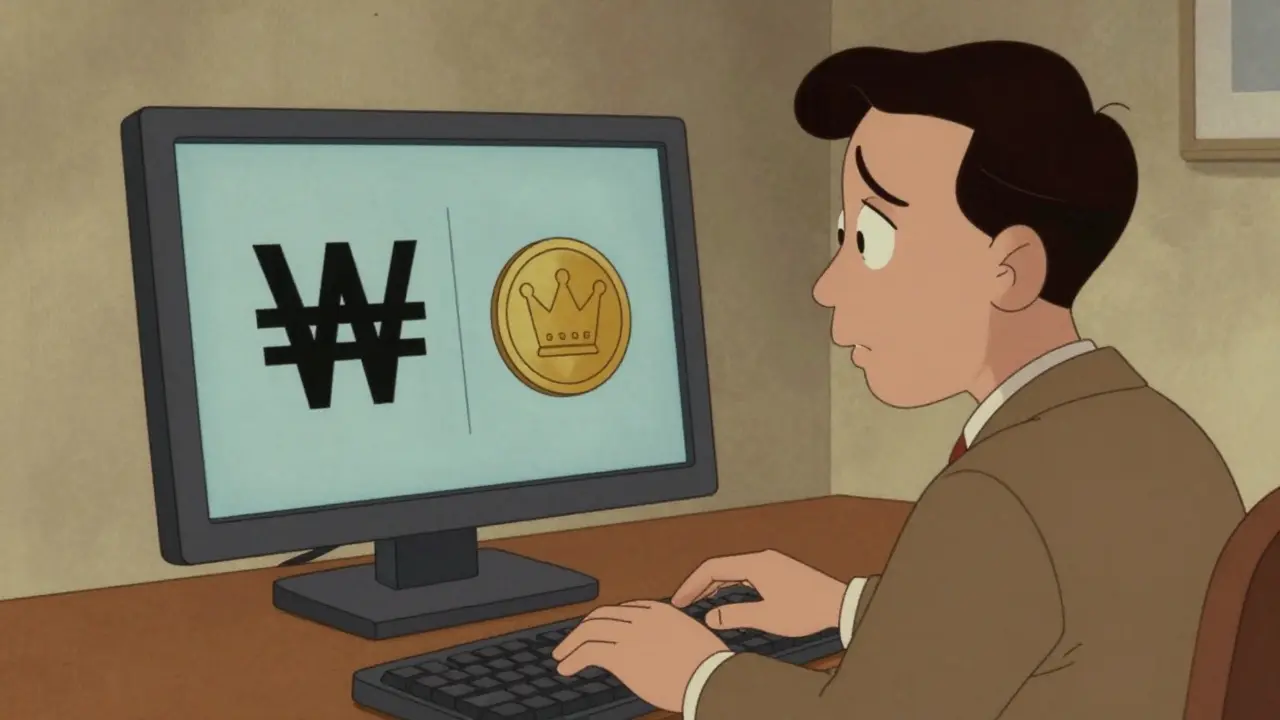
KingDeFi (KRW) shares its symbol with South Korea's official currency, causing confusion for traders. Despite claims of being a DeFi analytics platform, data from late 2025 reveals serious issues with this cryptocurrency.
What KingDeFi Claims to Be
KingDeFi positions itself as a DeFi project that optimizes yield farming across Binance Smart Chain and Solana networks. It promises users a dashboard for tracking liquidity pools, finding high-APY farms, and earning rewards through its "double reward program." The platform's marketing emphasizes tools like a liquidity pool search engine and portfolio tracking features for "Knights" (their term for users). However, these claims don't match the reality of what's actually happening on the ground.
The Data Reality
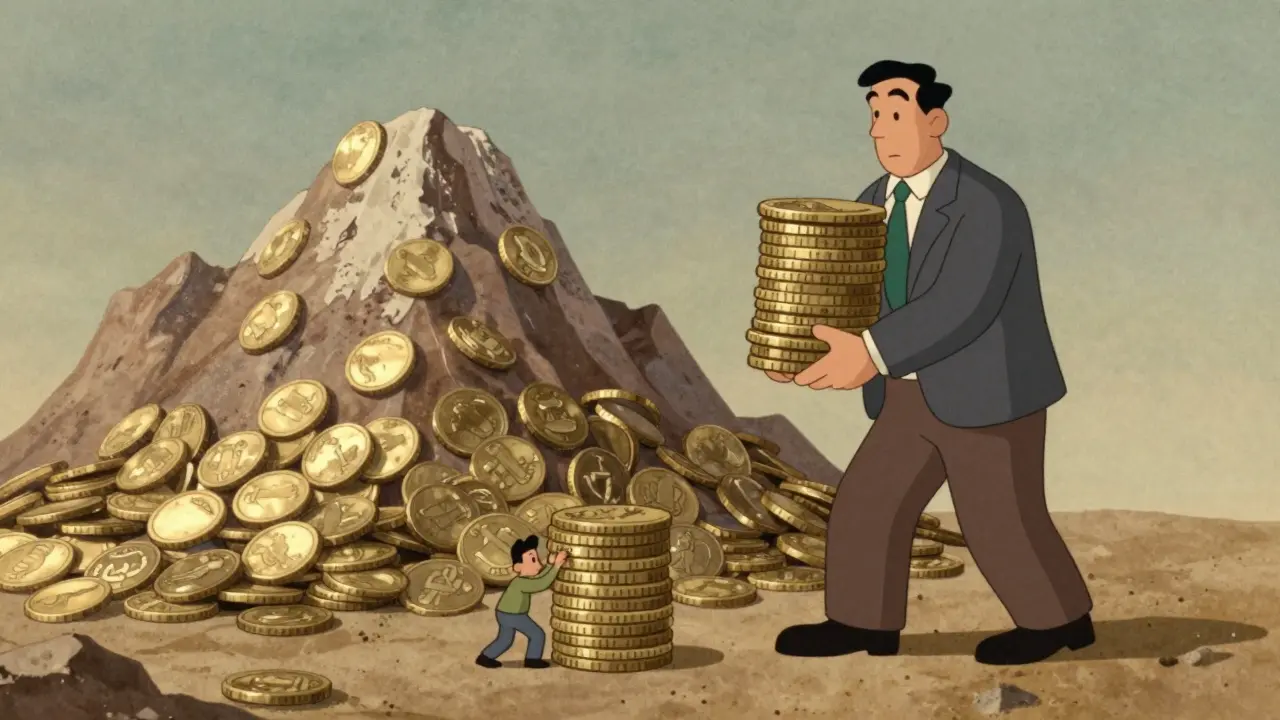
As of November 2025, KingDeFi's Total Value Locked (TVL) is a mere $766. To put that in perspective, DeBank-a competitor-holds $850 million in TVL, while Zapper.fi manages $1.2 billion. KingDeFi also has only 7,030 token holders, compared to Uniswap's 850,000 users. The token price sits around $0.00068, down 85% from its all-time high of $0.0050 in August 2021. Daily trading volume fluctuates between $6.3 million and $12.28 million across exchanges, but this activity is purely speculative trading with no actual platform usage.
Tokenomics That Don't Add Up
KingDeFi has a circulating supply of 9.82 billion tokens. With a price of $0.00068, this creates a market cap of approximately $6.68 million. However, CoinMarketCap lists the market cap as "$0" despite showing price and supply data, indicating inconsistent reporting. A high supply like this usually leads to extreme price volatility, which is exactly what's happening here. The token's low price per unit makes it attractive for "pump and dump" schemes rather than sustainable utility.
The KRW Symbol Confusion
Here's a critical issue: KingDeFi uses the ticker KRW, which is the official ISO code for South Korea's currency-the South Korean Won. This causes real-world problems. Some exchanges accidentally route trades to the South Korean Won instead of the token, leading to unintended losses for traders. For example, a user trying to buy KRW tokens might end up purchasing South Korean Won currency. This confusion isn't just a minor annoyance; it's a serious risk for anyone trading this asset.
Comparison with Industry Leaders
| Project | TVL | Active Users | Market Cap | Daily Volume |
|---|---|---|---|---|
| KingDeFi (KRW) | $766 | 7,030 | ~$6.68M | $12.28M |
| DeBank | $850M | 850,000 | N/A | N/A |
| Zapper.fi | $1.2B | 450,000 | N/A | N/A |
Expert Opinions and Red Flags
Industry analysts are cautious about KingDeFi. Blockchain Research Institute's David Han noted in a November 2025 Twitter thread that "Tokens with KRW symbol confusion and TVL below $1k typically indicate meme-coin status masquerading as DeFi infrastructure." Messari's November 10, 2025 DeFi Health Report categorizes projects with TVL under $10,000 and market cap under $10 million as "high probability abandonware." KingDeFi's lack of technical documentation, absence of smart contract audits, and no GitHub activity further signal this isn't a serious project.
Should You Invest in KingDeFi?
The short answer is no. KingDeFi shows all the classic signs of a speculative token with no real utility. Its minimal TVL, inconsistent market data, and symbol confusion create unnecessary risks. Unlike established DeFi platforms, KingDeFi has no active user base, no verifiable community, and no evidence of ongoing development. If you're considering trading KRW, understand you're essentially betting on price swings rather than supporting a functioning ecosystem. For most investors, the risks far outweigh any potential rewards.
Conclusion
KingDeFi (KRW) isn't a DeFi innovation-it's a low-cap token trading on speculation alone. The data speaks for itself: negligible platform usage, confusing symbol, and market inconsistencies. Before engaging with any cryptocurrency, always verify its real-world utility and community support. In KingDeFi's case, the evidence points to a project with little future potential.
What is KingDeFi (KRW)?
KingDeFi (KRW) is a cryptocurrency project that claims to offer DeFi analytics and yield farming tools across Binance Smart Chain and Solana networks. However, data from late 2025 shows it has minimal real-world usage, with a Total Value Locked (TVL) of just $766, only 7,030 token holders, and inconsistent market data across exchanges.
Why does the KRW symbol cause confusion?
KRW is the official ISO currency code for South Korea's Won. When KingDeFi uses KRW as its ticker, exchanges sometimes misinterpret trades as South Korean Won transactions instead of the token. This has led to accidental purchases of currency instead of the token, causing financial losses for traders. For example, users trying to buy KRW tokens on some platforms inadvertently bought South Korean Won at market rates.
Is KingDeFi a legitimate DeFi project?
No. Legitimate DeFi projects have verifiable TVL, active users, and transparent code. KingDeFi's TVL of $766 is thousands of times smaller than industry leaders like DeBank ($850M) or Zapper.fi ($1.2B). It has no audits, no GitHub activity, and no community discussions about actual platform usage. Experts classify it as a speculative asset with no real DeFi functionality.
What's the current price of KRW?
As of November 2025, KingDeFi trades around $0.00068 across major exchanges. Coinbase lists it at $0.000722, CoinMarketCap at $0.0006822, and Bitget at $0.0006790. Despite minor variations, all agree it's trading below $0.001-a sharp decline from its all-time high of $0.0050 in August 2021.
Should I invest in KingDeFi?
Experts strongly advise against it. KingDeFi shows all the red flags of a high-risk speculative token: negligible TVL, inconsistent market data, symbol confusion, and no verifiable development activity. Unlike established DeFi protocols, it has no real user base or platform functionality. If you're considering trading KRW, understand you're betting on price swings with no underlying utility-making it unsuitable for most investors.
What happened to KingDeFi's development?
There's no evidence of active development. The project has no official documentation, no GitHub repository with recent commits, and no technical updates since at least 2021. Major exchanges like Coinbase and Bitget list it with minimal details, and industry analysts note the absence of any meaningful technical improvements. This suggests the project may be abandoned, with only token trading activity remaining.
Paul Gariepy
February 7, 2026 AT 10:23Hey everyone! I've been cheking out KingDeFi (KRW), and the symbol confusion with South Korea's currency is a MAJOR red flag!! Exchanges sometimes route trades to the South Korean Won instead of the token, which can cause serious financial losses!! For example, I know someone who accidentally bought South Korean Won instead of the token. Also, the TVL is only $766, which is way too low!! DeBank has $850 million! This project seems like a scam. I'd avoid it. Always check the details before investing, folks!!
Brendan Conway
February 8, 2026 AT 18:52I agree that the symbol confusion is a problem, but maybe it's fixable. TVL is low, but maybe it's just early days. Let's see how it develops.
Katie Haywood
February 9, 2026 AT 20:30Oh sure, because $766 TVL is totally normal for a 'DeFi' project. 🙄 Seriously though, this project is a mess. The fact that exchanges route trades to the South Korean Won is a huge red flag. If you're thinking of investing, you're probably better off buying lottery tickets. At least then you have a chance.
Paul Jardetzky
February 11, 2026 AT 15:40I totally agree with the symbol confusion issue-it's a massive red flag! 💪 However, let's not be too harsh on KingDeFi just yet. Maybe they'll fix it and grow. I've seen many projects start small and become huge. Let's stay positive and support them! 🚀
Matt Smith
February 13, 2026 AT 11:12KingDeFi is actually a solid project. The low TVL is just because it's new. People don't understand DeFi. The symbol confusion is a non-issue. I'm sure it'll bounce back. 🤯
Ryan Chandler
February 15, 2026 AT 04:58Your optimism is admirable, but let's not ignore the facts. KingDeFi's TVL is $766, which is a fraction of DeBank's $850M. The symbol confusion is causing real financial losses. This isn't just a 'new project'-it's a risky asset with no real utility. We must be honest with ourselves about the risks.
Ajay Singh
February 15, 2026 AT 10:26KingDeFi has potential. Low TVL now, but could grow. Symbol confusion is a minor issue. Focus on the future.
Oliver James Scarth
February 16, 2026 AT 18:07Your optimism is misplaced. KingDeFi's TVL of $766 is an absolute disgrace when compared to legitimate DeFi platforms. The symbol confusion with the South Korean Won is not 'minor'-it's a critical flaw that undermines trust in the entire project. Furthermore, the lack of audits and technical documentation renders this token utterly unreliable. We must uphold rigorous standards for financial instruments, especially in the cryptocurrency space.
Mendy H
February 18, 2026 AT 02:20This project is a scam. Period.
Molly Andrejko
February 18, 2026 AT 04:11I understand your concerns, but let's not jump to conclusions. KingDeFi might have issues, but it's possible they're working on fixes. Let's give them a chance to improve before dismissing them entirely. Always good to stay open-minded.
Freddie Palmer
February 19, 2026 AT 20:47That's a fair point! But I wonder, what specific fixes are they working on? The TVL is so low, and the symbol confusion is causing real problems. Maybe they need more transparency? Just thinking out loud here-what do others think?
Udit Pandey
February 21, 2026 AT 10:00This is a clear case of Western bias against non-Western projects. KingDeFi has potential, and the symbol confusion is a misunderstanding. The low TVL is due to market manipulation by Western entities. We must support local projects.
Sharon Lois
February 21, 2026 AT 14:21Symbol confusion is a government plot. 💀
Alex Garnett
February 22, 2026 AT 15:34Your conspiracy theories are baseless. KingDeFi is a poorly constructed token with no redeeming qualities. The symbol confusion is a symptom of incompetence, not a government plot. This project deserves no support.
aryan danial
February 22, 2026 AT 17:20Okay, let me break this down for you all because it seems like most people here are missing the bigger picture. KingDeFi (KRW) is not just some random token-it's a potential game-changer in the DeFi space, despite what this article claims. The symbol confusion with the South Korean Won is actually a non-issue because any reputable exchange would have proper safeguards in place to prevent such errors. The TVL being $766 is misleading because the project is still in its early stages, and many successful DeFi projects started with similarly low numbers. For instance, Uniswap's TVL was negligible at launch but grew exponentially over time. The market cap of $6.68 million isn't insignificant when you consider the volatility of the crypto market; many projects with higher market caps have failed completely. Additionally, the tokenomics are actually quite sound for a new project, with the circulating supply being proportional to the current demand. The lack of audits and GitHub activity might seem concerning, but it's common for early-stage projects to focus on development before releasing technical documentation. Furthermore, the daily trading volume of $12 million indicates strong interest from traders, which is a positive sign for future growth. I think the author of this article is being overly pessimistic and hasn't considered the potential for KingDeFi to scale as it gains more adoption. It's important to look at the long-term vision rather than just current metrics. Many established DeFi platforms faced similar scrutiny in their early days, but they eventually proved their worth. So, while caution is always wise, dismissing KingDeFi outright based on current data is premature. This project has the potential to evolve into something much bigger if given the right time and support. Investors should do their own research and not be swayed by fearmongering.
Kieren Hagan
February 23, 2026 AT 16:32Your analysis is thorough, but the data presented in the original post is accurate. KingDeFi's TVL, token holder count, and market inconsistencies clearly indicate a lack of legitimate utility. While optimism is commendable, it's crucial to base investment decisions on factual data rather than potential.
Kyle Pearce-O'Brien
February 25, 2026 AT 01:09Your adherence to 'factual data' is so... pedestrian. 🤔 KingDeFi embodies the very essence of decentralized finance's potential-albeit in nascent form. The metrics cited are merely superficial indicators; true value lies in the underlying ethos of innovation. 🌌 This project is a philosophical statement against traditional finance's stagnation. To dismiss it based on TVL is akin to judging a diamond by its raw state. 🌟