Kraken Blocked Jurisdictions: Who Can Trade in 2026?
 Jul, 9 2026
Imagine logging into your favorite crypto exchange only to find your account frozen or certain coins missing. For many users around the world, this isn't a hypothetical scenario-it's reality. Kraken is a major cryptocurrency exchange known for its security and compliance standards. Founded by Jesse Powell in 2011, it has grown into one of the largest platforms globally. However, with great growth comes strict regulation. If you are wondering whether you can use Kraken from your location, the answer depends heavily on where you live and what you want to trade.
The landscape changed significantly in early 2025. New laws like the Markets in Crypto-Assets (MiCA) regulation in Europe forced exchanges to rethink their offerings. Kraken responded by tightening its grip on geographic restrictions. This article breaks down exactly who is blocked, what features are limited, and why these rules exist.
Countries Where Kraken Is Completely Banned
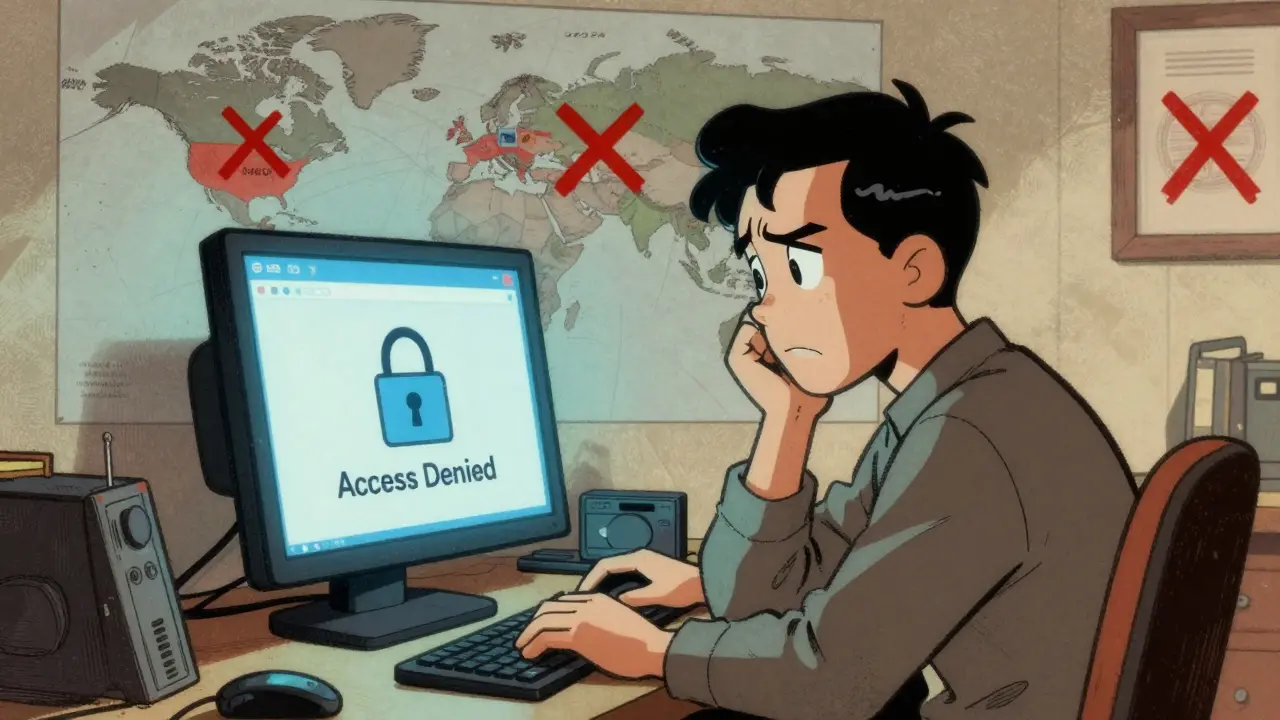
First, let’s address the hard no-go zones. Kraken does not serve residents of specific countries due to international sanctions and anti-money laundering laws. If you live in any of these places, you cannot create an account or access services. Trying to bypass these blocks using a Virtual Private Network (VPN) is a bad idea. Kraken uses sophisticated detection methods, and if they catch you spoofing your location, they will terminate your account and freeze your assets. There is no appeal process for this.
The list of fully prohibited jurisdictions includes nations under heavy sanctions from bodies like the United Nations, the European Union, and the United States Treasury. Here is the current list as of mid-2026:
- Afghanistan
- Belarus
- Cuba
- Iran
- Iraq
- North Korea
- Syria
- Russia (including Crimea, Donetsk, and Luhansk regions)
- Libya
- Sudan and South Sudan
- Democratic Republic of the Congo
- Central African Republic
- Eritrea
- Guinea-Bissau
- Lebanon
- Mali
- Namibia
- Somalia
- Tajikistan
- Yemen
These restrictions align with global financial safety nets. The goal is to prevent illicit funds from moving through legitimate trading platforms. While frustrating for individuals in these regions, it keeps the exchange operational in the rest of the world.
Restrictions Within Allowed Countries
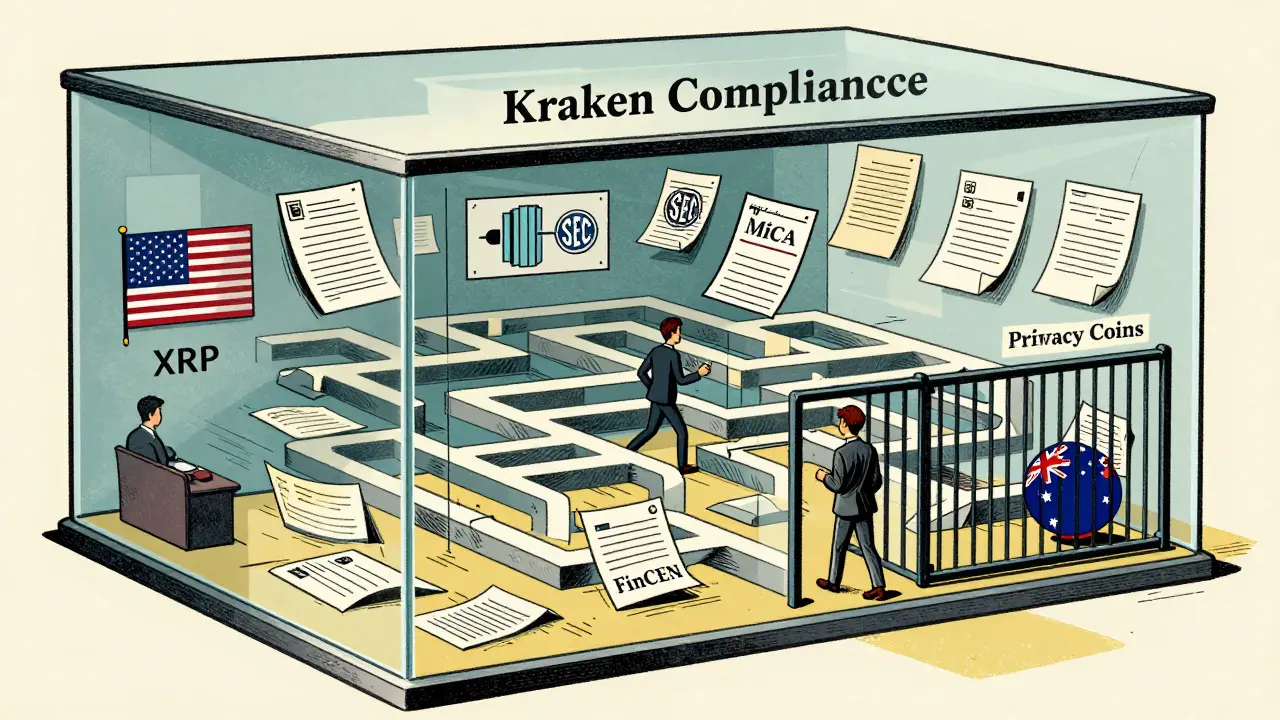
Just because your country isn’t on the banned list doesn’t mean you get full access. Kraken operates a complex matrix of limitations based on local laws. The United States is the most prominent example of this fragmented approach. You might be able to sign up, but your ability to trade specific assets varies by state.
| Restriction Type | Details |
|---|---|
| XRP Trading | Banned for all US residents across every state. |
| New York & Washington | New York residents can only pre-verify; Washington State is completely excluded. |
| Euro Holdings | Residents of New Hampshire and Texas cannot fund, trade, or hold Euros. |
| Margin Trading | US traders face a maximum 28-day limit on margin positions, compared to 365 days for non-US users. |
| Specific Tokens | EWT and GRT tokens are prohibited for US and Canadian residents. |
Other countries have their own quirks too. Australian residents, for instance, are barred from trading privacy coins like Monero (XMR), Dash (DASH), and Zcash (ZEC). This stems from Australia’s strict stance on anonymity tools that could facilitate tax evasion or money laundering. Japanese users face additional documentation hurdles when dealing with JPY currency pairs, reflecting the rigorous oversight of Japan’s Financial Services Agency (FSA).
The European Shift: MiCA and Stablecoins
If you live in the European Economic Area (EEA), things got complicated in 2025. The implementation of the Markets in Crypto-Assets (MiCA) regulation forced Kraken to make drastic changes. MiCA requires stablecoin issuers to meet strict reserve and transparency standards. Many popular stablecoins failed to meet these new criteria within the required timeframe.
As a result, Kraken announced the delisting of five major stablecoins for EEA users: Tether USDT, PayPal USD, TrueUSD, Tether EURt, and TerraClassic USD. This was a massive shift, especially since USDT is the most widely used stablecoin in the industry. The process unfolded in stages throughout early 2025:
- February 13: Reduce-only mode began, preventing new buys.
- February 27: Sell-only mode started, allowing users to offload holdings.
- March 17: Margin positions had to be closed.
- March 24: Spot trading terminated entirely.
- March 31: Final conversion deadlines hit.
This affected countries like Austria, Cyprus, Czechia, Malta, Portugal, Spain, and Sweden. Users expressed frustration, particularly because regulatory-compliant alternatives were scarce at the time. Mark Greenberg, Kraken’s Global Head of Asset Management, previously stated there were no plans to delist USDT, making this reversal even more jarring for long-term users.
Why Are These Rules So Strict?
You might wonder why Kraken goes through such trouble to block people. It’s not about being difficult; it’s about survival. As a registered Money Services Business (MSB) with FinCEN in the US, and licensed by the FCA in the UK, AUSTRAC in Australia, and FINTRAC in Canada, Kraken must adhere to stringent compliance protocols.
In 2020, Kraken achieved a milestone by receiving Wyoming’s first Special Purpose Depository Institution (SPDI) charter. This made it the first crypto exchange with a US banking license. But with that privilege came responsibility. Regulatory bodies watch closely. In 2021, Kraken settled with the CFTC over margin trading violations. In 2022, the US Treasury fined them for sanctions breaches. Then came the high-profile SEC lawsuit in 2023, alleging unregistered operations. Although the SEC dropped the case later, the scrutiny remains intense.
By enforcing these geographic and asset restrictions, Kraken protects its licenses. Without them, they risk losing access to the traditional banking system, which would cripple their ability to handle fiat deposits and withdrawals. Industry experts from Datawallet rate Kraken’s compliance framework highly, noting that this proactive approach allows them to operate in over 190 countries despite the hurdles.
How Verification Works
To enforce these rules, Kraken relies on multi-layered verification. When you sign up, you aren’t just providing an email address. You undergo Know Your Customer (KYC) checks. This involves:
- IP Geolocation: Checking your internet service provider’s location data.
- ID Verification: Uploading government-issued identification like a passport or driver’s license.
- Proof of Residence: Submitting utility bills or bank statements showing your current address.
- Ongoing Monitoring: Scanning transactions for suspicious patterns linked to restricted jurisdictions.
Standard verification usually takes 24 to 48 hours. Enhanced verification, required for higher withdrawal limits or institutional accounts, can take up to seven days. Processing times vary depending on your jurisdiction and the volume of applications. Be prepared for delays during peak periods.
What Does This Mean for Traders?
For the average trader, these restrictions mean doing your homework before depositing funds. Check if your specific coin is available in your region. Don’t assume that because Bitcoin is everywhere, everything else is too. Privacy coins, certain altcoins, and stablecoins often face the harshest cuts.
If you are in a partially restricted area like the US or Australia, consider diversifying. Maybe keep your main portfolio on Kraken for its security reputation but use another platform for assets unavailable here. Just ensure any alternative also meets high security and compliance standards. Moving funds between exchanges carries risks, so weigh the benefits carefully.
Looking ahead, the trend is toward more standardization. As regulators worldwide adopt frameworks similar to MiCA, expect other exchanges to follow Kraken’s lead. This might reduce choice in the short term but could increase trust and institutional adoption in the long run. Kraken’s position as the fourth-largest global exchange by volume suggests that compliance pays off, even if it means saying no to some customers.
Can I use a VPN to access Kraken from a banned country?
No, you should not try to use a VPN to bypass geographic restrictions. Kraken employs advanced detection systems to identify virtual private networks and proxy servers. If they detect that you are attempting to spoof your location, they will permanently ban your account and freeze all associated assets. There is typically no recourse for recovering these funds.
Why can't US residents trade XRP on Kraken?
The restriction on XRP for US residents stems from ongoing regulatory uncertainty regarding whether XRP constitutes a security under US law. Following legal battles involving the Securities and Exchange Commission (SEC), many exchanges, including Kraken, removed XRP trading for US customers to mitigate potential legal liabilities. While XRP trading remains available for users outside the US, American residents are completely excluded from buying or selling it on the platform.
What happened to USDT in Europe?
Due to the implementation of the Markets in Crypto-Assets (MiCA) regulation in the European Economic Area, Kraken delisted several stablecoins, including Tether USDT, for EEA users in early 2025. MiCA imposes strict requirements on stablecoin issuers regarding reserves and transparency. Since USDT did not meet these specific regulatory criteria within the mandated timeframe, Kraken ceased support for it in countries like Germany, France, and Italy to remain compliant with EU law.
Are privacy coins banned globally on Kraken?
Privacy coins are not banned globally, but restrictions vary by jurisdiction. For example, Australian residents are prohibited from funding, trading, or holding privacy coins such as Monero (XMR), Dash (DASH), and Zcash (ZEC) due to local anti-money laundering regulations. However, users in other permitted countries may still be able to trade these assets, provided they comply with their local laws.
How long does Kraken verification take?
Standard identity verification on Kraken typically takes between 24 and 48 hours. However, enhanced verification levels, which are required for higher transaction limits or institutional accounts, can take up to seven business days. Processing times can vary depending on your country of residence, the clarity of the documents submitted, and the current volume of applications being processed by the compliance team.