Largest Bitcoin Mining Pools in 2026: Market Share, Fees, and Centralization Risks
 Jul, 30 2026
When you look at the Bitcoin network, it’s easy to imagine thousands of independent miners working alone in basements. The reality is far more centralized. A handful of massive entities now control the majority of the computational power securing the blockchain. As of late 2025 and moving into 2026, five major players dominate the landscape: Foundry USA, a North American mining pool controlling approximately 30% of the network hash rate, Antpool, F2Pool, ViaBTC, and Braiins Pool. Together, they command roughly 70% of the known Bitcoin hash rate.
This concentration of power isn’t just a statistic; it dictates how rewards are distributed, which hardware gets prioritized, and potentially, how the network evolves. For anyone running an ASIC miner or considering entering the space, choosing the right pool is as critical as choosing the right machine. You aren’t just picking a server; you’re aligning with a business model that has its own risks, fees, and political stance on decentralization.
The Dominance of Foundry USA
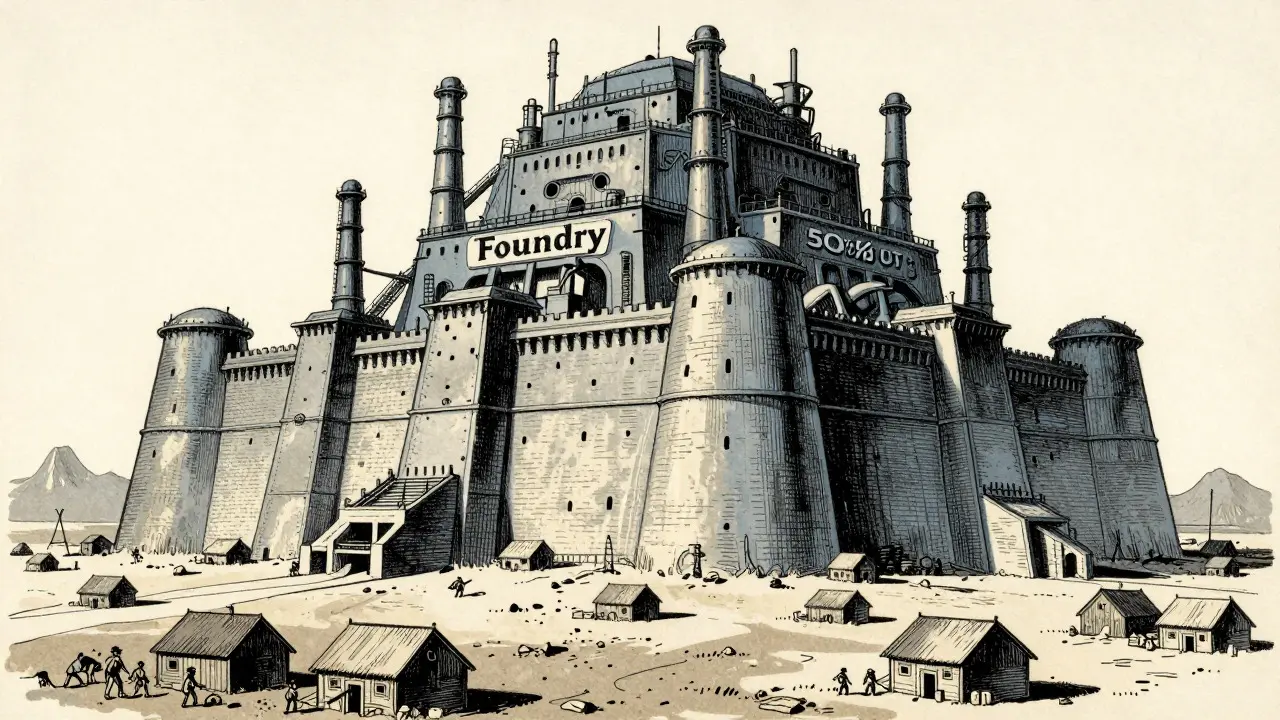
If there is one name dominating the conversation around Bitcoin mining in 2026, it is Foundry USA. Launched by Digital Currency Group in 2020, this pool has grown from zero to controlling about 30% of the total network hash rate. That number is staggering when you consider that a single entity holding 51% could theoretically manipulate transactions. While 30% doesn’t grant that power, it grants immense influence.
Foundry USA operates primarily under the FPPS (Full Pay Per Share) payout model. This means miners receive consistent earnings that include both block rewards and transaction fees, calculated based on their share of the pool’s work. It’s predictable, which appeals to institutional investors who need steady cash flow for loan repayments and operational costs. However, this stability comes with strings attached. Foundry requires mandatory KYC (Know Your Customer) verification for larger operations, specifically those exceeding 10 PH/s. This creates a 3-5 business day onboarding process that privacy-focused miners often find intrusive.
Critics, including researchers like Dr. Alex de Vries, argue that Foundry’s size undermines Bitcoin’s decentralized ethos. Yet, supporters point out that Foundry has helped stabilize North American mining infrastructure post-2021 Chinese ban. In September 2025, they even announced plans to integrate zero-knowledge proof technology to verify operations without exposing miner identities, attempting to bridge the gap between regulatory compliance and privacy.
Antpool: The Hardware Giant’s Playground
Antpool, operated by Bitmain Technologies since 2014, controls approximately 18.76% of the network hash rate. Bitmain is also the world’s largest manufacturer of ASIC miners. This vertical integration-owning both the hardware and the pool-is a double-edged sword. On one hand, Antpool offers seamless compatibility with Bitmain devices like the Antminer S19 and S21 series. On the other, it raises eyebrows among purists who worry about a monopoly where the company making the shovels also owns the mine.
Antpool stands out for its flexibility in payout structures. It offers two main options:
- PPLNS (Pay Per Last N Shares): With 0% fees, this option accepts higher variance. If the pool finds a block, everyone benefits. If it doesn’t, payouts can be lower. It’s risky but potentially more rewarding over time if you get lucky.
- PPS+ (Pay Per Share Plus): This charges a 4% fee on block rewards plus 2% on mining fees. In exchange, it guarantees stable daily payouts regardless of whether the pool finds a block. This is popular among miners who want to hedge against bad luck.
User experience reviews from late 2025 highlight Antpool’s ease of use. New users can configure their miners in under 15 minutes, significantly faster than the industry average. However, during periods of high network congestion, such as the April 2025 halving event, some users reported payout delays of up to 36 hours. If you prioritize speed and simplicity over absolute anonymity, Antpool remains a top contender.
F2Pool and ViaBTC: The Mid-Tier Contenders
While Foundry and Antpool grab headlines, F2Pool, founded in 2013, maintains a 12.395% market share and ViaBTC, established in 2016, commands 10.553% of the hash rate hold significant sway. These pools appeal to different segments of the market.
F2Pool distinguishes itself through multi-currency support. Beyond Bitcoin, it supports Litecoin, Ethereum Classic, and others. This is useful for miners who diversify their hardware portfolio. However, its Chinese origins have led to regulatory uncertainty, especially as PRC cryptocurrency policies evolve. Miners must weigh the convenience of multi-algorithm support against potential geopolitical risks.
ViaBTC, meanwhile, focuses on analytics and latency. Its advanced dashboard provides detailed insights into your mining performance, and its global server network ensures low-latency connections. ViaBTC utilizes a combination of PPLNS and FPPS models, giving users choice without the complexity of managing multiple accounts. With a 10.553% share, it positions itself as a reliable mid-tier option for those wary of the top two giants.
Braiins Pool: The Decentralization Advocate
Braiins Pool, formerly Slushpool, founded in 2010 by Marek Palatinus, controls an estimated 5-7% of the network hash rate is the oldest active pool and a favorite among Bitcoin maximalists. Unlike the corporate-heavy Foundry or the hardware-linked Antpool, Braiins emphasizes open-source principles and miner sovereignty.
The biggest draw for Braiins is its 0% pool fees. How do they make money? Through BraiinsOS+, firmware that increases mining efficiency by up to 25%. By selling optimized firmware and hosting services, they offset the lack of direct pool fees. This model resonates with miners tired of paying 2-4% fees to other pools. Additionally, Braiins allows anonymous mining with instant setup, though new users are limited to 1 PH/s until identity verification.
In August 2025, Braiins launched Farm 2.0 software, reducing connection overhead by 40%. For tech-savvy miners who value control and transparency, Braiins is often the go-to choice. However, its smaller market share means less influence on network consensus compared to Foundry or Antpool.
Comparing the Top Pools: A Quick Reference
| Pool Name | Market Share | Payout Model | Fee Structure | KYC Required? |
|---|---|---|---|---|
| Foundry USA | ~30% | FPPS | Varies (often low for large ops) | Yes (for >10 PH/s) |
| Antpool | ~18.76% | PPLNS / PPS+ | 0% (PPLNS) / 4-6% (PPS+) | No (optional) |
| F2Pool | ~12.39% | PPLNS / PPS | Varies by coin | No |
| ViaBTC | ~10.55% | PPLNS / FPPS | Low fees | No |
| Braiins Pool | ~5-7% | FPPS / PPLNS | 0% Pool Fee | No (instant start) |
Centralization Risks and the "Unknown" Hash Rate
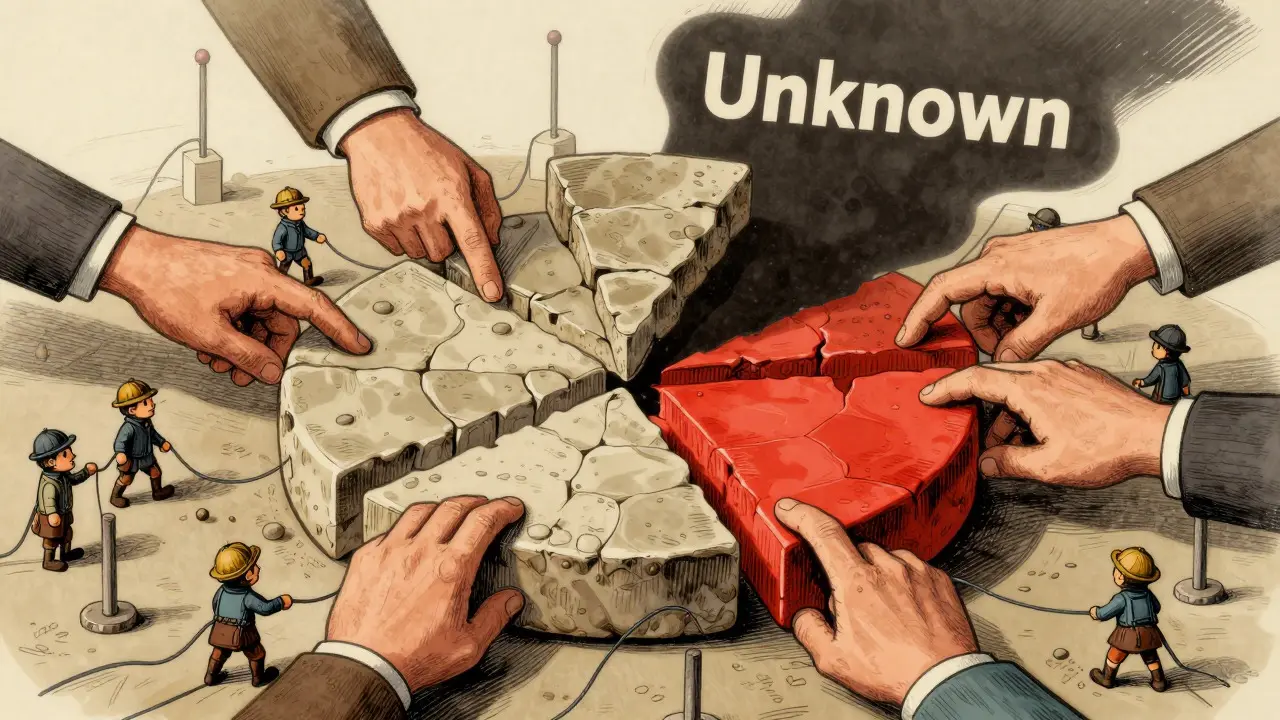
A common fear among Bitcoin enthusiasts is that these pools will eventually collude or grow large enough to execute a 51% attack. While no single pool currently holds that much power, the trend is concerning. Blockchain.com data from October 2025 shows that while the top five pools control 70%, another 53.099% of the hash rate is attributed to "unknown" entities. Nick Carter of Castle Island Ventures argues this actually promotes decentralization by obscuring geographic concentration. However, skeptics believe these unknowns may simply be unverified branches of the major pools.
To mitigate risk, many institutional miners now split their hash rate across multiple pools. Deloitte’s September 2025 survey found that 62% of operations with over 100 PH/s use simultaneous multi-pool strategies. This approach balances reward stability with network security, ensuring no single entity gains too much leverage.
Technical Requirements and Setup
Regardless of which pool you choose, technical requirements remain similar. All major pools require SHA-256 compatible ASIC miners. Connection protocols are shifting toward Stratum V2, which offers end-to-end encryption and improved security against man-in-the-middle attacks. As of October 2025, 78% of new connections use Stratum V2. Ensure your miner firmware supports this protocol to future-proof your operation.
Latency matters. Most pools recommend connections under 100ms for optimal performance. If you’re in Europe, connecting to a US-based pool might result in stale shares, reducing your effective earnings. Always check the pool’s server locations before committing. Braiins and Antpool offer robust global networks, minimizing this issue for international users.
Regulatory Pressures in 2026
The regulatory landscape is tightening. The EU’s MiCA framework requires all pools serving European customers to implement full KYC by Q1 2026. This could force anonymous miners to migrate to non-EU pools or undergo verification. Meanwhile, the SEC’s October 2025 guidance classified certain pool reward structures as securities offerings, potentially impacting PPS+ models used by Antpool and ViaBTC. Keep an eye on these developments, as they could reshape fee structures and accessibility in the coming year.
Which Bitcoin mining pool is best for beginners?
For beginners, Antpool is often recommended due to its user-friendly interface and quick setup time (under 15 minutes). It offers clear documentation and flexible payout options, making it easier to understand how mining rewards work without complex configurations.
Is Foundry USA safe to use despite its large market share?
Yes, Foundry USA is considered safe and highly reliable, with a 9.2/10 rating for reliability in 2025. However, its 30% market share raises centralization concerns. To mitigate risk, many miners split their hash rate between Foundry and a smaller pool like Braiins.
Do I need KYC to join a Bitcoin mining pool?
It depends on the pool and your hash rate. Foundry USA requires KYC for operations above 10 PH/s. Braiins Pool allows anonymous mining up to 1 PH/s. Other pools like Antpool and F2Pool generally do not require KYC for small-scale miners, but regulations like EU MiCA may change this by 2026.
What is the difference between PPLNS and FPPS payouts?
PPLNS (Pay Per Last N Shares) pays based on recent contributions, offering 0% fees but higher variance in income. FPPS (Full Pay Per Share) guarantees consistent daily payments including transaction fees, usually with a small fee deducted. FPPS is better for stability; PPLNS can be more profitable if the pool gets lucky.
Why does Braiins Pool charge 0% fees?
Braiins Pool offsets its 0% pool fees by selling BraiinsOS+ firmware and hosting services. This firmware optimizes miner performance, increasing efficiency by up to 25%. Miners pay for the software rather than a percentage of their mining rewards.
Carl Michaud
July 31, 2026 AT 11:05The whole narrative about decentralization is a complete fabrication designed to keep the retail sheep docile while the institutional wolves feast on the carcass of Bitcoin's original ethos. Foundry USA isn't just a pool; it is the central bank of the new financial order, and they are laughing at you for thinking you have any agency in this game. They control the hash rate, they influence the block templates, and they decide which transactions get confirmed during times of congestion. The KYC requirement for anything over 10 PH/s is not a safety measure; it is a surveillance tool to map out every significant player in the network so they can be regulated into oblivion or crushed if they step out of line. We are watching the slow-motion death of peer-to-peer cash, replaced by a permissioned ledger controlled by DC-connected elites who view miners as mere infrastructure providers rather than sovereign actors.
Eric Zehr
July 31, 2026 AT 20:36While Carl raises some valid concerns about centralization, we shouldn't lose sight of the fact that mining pools provide essential stability for the network. Without them, individual miners would face immense variance in payouts, making it nearly impossible to cover operational costs like electricity and hardware maintenance. Foundry USA has certainly grown large, but their integration with renewable energy sources and efforts to stabilize North American infrastructure post-2021 Chinese ban have been beneficial for the broader ecosystem. It’s important to approach this topic with a balanced perspective, recognizing both the risks and the practical benefits these pools offer to miners worldwide.
Namrata Mapgaonkar
August 2, 2026 AT 16:31i think foundry is fine lol :D why everyone so worried? my uncle mines btc and he uses antpool because setup was easy like 15 mins. no stress no drama. just let us mine our coins please :)
Rita Dutta
August 4, 2026 AT 08:16The philosophical underpinning of your anxiety is misplaced, dear Eric. You speak of 'stability' as if it were a virtue, yet in the realm of digital sovereignty, stability is often the precursor to stagnation. Foundry USA represents the corporatization of anarchy, a paradox that should terrify anyone who truly understands the spirit of Satoshi. But alas, the masses prefer the warm embrace of predictability over the cold, hard winds of true decentralization. It is a tragedy of human nature, really, that we trade freedom for convenience without even realizing the price tag attached.
Rodmun Tarnowski
August 4, 2026 AT 14:07It is imperative to consider the technical implications of Stratum V2 adoption! This protocol shift is not merely a minor update; it is a fundamental restructuring of how miners interact with the network! End-to-end encryption is crucial for preventing man-in-the-middle attacks, which have become increasingly sophisticated! Furthermore, the latency requirements underscore the importance of geographic proximity to pool servers! Miners must prioritize low-latency connections to maximize efficiency! Ignoring these technical nuances could result in significant revenue loss!
Matthew Smith
August 6, 2026 AT 09:24morality dictates we support smaller pools. big pools corrupt. braiins is good choice. zero fees mean less greed. simple truth.
Prudence Flemming
August 7, 2026 AT 00:11the epistemological crisis within the mining community is palpable. we oscillate between technocratic optimism and paranoid conspiracy. braiins offers a phenomenological reduction of the mining experience by stripping away the fee structure, forcing us to confront the raw utility of the firmware itself. it is a jargon-heavy reality where os+ becomes the primary value proposition rather than the pool itself. interesting paradigm shift.
Matt Kay
August 8, 2026 AT 14:21too much text. antpool is ok. done.
Dave Kjendal
August 8, 2026 AT 20:36you people dont know what you're talking about. real miners use multiple pools. split hash rate. don't put all eggs in one basket. basic strategy. stop whining about fees and start optimizing uptime.
Kat Bennett
August 10, 2026 AT 12:00I've been following the mining space for years, and it's fascinating to see how the landscape has evolved from basement operations to massive industrial complexes. The article mentions that Deloitte found 62% of large operations use multi-pool strategies, which makes perfect sense when you think about risk management. It reminds me of diversifying a stock portfolio; you don't want all your assets tied to one volatile entity. I'm curious to see how the EU's MiCA framework will impact smaller miners who might not have the resources to handle complex KYC procedures. Will this lead to further consolidation, or will we see a rise in decentralized mining cooperatives?
Candice Cornett
August 11, 2026 AT 00:15everyone says multi-pool is smart but its actually lazy. pick the best pool and stick with it. foundry is too big yes but they pay. antpool is convenient. stop overthinking it. morality doesn't pay bills.
Lance Jantz
August 11, 2026 AT 00:26Oh, the sheer audacity of assuming Foundry USA is merely a 'pool'! It is a behemoth, a leviathan of computational power that dwarfs the quaint notions of decentralization held by the uninitiated! To suggest that splitting hash rates mitigates risk is to ignore the systemic corruption inherent in the entire structure! These entities are intertwined, sharing data, influencing each other, creating a web of control that ensnares every miner who dares to plug in! We are not participants; we are batteries in their matrix! Wake up, sheeple, before the grid goes down and you realize you own nothing!
Don Fizy
August 12, 2026 AT 15:09Hey there! Don't let the doom and gloom get you down! :D Mining can still be profitable if you choose wisely. Antpool is great for beginners because it's super easy to set up. Just remember to check your latency! If you're in Europe, maybe look at ViaBTC or Braiins for better connection speeds. Keep smiling and keep those fans spinning! :)
Phil Babb
August 13, 2026 AT 14:09LISTEN UP! If you want to make money, you need to be aggressive! Don't sit on the sidelines! Foundry USA is dominating for a reason! They have the scale! They have the efficiency! Sure, the KYC is annoying, but do you want to be anonymous or rich?! Choose wisely! And if you're using old hardware, upgrade NOW! The halving is coming and only the strong survive! Get out there and mine like your life depends on it!!!
Dominic Greco
August 14, 2026 AT 01:32They are watching you 👀 Every share you submit is tracked 📊 Foundry knows your IP 🌐 Your location 📍 Your habits 🕵️♂️ Why do you think they need KYC? To sell your data 🤑 Or worse... to censor your blocks 🚫 The 51% attack isn't coming from outside... it's already here 😱 Trust no one 🔒 Mine offline if you can 💻 Stay safe out there 🛡️
Sean Rowland
August 15, 2026 AT 08:03One must question the very premise of 'trust' in these centralized entities. The notion that a pool operated by Bitmain, the same company manufacturing the ASICs, is neutral is absurd. It is a vertical monopoly masquerading as a service provider. Furthermore, the SEC's classification of certain reward structures as securities is a blatant attempt to stifle innovation. We are entering an era of regulatory strangulation, where the boundaries between private enterprise and state control blur until they are indistinguishable. Prepare yourselves for a future where mining is a licensed profession, not a right.
Sus Sawyer
August 16, 2026 AT 08:51yo sus here! just wanted to say that braiins os+ is legit fire 🔥 boosted my s19s by like 20%. no fees on the pool is huge. sure you gotta buy the firmware but its worth it imo. also stratum v2 is the way to go for security. dont sleep on that. happy mining fam! ✌️
Aryan MISHRA
August 18, 2026 AT 01:41Technical analysis indicates PPLNS is superior for long-term holders! Variance is acceptable! Fees are zero! Efficiency is maximized! Do not fall for the PPS+ trap! It is a hedge for the weak-minded! Optimize your hashrate! Monitor stale shares! Reduce latency! Execute!;
Ryan Robinson
August 18, 2026 AT 02:57i mean i guess foundry is kinda big but hey if they pay then who cares right? i just run my rig and hope for the best. antpool seems cool cause its easy. not gonna lie i dont understand half the tech stuff but my wallet is growing so im happy. chill out guys.
Earl Kott65
August 18, 2026 AT 06:22Oh, look at you all, worrying about 'centralization' while ignoring the fact that you're all using the same hardware from the same Chinese manufacturer! 🙄 How ironic! 😂 Foundry is 30%? Big deal! At least they aren't stealing your cookies! 🍪 Just kidding... unless? 😉 Seriously though, if you can't handle a little KYC, maybe crypto isn't for you! 💅 Keep dreaming of decentralization while the whales eat! 🐋🌊
Ethan Yuwono
August 19, 2026 AT 07:21it is interesting how we define trust. in a decentralized system trust is code. in a pool trust is reputation. foundry has built reputation through reliability. braiins through ideology. neither is perfect. perhaps the answer lies not in choosing one but in understanding the trade-offs. silence speaks volumes sometimes.
Jack Delasquez
August 19, 2026 AT 20:29guyz i just started mining last week and i am so confused lol. everyone says different things. one day foundry is evil next day its the best. i just want my btc. help pls. tyvm.
Harman Singh
August 20, 2026 AT 10:21why does nobody talk about the emotional toll of mining? the stress of waiting for payouts. the fear of downtime. the anxiety of regulation. it drains you. i feel empty after checking my dashboard. is this what freedom feels like? probably not. just venting sorry.