NFTP Airdrop by NFT TOKEN PILOT: What We Know (and What We Don’t)
 Feb, 20 2026
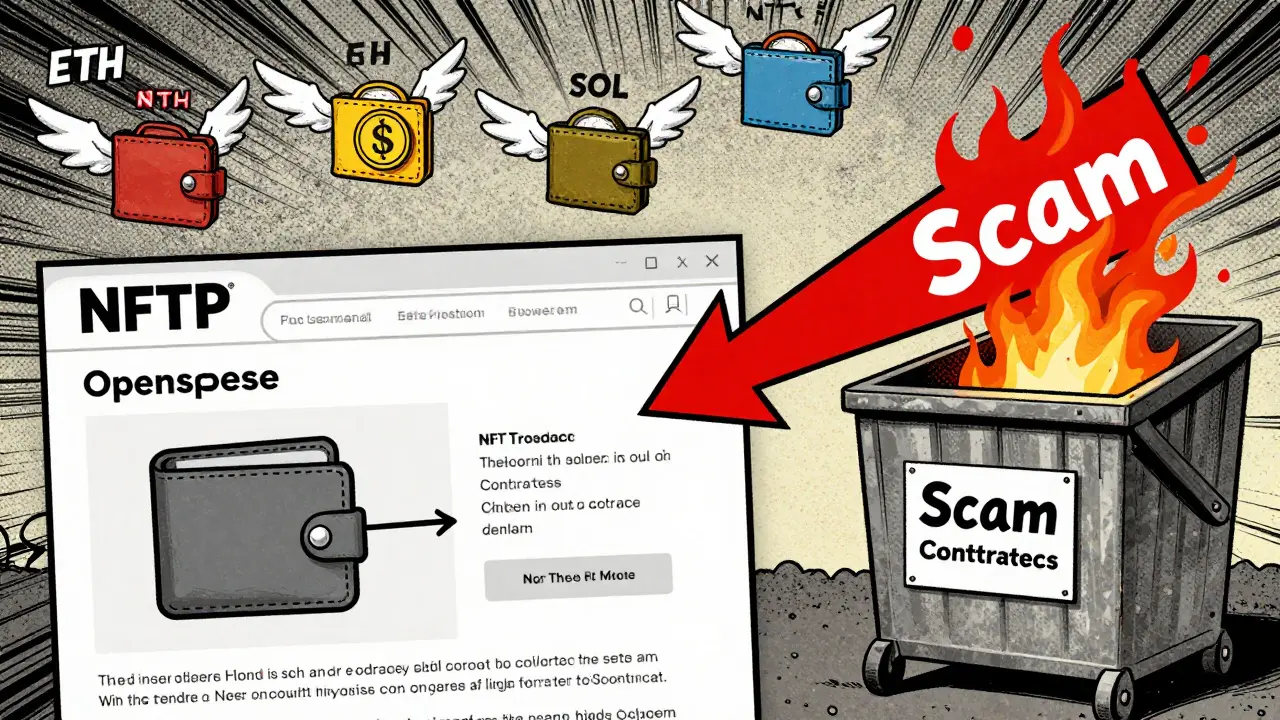
There’s no verified information about an NFTP airdrop by NFT TOKEN PILOT. Not a single official announcement, no whitepaper, no Twitter thread from their team, no contract address on Etherscan, no Telegram group with verified members. If you’ve seen a post claiming otherwise - a screenshot of a ‘limited-time airdrop’, a Discord invite promising free NFTP tokens, or a YouTube video promising ‘how to claim your 10,000 NFTP’ - you’re looking at a scam.
Why This Airdrop Doesn’t Exist
The name ‘NFTP’ doesn’t show up in any blockchain explorer, token tracker, or crypto database. Not on CoinGecko. Not on CoinMarketCap. Not on Etherscan, SolanaScan, or PolygonScan. There’s no contract address tied to it. No liquidity pool. No trading volume. No market cap. Zero.
‘NFT TOKEN PILOT’ isn’t a recognized project either. No GitHub repo. No LinkedIn page for its team. No press coverage from CoinDesk, Cointelegraph, or The Block. Even in the obscure corners of Reddit and Twitter, there’s no trace of this entity ever launching anything - not a testnet, not a mint, not even a meme.
That’s not negligence. That’s a red flag.
How Scammers Use Fake Airdrops
Airdrops used to be real. Projects like Uniswap, Polygon, and Arbitrum gave away tokens to early users - not because they were generous, but because they needed community buy-in. Those airdrops had documentation, timelines, and verifiable eligibility rules.
Today, fake airdrops are a tool for phishing. Here’s how they work:
- You get a DM on Discord or Telegram: ‘Claim your NFTP tokens before the deadline!’
- You click a link. It looks like a legit site - maybe even uses the same font as OpenSea.
- You connect your wallet. Suddenly, your ETH, SOL, or NFTs vanish.
- They drain your wallet in under 10 seconds. No refund. No trace.
There are reports of over 2,300 wallet addresses drained in January 2026 alone by fake airdrop scams using names like ‘NFTP’, ‘XRP2026’, and ‘MATICX’. These aren’t random. They’re targeted. Scammers pick names that sound real - names that are trending or sound like real projects.
What Real Airdrops Look Like
If a project is running a real airdrop, it will:
- Announce it on its official website - not a mirror site, not a .xyz domain.
- Link to a blockchain explorer where you can verify the token contract.
- Explain exactly who qualifies - ‘Users who held NFTs on Polygon before Dec 1, 2025’ - not ‘just connect your wallet’.
- Never ask for your private key, seed phrase, or signature on a transaction that doesn’t clearly say ‘Claim Airdrop’.
For example, when the Arbitrum airdrop happened in 2023, they published a full list of eligible addresses on their blog. You could search your wallet. You could see the exact number of tokens you’d get. You could track the transaction on Etherscan.
NFTP? No such thing.
Why People Fall for This
It’s not about being dumb. It’s about hope.
People remember the early days of crypto - when airdrops turned small wallets into life-changing sums. A $50 investment in a Solana NFT in 2021 turned into $10,000 for some. That story gets repeated. It’s real. But it’s rare.
Now, scammers exploit that hope. They use FOMO. They create fake countdown timers. They post fake screenshots of ‘people claiming their tokens’. They even use AI-generated voices on YouTube to say things like: ‘I just got 50,000 NFTP - here’s how I did it.’
The truth? There’s no NFTP. No NFT TOKEN PILOT. No tokens to claim.
What You Should Do
If you’ve already connected your wallet to a fake NFTP site:
- Disconnect your wallet immediately. Use WalletConnect or your wallet’s settings to revoke access.
- Check your transaction history. If you signed anything beyond a simple ‘approve’ for gas fees - you’re likely drained.
- Do not send more funds. No one will refund you.
- Report the site. Use the reporting tools on MetaMask or Phantom.
If you haven’t acted yet:
- Ignore every message about NFTP.
- Block any account promoting it.
- Share this info with others. Airdrop scams spread fast.
How to Spot Fake Airdrops in the Future
Here’s a quick checklist:
- Is there a contract address? If not - skip it.
- Is the website on a .com or .xyz? Legit projects use .com, .org, or .io. .xyz and .top are red flags.
- Does it ask for your seed phrase? Always say no. No legitimate project ever asks for this.
- Is there a Twitter/X account with 10,000+ followers and real engagement? Fake accounts have 200 followers, 180 likes on every post, and no replies.
- Can you find the team? Real projects have LinkedIn profiles, interviews, and public team members.
If any of these are missing - it’s not a project. It’s a trap.
Final Thought
The crypto space is full of innovation. Real projects are building real tools - decentralized exchanges, identity systems, tokenized assets. But scams are growing faster.
NFTP isn’t a project. It’s a ghost. A name pulled from thin air to lure people into giving up their crypto. Don’t be the next victim. If it sounds too good to be true - it is. And if no one can show you proof it exists - it doesn’t.
bella gonzales
February 22, 2026 AT 03:51McKenna Becker
February 23, 2026 AT 19:59George Suggs
February 25, 2026 AT 11:32Michael Rozputniy
February 27, 2026 AT 08:37Cathy Sunshine
February 27, 2026 AT 14:02Dee Resin
March 1, 2026 AT 07:47Tanvi Atal
March 2, 2026 AT 05:21Sony Sebastian
March 2, 2026 AT 22:40Colin Lethem
March 3, 2026 AT 10:21Kristi Emens
March 4, 2026 AT 22:23Jeremy buttoncollector
March 5, 2026 AT 13:41Michelle Xu
March 6, 2026 AT 02:54Amanda Markwick
March 6, 2026 AT 14:30Sriharsha Majety
March 7, 2026 AT 15:23Tabitha Davis
March 7, 2026 AT 21:36