OKX Crypto Exchange Review: Fees, Features & Safety Analysis
 Aug, 16 2026
Choosing a crypto exchange isn't just about finding the lowest fee. It’s about trusting where your money sits while you sleep. If you’ve landed here looking for an honest breakdown of OKX, you’re probably weighing it against giants like Binance or Coinbase. The short answer? OKX is a powerful, feature-rich platform that punches above its weight in terms of tools and variety, but it comes with specific regulatory caveats you need to know before depositing a cent.
Founded in 2017 by Star Xu, OKX has grown from a niche player into the fourth-largest crypto exchange globally by daily trading volume, currently handling around $1.44 billion per day. It supports over 400 cryptocurrencies across 739 trading pairs, making it a hub for both Bitcoin maximalists and altcoin hunters alike. But does the tech justify the trust? Let’s break down what makes this platform tick, where it shines, and where you might hit a snag.
Key Takeaways
- Low Fees: Standard spot trading fees start at 0.08% to 0.1%, which is highly competitive compared to major rivals.
- Wide Asset Selection: Access to 400+ tokens and extensive DeFi integrations, including perpetual swaps and options.
- Regulatory Gaps: Headquartered in Seychelles, offering flexibility but less formal protection than exchanges licensed in the US or EU.
- User Experience: Rated 4.6/5 on iOS and 4.4/5 on Android, praised for its clean interface and robust mobile app.
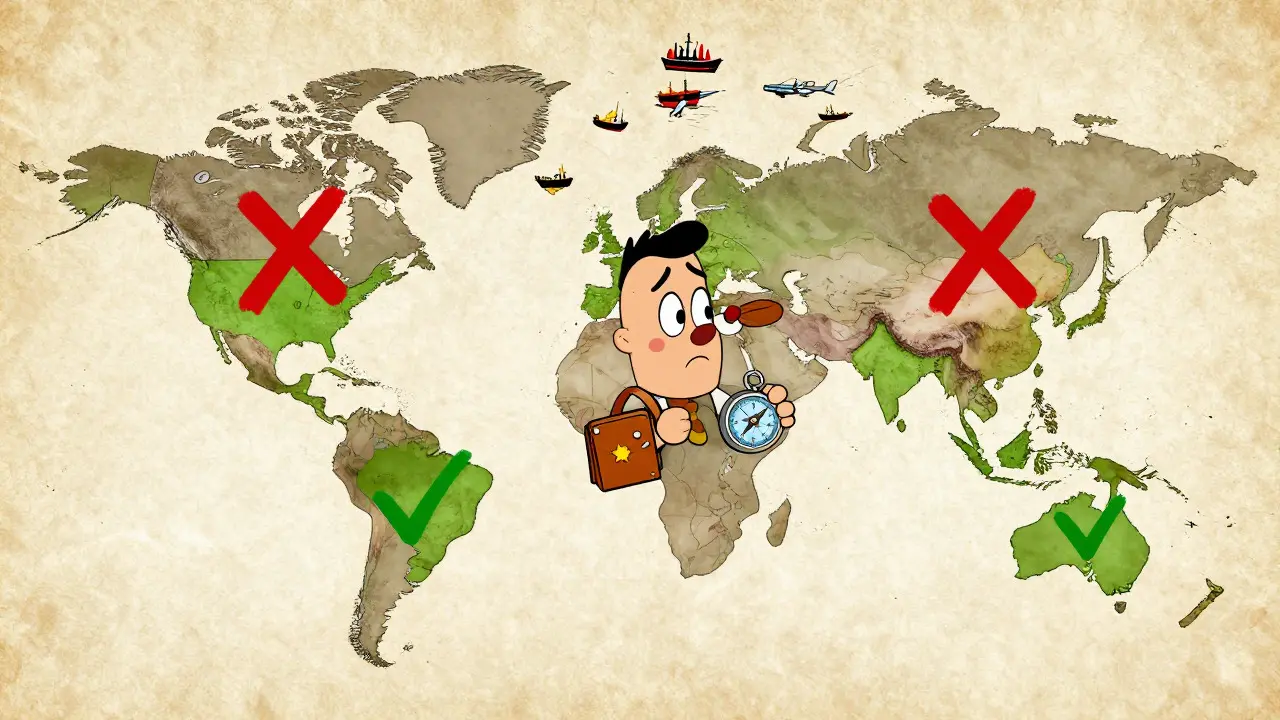
- Geographic Restrictions: Not available in the USA, Canada, Japan, and several other major markets due to licensing issues.
The Basics: What Is OKX Really?
At its core, OKX is a comprehensive digital asset trading ecosystem that offers spot, margin, futures, and DeFi services. Unlike some exchanges that focus solely on buying and holding, OKX is built for active traders. It provides a suite of tools ranging from automated trading bots to complex derivatives like quarterly futures and options. This breadth means whether you are a beginner looking to buy Bitcoin or a pro executing arbitrage strategies, there is a dedicated section for your workflow.
The platform operates under licenses in multiple jurisdictions, including Seychelles, UAE, Australia, Europe, Brazil, Singapore, and the Netherlands. This multi-jurisdictional approach allows them to serve users in over 100 countries. However, because their primary headquarters is in Seychelles, some users feel they lack the ironclad regulatory shield provided by top-tier financial authorities like the SEC or FCA. It’s a trade-off: you get operational freedom and lower compliance costs (which keeps fees down), but you rely more on the exchange's internal security measures rather than government-backed insurance.
Fees and Funding: Does It Cost You More?
Money talks, so let’s look at the numbers. OKX maintains a competitive fee structure that often undercuts larger competitors. For standard spot transactions, maker fees are typically 0.08% and taker fees are 0.1%. If you hold their native token, OKB, these rates drop even further, rewarding long-term holders with cheaper trading.
| Feature | OKX | Binance | Coinbase |
|---|---|---|---|
| Spot Trading Fee (Taker) | 0.10% | 0.10% | ~0.60% - 1.00% |
| Number of Cryptocurrencies | 400+ | 350+ | 250+ |
| Minimum Deposit (Fiat) | $1 - $10 | Varies ($10+) | Varies ($25+) |
| Headquarters | Seychelles | Cayman Islands | USA |
| Risk Fund Size | $700 Million | SAFU (Proven track record) | N/A (Segregated Accounts) |
Funding your account is straightforward. OKX accepts nine major fiat currencies, including USD, EUR, GBP, AUD, BRL, AED, SGD, CAD, and JPY. You can deposit via bank transfers, credit cards, peer-to-peer trading, or third-party services. One thing to keep in mind: fiat funding via bank transfer can sometimes take up to two business days to process. If you are looking for instant execution, using a credit card or P2P market might be faster, though potentially more expensive due to network fees.
Security and Trust: Where Do Your Coins Live?
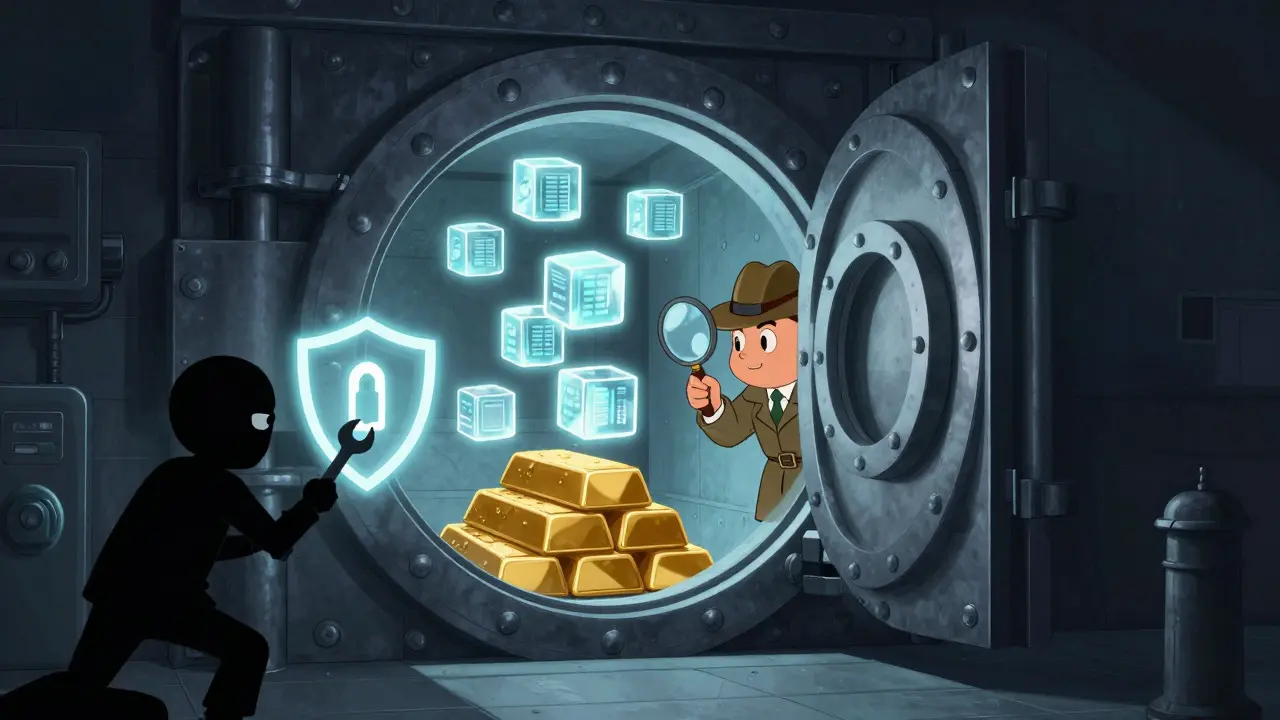
Security is the biggest hurdle for any centralized exchange. OKX addresses this with a multi-layered approach. They utilize cold storage for the majority of user assets, meaning most coins are kept offline and away from hackers. On the software side, they enforce two-factor authentication (2FA), anti-phishing codes, and withdrawal safelists. These features add friction to unauthorized withdrawals, giving you time to react if someone tries to drain your account.
Perhaps the most compelling trust signal is their Proof of Reserves. OKX regularly publishes audits showing that they hold over 100% reserve backing specifically for Bitcoin. This appeals strongly to Bitcoin-focused traders who want assurance that their BTC isn't being lent out or used in risky derivatives without permission. Additionally, they maintain a $700 million risk fund. While this fund provides a cushion for potential trading losses or technical errors, it remains untested in a true crisis compared to Binance’s SAFU fund, which has been deployed during past market volatility events. So, while the numbers look good, the real-world stress test is still pending.
User Experience: Is It Easy to Use?
You don’t need a computer science degree to use OKX. The platform has earned high marks for its usability, boasting a 4.6/5 rating on the iOS App Store and 4.4/5 on Android. Users frequently praise the intuitive interface, noting that navigation between spot trading, staking, and futures sections is logical and clutter-free. The desktop web version mirrors this cleanliness, making it easy to switch devices without losing your place.
For beginners, the onboarding process is frictionless. KYC verification is rapid, and you can start trading with as little as $1. There are also demo accounts available, allowing you to practice strategies with fake money before risking real capital. Advanced traders will appreciate the depth of tools: customizable price alerts, cross-exchange price comparisons, and real-time volume data analysis. The 'Earn' section is particularly popular, offering various staking products that generate yield on idle assets, effectively turning your holdings into a passive income stream.
Pros and Cons: The Honest Balance Sheet
No platform is perfect. Here is a balanced view of what users love and what frustrates them.
Pros:
- Competitive Fees: Among the lowest in the industry for spot trading.
- Product Variety: From simple spot buys to complex options and DeFi integration.
- Mobile App Quality: Highly rated, stable, and feature-complete.
- Bitcoin Focus: Strong reserve backing and low fees for BTC traders.
Cons:
- Customer Support: Reddit and X users often report delays in response times and occasional glitches in asset synchronization.
- Regulatory Uncertainty: Limited formal protection due to offshore headquarters.
- Geographic Restrictions: Unavailable in key markets like the USA, Canada, and Japan.
- Fiat Processing Times: Bank transfers can be slow compared to instant payment methods.
Who Should Use OKX?
If you live in the United States, Canada, or Japan, OKX likely isn't an option for you due to licensing restrictions. For everyone else, it’s a strong contender. It’s ideal for traders who want more than just a basic buy/sell button. If you are interested in copy trading, algorithmic bots, or earning yield through staking, OKX provides a unified environment to do all of this without jumping between different platforms. Beginners should start with the demo account to get comfortable with the interface, while experienced traders can dive straight into the advanced charting tools and derivatives markets.
Ultimately, OKX balances technological sophistication with competitive pricing. It may not have the same level of regulatory comfort as a US-based exchange, but its track record, reserve transparency, and feature set make it a reliable choice for global crypto investors willing to accept the slight regulatory trade-off for better tools and lower costs.
Is OKX safe to use in 2026?
Yes, generally considered safe. It uses cold storage, 2FA, and proof of reserves. However, because it is headquartered in Seychelles, it lacks the specific legal protections of US-regulated exchanges. Always enable all security features on your account.
What are the trading fees on OKX?
Standard spot trading fees are 0.08% for makers and 0.10% for takers. These fees decrease if you hold OKB tokens. Derivatives fees vary but are generally competitive with other major exchanges.
Can I use OKX in the USA?
No, OKX is currently restricted in the United States, Canada, Japan, and several other countries due to regulatory licensing requirements. Check the latest list of supported countries before signing up.
How fast are deposits on OKX?
Crypto deposits are usually fast, depending on network congestion. Fiat deposits via bank transfer can take up to 2 business days. Credit card and P2P deposits are typically faster but may incur higher fees.
Does OKX offer staking?
Yes, the 'Earn' section offers various staking and lending products. You can earn yield on idle assets, though rates fluctuate based on market conditions and lock-up periods.
Patrick Pat
August 17, 2026 AT 07:13Oh, look at that. Another offshore haven for your digital gold. Seychelles, huh? That's not a jurisdiction, that's a rumor with a flag. The 'regulatory caveats' are just polite words for 'if they vanish, good luck finding a lawyer in the Caribbean.'
Shawn Schaerer
August 17, 2026 AT 18:37One must consider the geopolitical implications of such decentralization! While the fees are indeed attractive, the lack of SEC oversight is a profound risk factor for institutional investors. We cannot simply ignore the legal vacuum.
Patrick Pat
August 19, 2026 AT 07:43Institutional investors? Buddy, if you're an institution, you're already on Coinbase or Kraken. This place is for degens who like living dangerously and paying 0.08% instead of getting robbed by spreads.
Aaron Morrissey
August 19, 2026 AT 08:48A magnificent analysis, truly! The breadth of instruments available is nothing short of spectacular. To have access to such diverse derivatives without the bureaucratic shackles of traditional finance is a testament to human ingenuity. One feels a sense of liberation when navigating these markets.
michelle aguilar
August 20, 2026 AT 17:51Well... it's certainly... fascinating, isn't it? I mean, who really cares about the Seychelles angle if the UI is pretty enough? It's all about the aesthetics, darling. The rest is just noise for people who don't understand the subtle art of holding assets.
Nia Franklin
August 20, 2026 AT 22:18I love how they mention the demo accounts!! It's so nice for beginners to practice without losing their shirts (or wallets). I made a typo in my first trade last month and lost half my stake, so yeah, demo mode is a lifesaver!! 🌟✨
Linda Leeuwesteijn
August 22, 2026 AT 10:07Totally agree with the point about demo accounts! 😊 It’s a great way to learn the ropes before diving in deep. I always recommend starting small anyway. Safety first! 🛡️💰
Uday N M
August 22, 2026 AT 18:25India is not mentioned in the restricted list, which is good. But we should be careful. These foreign exchanges often manipulate rates against INR pairs. Stick to domestic regulated entities where possible for stability.
Zothana Pachuau
August 24, 2026 AT 17:03Oh, sure, because 'domestic regulated entities' are the only safe bet. Have you tried using them during a bull run? Good luck getting your funds out instantly. OKX is actually faster for cross-border arbitrage, trust me.
Claudio Perrone
August 26, 2026 AT 15:19proof of reserves is a lie. they just move the coins around to make the numbers look right. i saw a video on youtube that proves this. its all a big con job. wake up sheeple.
Patrick Quairoli
August 27, 2026 AT 06:32Exactly. And did you notice the $700M risk fund? That's peanuts compared to what they're handling. They're definitely siphoning off user funds to pay for Star Xu's yacht. You can smell the corruption from here.
Stephanie Millar
August 28, 2026 AT 15:28It is worth noting, however, that the customer support delays are a genuine pain point. I waited three days for a simple withdrawal query to be resolved. Do not rely on them for urgent issues; keep your own records meticulously.
Jay Johhnston
August 29, 2026 AT 07:12Fair point. Support can be hit or miss depending on the time zone. I've had some quick responses, but others took a while. Just set expectations accordingly.
Phelan Deihl
August 29, 2026 AT 12:51I think the fee structure is the real winner here. For high-volume trading, saving those extra basis points adds up significantly over a year. It's a quiet benefit that doesn't get enough attention in these reviews.