RBI Banking Ban Reversal: What Changed for Crypto in India
 Feb, 25 2026
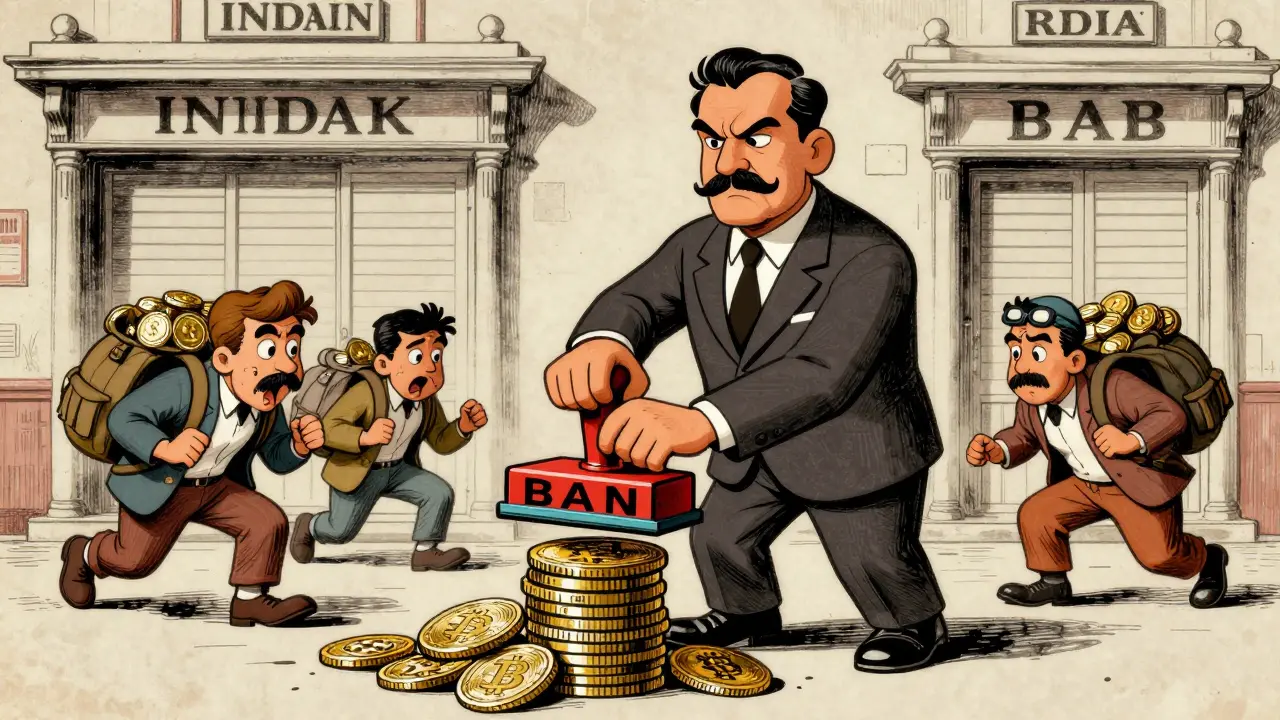
Before March 2020, if you wanted to buy Bitcoin in India, you had to jump through hoops. Banks wouldn’t touch you. Exchanges shut down. Even your UPI payments got blocked if they detected crypto-related activity. The RBI banking ban didn’t just make crypto hard to trade-it made it nearly impossible to operate legally. Then, everything flipped.
How the RBI Ban Killed Crypto Banking in India
In April 2018, the Reserve Bank of India dropped a bomb: a circular banning all regulated financial institutions from providing services to anyone dealing in cryptocurrencies. That meant banks, payment processors, and NBFCs couldn’t open accounts for crypto exchanges, process deposits, or even hold funds for trading platforms. It wasn’t a law passed by Parliament. It was a regulatory order-and it was sweeping.Exchanges like WazirX, CoinDCX, and ZebPay didn’t just lose customers-they lost their lifelines. Without bank accounts, they couldn’t accept INR deposits. Without INR deposits, users couldn’t buy Bitcoin or Ethereum. Trading volumes dropped by over 80% in just six months. Some platforms moved operations offshore. Others shut down entirely. Even blockchain startups working on supply chain or identity verification tools got caught in the crossfire. Banks froze their accounts too, because the RBI’s ban didn’t distinguish between gambling and innovation.
The RBI’s reasoning? Cryptocurrencies were too risky. Too volatile. Too unregulated. They cited concerns about money laundering, consumer losses, and threats to India’s monetary system. But here’s the thing: they never showed proof. No data. No case studies. No evidence that any bank had lost money because of crypto clients. Just fear.
The Supreme Court’s Landmark Ruling
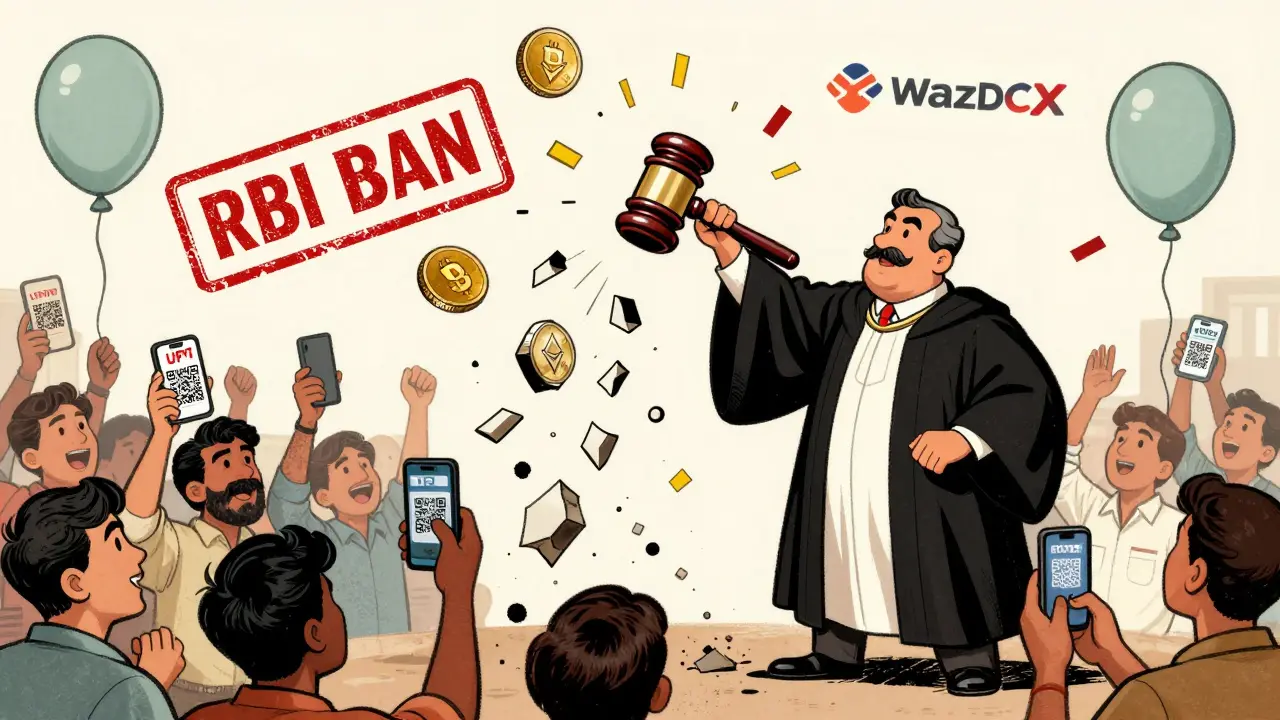
On March 4, 2020, the Supreme Court of India made a decision that changed everything. In the case Internet and Mobile Association of India v. RBI, the Court struck down the 2018 circular. The judges didn’t say crypto was safe. They didn’t say it was good. They said the RBI’s ban was disproportionate.The Court ruled that the RBI violated Article 19(1)(g) of the Constitution-the right to carry on any profession, trade, or business. The judges pointed out that the central bank had no proof that banks suffered losses from serving crypto firms. They also noted that the RBI didn’t try less extreme options first, like setting up strict KYC rules or limiting transaction sizes. Instead, they pulled the plug on the whole industry.
Justice Rohinton Fali Nariman wrote that regulation shouldn’t be a sledgehammer. If you’re worried about risks, you regulate the risk-not ban the entire activity. This wasn’t just a win for crypto traders. It was a win for legal fairness. It forced regulators to prove their claims, not just make them.
What Happened After the Ban Was Lifted
Within 48 hours of the ruling, crypto exchanges started reopening bank accounts. WazirX reported a 300% surge in new users in the first week. CoinDCX added 50,000 new traders in just 10 days. By mid-2020, trading volumes had not only recovered-they surpassed pre-ban levels.Banking access returned. UPI integration came back. Exchanges began partnering with licensed fintech providers to handle fiat on-ramps. The RBI didn’t stop them. Why? Because they had no legal grounds to. The Supreme Court had already ruled the ban unconstitutional.
But here’s where it gets messy. Just because crypto became legal again doesn’t mean it became easy. The government didn’t pass new laws. No clear rules. No licensing system. No tax framework. Just silence. So for years, the industry operated in a gray zone: legal because the ban was overturned, but not officially recognized.
The 2021 Draft Bill That Never Happened
In 2021, the Indian government floated a draft bill called the Cryptocurrency and Regulation of Official Digital Currency Bill. It aimed to ban all private cryptocurrencies and launch a digital rupee. The language was harsh: mining, trading, holding, even transferring crypto could be criminalized.But the bill never made it to Parliament. It disappeared. No debate. No vote. No final version. Why? Because the Supreme Court’s 2020 ruling made it legally risky. You can’t pass a law that bans something the courts already said can’t be banned without proof. The government stalled. The RBI kept warning. And the market kept growing.
Where Things Stand in 2026
Today, in 2026, crypto is legal in India. You can buy, sell, and hold Bitcoin, Ethereum, Solana, or any other coin without fear of arrest. Exchanges are back. Banks are open. UPI works. Over 15 million Indians now own crypto, according to industry estimates. Trading volumes hit $120 billion in 2025-up from $30 billion in 2020.But here’s the catch: crypto is still not legal tender. You can’t pay your electricity bill in Bitcoin. You can’t buy a car with Ethereum. The rupee is still the only official currency. Crypto is treated like stocks or gold-something you can invest in, not spend.
Taxes? Yes. The government started taxing crypto gains at 30% in 2022. TDS of 1% applies on all trades. But no one’s shutting down wallets. No one’s raiding exchanges. The RBI still doesn’t like crypto. Former Governor Shaktikanta Das called it a “threat to monetary sovereignty.” But they can’t ban it anymore. The courts already did.
Why This Matters Beyond India
India’s story is unique. No other major economy has gone from a full banking ban to a judicial reversal like this. The Supreme Court didn’t just protect crypto. It protected the principle that regulators must act proportionally. If you want to restrict a new technology, you need evidence-not fear.This ruling has become a reference point worldwide. Countries considering similar bans now ask: “Did we prove the harm? Did we try less extreme measures?” The Indian case says: if you can’t prove it, you can’t ban it.
What’s Next?
The big question now isn’t whether crypto is legal-it’s whether India will finally pass a real law. Will there be licensing for exchanges? Will there be clearer tax rules? Will the RBI finally engage with the industry instead of just warning against it?For now, the market is growing anyway. New crypto startups are popping up in Bengaluru, Hyderabad, and Pune. Decentralized finance (DeFi) apps are being built for Indian users. NFT marketplaces are launching in local languages. The infrastructure is here. The people are here. The only thing missing is clear regulation.
Until then, India’s crypto scene runs on a single rule: what’s not banned is allowed. And thanks to the Supreme Court, that’s enough.
Danny Kim
February 26, 2026 AT 23:35Also, 15 million Indians owning crypto? That's wild. Imagine if they had a real tax framework instead of just slapping on 30% like it's a parking ticket.
Cathy Sunshine
February 28, 2026 AT 00:38Shannon Black
March 1, 2026 AT 17:01Richard Cooper
March 2, 2026 AT 07:51Dee Resin
March 2, 2026 AT 15:04At least they finally stopped treating people like toddlers who can’t handle a little risk. Or maybe they just realized they couldn’t stop it anyway.
Tanvi Atal
March 4, 2026 AT 13:36Sony Sebastian
March 5, 2026 AT 20:08Brian Lemke
March 6, 2026 AT 02:55Also, 120 billion in trading volume? That’s not a bubble. That’s a movement.
Megan Lavery
March 6, 2026 AT 23:18Mae Young
March 7, 2026 AT 20:35Trenton White
March 8, 2026 AT 06:00Cheryl Fenner Brown
March 8, 2026 AT 23:44Michael Teague
March 10, 2026 AT 21:35