Real Estate Security Tokens Explained: How Blockchain Is Changing Property Ownership
 Jan, 25 2026
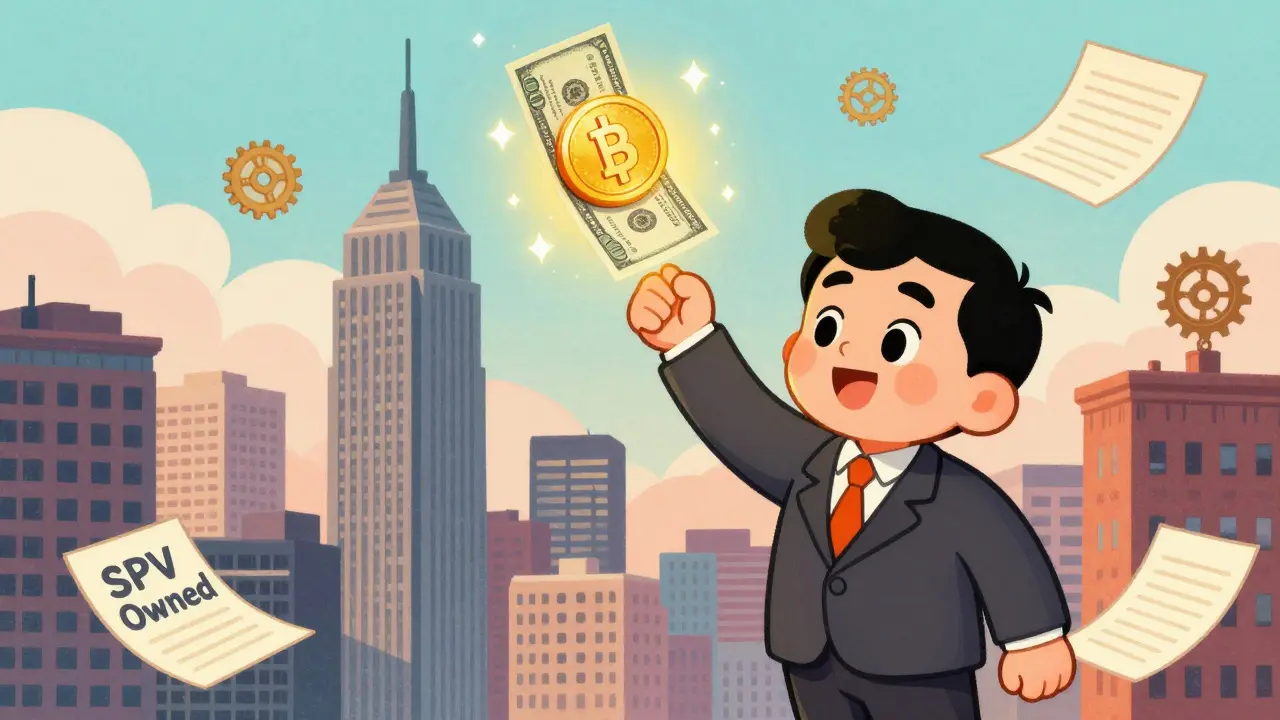
Imagine buying a piece of a Manhattan office building for $100. Not a share in a REIT. Not a fractional ownership deal through a lawyer. But an actual digital token on a blockchain that gives you a legal claim to rent income and future sale proceeds. That’s what real estate security tokens do - and they’re not science fiction. They’re real, regulated, and already changing how people invest in property.
What Are Real Estate Security Tokens?
Real estate security tokens are digital representations of ownership in a physical property. They’re not like Bitcoin or Ethereum. You don’t buy them to speculate on price swings. You buy them because they give you a legal right - like dividends, voting power, or a share of profits when the property sells. These tokens are built on blockchain networks, usually Ethereum using the ERC-20 standard. But here’s the key: they’re securities. That means they fall under the same rules as stocks or bonds. If you’re investing in one, you’re not just holding a digital file - you’re holding a financial instrument regulated by the SEC or equivalent agencies worldwide. The reason this matters is simple: before tokens, real estate was locked up. You needed tens of thousands, sometimes millions, to get in. Now, with tokenization, a $5 million apartment building can be split into 50,000 tokens. Each one is worth $100. Suddenly, someone with $500 can own a slice of a high-value asset they’d never have accessed before.How Tokenization Works: From Brick and Mortar to Digital Shares
The process starts with a legal structure - usually a Special Purpose Vehicle (SPV). This is a company created just to own the property. Think of it like a shell. The building goes into this shell. Then, the SPV issues digital tokens that represent ownership in the company, not the building directly. Here’s how it breaks down:- A property is bought and placed into an SPV.
- The SPV creates tokens - each one equals a percentage of ownership.
- Smart contracts define what rights each token holds: rent share, voting on repairs, or proceeds from a sale.
- Tokens are sold to investors through a regulated offering (like Regulation D or Regulation A+ in the U.S.).
- Investors store tokens in their own crypto wallets or through licensed custodians.
Security Tokens vs. Utility Tokens: Why the Difference Matters
Not all blockchain tokens are the same. There’s a big gap between security tokens and utility tokens. Utility tokens are like coupons. Buy a token, get access to a service - maybe a cloud storage plan or a discount on a platform. They’re not investments. They don’t promise returns. That’s why they mostly escaped SEC scrutiny early on. Security tokens are different. They’re built for investment. They promise income, appreciation, or both. The SEC uses the Howey Test to decide if something is a security: Is it an investment of money in a common enterprise with expectation of profit from others’ efforts? If yes - it’s a security. Real estate tokens almost always pass this test. That’s why you can’t just launch a real estate token and sell it to anyone on Twitter. You need compliance. You need legal structure. You need to know if you’re using Regulation D (only accredited investors), Regulation S (non-U.S. investors), or Regulation A+ (which lets you raise up to $75 million from retail investors).
Types of Real Estate Security Tokens
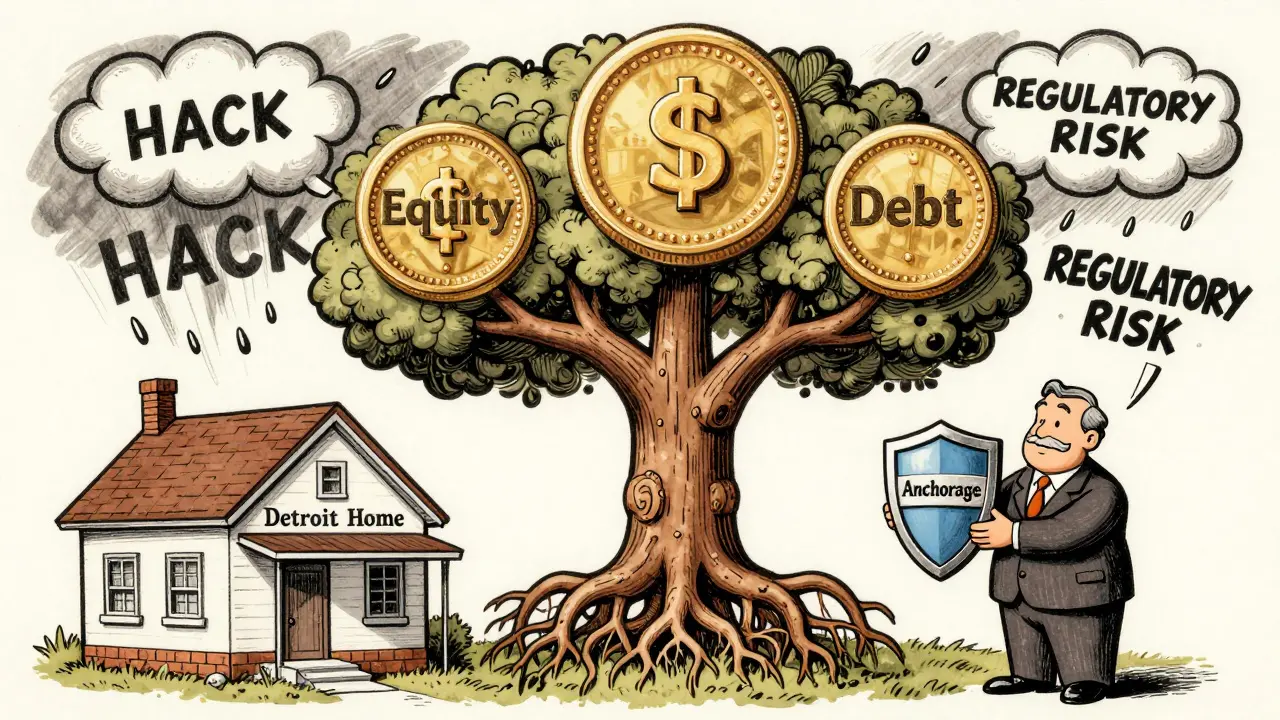
There are three main types, each with different rights:- Asset-Backed Tokens: These are tied directly to a physical property. Your token gives you a share of the building’s value and cash flow.
- Equity Tokens: These act like shares in the SPV. You get voting rights, dividends, and a claim on sale proceeds. Think of them as digital stocks in a real estate company.
- Debt Tokens: These are like bonds. You lend money to the SPV, and you get fixed interest payments. When the property sells or refinances, you get your principal back.
Why This Matters: Liquidity, Access, and Cost
Real estate is the world’s largest asset class - worth $228 trillion. But less than 7% of it is accessible to everyday investors. Why? Because it’s illiquid. Selling a house takes months. Buying a commercial building requires lawyers, appraisers, title insurers, and a ton of cash. Tokenization changes that. With tokens, you can trade ownership in minutes. You don’t need to find a buyer. You just sell your token on a specialized exchange called an Alternative Trading System (ATS). These are regulated platforms like INX or DigiShares - not Coinbase or Binance. Liquidity jumps from 0.5% per year (traditional real estate) to 15-20% per year with tokenization. Transaction costs drop by 40-60%. Entry points fall from $10,000+ to $100. And it’s not just for rich investors anymore. A teacher in Ohio can now own 0.02% of a warehouse in Texas. A nurse in New Zealand can earn monthly rent from a retail center in Florida. That’s the power of fractional ownership - and it’s only possible because of blockchain.Regulation: The Make-or-Break Factor
This is where most projects fail. You can’t just mint a token and call it a day. The SEC doesn’t care if you use blockchain, AI, or a typewriter. If your token meets the Howey Test, it’s a security. And securities have rules. In the U.S., you must either:- Register the offering with the SEC (expensive and slow), or
- Use an exemption like Regulation D 506(c) - which lets you advertise to accredited investors only, or
- Use Regulation A+ - which lets you raise up to $75 million from both accredited and non-accredited investors, with ongoing reporting.
Who’s Doing It Right?
A few platforms are leading the way:- INX: Institutional-grade platform. Launched the $22 million Manhattan apartment tokenization in 2023. Uses Regulation A+.
- DigiShares: Focuses on compliance infrastructure. Works with real estate firms to tokenize assets legally.
- RealT: Specializes in residential properties. Lets you buy tokens in single-family homes in Detroit, Chicago, and Phoenix. Minimum investment: $25.
- EY: Not a platform - but a consultant. Their tokenization framework is used by banks and funds to build compliant offerings.
- JPMorgan Chase: In September 2023, they completed a $50 million tokenized commercial property deal using their JPM Coin system. Big banks are moving in.
Challenges and Risks
It’s not all smooth sailing. First, liquidity. Even with tokens, trading volume is still low. There aren’t many ATS platforms. If you need to sell fast, you might not find a buyer. Second, complexity. You need to understand both real estate syndication AND blockchain. A token isn’t just a digital share - it’s a contract with legal rights. If the SPV goes bankrupt? Your token might be worthless. Third, regulation is still evolving. The SEC’s proposed Digital Asset Securities Framework is expected in early 2024. It could change everything - for better or worse. And then there’s the tech risk. Wallets get hacked. Private keys get lost. Custodians fail. That’s why using a licensed custodian - like Anchorage or BitGo - is critical. Don’t store your tokens on an exchange you don’t trust.What’s Next?
By 2027, EY predicts 10% of commercial real estate deals will involve tokenized components. By 2030, the market could hit $16.3 trillion - 7.1% of the global real estate market. The biggest shift? Convergence. Real estate firms aren’t fighting blockchain. They’re adopting it. Law firms are writing smart contract templates. Banks are settling transactions on-chain. Insurers are creating policies for digital assets. Residential tokenization is still behind commercial. Why? Zoning laws, tenant rights, and local regulations make it messy. But platforms like RealT are proving it’s possible - one house at a time. The future isn’t about replacing brokers or appraisers. It’s about making the system faster, cheaper, and fairer. If you can invest in a property without flying across the country, without writing a check for $500,000, without waiting six months for paperwork - then you’re not just investing in real estate. You’re investing in a new way of owning.Are real estate security tokens legal?
Yes, but only if they comply with securities laws. In the U.S., they must follow SEC rules like Regulation D, Regulation S, or Regulation A+. If they’re structured as investment contracts - which most are - they’re treated as securities, not cryptocurrencies. Non-compliant offerings have been fined, like Blockstream’s $30 million penalty in 2022.
Can anyone buy real estate security tokens?
It depends on the offering. Regulation D 506(c) only allows accredited investors (those with $200k+ income or $1M+ net worth). Regulation A+ allows non-accredited investors to participate, but with limits on how much they can invest. Always check the offering’s terms before buying.
How do I store my real estate security tokens?
You can store them in your own wallet - like MetaMask - if you’re comfortable managing private keys. But for safety, use a licensed custodian like Anchorage, BitGo, or DigiShares’ custody service. These firms are insured, regulated, and designed for institutional-grade digital assets.
Do I get actual ownership of the property?
No - you own a token that represents an interest in the legal entity (usually an SPV) that owns the property. Your rights are defined in the smart contract and legal documents: rent share, voting rights, or sale proceeds. It’s not direct ownership of the land, but it’s legally enforceable.
Can I sell my tokens anytime?
You can only sell on approved platforms called Alternative Trading Systems (ATS), not regular crypto exchanges. Liquidity is still limited. Some platforms lock tokens for 1-2 years. Always check the lock-up period and trading rules before investing.
What’s the difference between tokenized real estate and REITs?
REITs are publicly traded companies that own many properties. You buy shares in the company. With tokenized real estate, you own a direct stake in one or a few specific properties. You get more control, transparency, and direct cash flow - but less diversification. REITs are simpler. Tokenized real estate is more targeted.
Are real estate security tokens a good investment?
They can be - but they’re not for everyone. They offer access to high-value assets and passive income, but carry risks: regulatory changes, illiquidity, platform failure, and property value swings. Treat them like any other real estate investment: do your research, understand the SPV, check the legal docs, and only invest what you can afford to lose.
Brenda Platt
January 26, 2026 AT 13:00OMG I just bought my first $100 token in a Chicago apartment building 😍 I get $3.50 in rent every month and it feels like magic. No lawyers, no paperwork, just my wallet and a smart contract. Real estate is finally for real people now 🥹
Mark Estareja
January 27, 2026 AT 08:40The structural inefficiencies of traditional REITs are being obviated by blockchain-based tokenization via SPV encapsulation and ERC-20 compliance frameworks, which enforce SEC-regulated liquidity protocols and automated dividend disbursement mechanisms. The underlying asset-liability alignment is non-trivial.
Melissa Contreras López
January 29, 2026 AT 04:14Y’all are making this sound so scary but it’s really just… owning a piece of something real? 🤗 I’m a single mom with $500 to spare and now I’m getting rent from a house in Detroit. Not life-changing, but it’s mine. And that feels powerful. Keep going, this is beautiful.
Mike Stay
January 30, 2026 AT 10:25One must consider the geopolitical and macroeconomic implications of tokenized real estate as a decentralized financial instrument. The convergence of sovereign regulatory frameworks, particularly within the Anglo-American legal tradition, with blockchain-based asset representation represents a paradigm shift in capital formation. The U.S. remains the most mature ecosystem due to its well-defined securities jurisprudence, particularly under the Howey Test, which has been consistently upheld by federal courts since 1946. This is not merely innovation-it is institutional evolution.
Taylor Mills
January 30, 2026 AT 21:39so u guys are letting some crypto bros own parts of ur houses now? cool. next they’ll be voting on whether ur kid can have a swingset. america is dead.
Arielle Hernandez
February 1, 2026 AT 15:27It is imperative to distinguish between the legal structure of the Special Purpose Vehicle (SPV) and the digital token itself. The token is a security instrument representing an equitable interest in the SPV, which holds fee-simple title to the underlying real property. Compliance with Regulation A+ under the Securities Act of 1933 requires ongoing disclosure, including quarterly financials and material event reporting. Failure to maintain these obligations constitutes a material violation under Section 5 of the Act.
HARSHA NAVALKAR
February 3, 2026 AT 09:03Interesting. But in India, we still need to get bank loans to buy one room. This seems like fantasy.
Ryan Depew
February 4, 2026 AT 07:10RealT is actually legit. I bought a $25 token in a Detroit house last year. Got $1.20 in rent last month. Not rich, but I didn’t have to sign 17 forms or wait 3 months. Also, my wallet’s way safer than my old landlord’s mailbox.
Mathew Finch
February 6, 2026 AT 05:07Tokenization? Please. This is just Wall Street repackaging the same old pyramid scheme with blockchain glitter. You think a $100 token gives you real power? You’re a digital tenant. The SPV still owns everything. The only thing that’s changed is the fee structure.
Jessica Boling
February 7, 2026 AT 08:01so you’re telling me I can now own 0.001% of a building… and still have to deal with the same bad plumbing and noisy neighbors? cool cool cool
Andy Simms
February 8, 2026 AT 19:08For beginners: if you’re using MetaMask, make sure you’re on the right network. Most real estate tokens are on Ethereum mainnet or Polygon. Don’t send tokens to a Binance deposit address - you’ll lose them. And always check the legal docs linked in the offering. It’s not just crypto - it’s a contract.
Nadia Silva
February 10, 2026 AT 18:25Canada has better housing policies than this. Why are we letting American tech bros tokenize our future? This is just another way to extract value from ordinary people while pretending it’s empowerment.
Roshmi Chatterjee
February 12, 2026 AT 15:20I love how this is opening doors for small investors. I’m from a small town in India and I never thought I’d ever own a piece of a U.S. property. Even if it’s $100, it’s a start. Thank you for making this real.
MICHELLE REICHARD
February 14, 2026 AT 08:15Of course it’s legal. Everything’s legal if you pay enough lawyers. The SEC doesn’t care about you - they care about the banks that control the ATS platforms. This isn’t democratization. It’s rebranding.
tim ang
February 15, 2026 AT 08:03just got my first rent payout from RealT - $2.10 😭 i cried. not because it’s a lot but because it’s mine. no middleman. no landlord. just code and cash. this is the future and i’m here for it.
Julene Soria Marqués
February 17, 2026 AT 05:25wait so if the SPV goes bankrupt, i lose my token? but i thought this was safe? so this is just like buying a stock in a failing company but with more steps? why am i doing this again?
Bonnie Sands
February 17, 2026 AT 23:21the feds are using this to track everything. every transaction. every wallet. they’ll know how much rent you got from that one house in texas. next they’ll tax your dreams. don’t trust the blockchain. they own it.
MOHAN KUMAR
February 19, 2026 AT 15:49In India, we can't even buy a house. This seems like a game for rich Americans. But I hope one day someone builds this for us too.
Jennifer Duke
February 20, 2026 AT 15:06It’s cute that you think this is financial inclusion. The platforms are all based in New York and only accept U.S. investors. The rest of the world gets to watch. This isn’t revolution - it’s exclusion with better branding.
Andy Marsland
February 20, 2026 AT 23:14The fundamental flaw in this entire paradigm lies in the misalignment between the immutable nature of blockchain technology and the mutable, jurisdictional nature of real property law. While smart contracts can automate dividend distribution, they cannot override local zoning ordinances, tenant protection statutes, or municipal tax liens. A token may represent an interest in an SPV, but the SPV remains subject to the whims of county clerks and state legislatures. This is not disintermediation - it is layering complexity atop existing legal inertia.
Anna Topping
February 21, 2026 AT 10:31Isn’t it ironic? We’re using decentralized tech to create new forms of centralized control. The blockchain doesn’t care who owns the property - but the lawyers, the custodians, the ATS platforms? They do. We’re just swapping one gatekeeper for another. The dream of true ownership… is it even possible anymore?
Jeffrey Dufoe
February 23, 2026 AT 05:38i just bought a token. it’s $100. i got $1.50 last month. i don’t know much but i like that i can see the building on google maps and know i own a piece of it. simple. good.
katie gibson
February 23, 2026 AT 21:30so i spent 3 hours trying to figure out how to connect my wallet to the ATS and now i have a token… but my phone died and i lost my seed phrase and now i think i’m a millionaire but also broke and also crying in a parking lot??
Ashok Sharma
February 25, 2026 AT 00:45This is a very positive development for global investment. In India, we need more such platforms that are compliant and transparent. I hope local regulators will support this kind of innovation soon.