RUNE.GAME Airdrop Details: How the CoinMarketCap Campaign Worked
 Sep, 9 2026
Do you remember the rush of trying to claim free crypto in 2021? If you were deep in the RUNE.GAME community or scrolling through CoinMarketCap campaigns, you likely saw the buzz around their massive $70,000 prize pool. This wasn't just another random token drop; it was a strategic move by a blockchain-based MMO to grab attention during the peak of the GameFi boom. The campaign closed on September 8, 2021, but understanding how it worked gives us valuable insight into how early play-to-earn projects built their initial user bases.
So, what exactly happened with this Rune airdrop? And more importantly, why does it still matter for anyone tracking the evolution of blockchain gaming? Let's break down the mechanics, the rewards, and the broader context of this specific event.
The Core Mechanics of the RUNE.GAME x CoinMarketCap Airdrop
At its heart, this campaign was a classic engagement-for-rewards model. RUNE.GAME, a massively multiplayer online game built on the Binance Smart Chain (BSC), partnered with CoinMarketCap to distribute a total of $70,000 worth of prizes. But unlike simple token drops where you connect a wallet and wait, this required actual effort from participants. The goal was twofold: reward existing fans and attract new users who might not have known about the project yet.
The prize pool consisted primarily of NFTs and in-game items. Specifically, eligible winners could receive up to one unique RUNE NFT. These weren't just static images; they represented "full ownership of digital assets" within the game ecosystem. In the context of 2021, this was a powerful selling point. Players wanted proof that their time and money invested in a game actually belonged to them, and these NFT heroes served as tangible evidence of that ownership.
The distribution targeted 1,000 winners. Doing the math, that averages out to roughly $70 per winner, though the actual value varied depending on which specific NFT or item you received. Some rare heroes might have been worth significantly more than others, adding a layer of gamification to the lottery itself.
How Participants Qualified for Rewards
You couldn't just show up and get paid. The Rune team set up a multi-step checklist designed to maximize visibility across different social platforms. This is standard practice now, but back then, it was a rigorous test of commitment. Here is exactly what you had to do to qualify:
- Watchlist Action: Add the RUNE token to your personal watchlist on CoinMarketCap. This signaled interest to the data platform's algorithm and the project's analytics.
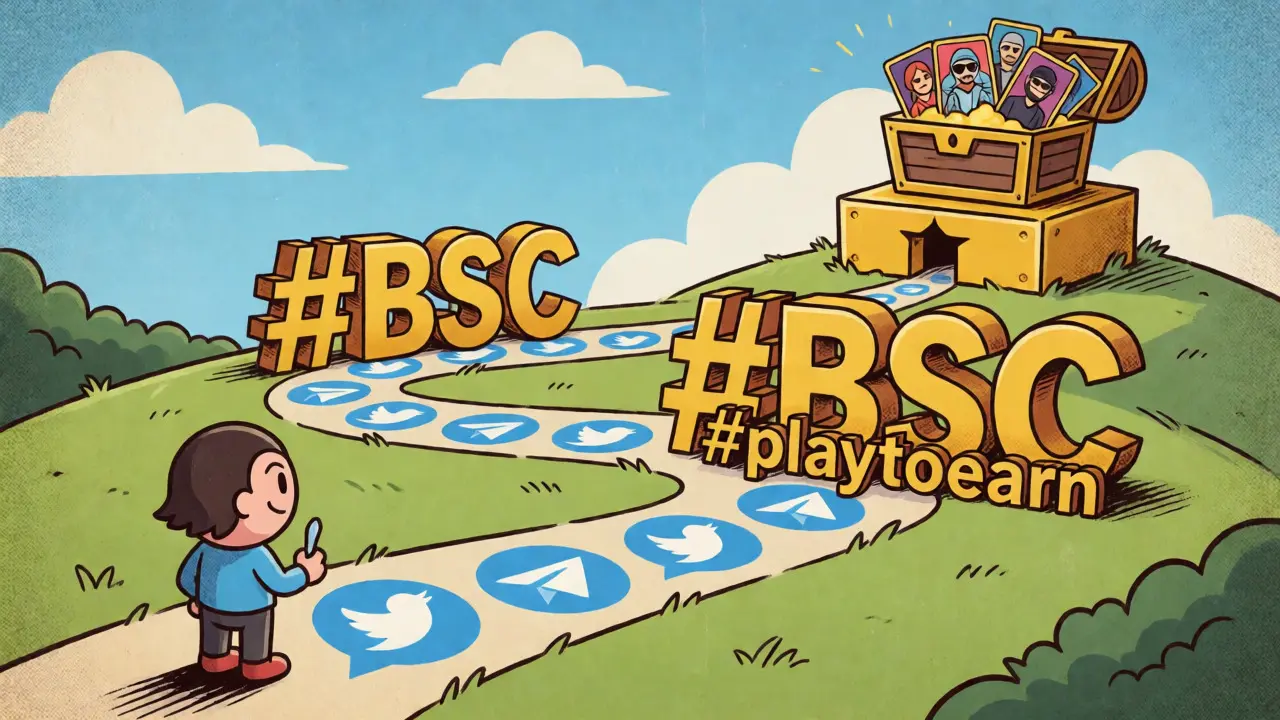
- Twitter Engagement: Follow the official account @RuneMMO. Then, like and retweet the specific campaign tweet. Crucially, you had to tag at least three friends using hashtags like #BSC, #BSCgems, #playtoearn, and #Binance.
- Community Joining: Enter the Rune Telegram group and join their Discord server. This moved users from passive observation to active community spaces.
- Newsletter Subscription: Sign up for the Rune newsletter to stay updated on future developments.
- Optional Step: Check out the game directly at rune.game. While marked optional, doing so likely improved your chances or qualified you for additional tiers of rewards.
Notice the emphasis on Binance Smart Chain. The mandatory hashtags weren't just decorative; they anchored the project firmly within the BSC ecosystem. This choice was deliberate. BSC offered lower transaction fees compared to Ethereum, making it easier for regular gamers to participate in microtransactions without losing their shirts on gas fees.
Why Binance Smart Chain Was the Backbone
If you're wondering why RUNE.GAME chose BSC over other chains, look no further than the cost structure. Blockchain games require frequent interactions-moving characters, trading items, completing quests. On Ethereum, each of these actions could cost dollars in gas fees, creating friction for casual players. BSC, being compatible with the Ethereum Virtual Machine (EVM) but operating with a different consensus mechanism, allowed for high throughput and negligible costs.
This technical decision directly influenced the airdrop's success. Because transactions were cheap, the project could afford to distribute thousands of small-value NFTs without eating into the prize pool excessively. It also meant that once winners claimed their NFTs, they could immediately use them in-game without worrying about prohibitive transfer fees. This seamless integration between the marketing campaign and the underlying tech stack is a key reason why many early GameFi projects stuck with BSC.
The Role of CoinMarketCap in Gaming Adoption
This partnership wasn't just about free money for users; it was a symbiotic relationship between two giants in their respective fields. CoinMarketCap, traditionally known for price tracking and market data, was expanding its footprint into the gaming and NFT sectors. By hosting this airdrop, CMC provided legitimacy and massive reach to a smaller gaming studio. For RUNE.GAME, having their name associated with a trusted data aggregator helped overcome the skepticism often directed at new blockchain games.
For CMC, it was a way to tap into the growing audience of gamers who were curious about crypto but hadn't fully committed. It exposed their platform to a demographic that might not check prices daily but cared deeply about asset ownership and in-game economies. This model of "Data Platform + Game Studio" became a template for many subsequent collaborations in the sector.
Lessons from the Closure
The campaign is long gone. If you try to find it now, you'll see messages like "It looks like you are too late." This highlights the transient nature of airdrops. They are designed to create urgency. The window was tight, and missing it meant missing out on potentially valuable assets. But beyond the missed opportunity, there's a bigger lesson here about sustainability.
While the airdrop successfully generated hype and distributed assets, the long-term viability of any play-to-earn project depends on retention. Did those 1,000 winners keep playing? Did the NFTs retain value after the initial novelty wore off? History shows mixed results for many projects launched during that 2021 peak. Market corrections later hit the sector hard, and only games with robust gameplay loops-not just speculative tokenomics-survived.
Key Takeaways for Crypto Gamers
| Feature | Detail |
|---|---|
| Total Prize Pool | $70,000 |
| Number of Winners | 1,000 |
| Primary Reward | RUNE NFTs (Heroes) |
| Blockchain | Binance Smart Chain (BSC) |
| Campaign Status | Closed (Sept 2021) |
If you're looking at similar opportunities today, pay attention to the requirements. High-effort tasks usually signal a project serious about building a community rather than just dumping tokens. Also, always check the chain. Low fees enable micro-transactions, which are essential for gaming. Finally, consider the partnership. A collaboration with an established entity like CoinMarketCap adds a layer of vetting that solo projects lack.
The RUNE.GAME airdrop serves as a case study in early GameFi marketing. It combined financial incentives with social proof and technical accessibility. While the specific event is history, the strategies employed remain relevant for anyone navigating the intersection of cryptocurrency and interactive entertainment.
Is the RUNE.GAME airdrop still open?
No, the specific RUNE.GAME x CoinMarketCap airdrop concluded on September 8, 2021. It is permanently closed, and new participants can no longer claim rewards from that specific campaign.
What blockchain did RUNE.GAME use?
The game operated on the Binance Smart Chain (BSC). This choice was made to ensure low transaction fees and high processing speeds, which are critical for a massively multiplayer online game.
What were the prizes in the airdrop?
The total prize pool was $70,000, distributed among 1,000 winners. Prizes included unique RUNE NFTs representing in-game heroes and various in-game items, giving players ownership of digital assets.
Did I need a crypto wallet to participate?
Yes, while the social tasks didn't strictly require a wallet address for every step, claiming NFTs typically requires connecting a compatible Web3 wallet like MetaMask configured for the Binance Smart Chain network.
Why was tagging friends required?
Tagging friends and using specific hashtags (#BSC, #playtoearn) helped amplify the campaign's reach on Twitter. It turned participants into brand ambassadors, spreading awareness organically beyond the existing community.