Russia Legalizes Crypto Mining to Bypass Sanctions: How It Works and Why It’s Limited
 Dec, 28 2025
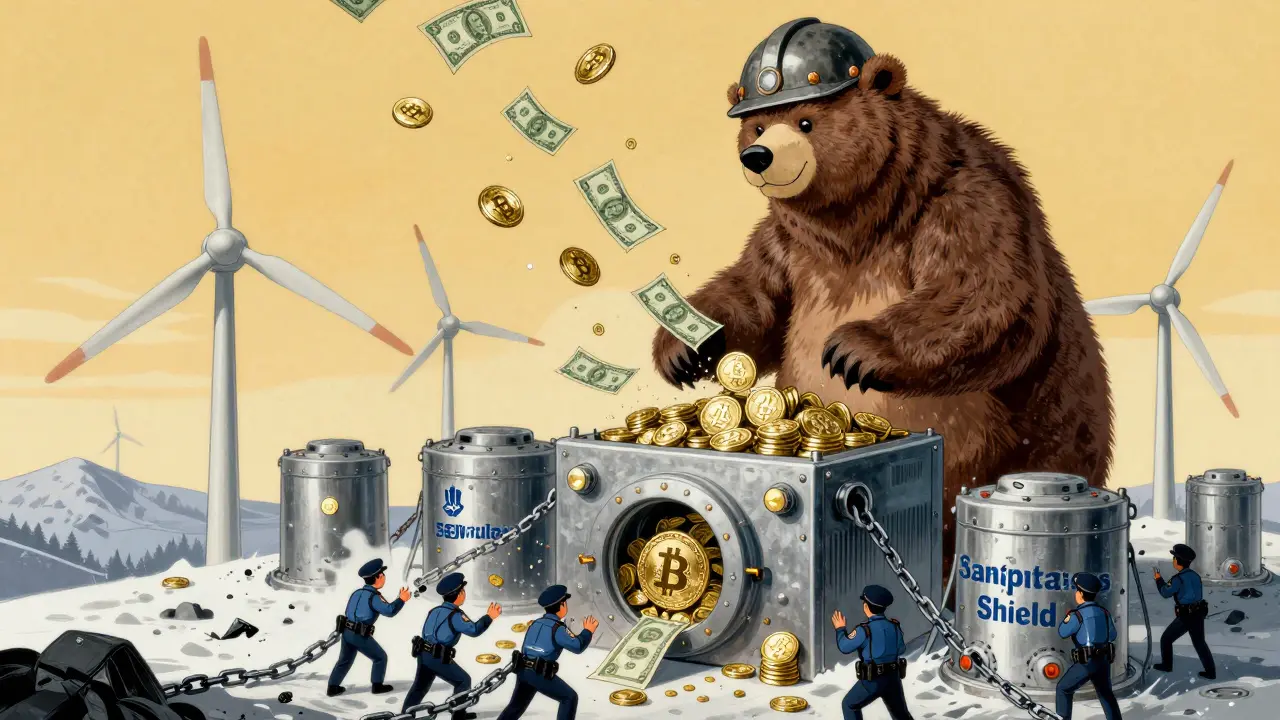
When Russia legalized cryptocurrency mining in 2025, it wasn’t about embracing digital currency for its innovation or efficiency. It was a survival move. After Western sanctions cut off access to dollar-based banking systems, Russia needed a way to pay for weapons, buy raw materials, and move money without being tracked. Crypto mining became the backbone of that strategy - not because Bitcoin is perfect, but because it’s the only tool left that doesn’t require a Western bank.
How Russia Turned Mining Into a Sanctions Shield
Russia didn’t just allow crypto mining. It built an entire shadow economy around it. By 2025, the country had the third-largest crypto mining operation in the world, powered by cheap electricity from Siberia and state-backed energy firms. Miners weren’t just hobbyists with rigs in their garages. They were part of a coordinated system, running machines 24/7 to generate digital assets that could be swapped for goods and services outside the reach of U.S. and EU sanctions. The real game-changer was the launch of the A7A5 stablecoin in February 2025. Backed by the Russian state-owned Promsvyazbank and issued by a Kyrgyz company tied to a Moldovan oligarch, A7A5 was designed to look like a regular digital dollar - but it wasn’t. It was pegged to the ruble and traded almost entirely on Russian-linked exchanges like Garantex and its successor, Grinex. By July 2025, A7A5 had moved over $51 billion in transactions. That’s not retail trading. That’s corporate-scale movement - paying for oil, metals, and military parts. Unlike Bitcoin, which swings wildly in price, A7A5 stayed steady. That made it usable for real commerce. Companies in Turkey, India, and Central Asia started accepting it because they could get paid in something that didn’t vanish overnight. And because it operated on private networks with limited oversight, Western regulators struggled to trace where the money went.The Exchanges That Kept the System Running
The A7A5 network didn’t exist in a vacuum. It relied on a handful of exchanges that had been quietly rebuilt after being sanctioned. Garantex, once Russia’s biggest crypto platform, was blocked by the U.S. in 2022. But its founders didn’t disappear. They launched Grinex in 2024 - a new platform with the same team, same infrastructure, same clients. The U.S. Treasury called it a “sanctions evasion tool” and sanctioned it in August 2025. The UK followed suit, freezing assets of the company and its parent, Old Vector. These weren’t anonymous dark web sites. They were fully operational platforms with customer support, mobile apps, and even ads on Russian TV. You could buy A7A5 tokens directly with a PSB bank card - Russia’s state bank. The system was designed to feel normal, so users wouldn’t question it. And for businesses that had no other way to get paid, it worked.Western Countermeasures: Targeting the Infrastructure, Not Just the Coins
The U.S. and UK didn’t just slap sanctions on exchanges. They went after the people behind them. In August 2025, the Treasury designated a crypto mining company for the first time ever - a Russian firm operating in Kazakhstan that was powering A7A5 transactions. That was a warning: if you’re mining crypto to help Russia evade sanctions, you’re a target. They also froze the assets of more than 40 individuals and entities tied to Konstantin Malofeyev, a Russian oligarch known for funding pro-Kremlin networks. Three of them were linked to Transkapitalbank, which was used to move money for weapons suppliers. The UK targeted Kyrgyz banks that processed payments for sanctioned Russian firms. This wasn’t just about blocking crypto wallets. It was about cutting off the entire pipeline - from miners to banks to middlemen. Chainalysis, a blockchain analytics firm, tracked over $12 billion in suspicious transfers linked to Russian mining pools in 2025. But here’s the twist: blockchain is public. Every transaction leaves a trail. That’s why Western agencies are winning - not by banning crypto, but by mapping it. They know which wallets connect to which exchanges, which miners are funded by Russian state energy companies, and which companies are receiving payments from A7A5.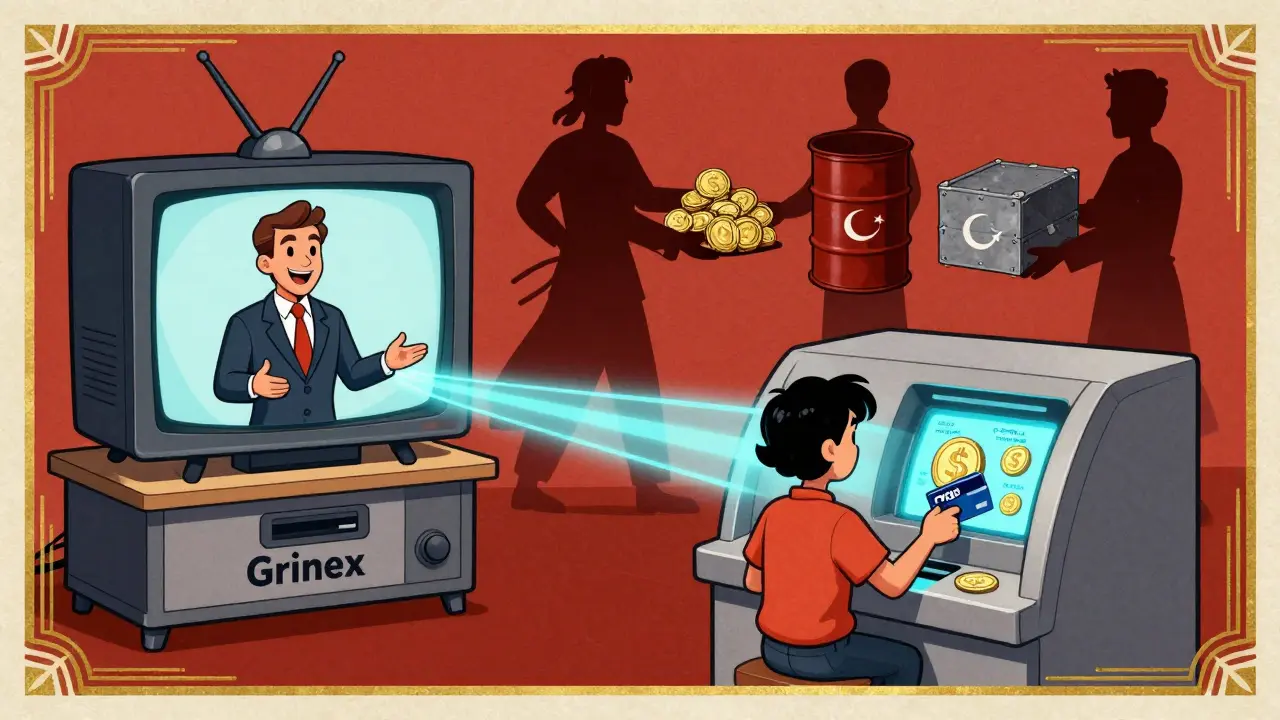
Why Crypto Isn’t a Magic Bullet for Sanctions Evasion
Despite all the hype, crypto hasn’t replaced the dollar. Not even close. Russia’s pre-war exports were worth about $400 billion a year. Bitcoin’s entire market cap? Around $800 billion. That sounds big - until you realize you can’t move $400 billion in oil sales using a currency that takes 10 minutes to confirm each transaction and costs $50 in fees per trade. And if the price drops 20% while your cargo is at sea? You lose millions. The Bitcoin Policy Institute says it plainly: Bitcoin is “ill-suited” for large-scale sanctions evasion. It’s too volatile, too slow, and too small. Russia didn’t use Bitcoin. It used A7A5 - a state-controlled stablecoin. And even that has limits. The network is isolated. You can’t easily convert A7A5 into euros or yen. You can’t buy a German machine with it unless the seller is already in the Russian crypto loop. Other countries like North Korea and Venezuela have tried similar tricks. But none have scaled it. Why? Because global trade still runs on dollars. If you’re not using dollars, you’re stuck with a closed system - and that’s not a replacement. It’s a prison.The Real Goal: Building a Parallel Financial System
Russia’s endgame isn’t to replace the dollar. It’s to create a world where the dollar doesn’t matter. By legalizing mining and crypto payments, Russia is building its own financial plumbing - one that doesn’t rely on SWIFT, Visa, or the Federal Reserve. It’s a long-term play. If enough countries start using ruble-backed stablecoins or crypto rails to trade with Russia, the dollar’s dominance weakens. That’s the real threat. China, India, and Brazil have all increased trade in local currencies with Russia since 2022. Some of those payments go through crypto. It’s not about Bitcoin. It’s about breaking the monopoly. And if Russia can prove it can move billions without Western banks, others will follow.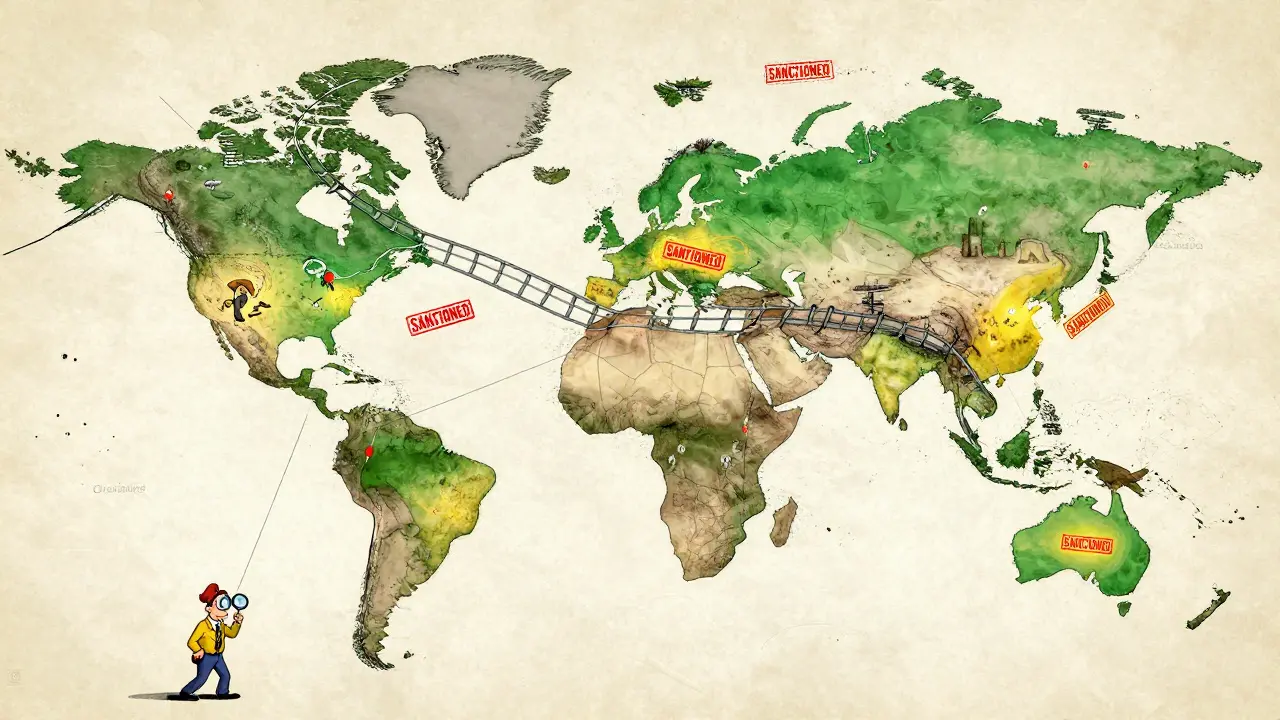
What This Means for the Future
Crypto mining isn’t going away. It’s becoming a geopolitical tool. Countries under sanctions will keep using it. Regulators will keep trying to shut it down. And blockchain will keep exposing the truth - because every transaction is recorded, forever. The lesson isn’t that crypto is a weapon. It’s that when you cut off a country from the global financial system, it will find another way. And sometimes, that way is digital, decentralized, and surprisingly effective - even if it’s not perfect. The U.S. and EU can sanction exchanges, freeze wallets, and arrest individuals. But they can’t un-invent blockchain. The best they can do is make it harder - and hope the cost of evasion becomes too high. So far, Russia is still mining. Still trading. Still building.Frequently Asked Questions
Is crypto mining legal in Russia?
Yes. In early 2025, Russia officially legalized cryptocurrency mining and cross-border crypto payments as part of its strategy to bypass Western sanctions. Mining operations are now supported by state energy companies and operate under a regulatory framework that treats them as critical infrastructure.
What is the A7A5 stablecoin and why is it important?
A7A5 is a ruble-backed stablecoin launched in February 2025 by a Kyrgyz company backed by Russia’s Promsvyazbank. It’s designed to move money outside the traditional banking system. By July 2025, it had processed over $51 billion in transactions, mostly for trade in oil, metals, and military equipment. Unlike Bitcoin, it’s stable, fast, and used by businesses - not just speculators.
Can Russia really evade sanctions using crypto?
Not fully, but partially. Crypto can’t replace the dollar for large-scale trade - Bitcoin’s market cap is too small and too volatile. But Russia uses state-controlled stablecoins like A7A5 to move money through closed networks of sanctioned exchanges and allied countries. It’s not perfect, but it’s enough to keep critical imports flowing.
Why did the U.S. sanction a crypto mining company?
In August 2025, the U.S. Treasury sanctioned a Russian-linked mining firm in Kazakhstan for directly supporting sanctions evasion by powering transactions for the A7A5 stablecoin. This was the first time a crypto mining company was targeted - signaling that infrastructure, not just wallets, is now a key focus of enforcement.
Is crypto mining in Russia funded by the government?
Yes. Russian state-owned energy companies provide cheap electricity to mining operations. Promsvyazbank, a state bank, backs the A7A5 stablecoin. The government has also exempted mining from certain taxes and tariffs. This isn’t a grassroots movement - it’s a state-backed project.
Can other countries use crypto to evade sanctions like Russia?
Yes. North Korea, Venezuela, and Iran have all used crypto to bypass sanctions. But none have built a system as large or as institutionalized as Russia’s. Russia’s advantage is its scale, energy resources, and control over financial infrastructure - things most sanctioned countries don’t have.
Will crypto replace the dollar as the global reserve currency?
No - not now, and not soon. The dollar is used in over 80% of global trade. Crypto’s transaction speed, volatility, and lack of widespread acceptance make it impractical for replacing the dollar in large-scale commerce. But it can weaken the dollar’s dominance by creating alternative payment systems - and that’s enough to worry Western policymakers.
Daniel Verreault
December 28, 2025 AT 20:39Grinex? More like Grin-and-bear-it-exchange. They even have TV ads. I mean, come on. If this isn’t the future of sanctioned economies, I don’t know what is.
Jacky Baltes
December 28, 2025 AT 23:45Michelle Slayden
December 29, 2025 AT 03:15Mike Reynolds
December 30, 2025 AT 05:55dayna prest
December 30, 2025 AT 07:54Brooklyn Servin
December 31, 2025 AT 06:10Alex Strachan
January 1, 2026 AT 20:25Also, A7A5? That’s not a coin. That’s a government Excel sheet with a blockchain skin.
Rick Hengehold
January 2, 2026 AT 01:37Brandon Woodard
January 3, 2026 AT 00:31Antonio Snoddy
January 4, 2026 AT 03:38Ryan Husain
January 4, 2026 AT 17:13Rajappa Manohar
January 4, 2026 AT 18:05prashant choudhari
January 6, 2026 AT 06:27Emily L
January 7, 2026 AT 09:50Gavin Hill
January 7, 2026 AT 09:59SUMIT RAI
January 8, 2026 AT 04:11Andrea Stewart
January 10, 2026 AT 01:44Josh Seeto
January 10, 2026 AT 15:47Khaitlynn Ashworth
January 11, 2026 AT 01:21NIKHIL CHHOKAR
January 11, 2026 AT 04:41Mike Pontillo
January 12, 2026 AT 16:46Joydeep Malati Das
January 12, 2026 AT 17:40rachael deal
January 13, 2026 AT 14:41