Slashing Impact on Staking Returns: How Penalty Risks Reduce Your Crypto Earnings
 Mar, 15 2026
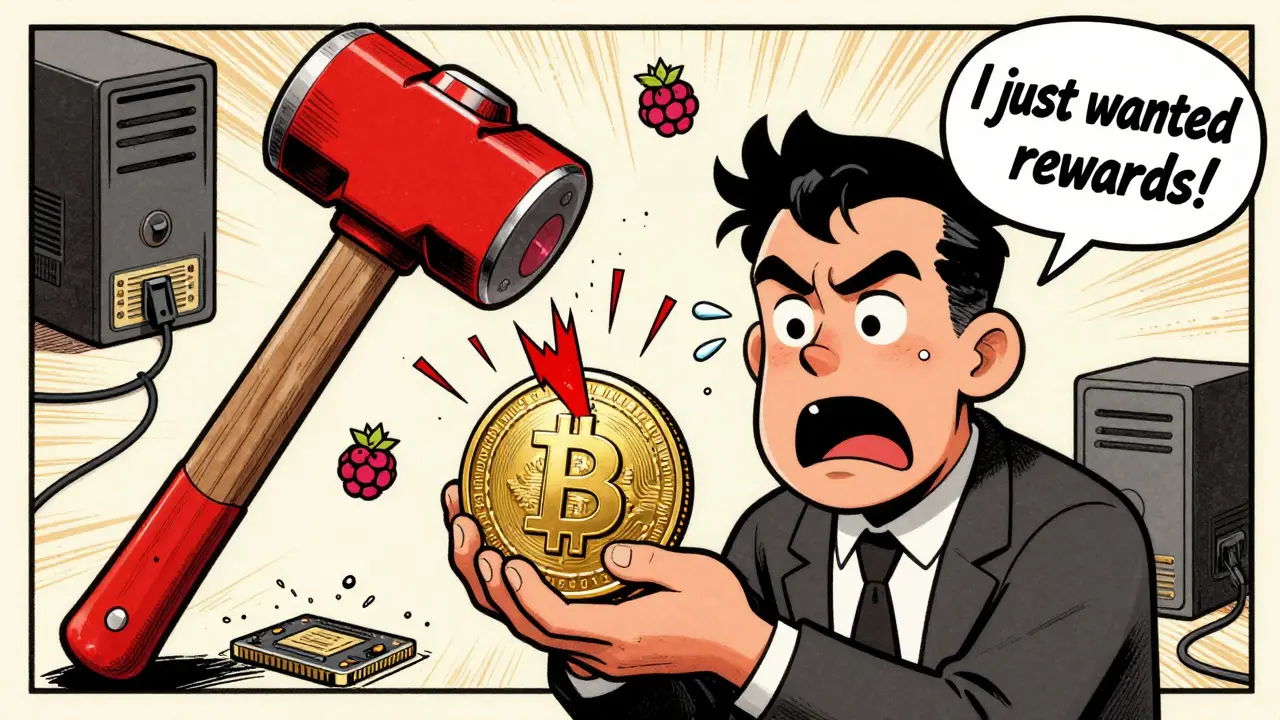
When you stake your crypto, you’re not just earning rewards-you’re also betting your money on a system that can take it away.
Slashing isn’t a bug. It’s a feature. And if you don’t understand how it works, you could lose a big chunk of your staked coins-maybe even all of them. This isn’t theoretical. Real validators have lost entire 32 ETH deposits. Real people have seen their staking profits vanish for over a year after a single mistake. If you’re staking on Ethereum, Cosmos, Solana, or any major Proof-of-Stake chain, you need to know what slashing means for your wallet.
What Slashing Actually Does to Your Staking Returns
Slashing is when the blockchain automatically removes part-or all-of your staked tokens because you broke the rules. It’s not a hack. It’s not a scam. It’s built into the protocol to keep the network secure. The idea is simple: if you’re supposed to be a validator, you must act honestly. If you don’t, you pay a price.
Here’s the catch: slashing doesn’t just hurt the bad actor. It hurts your returns. Let’s say you stake 10 ETH and normally earn 4% a year-that’s 0.4 ETH in rewards. But if you get slashed by 5%, you lose 0.5 ETH. Now you’re down 0.1 ETH for the year. No rewards. Just loss.
Worse, slashing compounds. If you lose 5% of your stake, your future rewards drop too. Less stake = less reward. So a 5% slash today can mean 10-15% less income over the next year. And if you get hit twice? You might be out of the game entirely.
How Slashing Happens: The Three Big Reasons
Slashing doesn’t happen randomly. It’s triggered by three specific actions:
- Double-signing: You sign two different blocks at the same height. This is like lying to the network. It’s the worst offense. Ethereum can slash 100% of your stake for this.
- Downtime: Your validator node goes offline for too long. Ethereum requires 99% uptime. If you miss more than 1% of your duties, you start losing coins.
- Invalid block proposals: You try to propose a block that breaks protocol rules. This could be due to bad software, misconfigured settings, or even a bug in your client.
Most retail stakers lose money on downtime-not double-signing. Why? Because running a node isn’t like running a website. It needs constant monitoring, backup power, redundant internet, and regular updates. If your validator goes down during a power outage or a software update, you’re getting slashed.
How Bad Is It? Real Numbers from Real Chains
Not all blockchains slash the same. Here’s what you’re actually risking:
| Network | Downtime Penalty | Double-Signing Penalty | Annual Slash Rate (Avg) |
|---|---|---|---|
| Ethereum | 0.5%-1% per incident | Up to 100% | 0.8%-1.2% |
| Cosmos Hub | 0.1%-5% | 5%-10% | 0.3%-0.6% |
| Solana | Minimal (under 0.1%) | 100% | 0.2%-0.5% |
| Cardano | 0% (no slashing) | 0% (no slashing) | 0% |
| Avalanche | 0.5%-3% | 1%-5% | 0.4%-0.8% |
Cardano doesn’t slash at all. That’s why it’s popular with beginners. But Ethereum, the biggest PoS chain, has the highest slash risk-and the highest staking rewards. If you stake on Ethereum, you’re signing up for both.
According to data from BeaconScan, 27 validators lost 100% of their 32 ETH deposits in May 2023-just because of a software bug. That’s $56,000 each. All gone. No appeal. No refund.
Why Retail Stakers Lose More Than Institutions
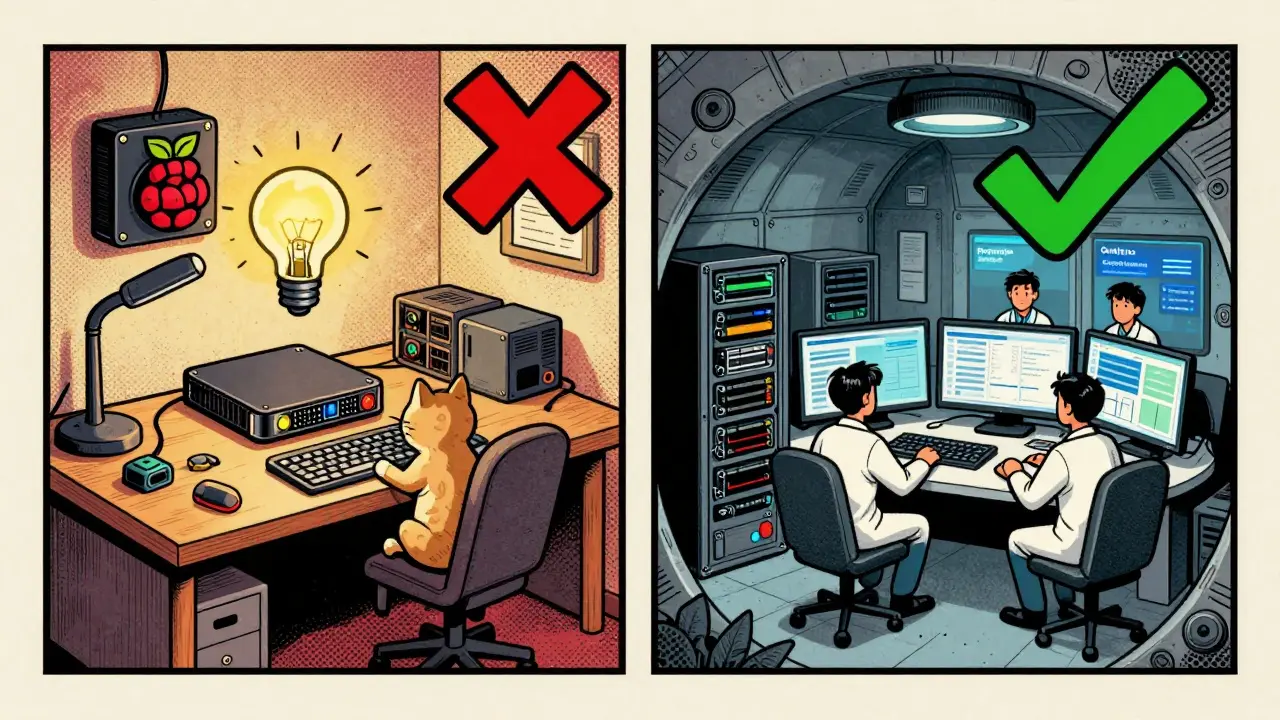
Here’s the truth: if you’re running your own validator on a Raspberry Pi at home, you’re 10x more likely to get slashed than if you use a professional service.
Studies from KPMG and Stakin show:
- Retain validators have a slashing rate of 0.1% per year.
- Retail validators? 1.2%-2.5% per year.
That’s not a small difference. It’s a 12x-25x higher risk. Why? Because institutions use:
- Hardware Security Modules (HSMs) to protect signing keys
- Multi-datacenter setups with failover servers
- Real-time monitoring with Prometheus and Grafana
- Automated alerts and 24/7 support teams
One Reddit user lost 7.2 ETH ($12,700) after his home server overheated. He didn’t have a UPS. He didn’t have backup internet. He didn’t even know his node was down for 48 hours. That’s not rare. That’s typical.
Meanwhile, services like Lido, Coinbase, and Kraken have slashing rates under 0.05%. Why? They spend tens of thousands of dollars per validator to prevent this. They treat it like a financial infrastructure, not a hobby.
How to Protect Your Staking Returns
If you’re serious about staking, you need a plan. Here’s what actually works:
- Use a reputable staking provider-If you’re not running enterprise-grade infrastructure, don’t try to be a validator. Use Lido, Coinbase, or Kraken. They absorb the slashing risk so you don’t have to.
- Never run a node on a single server-If you insist on self-hosting, you need at least two geographically separated servers, with independent power and internet. One is a gamble. Two is a start.
- Use an HSM-Hardware Security Modules cut slashing risk by over 80%. They’re not cheap ($500-$1,500), but they’re cheaper than losing 32 ETH.
- Monitor constantly-Set up alerts for downtime, key errors, and sync status. Use tools like Prometheus, Grafana, or even simple Telegram bots. If you don’t know your node is down, you’re already getting slashed.
- Update software before hard forks-Most slashing events happen during upgrades. Don’t wait for the network to tell you. Check the official Ethereum or Cosmos docs 48 hours before a scheduled upgrade.
And if you’re still thinking about self-hosting? Ask yourself: are you prepared to spend $15,000 a year on infrastructure? Because that’s the real cost of avoiding slashing.
The Future: Slashing Is Getting Smarter
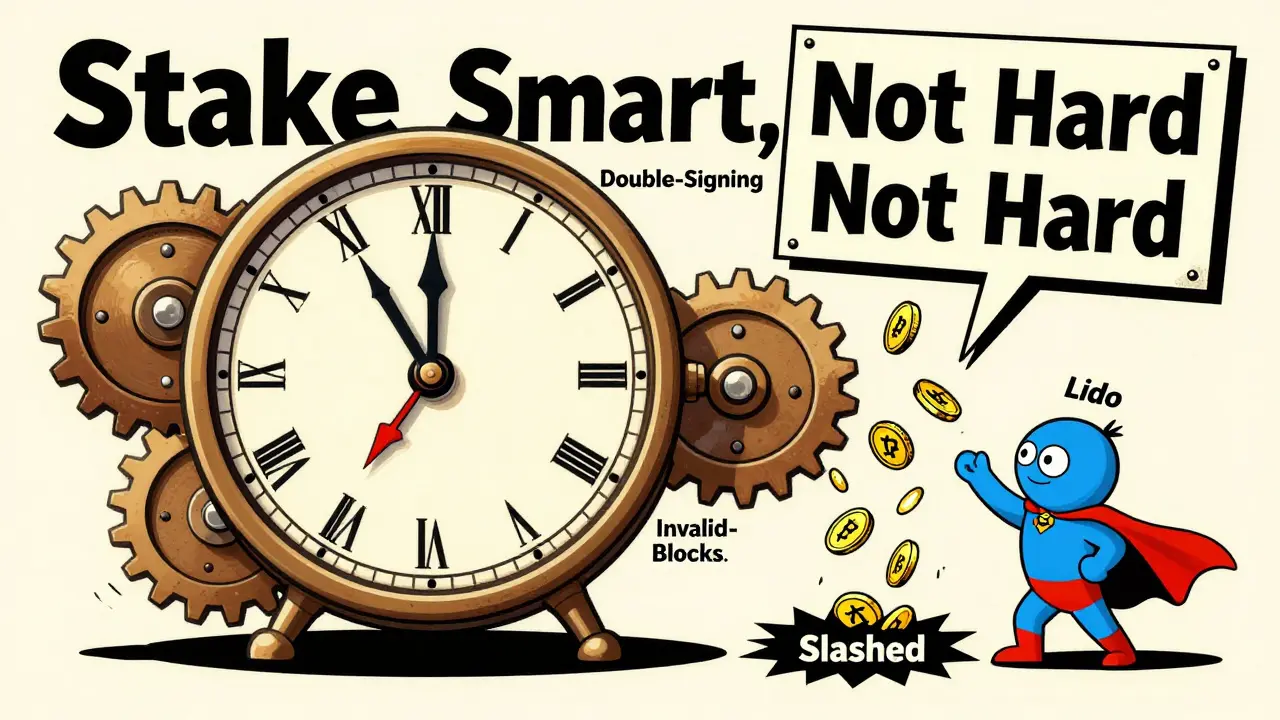
Slashing isn’t going away. But it’s changing.
Ethereum’s Prague upgrade (Q2 2024) will reduce the minimum penalty for minor downtime from 1% to 0.5%. That’s good news. But it also increases penalties for coordinated attacks-meaning if a group of validators go down together, the system hits them harder. That’s designed to stop large-scale attacks.
Delphi Digital predicts slashing rates will drop from 0.8-1.2% today to 0.3-0.5% by 2026. Why? Because better tools, better monitoring, and better education are making validators smarter. The days of losing ETH because you forgot to reboot your server are ending.
But here’s the twist: as slashing becomes less frequent, more people will start staking. That means more competition for rewards. So even if slashing drops, your APY might not go up much. The market adjusts.
The Bottom Line
Slashing isn’t a hidden risk. It’s the price of decentralization. You can’t ignore it. You can’t wish it away. But you can control it.
If you want to maximize your staking returns, you have two choices:
- Outsource the risk-Use a trusted staking provider. Pay a small fee. Sleep at night.
- Build the infrastructure-Spend thousands on servers, HSMs, monitoring, and backup systems. Become a pro.
Anything in between? You’re gambling. And the house always wins.
Slashing doesn’t care if you’re new. It doesn’t care if you’re smart. It only cares if your node is online, your keys are safe, and your software is updated. If you’re not checking those three things every day, you’re already losing money.
What happens if I get slashed?
Your staked tokens are permanently reduced by the slashing penalty. For minor issues like downtime, you might lose 0.5%-1% of your stake. For double-signing or malicious behavior, you could lose 100%. The penalty is automatic, irreversible, and applied immediately. Your future staking rewards are also lowered because they’re calculated based on your remaining stake.
Can I get my slashed coins back?
No. Slashing is designed to be permanent. There is no appeal process, no customer support, and no refund. Even if the slashing was caused by a software bug or a one-time outage, the blockchain protocol enforces the penalty without exception. This is intentional-it ensures validators take security seriously.
Is staking on Ethereum riskier than other blockchains?
Yes, in terms of slashing severity. Ethereum imposes the highest penalties for violations-up to 100% for double-signing. However, Ethereum also has the most mature validator infrastructure, with better monitoring tools and more experienced operators. Smaller chains may have lower penalties, but they often lack the tools to prevent slashing, making them riskier for inexperienced users.
Do staking services like Lido or Coinbase protect me from slashing?
Yes, but indirectly. These services manage hundreds or thousands of validators using enterprise-grade infrastructure. They reduce slashing risk to under 0.05% annually-far below retail levels. While they don’t guarantee 100% protection, their systems are designed to prevent the mistakes that cause slashing. You’re paying for their expertise, not a refund.
Should I avoid staking because of slashing?
No. Slashing is a manageable risk. Avoiding staking entirely means missing out on passive income that’s often 3-12% annually. Instead, use a trusted staking provider if you’re not technically experienced. If you are experienced, invest in proper infrastructure. Slashing isn’t a reason to avoid staking-it’s a reason to do it right.
Steph Andrews
March 16, 2026 AT 00:34Prakash Patel
March 17, 2026 AT 18:15Elizabeth Kurtz
March 18, 2026 AT 23:39john peter
March 19, 2026 AT 08:12Marc Morgan
March 21, 2026 AT 04:46Kira Dreamland
March 21, 2026 AT 12:09shreya gupta
March 22, 2026 AT 12:07Christopher Hoar
March 23, 2026 AT 22:11Robert Kunze
March 25, 2026 AT 20:39Sarah Zakareckis
March 27, 2026 AT 01:38Heather James
March 27, 2026 AT 13:40Jerry Panson
March 28, 2026 AT 04:59Gene Inoue
March 29, 2026 AT 03:17Ricky Fairlamb
March 30, 2026 AT 13:59Lauren J. Walter
April 1, 2026 AT 13:30Carol Lueneburg
April 3, 2026 AT 13:26Manali Sovani
April 5, 2026 AT 05:26Konakuze Christopher
April 5, 2026 AT 15:31S F
April 7, 2026 AT 07:56Angelica Stovall
April 8, 2026 AT 05:47Taylor Holloman.
April 8, 2026 AT 18:11Bryan Roth
April 9, 2026 AT 12:03sai nikhil
April 10, 2026 AT 18:46Steph Andrews
April 11, 2026 AT 18:49