Solana ETF Launch in Canada: How to Invest in Solana Without Holding Crypto
 Dec, 21 2025
On April 16, 2025, Canada became the first country in the world to launch spot Solana ETFs - and it changed how regular investors can get exposure to one of the fastest blockchains out there. You don’t need a crypto wallet. You don’t need to worry about private keys. You don’t even need to know how staking works. All you need is a Canadian brokerage account and the ticker symbol for one of four new ETFs trading on the Toronto Stock Exchange.
What Exactly Is a Solana ETF?
A Solana ETF is a fund that holds actual Solana (SOL) tokens in secure custody and lets you buy shares of it like you would Apple or Tesla stock. It tracks the price of Solana in real time. If SOL goes up, your ETF share value goes up. If it drops, so does your investment. That’s it.
But here’s what makes these ETFs different from anything else in North America: they earn yield by staking Solana. Unlike U.S. crypto ETFs, which are locked out of staking by the SEC, Canadian regulators allowed these funds to participate in Solana’s Proof-of-Stake network. That means your investment doesn’t just ride price movements - it also earns rewards from validating transactions on the Solana blockchain.
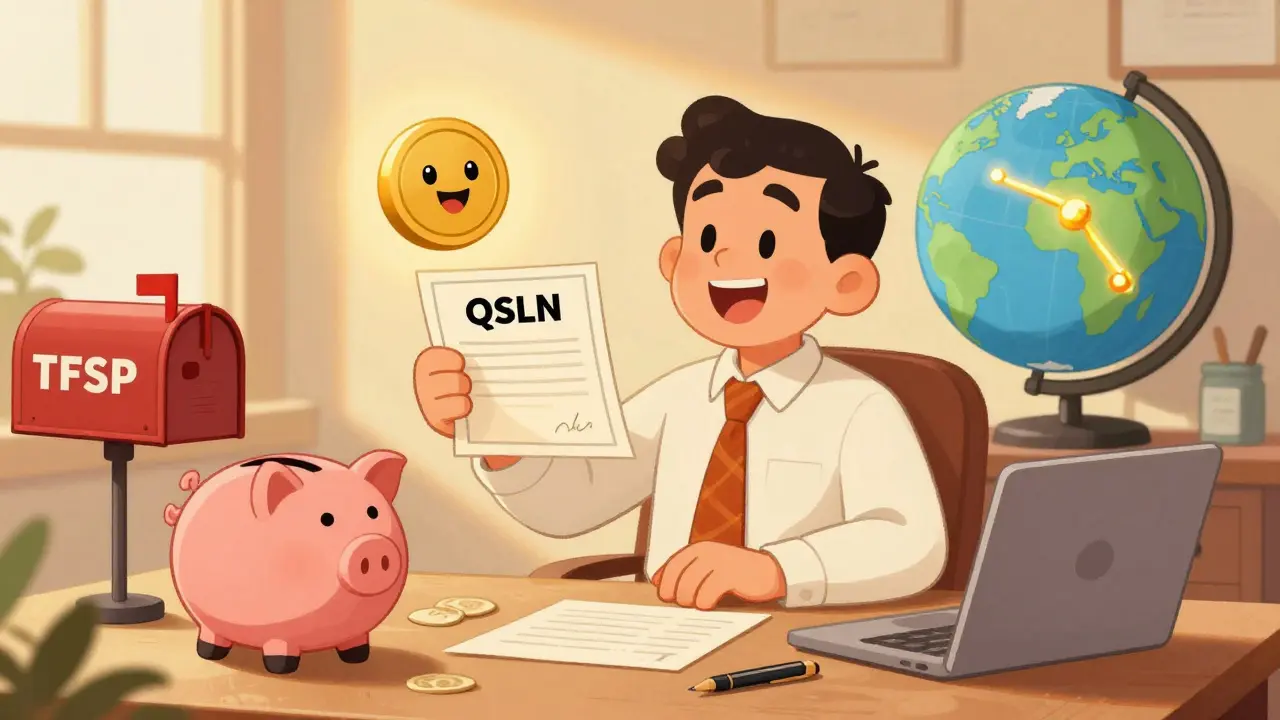
For example, the 3iQ Solana Staking ETF (QSLN) started with a $10 USD price and offered 0% management fees for its first year. By October 2025, it had grown to over $258 million CAD in assets under management. That kind of growth didn’t happen by accident. People wanted a simple, regulated way to own Solana - without the headaches of exchanges, hacks, or tax confusion.
Why Canada? Why Now?
Canada didn’t get here by luck. It’s been building this infrastructure since 2021, when Purpose Investments launched the world’s first Bitcoin ETF. Since then, Ontario’s Securities Commission (OSC) has taken a clear, step-by-step approach: approve Bitcoin, then Ethereum, then Solana, then XRP. Each time, they refine the rules.
In January 2025, the OSC released new guidelines for cryptocurrency ETFs. They made it clear: if the underlying asset is secure, transparent, and not classified as a security, it can be listed. Solana met those criteria. The U.S. SEC, by contrast, still hasn’t approved a single altcoin ETF. As of late 2025, they’ve only greenlit Bitcoin and Ethereum funds - and even those can’t stake.
Canada’s provincial system lets Ontario approve products without waiting for national consensus. That speed matters. While U.S. regulators debate for years, Canadian asset managers file, get approved in 60-90 days, and launch.
The Four Solana ETFs in Canada
Four companies got the green light to launch Solana ETFs:
- 3iQ Solana Staking ETF (QSLN): The only one that explicitly stakes SOL. Offers daily yield accretion, segregated cold storage, and TFSA/RRSP eligibility. Managed by one of Canada’s most experienced crypto fund managers.
- Purpose Investments SOL ETF (PSOL): Follows the same structure as their Bitcoin and Ethereum ETFs. Low fees, transparent reporting, and deep liquidity on the TSX.
- Evolve Solana ETF (ESOL): Designed for long-term holders. Focuses on simplicity and low tracking error.
- CI Financial Solana ETF (CISOL): Backed by one of Canada’s largest asset managers. Strong brand recognition and retail distribution.
All four trade on the Toronto Stock Exchange. You can buy them through any Canadian broker - Questrade, Wealthsimple, Scotia iTrade, TD Direct Investing - just like you’d buy a stock. No crypto exchange needed.
Staking: The Game-Changer
This is the biggest difference between Canadian and U.S. crypto ETFs. Staking means you’re helping secure the Solana network. In return, you earn newly minted SOL tokens and a share of transaction fees.
On Solana, staking rewards are distributed every 2-3 days (one epoch). That’s faster than Ethereum’s 2-14 day cycle. The 3iQ ETF doesn’t just collect these rewards - it adds them directly to the fund’s net asset value (NAV) every day. That means your share price slowly rises even if SOL’s market price stays flat.
U.S. regulators banned staking in ETFs over fears of asset commingling and custody risk. Canada’s solution? Strict custody rules. 3iQ uses segregated cold storage with institutional-grade providers like BitGo and Copper. They don’t mix client assets. They don’t lend them out. They just hold and stake.
For investors, this means you’re not just betting on price. You’re earning passive income - and it’s taxed like regular ETF dividends in Canada, not as crypto income.

Tax Advantages: TFSA and RRSP Eligibility
If you’ve ever tried to hold Bitcoin in your TFSA or RRSP, you know it’s impossible. Direct crypto purchases aren’t allowed in registered accounts. But ETFs? Totally fine.
All four Solana ETFs are eligible for Tax-Free Savings Accounts (TFSAs) and Registered Retirement Savings Plans (RRSPs). That’s huge. It means:
- Capital gains on Solana ETFs held in a TFSA are completely tax-free.
- Contributions to an RRSP reduce your taxable income now, and growth is deferred until withdrawal.
Compare that to holding SOL directly: if you sell it outside a registered account, you owe capital gains tax. If you earn staking rewards, the CRA treats them as income - which means higher taxes. With these ETFs, you sidestep all of that.
How to Buy a Solana ETF in Canada
It’s as simple as buying a stock. Here’s how:
- Log into your Canadian brokerage account (if you don’t have one, open one with Questrade or Wealthsimple - both support TSX-listed ETFs).
- Search for the ticker: QSLN, PSOL, ESOL, or CISOL.
- Place a market or limit order. Minimum purchase? One share. As of October 2025, prices ranged from $28 to $32 CAD per share.
- Hold it. No need to manage keys, wallets, or private addresses.
You can also set up automatic investments. Most brokers let you schedule recurring buys - $50 a week, $200 a month. Dollar-cost averaging works just as well with ETFs as it does with index funds.
Risks You Can’t Ignore
These ETFs are safer than holding crypto on an exchange - but they’re not risk-free.
Volatility: Solana’s price swung between $194 and $203 in late October 2025. That’s a 4.6% swing in under a week. If you’re not used to crypto swings, this will feel wild.
Network outages: Solana had an 11-hour outage in December 2024. While the ETFs themselves aren’t affected (they hold the tokens securely), the underlying asset’s reliability matters. If the network goes down, trading halts, and staking pauses.
Competition: Ethereum, Cardano, and Polkadot are all Proof-of-Stake blockchains. If one of them gains more traction, Solana’s dominance could fade. Its 65,000 transactions per second is impressive, but not unbeatable.
Regulatory change: Canada’s rules could tighten. If the OSC starts treating staking as a security feature, future ETFs might be restricted. But for now, the path is clear.

Who Should Buy a Solana ETF?
These products are perfect for:
- Canadian investors who want crypto exposure but hate managing wallets.
- People who already use TFSAs or RRSPs and want to add growth assets.
- Those who believe in Solana’s tech - fast, cheap, scalable - but don’t want to take custody risk.
- Investors looking for passive income from crypto without the tax headaches.
They’re not for:
- Day traders looking for leverage or short-selling options (these ETFs don’t offer that).
- People who think crypto is a get-rich-quick scheme. Solana ETFs are long-term plays.
- U.S. residents - these products aren’t available south of the border yet.
What’s Next for Crypto ETFs in Canada?
With Solana and XRP ETFs now live, the next candidates are Cardano and Polkadot. Both use Proof-of-Stake and have strong institutional interest. Vanir Assets predicted in April 2025 that Cardano ETFs could launch by Q4 2025.
Meanwhile, U.S. regulators are watching. Bloomberg’s James Seyffart suggested Ethereum staking ETFs might be approved in the U.S. by May 2025. If that happens, Canada’s edge will shrink - but not disappear. Canadian ETFs still have the TFSA/RRSP advantage, and their staking model is already live.
One thing’s certain: Toronto is becoming the global hub for regulated crypto investment products. And Solana ETFs? They’re not just another product. They’re proof that crypto can be mainstream - if you build the right rules.
Final Thoughts
You don’t need to be a crypto expert to invest in Solana now. You don’t need to understand consensus mechanisms or validator nodes. You just need to know that Canada lets you buy a share of Solana like a stock - and earn rewards while you hold it.
It’s not magic. It’s regulation done right. And for Canadian investors, it’s the easiest, safest, and most tax-efficient way to get into one of the most promising blockchains on the planet.
Alison Fenske
December 21, 2025 AT 23:28Canada just turned crypto into something your grandma can invest in and I’m lowkey jealous 😅
Tyler Porter
December 22, 2025 AT 16:42So you just buy it like a stock? No wallet? No keys? That’s it? That’s all you need? Wow.
Luke Steven
December 23, 2025 AT 23:43This is the quiet revolution no one’s talking about. Not because it’s boring-but because it’s so quietly normal now. You don’t need to be a tech bro to hold digital gold. You just need a brokerage account and a willingness to let time do the work. The real magic isn’t in Solana’s speed-it’s in how Canada made this feel like buying Coca-Cola stock. No drama. No panic. Just growth.
And the staking? That’s not a feature. That’s a philosophy. You’re not just owning a token-you’re helping run the network. That’s civic participation disguised as finance. The U.S. is still arguing over whether crypto is a security. Canada already decided it’s just… money now.
Ellen Sales
December 24, 2025 AT 10:57so canada just outsmarted america again?? like… again?? 😏
Vijay n
December 25, 2025 AT 13:10Why does Canada get to do this? Who gave them permission to be smarter than the SEC? This is not a coincidence. This is a coordinated attack on American financial dominance. I’ve seen this pattern before. First they take Bitcoin then Ethereum now Solana next they’ll take over the entire crypto market. The U.S. is being slowly dismantled by foreign regulators who don’t even understand blockchain. This is a Trojan horse for global control. You think you’re investing but you’re just handing over your financial sovereignty to Toronto.
Earlene Dollie
December 26, 2025 AT 00:49imagine if your crypto could literally pay you while you sleep… like a lazy millionaire with no pants on 🛌💸
Dusty Rogers
December 26, 2025 AT 21:42Simple. Safe. Regulated. No need to overcomplicate it. If you want exposure to Solana without the chaos, this is it. No hype. No FUD. Just buy and hold.
Kevin Karpiak
December 28, 2025 AT 15:08Canada thinks it’s a financial powerhouse. It’s a province with snow and maple syrup. The U.S. doesn’t need this. We have the dollar. We have the tech. We have the brains. Let them have their ETFs. We’ll still lead.
Amit Kumar
December 30, 2025 AT 10:12As someone from India who watched this unfold, I’m amazed. This is what proper regulation looks like. No panic. No bans. No endless delays. Just clear rules, secure custody, and real innovation. The U.S. is stuck in a loop of fear while Canada builds. I hope India learns from this. We have the talent. We have the investors. We just need the courage.
chris yusunas
December 31, 2025 AT 21:15so canada made crypto chill? that’s wild. i thought only nfts and dogecoin were supposed to do that
Mmathapelo Ndlovu
January 2, 2026 AT 03:20It’s beautiful how finance can become inclusive without losing integrity 🌍✨ I’ve watched people in my community fear crypto because they think it’s only for hackers or tech nerds. Now? My aunt in Johannesburg just bought QSLN through her retirement account. She didn’t even know what staking was. She just knew she wanted a piece of something that could grow. This is what progress looks like.
Jordan Renaud
January 2, 2026 AT 20:13This is the kind of innovation that doesn’t make headlines but changes lives. You don’t need to be a crypto insider to benefit from blockchain. You just need access. And Canada just gave millions of regular people that access without forcing them to become technologists. That’s not just smart regulation-it’s human-centered design.
roxanne nott
January 3, 2026 AT 20:40QSLN has 0% fees for a year? That’s a bait-and-switch. They’ll jack it to 1.5% after. And staking rewards are taxable as income. You think you’re getting passive income but you’re just delaying the IRS audit. Also, Solana’s had 3 major outages this year. This ETF is a house of cards.
Rachel McDonald
January 5, 2026 AT 02:35why is everyone so excited?? like… it’s just another ETF?? i’m literally crying over this 😭
Collin Crawford
January 5, 2026 AT 05:12Regulatory arbitrage is not innovation. Canada’s provincial system is a loophole. The SEC has jurisdiction over all U.S. financial instruments. This ETF is a violation of international securities norms. It should be flagged by the IOSCO. This is not progress. This is exploitation.
Jayakanth Kesan
January 7, 2026 AT 03:46Good for Canada. Hope more countries follow. Crypto should be accessible, not a club for tech elites. Simple tools for regular people-that’s the future.
Aaron Heaps
January 8, 2026 AT 05:59Another crypto scam dressed up as finance. Staking rewards? That’s just printing money. Solana’s network is unstable. You think you’re safe in an ETF? You’re just one market crash away from losing everything. And the TFSA thing? That’s a trap. The government will tax it later.
Tristan Bertles
January 9, 2026 AT 03:43For anyone scared of crypto but wants exposure-this is your on-ramp. No wallet. No keys. No panic. Just buy. Hold. Earn. Repeat. The hardest part is deciding which ticker to pick. Everything else? Easy.
Megan O'Brien
January 9, 2026 AT 14:00ETFs are just synthetic exposure. You don’t own the asset. You own a derivative. You’re not participating in the network. You’re just speculating on a price chart wrapped in regulatory compliance. This is finance theater.
Zavier McGuire
January 11, 2026 AT 06:48Why are we letting foreign governments decide what’s good for our money? This is the slippery slope. First they let you buy crypto ETFs. Next they’ll tell you what stocks you can own. Then your savings accounts. Soon you won’t even be allowed to choose your own financial future. Canada is normalizing surrender.
Radha Reddy
January 13, 2026 AT 06:47As an Indian investor, I’ve watched the U.S. and Canada’s crypto journey closely. Canada’s approach is a masterclass in balanced regulation-protecting investors without stifling innovation. The U.S. is still debating whether blockchain is real. Canada is already building the future. I hope India learns from this before it’s too late.
Alison Fenske
January 15, 2026 AT 03:32wait so if i buy this and solana crashes… i still get staking rewards? that’s like getting free candy while your house burns down 🍬🔥