Soy Finance Crypto Exchange Review: Callisto Network DEX Analysis
 Mar, 27 2026
If you are searching for Soy Finance, you likely want to know if this platform is safe and functional. As of March 2026, the answer comes with significant caveats regarding market visibility and liquidity.
This platform operates as a decentralized exchange specifically tied to the Callisto Network. It promises trading and yield farming, yet major tracking sites often show zero activity data. Before connecting your wallet, you need to understand exactly what that missing data implies for your funds.
Understanding Soy Finance Architecture
Soy Finance is a decentralized exchange protocol built on the Callisto blockchain. Unlike centralized exchanges where a company holds your coins, this system relies on smart contracts. You keep custody of your assets through a compatible digital wallet. The platform focuses on three main pillars: cryptocurrency swapping, providing liquidity to earn fees, and yield farming opportunities for stakers.
However, its architectural choice limits its reach. While giants like Uniswap sit on Ethereum or PancakeSwap sits on BNB Chain, Soy Finance lives exclusively on Callisto. This network aims for speed and lower fees but lacks the massive user base of its competitors. If you are already invested in the Callisto ecosystem, this tool offers utility. If you do not hold Callisto tokens or interact with this specific chain, the friction of cross-chain bridging might outweigh the benefits.
The Missing Market Data Problem
One alarming detail for potential traders is the complete absence of real-time statistics on major aggregators. Platforms like CoinMarketCap report "No data available" for Soy Finance trading pairs. This gap isn't just a technical glitch; it signals a severe liquidity shortage.
- Volume Visibility: Without published volume data, you cannot gauge how much money is moving through the system.
- Pair Availability: Major assets like Bitcoin or Ethereum equivalents may not trade with sufficient depth here.
- Price Transparency: Difficulty in verifying fair market price increases the risk of slippage.
In the world of Decentralized Finance (DeFi), visibility equals trust. If a project cannot provide transparent metrics to public trackers, it suggests low user adoption or potential operational pauses. For retail investors used to seeing daily volumes in millions of dollars, encountering a platform with zero reported figures demands extreme caution.
Token Performance and Future Projections
The native asset, the SOY token, has seen various analysis attempts over recent years. Looking at the broader market context for 2025 and extending into 2026, forecasts remain speculative. Analyses from earlier periods projected a range between $0.0005 and $0.0013 for the 2025 fiscal year. These models suggested potential gains up to 124% under ideal conditions.
For 2026, predictions become more conservative, hinting at slower growth or stabilization around $0.0006. Long-term outlooks stretching to 2029 propose a maximum ceiling near $0.0026, but these numbers rely heavily on hypothetical ecosystem growth. Crucially, none of these models account for sudden market crashes or protocol failures, which are common in niche blockchain sectors.
| Year | Predicted Low | Predicted High | Growth Potential |
|---|---|---|---|
| 2025 | $0.000557 | $0.00133 | +124.92% |
| 2026 | $0.000196 | $0.000643 | +8.82% |
| 2029 | $0.001013 | $0.002699 | +Variable |

Ecosystem Limitations Compared to Competitors
To put Soy Finance in perspective, you must compare it to established industry standards. Most users prefer platforms with deep integrations, meaning they connect easily with other wallets and services.
Callisto Network attempts to mimic the functionality of Ethereum but with different underlying technology. However, integration remains the bottleneck. On Ethereum or Binance Smart Chain, a developer can connect their app to thousands of existing services. On Callisto, the library of tools is significantly smaller. If you deposit funds into Soy Finance, withdrawing them elsewhere might require complex bridging steps that expose you to extra risk.
Major competitors like Uniswap handle billions in total value locked. In contrast, niche exchanges often struggle to maintain stable pools during high volatility. This difference affects price stability. A large buy order on a small pool can spike the price artificially, while a panic sell can crash it instantly.
Risk Factors for New Investors
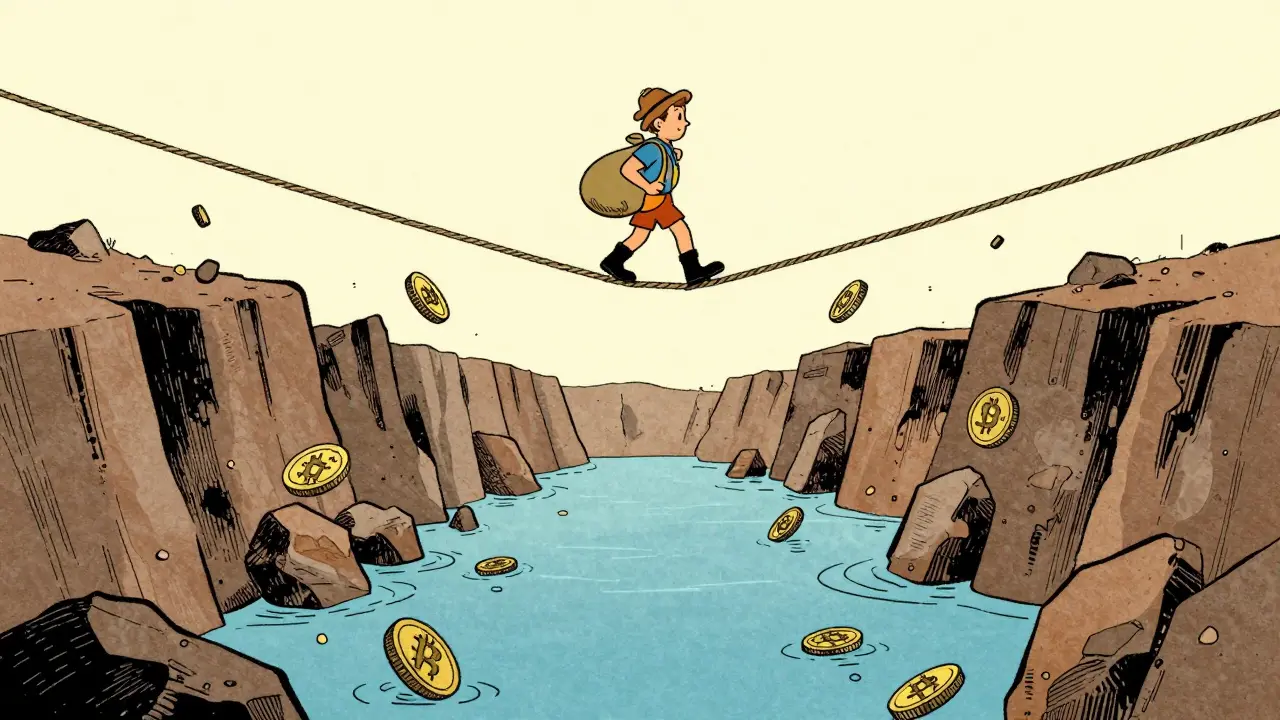
Before committing capital, evaluate these specific dangers associated with less prominent exchanges.
- Liquidity Risk: You may find it hard to exit a position if the trading pair has no active buyers.
- Smart Contract Risk: Audits are vital. Niche networks sometimes lack rigorous third-party security reviews.
- Volatility: Lower liquidity leads to wilder price swings than on larger platforms.
Additionally, the lack of support channels compared to mainstream exchanges means resolving issues takes longer. If a transaction gets stuck on the Callisto blockchain, customer service teams on specialized DEXes are often limited in what they can fix since the system is automated.
How to Evaluate Safety Yourself
If you still consider using the platform, perform these checks independently.
- Verify Contracts: Check the official smart contract address on the Callisto Explorer.
- Test Small Amounts: Never invest your full portfolio before confirming the UI works correctly.
- Monitor Gas Fees: Ensure network costs on Callisto remain competitive compared to other chains.
- Check Community Sentiment: Look for active discussions in forums rather than promotional posts.
Remember that "yield farming" sounds attractive but often requires locking tokens for extended periods. In a volatile market, being unable to access your funds quickly can result in losses far exceeding the yield earned.
Is It Suitable for Beginners?
Honestly, Soy Finance is not recommended for newcomers. It requires knowledge of cold storage, seed phrase management, and gas fee mechanics. Standard users often prefer centralized exchanges for buying and selling because the interface is simpler and regulated bodies oversee compliance.
This platform fits a specific profile: someone deeply embedded in the Callisto ecosystem who needs to swap local assets. If you just want general crypto exposure, broader markets offer better safety nets. Stick to exchanges with verified financial audits and insurance funds until you gain more experience.
Can I trade USDT on Soy Finance?
It depends on supported pairs. Given the lack of visible market data, you should check the internal interface directly to see if a USDT/SOY or similar stablecoin pair exists with actual liquidity.
Is the Callisto Network safe?
The network itself functions, but safety depends on individual protocols running on top of it. Always audit the specific contract addresses before approving transactions.
Why does CoinMarketCap show no data?
This usually indicates very low trading volume or technical reporting issues. It suggests the platform is currently operating at a minimal level of activity.
What happens to my funds if the site goes down?
On decentralized exchanges, assets stay in your wallet. However, if the smart contract fails, retrieving funds might require manual interaction with the blockchain explorer.
Are there alternatives to Soy Finance?
Yes. If you seek DeFi features on better-known chains, Uniswap (Ethereum), PancakeSwap (BSC), or Raydium (Solana) are standard alternatives with higher liquidity.
Jeannie LaCroix
March 28, 2026 AT 19:56This entire setup screams disaster waiting to happen.
The lack of visible market data isn't just suspicious it's alarming.
You need to wake up and see what kind of trap this is.
People throw money away because they don't read the fine print.
I am telling you right now stay far away from this nonsense.
They promise yields but deliver nothing but headaches.
Why would anyone trust a protocol with zero transparency?
It is reckless to even look at these numbers.
My advice is to close the tab and move on immediately.
There is no profit in gambling with a broken platform.
Kevion Daley
March 29, 2026 AT 18:10Only amateurs chase these obscure chain projects like this :)
Smart money stays in established ecosystems with real liquidity.
Soy Finance is basically a ghost town on the grid :(.
Do not let hype distract you from cold hard facts ;).
True investors know where the volume actually exists.
Andy Green
March 31, 2026 AT 04:19Typical sell-out take from someone who doesn't get early adoption.
Everyone was skeptical about Ethereum before it took over too.
Niche networks allow for faster innovation without legacy bloat.
Calling it a ghost town shows you ignore the underlying tech utility.
I see opportunity where you only see risks clearly.
Tammy Stevens
April 1, 2026 AT 13:54The architecture relies heavily on external oracle feeds for pricing accuracy.
Many newer protocols fail because they neglect proper validation layers.
You need to verify that the liquidity pool depth matches the advertised volume figures.
Impermanent loss remains a significant factor when providing capital to volatile pairs.
Slippage settings should be configured conservatively to prevent front-running bots.
Cross-chain bridges introduce their own attack vectors through validator consensus mechanisms.
Smart contract audits often miss specific edge cases related to reentrancy attacks.
Gas fees on the Callisto network fluctuate significantly during peak trading hours.
Withdrawal processes require patience when dealing with locked liquidity positions.
Tokenomics dictates the long-term value accrual for stakers participating in governance.
Yield farming rewards decay rapidly as more participants enter the same pool.
Network congestion can delay transaction confirmations beyond acceptable timeframes.
Security best practices involve never signing blind transactions on unknown interfaces.
Monitoring RPC nodes provides insight into potential network instability before crashes occur.
Always maintain cold storage backups regardless of platform incentives offered.
Leona Fowler
April 2, 2026 AT 18:49Accurate assessment regarding the contracts and validation layers mentioned above.
It is good to highlight the specifics on oracle dependencies clearly.
I recommend checking the explorer links before approving any permissions.
The technical details provided here are sound and well-researched.
Misty Williams
April 2, 2026 AT 21:03It is wrong to speculate on unproven assets without ethical consideration.
Honest labor is superior to chasing digital windmills for quick gains.
These platforms encourage greed over genuine value creation in society.
One should prioritize stable savings over volatile speculation always.
Moral integrity must come before financial opportunity every single time.
Annette Gilbert
April 4, 2026 AT 00:28Oh wow what a saint you are preaching to us poor investors.
Stop pretending ethics matter in crypto because they rarely do.
You are sitting there judging while everyone else makes moves.
How many bags did you accumulate before deciding to be holy?
Anand Makawana
April 4, 2026 AT 03:52The data suggests stability!!!
We must consider metrics,
kavya barikar
April 5, 2026 AT 17:05Caution is advised.
Cordany Harper
April 7, 2026 AT 00:17Bridging is annoying but doable if you take your time with it.
Just make sure you test with a small amount first.
It takes getting used to the different fee structures.
Overall it works if you stay patient with the process.
DarShawn Owens
April 8, 2026 AT 04:01Hey take care of your funds and don't rush the steps.
It is better to wait a few extra minutes for confirmation.
I know it feels frustrating when things move slowly though.
Just remember safety is more important than speed always.
Lorna Gornik
April 9, 2026 AT 19:56I think its kinda risky tbh 🤔
lol dont get rekt.
seems sketchy af but cool if u r careful tho 😅.
Joshua T Berglan
April 9, 2026 AT 21:22Stay strong everyone! 👍
Just double check the wallet addresses before connecting.
You got this! 💪
Always prioritize protecting your seed phrase.
vu phung
April 11, 2026 AT 08:41Slippage tolerance is key here and affects execution quality greatly.
The order book depth determines your ability to exit smoothly.
Liquidity providers need to monitor ratios closely.
Brijendra Kumar
April 13, 2026 AT 08:29You guys are clueless about how the market functions really.
The market eats weak hands quickly without showing mercy.
Stop thinking you can beat the smart money easily.
It is just another scam for the unwary masses.
Jenni Moss
April 13, 2026 AT 18:54Please listen to reason!
You could lose everything very quickly.
I hope nobody gets hurt doing this.
Stay safe out there please!