Blast DEX: What It Is, How It Works, and What You Need to Know
When you hear Blast DEX, a decentralized exchange built on the Blast blockchain designed for fast, low-fee crypto trading. It's one of the newer players in DeFi, built to make trading Ethereum-based tokens feel like using a centralized exchange—without giving up control of your funds. Unlike older DEXs that drag with high gas fees and slow confirmations, Blast DEX leverages the Blast network’s native rollup tech to bring near-instant trades and fees close to zero. This isn’t just a tweak—it’s a full reset of what users expect from a decentralized exchange.
What makes Blast DEX different? It’s not just about speed. The Blast network was engineered to reward users directly with yield from Ethereum staking, and that benefit flows straight into the DEX. Traders don’t just swap tokens—they earn passive rewards just for using the platform. That’s why users who’ve tried it say it feels like getting paid to trade. Related to this is decentralized exchange, a peer-to-peer platform where users trade crypto directly from their wallets without a middleman. Blast DEX fits that definition perfectly: no KYC, no custody, no delays. But it goes further by integrating native yield into the core experience, something most DEXs still treat as an afterthought.
Then there’s blockchain, a distributed digital ledger that records transactions across many computers in a secure, transparent way. Blast runs on its own Layer 2 blockchain, which means it doesn’t compete with Ethereum for space or gas. Instead, it uses Ethereum’s security while operating independently. This lets it scale without the congestion that slows down Uniswap or SushiSwap. And because it’s built for traders, not just developers, the interface is clean, fast, and focused on one thing: swapping tokens with zero friction.
Don’t confuse Blast DEX with other DEXs that claim to be fast. Many are just rebranded versions of old tech. Blast DEX is built from the ground up for performance. It’s not trying to be everything to everyone—it’s focused on traders who want speed, low cost, and real yield. That’s why it’s gaining traction among users who’ve had enough of paying $20 in gas to swap $50 worth of tokens.
What you’ll find in the posts below isn’t just hype. It’s real user experiences, breakdowns of how the yield works, comparisons with other chains, and warnings about risks that come with any new DeFi platform. Some posts cover how Blast DEX interacts with other tools like wallets and bridges. Others dig into why it’s different from older DEXs like PancakeSwap or KyberSwap. You’ll also see how it fits into the bigger picture of DeFi, a financial system built on blockchain that removes banks and middlemen from services like lending, trading, and earning interest. This isn’t theory—it’s what real people are using right now to trade, earn, and move money without permission.
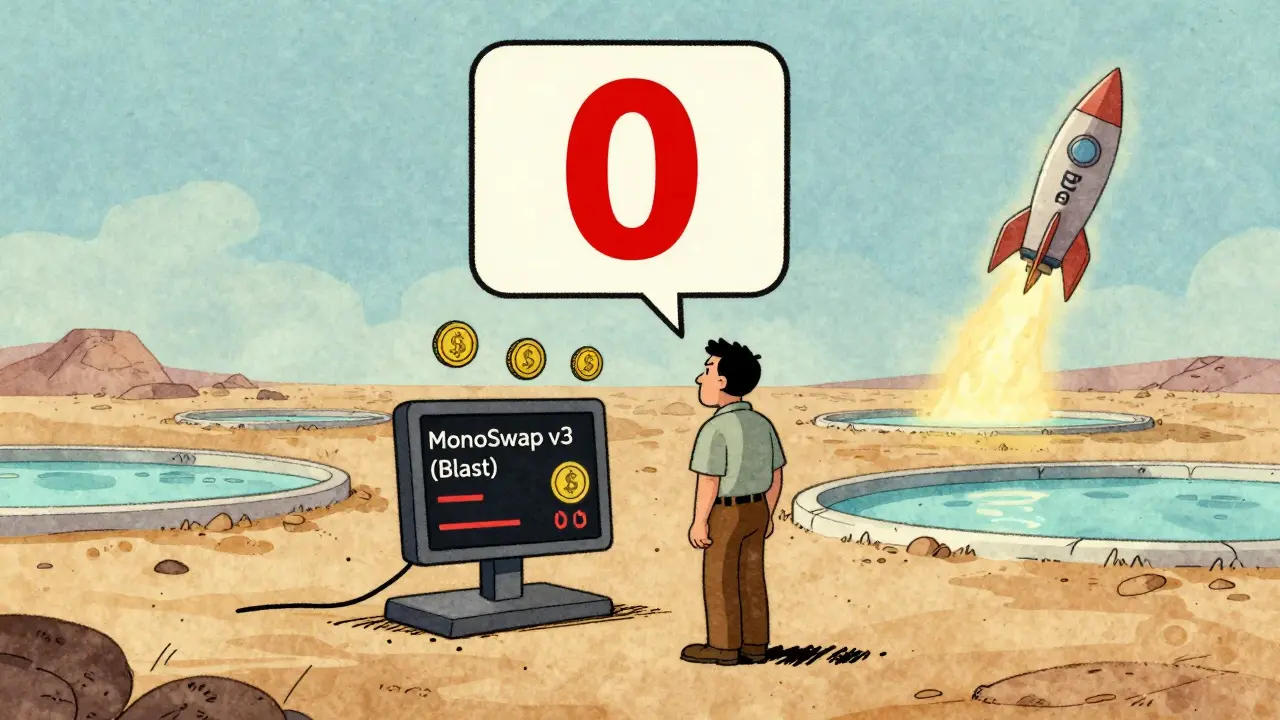
MonoSwap v3 (Blast) Crypto Exchange Review: Low Liquidity, Zero Fees, and Big Risks
MonoSwap v3 (Blast) offers zero trading fees but has almost no liquidity, zero trust score, and no active users. Learn why this DEX is too risky for real trading.
Read more