Crypto Exchange Without Fees: Real Options, Hidden Costs, and What You Need to Know
When you hear crypto exchange without fees, a platform that lets you trade digital assets without charging trading commissions. Also known as zero fee DEX, it sounds like a dream—until you realize most of them are either dead, dangerous, or hiding costs elsewhere. There’s no such thing as a free lunch in crypto, and exchanges that promise zero fees usually make up for it with low liquidity, high slippage, or outright scams.
Take MonoSwap v3 (Blast), a decentralized exchange on the Blast chain that advertises zero trading fees. Also known as Blast DEX, it’s technically fee-free—but it has almost no users, next to no liquidity, and a trust score of zero. You can trade without paying a fee, but if your trade doesn’t go through or you lose half your money to slippage, that ‘free’ trade just cost you more than a 0.3% fee on a real exchange. Then there’s Ebi.xyz, a Telegram-integrated DEX built for shorting meme coins with no KYC. Also known as Ebi.xyz crypto exchange, it doesn’t charge trading fees either—but it’s built on unverified smart contracts, has no audit, and users have reported funds disappearing after deposits. These aren’t exceptions. They’re the rule. Platforms that skip fees often skip security, oversight, and even basic functionality.
Real exchanges like Bitstamp or dYdX charge fees—but they also offer custody protection, regulatory compliance, and working order books. Even DeFi platforms like KyberSwap Classic (Arbitrum) or Curve Finance, which have low fees, still rely on liquidity providers and network gas costs. A true crypto exchange without fees doesn’t mean no cost—it means you’re paying in risk, time, or lost capital. The posts below dig into the exact platforms that claim to be fee-free, what they actually deliver, and which ones you should avoid at all costs.
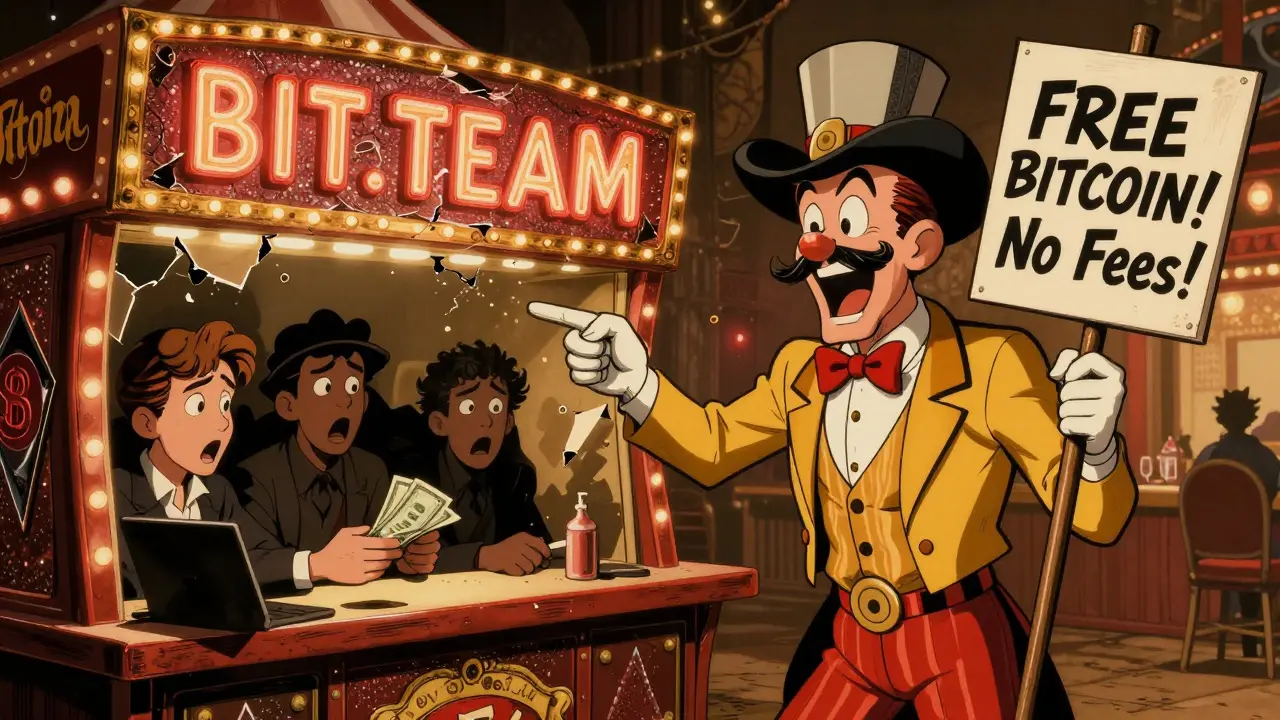
BIT.TEAM Crypto Exchange Review: Fees, Safety, and Real User Experience
BIT.TEAM claims zero-fee Bitcoin trading, but it's unregulated, lacks transparency, and has mixed user reviews. Is it safe? Here's what you need to know before using it.
Read more