Crypto Swap: What It Is, How It Works, and Where to Do It Safely
When you do a crypto swap, a direct exchange of one cryptocurrency for another on a decentralized platform without needing a central exchange. Also known as token swap, it’s how most traders move between coins like ETH, SOL, or BTC without ever touching a traditional exchange. Unlike buying Bitcoin on Coinbase or Binance, a crypto swap happens peer-to-peer using smart contracts—no sign-up, no KYC, no bank account needed.
This is powered by decentralized exchanges, platforms like Uniswap, PancakeSwap, or KyberSwap that run on blockchain networks. Also known as DEXs, they let you trade directly from your wallet using automated market makers (AMMs). These systems use pools of tokens locked in code to set prices, not human order books. That’s why you see slippage, why some swaps fail, and why liquidity matters more than you think. If a DEX has low liquidity—like MonoSwap v3 on Blast—it doesn’t matter how low the fees are. Your trade might not go through, or you could get ripped off by price distortion.
Not all crypto swaps are created equal. Some, like Ebi.xyz, let you short meme coins via Telegram and come with zero trust score. Others, like KyberSwap Classic on Arbitrum, focus on one pair—ARB/ETH—and do it well. Then there are platforms like BIT.TEAM that claim zero fees but operate without regulation or transparency. A real crypto swap needs three things: decent liquidity, a clear track record, and a wallet you control. If you’re swapping on a site that feels sketchy, it probably is. Always check the token contract, review user feedback, and never send funds to a contract you don’t understand.
And here’s the thing: every swap is a taxable event. The IRS treats crypto like property, so trading ETH for SOL isn’t just a trade—it’s a capital gain or loss. Track your basis. Know your cost. Otherwise, you’re setting yourself up for trouble come tax season. That’s why tools and guides on wallet security, tax reporting, and smart contract risks show up so often in this collection. You’re not just swapping tokens—you’re managing risk.
What you’ll find below isn’t a list of the best DEXs. It’s a real-world look at what’s actually working, what’s dead, and what’s a trap. From failed platforms like Oasis Swap to hidden gems like BonusCake’s auto-reward system, these reviews cut through the noise. You’ll see how Iran uses mining to bypass sanctions, how Ecuador bans banks from crypto, and why dYdX blocks users even though it calls itself decentralized. This isn’t theory. It’s what traders and investors are facing right now.
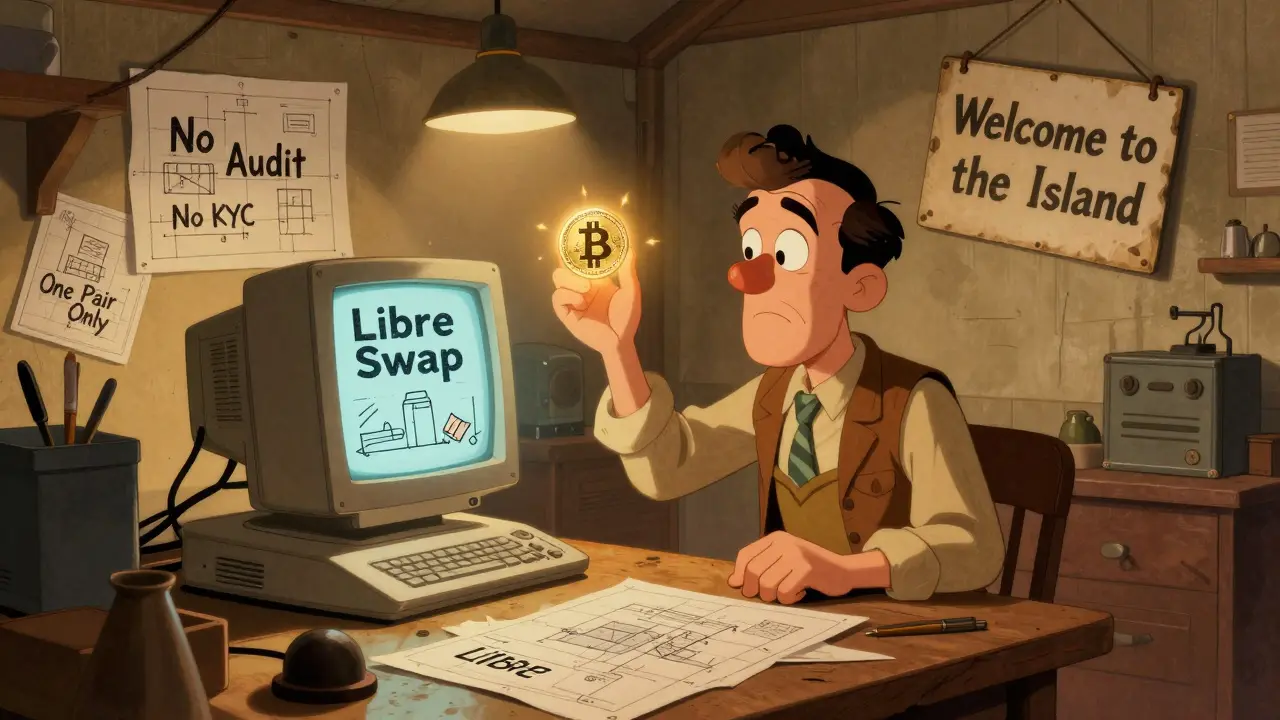
Libre Swap Crypto Exchange Review: Is This Decentralized Exchange Worth Trying in 2025?
Libre Swap is a niche decentralized exchange built on the Libre blockchain, offering only one trading pair: BTC/LIBRE. With no audits, no fees disclosed, and zero community activity, it's a high-risk experiment - not a reliable crypto platform.
Read more