Decentralized Exchange (DEX) Overview and Resources
When talking about decentralized exchange, a platform that lets users trade crypto assets directly from their wallets without a middle‑man. Also called a DEX, it runs on smart contracts, self‑executing code that enforces trade rules on‑chain and relies on liquidity pools, collections of tokens supplied by users to enable instant swaps. In simple terms, a DEX lets you swap tokens the way you would exchange baseball cards—no dealer needed, just the code that matches offers. This model requires trustless execution, meaning you keep control of your private keys at all times. Because the trades happen on public blockchains, price discovery is transparent and anyone can verify the transaction history. The three core pieces—decentralized exchange, liquidity pools, and smart contracts—form a tight loop: pools provide the assets, contracts automate the trades, and the exchange presents the interface.
The rise of DeFi, decentralized finance that replicates banking services on blockchain has turned DEXs into the backbone of crypto markets. Liquidity pools drive price signals, enabling token swaps, yield farming, and even airdrop distributions that many of our articles explain step‑by‑step. Smart contracts handle everything from fee calculation to reward allocation, so users can earn yields without trusting a centralized platform. Because DEXs are open, developers constantly launch new features—layer‑2 scaling, cross‑chain bridges, and novel order‑book models—that keep the ecosystem fresh. This constant innovation also means users must stay aware of risks like impermanent loss, rug pulls, and gas spikes. Our collection of guides breaks down these concepts, showing how to evaluate a DEX’s security, compare fee structures, and spot legitimate airdrops versus scams.
Below you’ll find a curated set of posts that cover everything from the basics of token swaps to deep dives on specific platforms like Uniswap on Avalanche, analyses of recent Bitcoin bull runs, and step‑by‑step airdrop claim guides. Whether you’re hunting for the next high‑yield token, comparing exchange fees, or just want to understand how liquidity pools shape market prices, the articles here give you practical tools and up‑to‑date insights. Dive in and arm yourself with the knowledge you need to navigate today’s decentralized exchange landscape.Why DEXs are central to modern DeFi
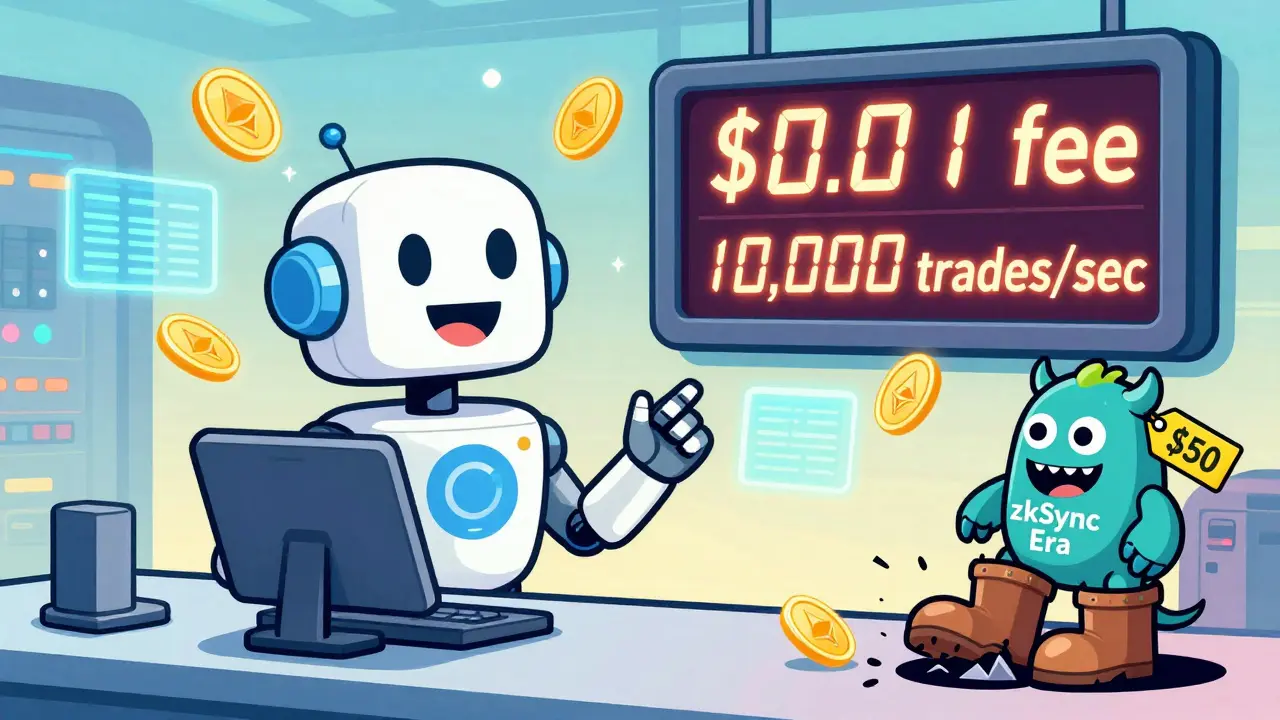
SyncSwap v2 Crypto Exchange Review: Low Fees, High Speed, and What You Need to Know
SyncSwap v2 is the leading decentralized exchange on zkSync Era, offering near-zero fees and instant trades. Learn how it compares to other Layer 2 DEXs, where it works best, and whether it's right for your crypto trading.
Read more
Kava Swap Crypto Exchange Review: Is It Worth Using in 2025?
Kava Swap is a fast, fee-free decentralized exchange built for the Kava blockchain. It's ideal for swapping KAVA and USDX but lacks liquidity, token options, and advanced features for broader crypto trading.
Read more
Libre Swap Crypto Exchange Review: Is This Decentralized Exchange Worth Trying in 2025?
Libre Swap is a niche decentralized exchange built on the Libre blockchain, offering only one trading pair: BTC/LIBRE. With no audits, no fees disclosed, and zero community activity, it's a high-risk experiment - not a reliable crypto platform.
Read more
MonoSwap v3 (Blast) Crypto Exchange Review: Low Liquidity, Zero Fees, and Big Risks
MonoSwap v3 (Blast) offers zero trading fees but has almost no liquidity, zero trust score, and no active users. Learn why this DEX is too risky for real trading.
Read more
dYdX Restricted Countries Despite Decentralized Crypto Exchange Claims
dYdX claims to be a decentralized crypto exchange, but it blocks users in over 20 countries. Here's why compliance with U.S. sanctions overrides decentralization - and what it means for your funds.
Read more
KyberSwap Classic (Arbitrum) Crypto Exchange Review: What You Need to Know in 2025
KyberSwap Classic (Arbitrum) is a specialized decentralized exchange for trading ARB/ETH with low fees and no KYC. It's fast, non-custodial, and ideal for liquidity providers and ARB traders on Arbitrum - but only supports one trading pair.
Read more
Balancer V2 on Gnosis Chain: In‑Depth Crypto Exchange Review
An in‑depth review of Balancer V2 on Gnosis Chain, covering architecture, fees, gasless swaps, Boosted Pools, a Balancer vs Uniswap comparison, user pros/cons, and step‑by‑step onboarding.
Read more
Biswap v2 Review: Low‑Fee DEX on BNB Chain
A detailed review of Biswap v2, the low‑fee BNB Chain DEX, covering features, BSW tokenomics, security audits, fee structure, competitor comparison, and future outlook.
Read more
Curve Finance on Polygon: In‑Depth Decentralized Exchange Review
A detailed review of Curve Finance on Polygon, covering fees, liquidity, user experience, risks, and how to get started with stablecoin swaps.
Read more