Oasis Swap: What It Is, How It Works, and Why It Matters in DeFi
When you trade crypto without a middleman, you're using a Oasis Swap, a decentralized exchange built on the Oasis Network that lets users trade tokens privately and with low fees. Also known as a privacy-focused DEX, it’s one of the few platforms designed to protect your transaction history while still giving you full control over your funds. Unlike big exchanges that track every trade, Oasis Swap uses confidential computing to hide who’s trading what—so your activity stays private even on a public blockchain.
This isn’t just about secrecy. Oasis Swap is built for people who want to trade tokens like ROSE, ETH, or stablecoins without exposing their wallet history to analysts, regulators, or bots. It connects directly to the Oasis Network, a layer-1 blockchain focused on scalability and privacy, which means trades settle fast and fees stay low. You don’t need KYC. You don’t need to hand over your ID. You just connect your wallet and trade. That’s why it’s popular among DeFi users who care about financial privacy as much as returns.
It’s not the only DEX out there—unlike Uniswap or SushiSwap, Oasis Swap doesn’t try to be everything to everyone. It’s focused: private swaps, low slippage, and minimal overhead. That makes it ideal for users who trade frequently, hold privacy-sensitive assets, or want to avoid chain analysis tools that track crypto flows. It also integrates with other Oasis ecosystem tools like confidential staking and shielded wallets, so if you’re already using the network, Oasis Swap feels like a natural next step.
But here’s the catch: privacy isn’t free. Because Oasis Swap hides transaction details, it doesn’t show public order books or volume stats like other DEXes. That makes it harder to spot trends or pump-and-dump schemes. You’re trading in the dark, literally. That’s a risk if you’re new to DeFi—but a feature if you’ve been burned by frontrunning bots or public wallet tracking before.
What you’ll find below are real posts that dig into how Oasis Swap fits into bigger trends: how decentralized exchanges handle compliance, why privacy tools are getting harder to ignore, and how blockchain networks like Oasis are changing what’s possible in crypto trading. You’ll also see how other DEXes like KyberSwap and dYdX handle similar issues—sometimes with the same trade-offs. These aren’t fluff pieces. They’re grounded in what’s actually happening on-chain, in regulations, and in user behavior right now.
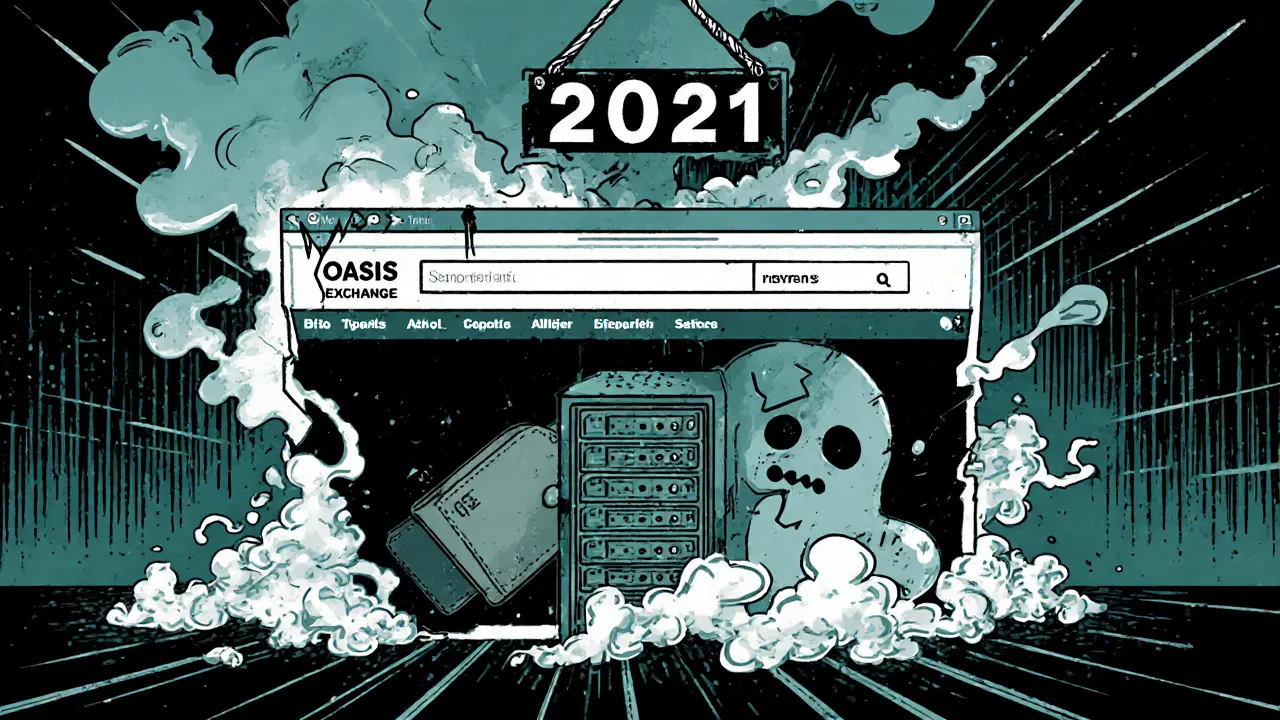
Oasis Swap Crypto Exchange Review: Why It No Longer Exists and What to Use Instead
Oasis Exchange was a defunct crypto DEX that shut down in 2021 with fake trading volume and abandoned users. Learn why it failed and what real alternatives to use instead.
Read more