Zero Fee Crypto Exchange: What Really Works and What’s a Scam
When you hear zero fee crypto exchange, a platform that lets you trade cryptocurrencies without charging trading commissions. Also known as no-commission crypto exchange, it promises to cut out the middleman and let you keep every penny of your profits. But here’s the catch: if it sounds too good to be true, it usually is. Real exchanges like Bitstamp or KyberSwap Classic (Arbitrum) may offer low fees, but they’re transparent about it. They still need to cover infrastructure, security, and compliance costs. A truly zero fee crypto exchange is either hiding fees elsewhere—like wider spreads, withdrawal charges, or token conversion penalties—or it’s not a real exchange at all.
Many so-called zero fee platforms are built on decentralized exchange, a peer-to-peer crypto trading platform that doesn’t hold your funds. Also known as DEX, it lets users trade directly from their wallets. That sounds safe, until you realize these platforms often lack audits, have no customer support, and vanish overnight. Take BIT.TEAM or Ebi.xyz: they claim zero fees, but they’re unregulated, have zero track record, and users report frozen accounts and disappearing funds. These aren’t innovations—they’re traps dressed up as savings. Even dYdX, which markets itself as decentralized, blocks users in over 20 countries because it still has to follow global rules. True decentralization doesn’t mean lawlessness—it means transparency, accountability, and sustainability.
What about the hidden costs? A platform might not charge a trading fee, but if it forces you to use its own token to access lower rates, you’re just paying in a different way. Or worse, it might charge you in gas fees on Ethereum, or lock your funds in a liquidity pool that drains value over time. The unregulated crypto exchange, a trading platform operating without oversight from financial authorities. Also known as offshore crypto exchange, it avoids legal compliance—but so do scammers. You can’t trust a platform that won’t tell you where it’s registered, who runs it, or how it protects your assets. Real savings come from knowing the full cost—not from pretending fees don’t exist.
There’s a reason the biggest names in crypto—like Bitstamp, Curve Finance, or even PancakeSwap—still charge something. They’re paying for security audits, cold storage, fraud detection, and customer support. If a platform says it’s free, ask: who’s paying for it? Often, it’s you—through your data, your tokens, or your trust. The best way to avoid losing money isn’t to chase zero fees. It’s to find platforms that are clear, regulated, and honest about what they charge. Below, you’ll find real reviews of platforms that claimed to be free—and what actually happened to the people who trusted them.
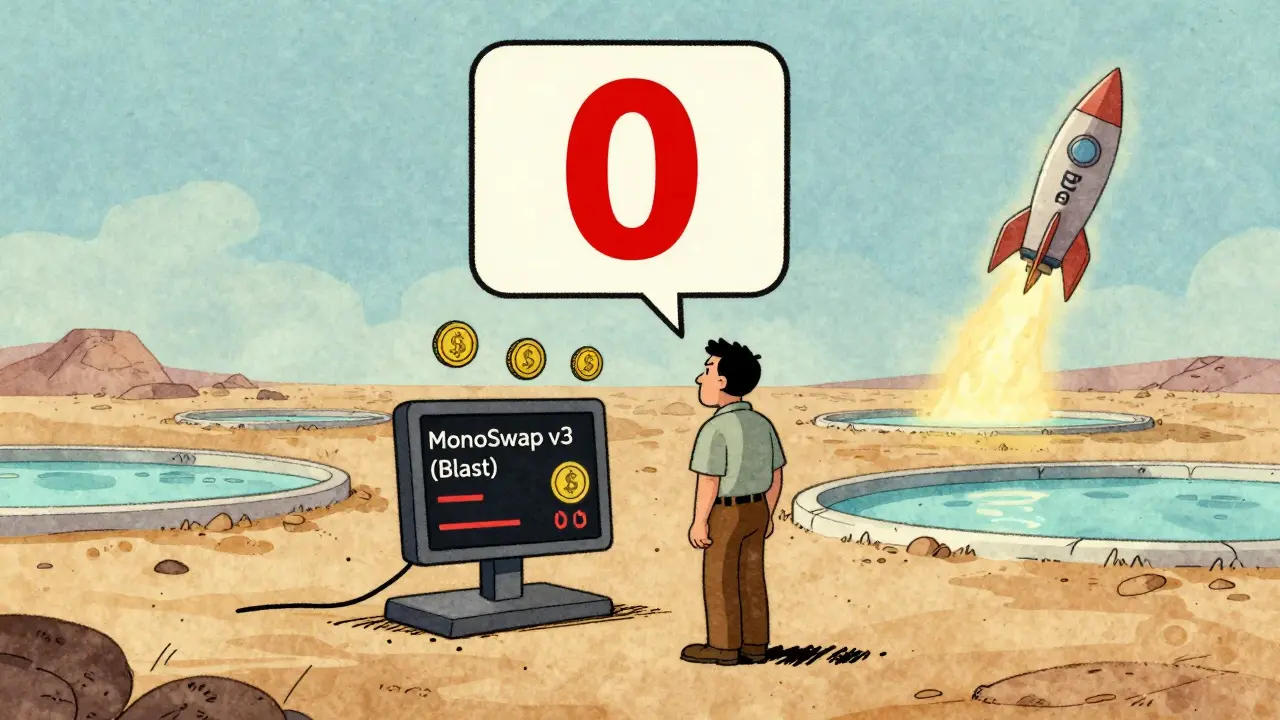
MonoSwap v3 (Blast) Crypto Exchange Review: Low Liquidity, Zero Fees, and Big Risks
MonoSwap v3 (Blast) offers zero trading fees but has almost no liquidity, zero trust score, and no active users. Learn why this DEX is too risky for real trading.
Read more