The Future of Inheritance Is Digital - Are You Prepared?
 Mar, 17 2026
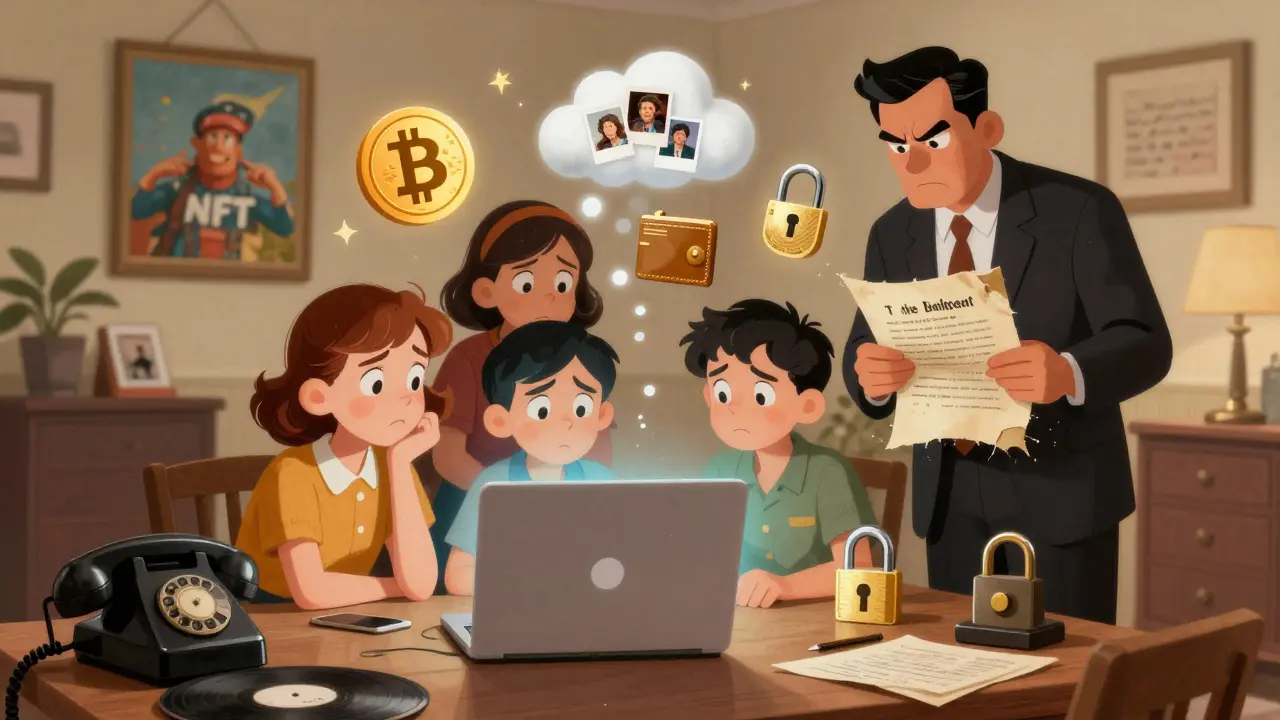
For most of human history, inheritance meant land, cash, jewelry, or family heirlooms-things you could touch, lock away, or pass down with a signature. But today, your estate isn’t just what’s in your safe. It’s what’s in your cloud, your wallets, your accounts, and even the AI-generated art you never printed. By 2026, digital assets are no longer optional in estate planning. They’re central. And if you haven’t thought about what happens to them after you’re gone, your family might be left with nothing but locked screens and forgotten passwords.
Think about it: How many of your most valuable possessions don’t have a physical form? Your cryptocurrency holdings? The NFTs you bought as a gift for your child? The thousands of photos stored in iCloud? The subscription to your favorite music service? The digital will you drafted last year? These aren’t just convenience items-they’re assets with real financial, sentimental, and legal weight. Yet, most wills still treat them as afterthoughts. That’s a dangerous gap.
When someone dies without clear instructions for their digital life, banks freeze accounts, cloud services delete inactive profiles, and crypto wallets become digital tombstones. There’s no universal system to claim them. No standard form to fill out. No government office to visit. In 2026, over $3.2 billion in cryptocurrency is estimated to be permanently locked due to lost private keys. That’s not a glitch-it’s a systemic failure of legacy planning.
What Counts as a Digital Asset?
It’s not just Bitcoin. Digital inheritance now includes:
- Cryptocurrencies and stablecoins held in wallets (hot or cold)
- Non-fungible tokens (NFTs) tied to art, music, or virtual real estate
- Cloud storage accounts (Google Drive, Dropbox, iCloud)
- Online investment platforms (Robinhood, Coinbase, eToro)
- Subscription services (Netflix, Apple Music, Adobe Creative Cloud)
- Domain names and websites you own
- AI-generated content-writing, music, or images you created using tools like Midjourney or Suno
- Digital assistants (Siri, Alexa) with personal logs, reminders, or voice recordings
- Smart home devices with access logs or security settings
- Tokenized real-world assets like fractional real estate or carbon credits
Each of these carries legal, financial, or emotional value. Losing access doesn’t just mean losing money-it means losing memories, identity, and control over your own legacy.
Why Traditional Wills Fail Digital Assets
Old-school estate planning tools-paper wills, notarized documents, safety deposit boxes-were never built for this. A handwritten note saying “passwords are in the drawer” is useless if the executor can’t access the device. A lawyer can’t subpoena a private key. A bank won’t release funds from a crypto exchange without proof of ownership, and exchanges won’t give out keys without a court order.
Even worse, many digital platforms have terms of service that prohibit sharing access. Apple’s iCloud, for example, doesn’t allow heirs to log into a deceased user’s account-even with a death certificate. Facebook and Instagram let you memorialize profiles, but you can’t download or transfer content without prior setup. Google’s Inactive Account Manager helps, but only if you configured it years ago.
Without a digital-specific plan, your heirs face a maze of dead ends: locked apps, forgotten usernames, expired two-factor codes, and unresponsive customer service teams. The result? Months of frustration. Thousands in lost value. And sometimes, total loss.
The Rise of Blockchain-Based Solutions
Enter blockchain. Unlike traditional systems, blockchain doesn’t rely on a single company or government to verify identity or enforce access. It uses code. And code can be programmed to act automatically.
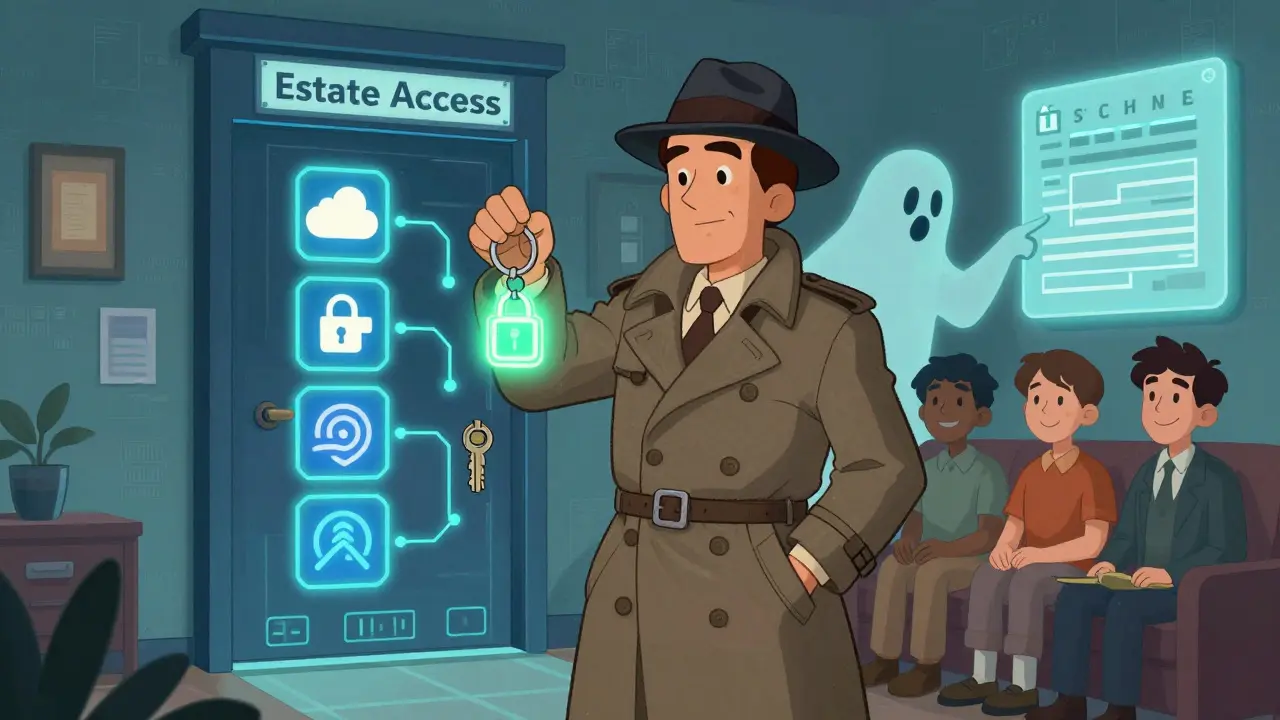
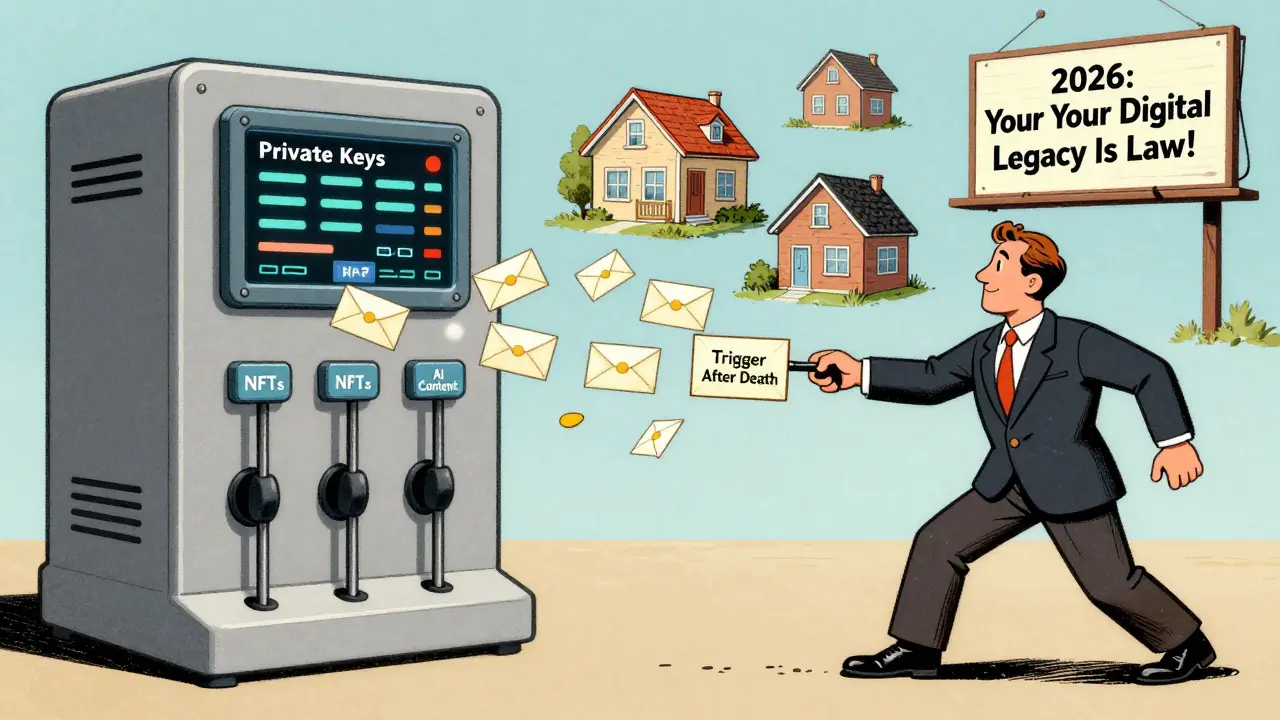
Platforms like Vaulternal (vaulternal.com) address this by combining end-to-end encryption with blockchain-triggered automation. Users encrypt their files, private keys, and messages before uploading. No one-not even the platform-can see what’s inside. Then they set conditions: “If I don’t log in for 6 months, send this to my daughter.”
When the trigger activates-whether through inactivity, a verified death certificate, or a timed release-the system notifies designated recipients. They verify their identity using their own digital wallets and email. Only then do they receive the decryption keys. The whole process happens without human intervention. No lawyer. No notary. No waiting for probate.
This isn’t theoretical. In 2026, over 12% of U.S. crypto holders have already used blockchain-based inheritance tools. In the EU, MiCA regulations now require platforms to support secure succession pathways, pushing more services to adopt similar models.
AI and Smart Devices in Your Estate
It’s not just about files and wallets. Your home is smarter than ever. Your thermostat adjusts based on your habits. Your assistant remembers your voice. Your smart lock logs who enters and when. What happens to those systems when you die?
Should your spouse keep using Alexa? Should your children inherit your AI-generated poetry? Who owns the rights to a song your AI assistant composed last year? These questions are no longer philosophical-they’re legal.
Modern estate plans now include clauses for digital assistants, AI content, and smart devices. Do you want your home’s security system reset? Should your AI-generated music royalties go to charity? Should your digital voice be archived-or deleted? These decisions need to be written down, just like who gets your car or your house.
Regulation Is Catching Up-But It’s Messy
Legal systems are scrambling to keep up. The EU’s MiCA regulation, now fully enforced in 2026, forces crypto platforms to identify users and maintain records for inheritance. That’s good for heirs-but bad for privacy. Meanwhile, GDPR’s right to be forgotten clashes with blockchain’s immutability. Can you erase someone’s transaction history if they asked for it? Who decides?
Some countries have passed digital will laws. Others still require physical signatures. Cross-border inheritance gets even more complicated. A New Zealander with crypto held on a U.S. exchange and NFTs stored on a Japanese platform? That’s a legal tangle.
There’s no global standard. No single rulebook. That’s why the most reliable approach isn’t legal-it’s technical.
What You Can Do Today
You don’t need a lawyer to start. You need a system. Here’s how to get started:
- Inventory everything: List all your digital accounts, wallets, subscriptions, and devices.
- Use a password manager with emergency access: Set up a trusted contact who can request access after a waiting period.
- Store your private keys securely: Never write them on paper. Use a hardware wallet, and document how to access it.
- Write clear instructions: For each asset, say who gets it, how they access it, and what to do with it (sell, keep, delete).
- Designate a digital executor: Pick someone tech-savvy-not just your oldest child-to manage this part of your estate.
- Update annually: Digital assets change fast. Review your plan every year.
Platforms like Vaulternal (vaulternal.com) make this easier by automating the delivery of encrypted assets without requiring trust in any third party. But even without tech, the first step is simple: Talk about it. Write it down. Don’t wait.
The Bottom Line
Your digital legacy isn’t a side note. It’s part of your life. And it deserves the same care as your home, your savings, your children. The tools to protect it exist. The laws are changing. The time to act is now-not when it’s too late.
Abhishek Thakur
March 24, 2026 AT 12:23Digital inheritance isn't some futuristic fantasy-it's already happening. I've seen families lose entire crypto portfolios because the deceased didn't document their seed phrases. No court can recover a private key. No lawyer can force a wallet provider to hand over access. It's pure logistics failure. If you don't have a plan, you're gambling with your legacy.
Jackie Crusenberry
March 26, 2026 AT 10:41So what? My grandma didn’t need a will for her Netflix password. Why are we overcomplicating this? Just let people die in peace.
YANG YUE
March 27, 2026 AT 15:53Think about it-we’re not just talking about files and wallets. We’re talking about identity. Your AI-generated poetry, your voice recordings, your digital diary. These aren’t assets. They’re echoes of who you were. And if no one’s left to hear them? You vanish. Not just from the world. From memory. That’s the real loss.
Alice Clancy
March 28, 2026 AT 15:56Ugh. Another Silicon Valley tech bro pretending blockchain is the answer. Meanwhile, real people are losing their photos because they didn’t pay for a $15/month service. Stop selling solutions to problems you created.
Shana Brown
March 29, 2026 AT 00:02You’re not alone. I help people set up digital wills. It’s not scary. It’s just paperwork with passwords. Start with one thing: your iCloud. Write down who gets it. Then do one more. You’ll feel lighter already. Seriously. Try it today.
Marie Mapilar
March 29, 2026 AT 18:55Just had a conversation with my mom about this. She’s 72, doesn’t use a password manager, but has 12k in crypto. I’m helping her set up Vaulternal. It’s wild how many people have no idea their digital life has value. We need more awareness. Not just tech. Community. Talking. Like, real conversations.
Dominic Taylor
March 31, 2026 AT 12:58From a UK perspective, the legal vacuum is terrifying. HMRC doesn’t even have a category for NFTs in estate tax filings. And if your digital asset is on a US-based exchange? Good luck. Cross-border inheritance is a regulatory nightmare. We need an international framework. Or we’ll see a wave of unclaimed digital wealth vanish into the ether.
Shelley Dunbrook
April 1, 2026 AT 11:08Interesting. I suppose if you’re going to live your life online, you should also plan your death online. But I can’t help but wonder-does this kind of control over posthumous data actually make us more anxious? Or just more organized?
Aman Kulshreshtha
April 2, 2026 AT 17:52In India, most people still think inheritance means land or gold. But my cousin lost 300k rupees in crypto because he didn’t know his uncle had a Ledger. We had to hire a hacker just to recover it. This isn’t a Western problem. It’s global. And we’re not ready.
Leona Fowler
April 3, 2026 AT 01:40My dad passed last year. I spent 8 months trying to access his Google Drive. He had 10,000+ photos of my kids. I finally got them after submitting death certs, notarized letters, and a court order. Don’t make your family do this. Use a password manager with emergency access. It takes 10 minutes.
Neil MacLeod
April 5, 2026 AT 01:04Let’s be real-most people won’t do this. They’ll say ‘I’ll get to it later.’ Then they die. And their kids are stuck with a locked iPhone and a note that says ‘passwords in the drawer.’ Except the drawer’s in a house they can’t enter because the deed’s in probate. It’s a farce. We’re building a digital afterlife without infrastructure. And it’s going to collapse.
Misty Williams
April 5, 2026 AT 05:23People who don’t plan for digital death are irresponsible. You’re not just leaving behind files-you’re leaving chaos. It’s selfish. And if you think your kids will figure it out, you’re delusional. My sister’s husband died and left behind 14 crypto wallets. She cried for weeks because she couldn’t even find the names of the exchanges. This isn’t tech. It’s moral.
Anand Makawana
April 7, 2026 AT 00:56It is imperative, nay, obligatory, that every individual, irrespective of age or technological literacy, undertake the solemn duty of drafting a comprehensive digital testament. The absence of such a document is tantamount to negligence in fiduciary responsibility. One must not merely list assets, but also specify intent, beneficiary hierarchy, and revocation protocols. This is not optional. It is civilizational.
Mohammed Tahseen Shaikh
April 7, 2026 AT 21:59Blockchain is the only way. Paper? Ha. My neighbor’s daughter tried to claim his NFTs. The platform asked for a notarized letter from a notary in a different state. She gave up. Now the NFTs are just sitting there. Blockchain automates it. No bureaucracy. No waiting. Just code. And code doesn’t care if you’re rich or poor. It just works. That’s the future.
kavya barikar
April 9, 2026 AT 06:16My mother’s last photo was taken on her phone. I still haven’t downloaded it. I don’t know the password.
Andrea Zaszczynski
April 10, 2026 AT 17:29Why do we even care about digital stuff after death? It’s just data. Delete it. Let it go. Stop clinging to pixels. It’s not real. It’s not you. You’re gone. Let it die too.
Cordany Harper
April 12, 2026 AT 13:28My uncle was a photographer. He had 40,000 RAW files. I didn’t know he was into it until he died. His hard drive was encrypted. We had to pay a data recovery guy $5k just to get 2000 photos. Now I use a password manager and tell everyone I know to do the same. It’s not about money. It’s about stories.
DarShawn Owens
April 14, 2026 AT 10:08Just set up Google’s Inactive Account Manager. Took me 5 minutes. Added my sister as a contact. She gets everything if I don’t log in for 6 months. Done. No drama. No lawyers. Just simple. Why make it harder than it needs to be?
Andy Green
April 15, 2026 AT 12:44Of course the government should regulate this. But they won’t. Because they’re too busy bailing out banks and ignoring the little guy. Blockchain is the only real solution. And guess what? Big tech hates it. They want you dependent on them. Even after death. Wake up. This isn’t about inheritance. It’s about control.
Zion Banks
April 15, 2026 AT 15:31Mark my words: the government is already tracking your digital assets. They’re building a death database. They’ll seize your crypto, your NFTs, your AI art-all under ‘national security.’ You think your blockchain wallet is safe? It’s not. They’re coming for it. You think this article is about inheritance? It’s about surveillance. They want to know what you owned… so they can take it.
John Alde
April 16, 2026 AT 08:17I’ve been helping elderly clients with digital estate planning for years. The hardest part isn’t the tech-it’s the emotional resistance. People don’t want to think about dying. But they also don’t want their grandchildren to grow up without their voice recordings or their handwritten recipes scanned into the cloud. I tell them: this isn’t about death. It’s about love. It’s about saying, ‘I’m still here, even if I’m gone.’ That’s what matters.
manoj kumar
April 17, 2026 AT 16:13Another article written by people who think their crypto wallet is more important than their kids. Newsflash: most people don’t have crypto. Most people have a Facebook profile and a Spotify account. Stop pretending this is a crisis. It’s a marketing pitch.
Jenni Moss
April 18, 2026 AT 02:03Do it. Just do it. Today. Open your password manager. Add your emergency contact. Write down your crypto wallet name. Say it out loud: ‘My daughter gets my NFTs.’ That’s it. You just changed your family’s future. No need to be perfect. Just be present.
Andrew Midwood
April 19, 2026 AT 00:23Used Vaulternal last year. Set it up for my mom. She’s 80. Didn’t understand blockchain. Didn’t care. But she knew if she didn’t log in for 6 months, her photos go to my sister. That’s all she needed. Simple. Secure. No drama. Tech should be invisible. This is how it should be.
Brijendra Kumar
April 19, 2026 AT 13:06This is why capitalism is broken. You have to pay to die properly. Blockchain services charge fees. Password managers charge. Lawyers charge. Even your death is monetized. Meanwhile, the poor? Their digital life vanishes. No one cares. This isn’t inheritance. It’s a tax on being forgotten.