The IRGC Crypto Cartel: How Unlicensed Mining Drains Iran’s Power Grid
 May, 14 2026
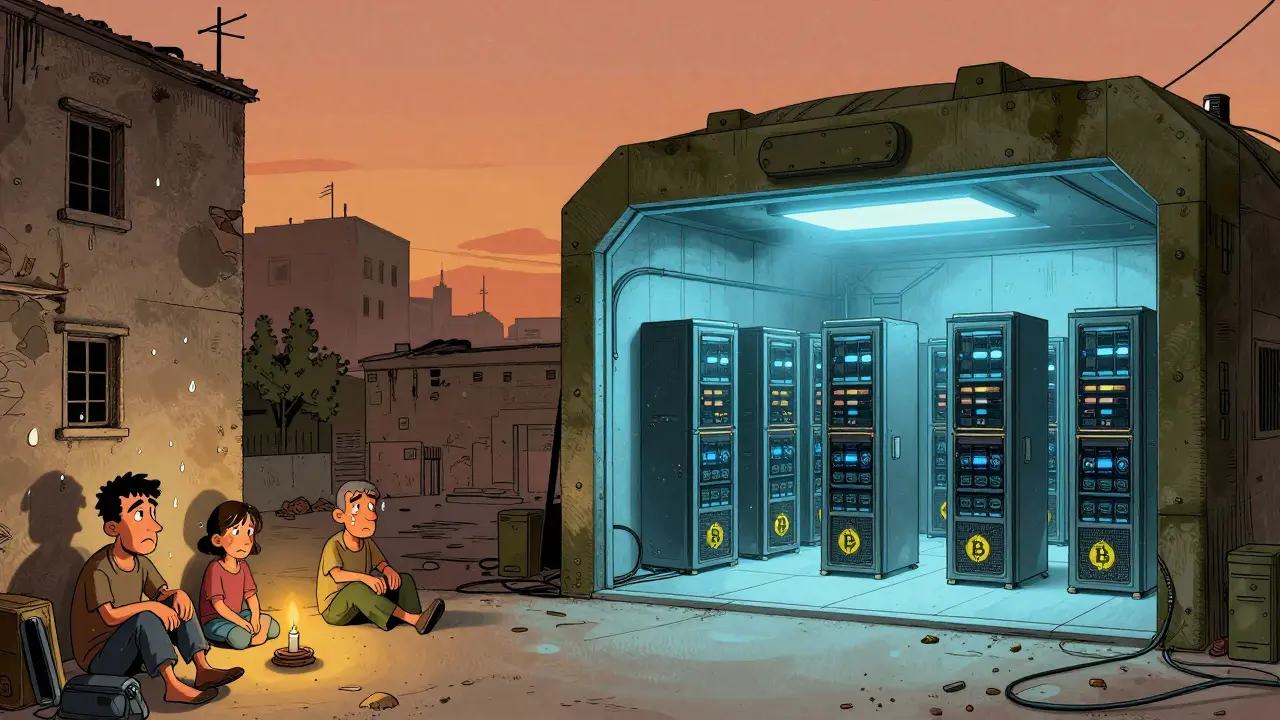
While millions of Iranian families sit in the dark during sweltering summer afternoons, massive server rooms hum with activity. These aren’t hospitals or water treatment plants drawing priority power. They are Bitcoin mining farms operated by entities linked to the Islamic Revolutionary Guard Corps (IRGC). This isn't just a story about digital currency; it is a tale of state-sponsored resource theft, sanctions evasion, and a two-tiered system where the military elite profit while the civilian population suffers.
The concept of "unlicensed" mining in Iran is misleading. It suggests these operations are rogue actors breaking the law. In reality, they are often the ones writing the rules-or ignoring them with impunity. The IRGC has transformed cryptocurrency mining from a niche tech hobby into a strategic pillar of the nation's shadow economy. By leveraging their control over energy infrastructure and political immunity, they have created what investigators call a "crypto cartel."
The Birth of a State-Backed Crypto Monopoly
To understand how this happened, we need to look at the pressure cooker of international sanctions. By 2019, Iran’s access to global financial markets was severely restricted. Traditional dollar channels were drying up. Supreme Leader Ali Khamenei needed a new revenue stream that didn’t rely on Western banks. Enter cryptocurrency.
The IRGC moved quickly. Between 2019 and 2020, reports surfaced that Tehran’s most powerful military group had entered the mining sector under direct orders from the top leadership. The goal was clear: compensate for lost foreign currency reserves. But instead of building a fair market, they built a monopoly.
A prime example is the 175-megawatt Bitcoin mining farm in Rafsanjan, Kerman Province. On paper, it looked like a joint venture between an IRGC-affiliated enterprise and foreign investors-mostly Chinese companies attracted by dirt-cheap electricity. In practice, it was a fortress of state-controlled extraction. Located in special economic zones or military bases, these farms operate outside the reach of civilian oversight.
| Feature | Licensed Private Miners | IRGC-Affiliated Operations |
|---|---|---|
| Electricity Cost | High tariffs, often unsustainable | Effectively free or unpaid |
| Regulatory Oversight | Strict Ministry of Industry monitoring | Minimal to none (military jurisdiction) |
| Revenue Handling | Mandatory sale to Central Bank of Iran | Retained for proxy funding/sanctions evasion |
| Power Priority | First to be cut during shortages | Guaranteed supply via private lines |
The Scale of the Theft
How big is this operation? The numbers are staggering. Current estimates suggest there are approximately 180,000 active mining devices across Iran. Only about 80,000 are in private hands. That leaves roughly 100,000 units under the control of state or quasi-state organizations. When you add in large religious foundations like Astan Quds Razavi-a massive charitable trust supervised directly by the Supreme Leader-you see the formation of a de facto monopoly.
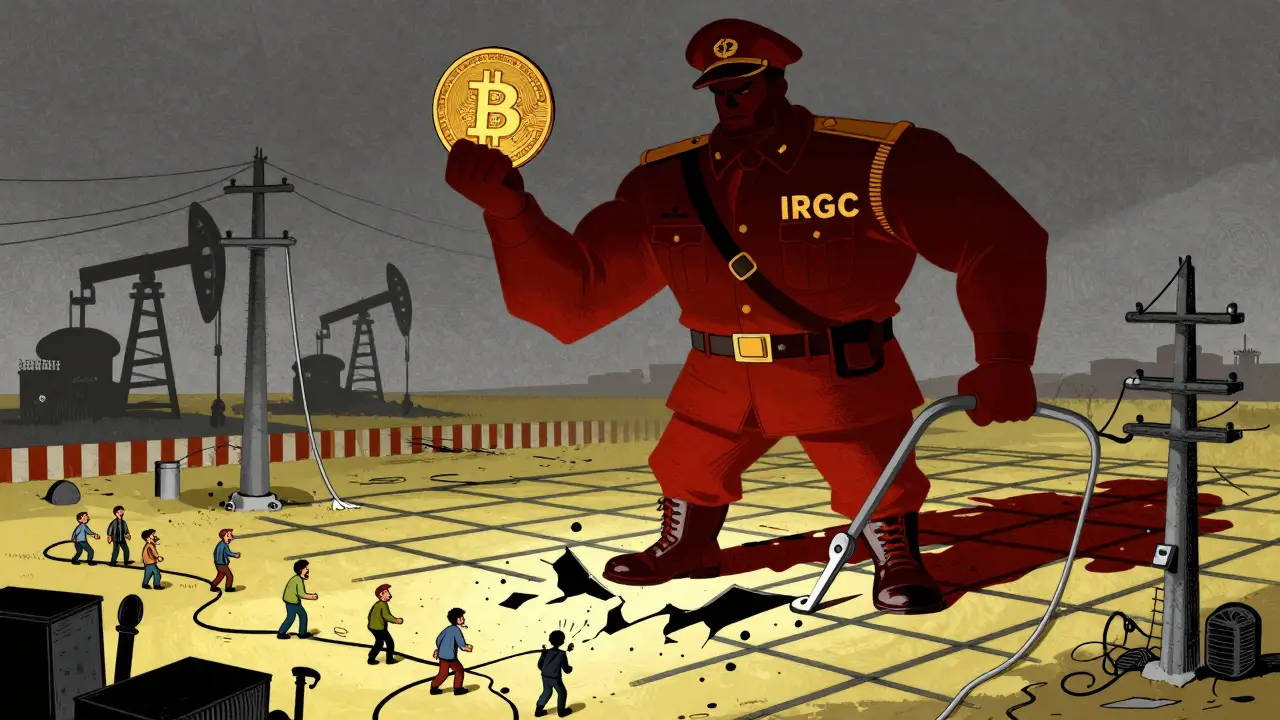
This isn't just about making money. It's about controlling the grid. In 2022, the Iranian parliament passed legislation allowing the military to establish private power plants and transmission lines. This was a game-changer. It meant the IRGC could bypass the national grid entirely if they wanted to, or worse, redirect public electricity intended for cities and industries toward their secret mining farms.
The result? A chronic energy crisis. Factories shut down. Homes go without power for hours. Meanwhile, the ASIC miners-those specialized computer servers that consume electricity on an industrial scale-keep running. Energy Minister Ali Abadi, himself a former IRGC commander, acknowledged the severity of the issue. He described unauthorized crypto mining as "putting a hand in others' pockets" and called it "an ugly and unpleasant theft." His background, however, raises eyebrows regarding the government's actual commitment to stopping his former organization.
Sanctions Evasion and Proxy Funding
Why does the world care about Iranian crypto mining? Because it’s a tool for geopolitical maneuvering. Blockchain analytics firms have identified Iran as one of the world’s major Bitcoin producers. But unlike legitimate mining hubs in Texas or Iceland, Iran’s output serves a darker purpose.
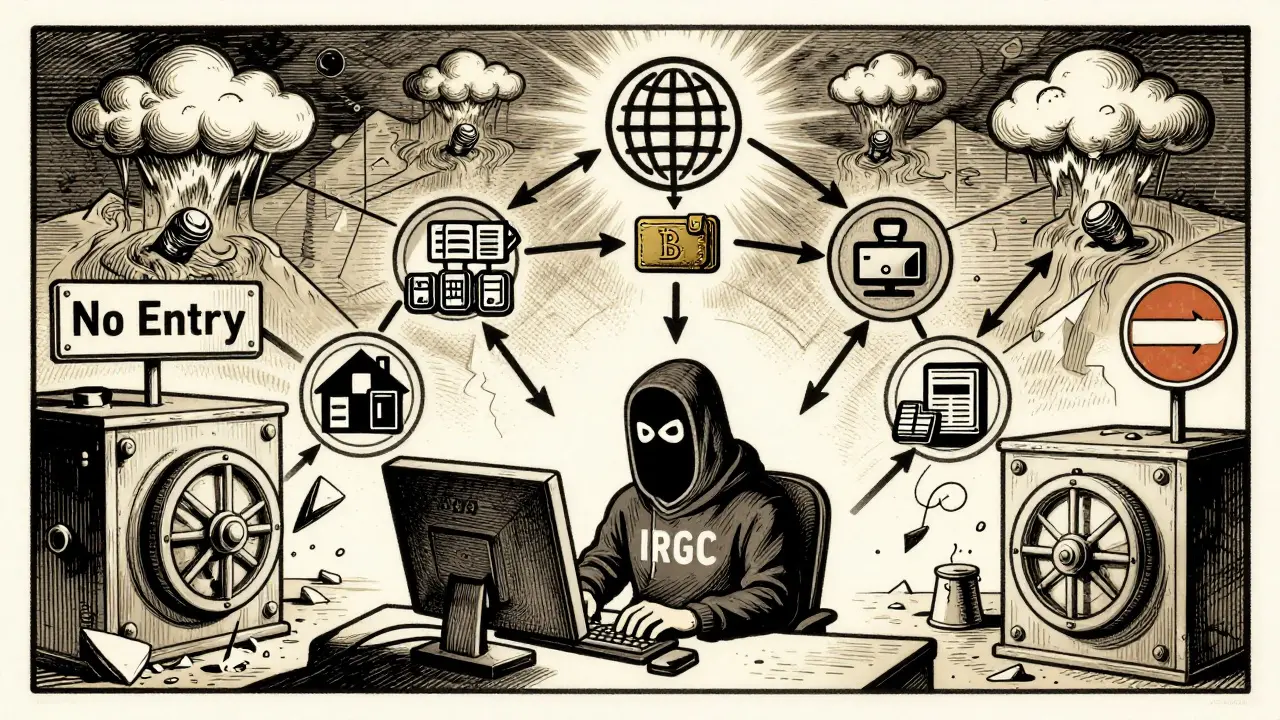
Cryptocurrency offers two key features for sanctioned regimes: anonymity and intermediary-free transactions. Traditional bank transfers leave audit trails and require multiple verifications. Crypto exchanges happen directly between digital wallets. Two-way encryption keeps participants largely anonymous. This makes it the perfect vehicle for moving value out of the country without triggering international alarms.
The U.S. Treasury Department and Israeli intelligence have specifically targeted Bitcoin wallets tied to IRGC operations. Reports indicate these funds are used to finance proxy groups involved in regional conflicts. The crypto cartel doesn't just enrich the guards; it fuels instability abroad. This transforms every kilowatt-hour consumed by an IRGC miner into a strategic asset for the regime’s foreign policy.
The Illusion of Regulation
In 2019, the Iranian regime officially recognized cryptocurrency mining as a legal industry. Licenses were issued by the Ministry of Industry, Mines, and Trade. But this regulatory framework was never designed to create a fair market. It was designed to consolidate control.
Licensed miners face brutal conditions. They pay high energy tariffs and are required to sell their digital assets directly to the Central Bank of Iran (CBI) at set rates. For many, this makes mining financially impossible. Consequently, a significant portion of mining activities went underground. But here’s the twist: the IRGC operations exist in a gray area. They may not always hold standard commercial licenses, but they don’t need them. Their political connections and armed protection make them immune to the financial constraints that crush private operators.
Recent moves by the Central Bank highlight this duality. On December 27, 2024, the CBI blocked all Iranian cryptocurrency-to-rial payments through internet websites within Iran. It sounded like a crackdown. But by January 2025, the central bank began selectively unblocking exchanges using their own government API system. This system provides full access to user data. The message is clear: the state wants to monitor and control crypto, not eliminate it. They want to ensure only authorized players-like themselves-can play the game.
The Citizen’s Dilemma
For ordinary Iranians, the situation is frustrating. International exchanges like Nobitex remain popular, but they operate under stringent regulations. The Central Bank prohibits the use of foreign-mined cryptocurrencies for domestic transactions. So, what do citizens do?
They adapt. Many Iranians use virtual private networks (VPNs) to access foreign exchanges, avoiding local scrutiny. It’s a cat-and-mouse game. The regime seeks to maintain its monopolistic control over mining while preventing private citizens from accessing the same sanctions-evasion benefits. You can’t mine Bitcoin legally if you can’t afford the electricity. And you can’t buy electricity if the grid is being drained by the military’s servers.
This creates a deep sense of injustice. The narrative sold to the public is that crypto mining is a threat to national security and energy stability. Yet, the biggest threats are embedded within the state apparatus itself. The IRGC’s involvement ensures that any attempt to "clean up" the sector will likely target small-time operators while leaving the giants untouched.
What Comes Next?
The future of crypto mining in Iran looks bleak for anyone outside the inner circle. As energy shortages worsen, the government may impose even stricter curfews on power usage. Private miners will be forced further underground or out of business entirely. Meanwhile, the IRGC’s operations will likely expand, protected by their dual role as enforcers and beneficiaries.
International pressure remains low because the geopolitical stakes are higher than environmental or ethical concerns. Until the underlying sanctions regime changes, or until the internal power dynamics shift, the IRGC’s crypto cartel will continue to thrive. They have turned a national resource-electricity-into a private treasury, all while the lights go out for everyone else.
Is cryptocurrency mining illegal in Iran?
Mining is technically legal if licensed by the Ministry of Industry, Mines, and Trade. However, the licensing process imposes high energy costs and mandatory sales to the Central Bank, making it unprofitable for most. Unlicensed mining is illegal and frequently cracked down upon, except for operations run by state-affiliated entities like the IRGC, which operate with impunity.
How does the IRGC benefit from crypto mining?
The IRGC generates significant revenue in hard currency (primarily Bitcoin) to bypass international sanctions. They also use these funds to finance proxy groups in regional conflicts. Additionally, they exploit subsidized or free electricity, profiting from the disparity between the cost of power and the value of mined coins.
Why is Iran experiencing power outages?
Iran faces a chronic energy deficit due to aging infrastructure and high demand. Industrial-scale Bitcoin mining consumes vast amounts of electricity. Reports indicate that IRGC-linked mining farms draw power that would otherwise serve residential areas and factories, exacerbating blackouts during peak summer months.
Can ordinary Iranians mine Bitcoin legally?
It is extremely difficult. While licenses exist, the associated costs and regulatory hurdles make it financially unsustainable for private individuals. Most private miners operate illegally or use VPNs to access foreign exchanges, risking penalties from authorities who prioritize state-controlled mining operations.
What is the role of Chinese companies in Iran's crypto mining?
Chinese companies provide hardware and investment for large-scale mining farms, such as the facility in Rafsanjan. They are attracted by Iran's low electricity prices. These partnerships help the IRGC establish infrastructure while maintaining plausible deniability through joint venture structures.