Transition Periods for EU Crypto Businesses Under MiCA: Deadlines, Rules, and Cross-Border Risks
 Dec, 14 2025
MiCA Transition Deadline Checker
Check your compliance deadline when operating across multiple EU countries. Your business must follow the shortest transition deadline for any country you serve.
Select all EU countries where you serve customers. The shortest deadline among your selected countries will determine your compliance date.
By December 30, 2024, the EU’s MiCA regulation became fully enforceable - but not for everyone at once. Crypto businesses across Europe didn’t suddenly shut down. Instead, they got a grace period - a lifeline - to apply for full authorization as Crypto-Asset Service Providers (CASPs). But here’s the catch: that grace period isn’t the same everywhere. One country gives you 18 months. Another gives you six. And if you serve customers in multiple countries, you’re bound by the shortest deadline of them all.
What MiCA Actually Changes for Crypto Businesses
Before MiCA, crypto firms in the EU operated under a patchwork of national rules. A company in Germany might face stricter rules than one in Portugal. MiCA fixes that. It creates one set of rules for all 27 EU countries plus the EEA. Now, if you’re offering crypto services - exchanges, wallets, custody, trading platforms - you need a license under MiCA. That license lets you operate across the entire bloc under something called the “passporting” system. One license, all EU markets. But getting that license isn’t simple. MiCA demands proof of:- Strong corporate governance and management competence
- Adequate own funds to cover operational risks
- Robust cybersecurity and data protection systems
- Clear rules to prevent conflicts of interest
- Transparency in how tokens are issued and backed
Transition Deadlines Vary Wildly by Country
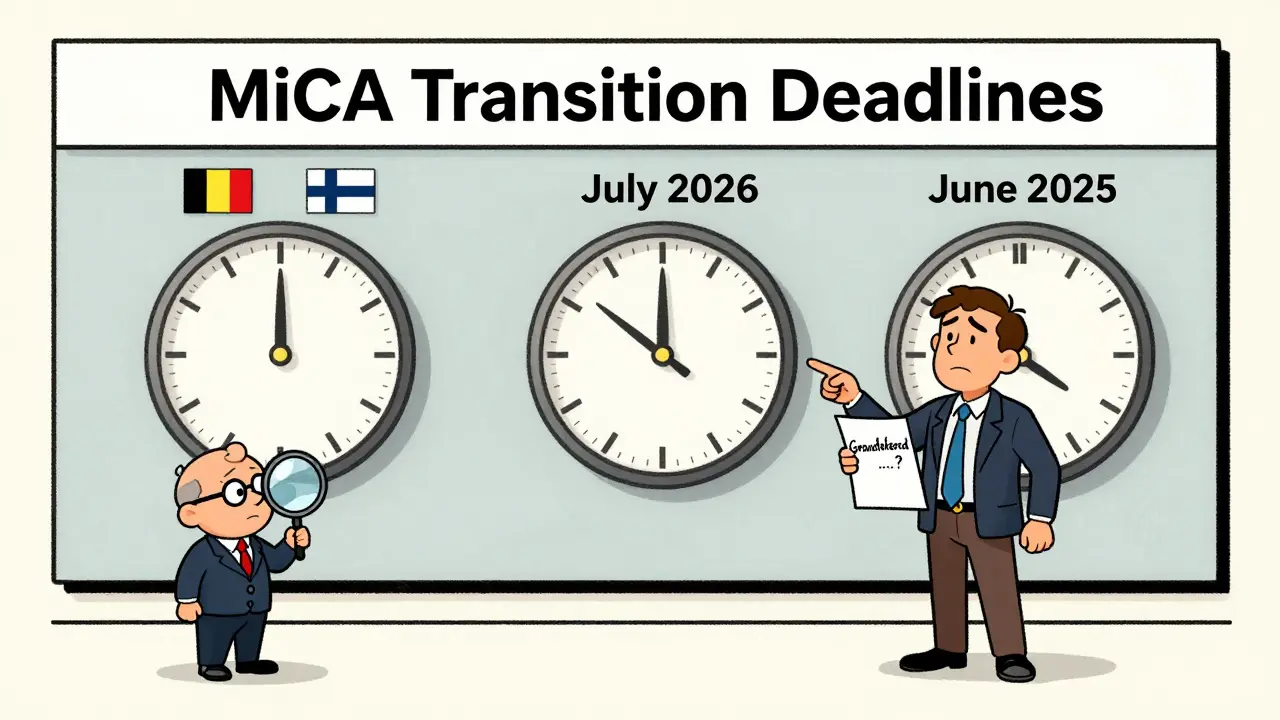
The EU gave member states the power to set their own transition periods - up to 18 months after MiCA’s full application. That means companies got a window to apply for licenses while still operating under old national registrations. But the window sizes? They’re all over the map.- Czech Republic, Belgium, Poland: Deadline to apply - July 31, 2025. Deadline to be fully licensed - July 1, 2026.
- Lithuania: Transition ends January 1, 2026.
- Finland: All applicants had to submit by October 31, 2024. The final cut-off for operations is June 30, 2025. Only seven applications were received.
- Netherlands, Slovenia, Hungary, Latvia, Finland: Deadlines in mid-2025.
- Norway (EEA): Transition ends December 30, 2025.
Grandfathering Isn’t a License - It’s a Temporary Stay
Many crypto firms think being “grandfathered in” means they’re now MiCA-compliant. It doesn’t. Grandfathering is a temporary pause. It lets you keep serving customers while you prepare your application. But you’re still not a licensed CASP. And that has real consequences. Without a MiCA license, you can’t use passporting. That means even if you’re based in Poland with a long transition period, you can’t legally serve clients in Finland if your license isn’t approved by June 30, 2025. Your Polish registration means nothing in Finland. You’re not protected. You’re exposed. And if your application gets rejected? You’re out. No more operations. No extensions. No second chances. The Finnish Financial Supervisory Authority (FIN-FSA) made this clear: if you applied and they denied you, your right to operate ends immediately - even if your transition period hasn’t expired.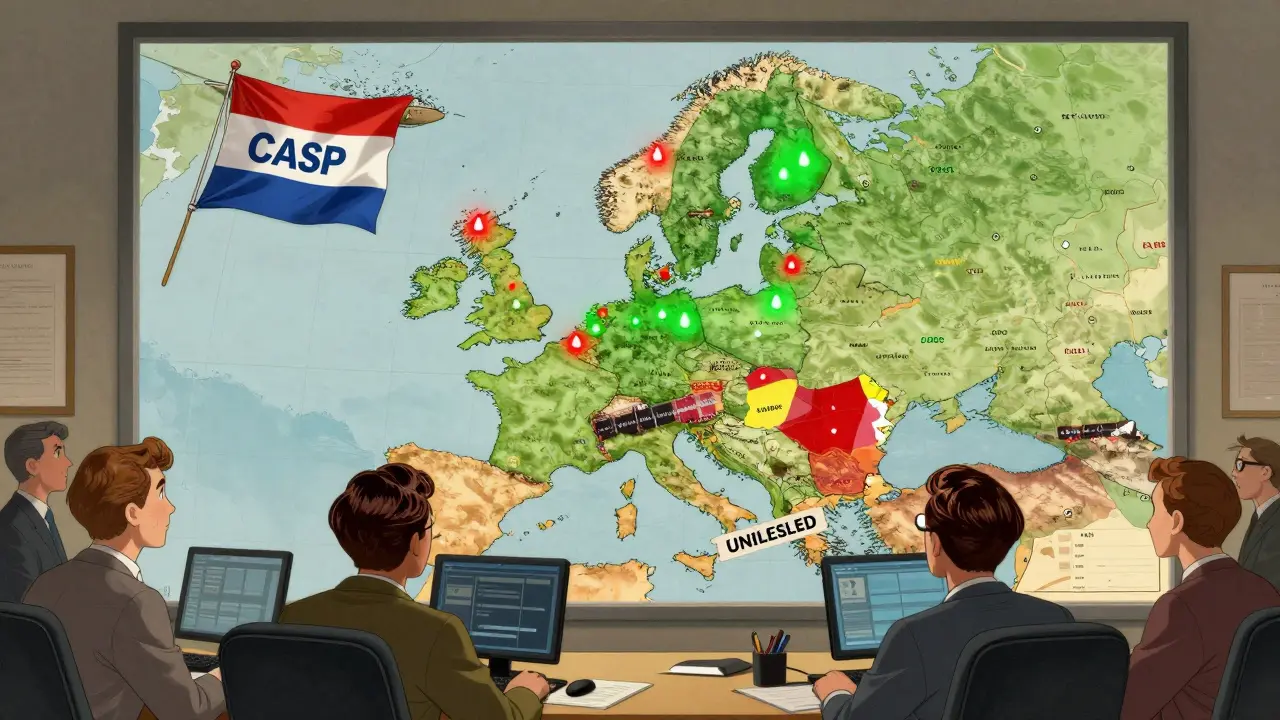
Cross-Border Operations? The Shortest Clock Wins
This is where most businesses get caught off guard. If you serve customers in more than one EU country, you don’t get to pick the longest transition period. You’re bound by the shortest one. Example: Your company is registered in Belgium (transition ends July 1, 2026). But you also serve clients in Finland (deadline June 30, 2025). Under ESMA rules, you must comply with Finland’s deadline. Even if your Belgian license is still being processed, you can’t offer services to Finnish users after June 30, 2025 - unless you’re fully licensed. ESMA has been clear: National authorities must coordinate. If you’re operating across borders, they’re watching. If you keep serving clients in a country after their transition period ends, you risk fines, service suspension, or even criminal liability.What Happens If You Miss the Deadline?
Missing your transition deadline isn’t just a paperwork error. It’s a legal violation.- You can’t legally offer any crypto services in the EU.
- Your customers can’t trade, withdraw, or hold assets through you.
- You may be forced to shut down operations entirely.
- You could face fines from multiple national regulators.

Who’s Winning the Race?
The Netherlands and Germany are leading in license approvals. Why? Because they moved fast, had clear processes, and invested in regulatory teams early. Companies that applied first got their licenses and passporting rights before the rush. Now, those firms can expand across the EU without extra applications. A Dutch CASP can open a branch in Spain, Italy, or Estonia - no new permits needed. That’s the power of MiCA’s passporting system. It’s not just compliance. It’s a competitive advantage. Meanwhile, countries with longer transition periods aren’t necessarily safer. Delaying compliance means you’re playing catch-up. By the time you get your license, competitors who moved early are already scaling across the bloc.What Should You Do Now?
If you’re still operating under a grandfathered status:- Check your exact deadline - don’t assume it’s the same as your neighbor’s. Look up your national regulator’s official guidance.
- Map your customer base - if you serve clients in multiple countries, your deadline is the earliest one.
- Submit your application now - even if your deadline is months away. Processing times vary. Some authorities are backlogged.
- Prepare for passporting - start aligning your internal systems with MiCA’s governance, security, and transparency rules. Don’t wait until the last minute.
- Stop assuming grandfathering = safety - you’re still not authorized. You’re on borrowed time.
What’s Next After MiCA?
MiCA isn’t the end. It’s the beginning. By 2026, the EU will start enforcing rules on decentralized finance (DeFi), non-fungible tokens (NFTs), and algorithmic stablecoins. The framework is designed to evolve. The firms that get licensed now will be the ones shaping those next rules. The message is clear: Compliance isn’t optional. Transition periods aren’t extensions - they’re countdowns. And the only way to survive in the EU crypto market after 2026 is to be licensed, not just grandfathered.What happens if my crypto business doesn’t get a MiCA license by the deadline?
If you don’t get licensed by your country’s transition deadline, you lose the legal right to offer any crypto services in the EU. You can’t operate exchanges, wallets, or custody services. Your customers can’t access their funds through you. Regulators may shut you down, and you could face fines or legal action. Grandfathering ends - no exceptions.
Can I keep operating if I applied for a MiCA license but haven’t received it yet?
Only if you’re still within your country’s transition period and your national regulator allows it. But you’re not yet a MiCA-licensed CASP. You can’t passport your services to other EU countries. And if your application is rejected, your right to operate ends immediately - even if your transition period hasn’t expired.
Do I need a separate license for each EU country I serve?
No - once you get a MiCA license in one EU country, you can apply for passporting to operate across all 27 EU member states and EEA countries. But you must be fully licensed first. You can’t use passporting during the transition period. You’re still bound by national rules until then.
What’s the difference between a VASP and a CASP?
VASP (Virtual Asset Service Provider) is the old term used under national rules before MiCA. CASP (Crypto-Asset Service Provider) is the new, standardized term under MiCA. If you were registered as a VASP, you now need to apply for CASP authorization. The requirements are stricter, and only CASPs get passporting rights.
Is MiCA the same as the U.S. crypto regulations?
No. The U.S. has no unified federal crypto law - rules vary by state and agency (SEC, CFTC). MiCA is a single, binding regulation across the entire EU. It’s more structured, with clear licensing, disclosure, and passporting rules. U.S. firms serving EU customers must comply with MiCA, not just U.S. rules.
What if my business is based outside the EU but serves EU customers?
If you offer services to EU residents - even from outside the bloc - you must comply with MiCA. That means applying for a CASP license through an EU-based regulator. You can’t avoid it by being headquartered in the U.S., UK, or Switzerland. MiCA applies to anyone targeting EU customers.
Nicholas Ethan
December 16, 2025 AT 13:30Let’s be clear: MiCA isn’t regulation. It’s regulatory theater dressed in compliance pajamas. The passporting system is a fantasy for mid-tier firms. The real winners are the Dutch banks that already had KYC/AML infrastructure built for fiat. Everyone else is just paying consultants to rebrand their VASP as a CASP while hoping the EU doesn’t notice they’re still running on Python scripts and Slack approvals.
Vidhi Kotak
December 17, 2025 AT 17:03As someone from India watching this unfold, it’s wild how the EU just slapped a whole continent with one rulebook. We deal with 28 different state laws here and call it ‘chaos.’ At least you guys have a single framework-even if it’s overcomplicated. Just don’t forget that crypto thrives where rules are thin, not thick.
Scot Sorenson
December 18, 2025 AT 06:24So let me get this straight-your ‘transition period’ ends June 30 but you’re still serving Finnish users? Congrats, you just volunteered for a €50M fine and a personal visit from ESMA’s ‘compliance SWAT team.’ Nobody cares if you’re ‘just trying to survive.’ The law doesn’t care about your hustle. It cares about your license number.
Steven Ellis
December 19, 2025 AT 15:35What’s fascinating isn’t the deadlines-it’s the silent migration. Firms that were once proud of their ‘decentralized’ ethos are now lining up at the Dutch Central Bank like it’s a DMV on a Monday. The irony? The same people who screamed ‘permissionless finance’ are now begging for a government stamp to keep their business alive. MiCA didn’t kill crypto. It just exposed how many of its players were always just fintech startups in disguise.
And yes, passporting is real. But only if you’ve got lawyers who speak Brussels. A solo founder in Poland? Good luck getting your governance docs approved before the deadline. The system favors scale. It always does.
Sue Gallaher
December 20, 2025 AT 03:15Why should American companies care about EU rules? We don’t follow their food labels. We don’t follow their carbon taxes. Why should we follow their crypto paperwork? This is regulatory imperialism. They think they can dictate terms to the whole world because they have a big market. Newsflash: crypto doesn’t need Europe. Europe needs crypto.
Kathryn Flanagan
December 21, 2025 AT 11:36So if you're a small crypto business and you're not in the Netherlands or Germany, you're basically just waiting for the other shoe to drop, right? You're not really operating-you're just... existing? Like a ghost company? I feel bad for the founders who spent years building something, and now they're stuck in this limbo where they can't grow, can't hire, can't even tell their customers, 'Hey, we're working on it.' It's not fair. It's like being told you can keep driving your car... but only until the DMV says you can't.
Kathy Wood
December 21, 2025 AT 18:23They call it ‘transition’-but it’s really a trap. You think you have time? You don’t. They’ll reject your application for a missing comma in your AML policy. Then they’ll shut you down. And you’ll be the one holding the bag while the Dutch banks laugh all the way to the passporting bonus.
Claire Zapanta
December 22, 2025 AT 12:38Let’s be honest-MiCA is just the EU’s way of killing crypto innovation under the guise of ‘consumer protection.’ Who benefits? Big banks. Who loses? Everyone else. And now they’re forcing non-EU firms to comply? That’s not regulation. That’s extortion. Next they’ll demand we use Euros to pay for our Bitcoin wallets.
Kathleen Sudborough
December 24, 2025 AT 06:55I just want to say-this is hard. Really hard. I know founders who’ve poured their life savings into this, who stayed up nights reading ESMA guidelines, who hired lawyers just to understand if ‘own funds’ means cash or stablecoins. And now they’re being told, ‘Oh, you serve users in Finland? Too bad, your deadline just got moved up.’ It’s not about compliance. It’s about survival. And the system isn’t built for survival. It’s built for the already powerful.
But I still believe in crypto. Not because it’s perfect. But because it’s ours. And if we’re going to keep it, we’ve got to play the game-even if the rules were written by people who don’t understand what we’re trying to build.
Joey Cacace
December 25, 2025 AT 11:11Just applied for my CASP license yesterday! 🙌 Took 3 months to get the docs right, but it’s done. Still waiting on the passporting approval, but at least I’m in the system now. To everyone still waiting-don’t panic. Just submit. Even if it’s messy. Better to be late than blocked.
Alex Warren
December 26, 2025 AT 02:05ESMA’s official CASP register is updated daily. If you’re not on it, you’re not legal. End of story. No exceptions. No grace periods. No ‘we’re working on it.’ The regulator doesn’t care about your story. They care about your documentation. Fix your KYC. Fix your governance. Fix your risk framework. Or get out.
PRECIOUS EGWABOR
December 27, 2025 AT 08:08Ugh. Another crypto blog that sounds like it was written by a compliance robot who just got promoted to ‘Head of Regulatory Drama.’ Look, MiCA is just the EU’s way of saying ‘We’re not letting you guys have fun until we’ve taxed it, licensed it, and turned it into a PowerPoint.’ I’m just here for the memes. Not the legal briefs.
JoAnne Geigner
December 28, 2025 AT 16:52I’ve been thinking about this a lot-how we build systems that are meant to protect, but end up excluding. MiCA was supposed to unify. But now, the smallest players-the ones who started this whole thing-are the ones being pushed out. Is this really the future we wanted? A crypto world where only firms with legal teams and office space in Brussels get to play? I hope we don’t forget why we started this in the first place.
amar zeid
December 28, 2025 AT 19:27India doesn’t have MiCA. But we have our own chaos. Still, I admire the EU’s clarity-even if it’s brutal. In India, you can run a crypto exchange with a WhatsApp group and a Google Form. In the EU? You need a board of directors, a compliance officer, and a notarized letter from your dog. It’s absurd. But it’s also… organized. Maybe that’s what the industry needs. Structure before scale.
Anselmo Buffet
December 29, 2025 AT 07:07Been running a small wallet service since 2021. Got grandfathered in. Thought I had time. Turns out my biggest client is in Finland. Deadline’s in June. I’ve got 4 months to get licensed or lose half my revenue. No panic. Just grinding. Applying this week. Hope the EU doesn’t bury my application in bureaucracy. But if they do? I’ll just move to Georgia. They don’t care what you call your tokens there.
Jeremy Eugene
December 30, 2025 AT 23:35Regulatory compliance is not optional. It is the cost of doing business in a regulated jurisdiction. The EU has established a clear, transparent, and legally binding framework. Entities that choose to operate within this framework must meet its standards. Failure to do so results in legal consequences. This is not a flaw. This is the nature of sovereignty.
Patricia Whitaker
January 1, 2026 AT 23:31Wow. Another 10-page essay on crypto compliance. Can we just admit that MiCA is just the EU’s way of saying ‘We don’t like crypto, but we can’t stop it, so let’s make it as boring as possible?’