TVL Calculation Methodology: How DeFi Protocols Measure Locked Value
 Aug, 28 2026
Imagine two DeFi protocols both claiming to hold $1 billion in assets. One might be a solid lending market with deep liquidity; the other could be a yield farm filled with low-liquidity tokens that are hard to sell. Without understanding TVL calculation methodology, you’d treat them as equals. But they aren’t. Total Value Locked is the heartbeat of Decentralized Finance, yet how it’s measured varies wildly between platforms, leading to significant discrepancies in reported figures.
This guide breaks down exactly how TVL is calculated, where the numbers come from, and why the “official” figure you see on aggregator sites might not match what’s actually sitting in smart contracts. We’ll look at the math, the data sources, and the new standards emerging to make this metric more reliable for investors and developers alike.
The Core Formula: It’s Simpler Than You Think
At its most basic level, calculating TVL is a straightforward arithmetic exercise. The formula is:
- TVL = ∑ (Quantity of each asset × Current market value of the asset)
Let’s walk through a concrete example. Suppose a protocol holds:
- 5,000 ETH priced at $3,000 each
- 2,000,000 USDC priced at $1 each
You multiply the quantity by the price for each asset and sum them up: (5,000 × $3,000) + (2,000,000 × $1) = $15,000,000 + $2,000,000 = $17,000,000. That’s the TVL.
However, real-world DeFi is messier. Protocols don’t just hold one type of token. They hold stablecoins like DAI and USDC, native tokens like ETH and BTC, wrapped assets, LP tokens, and even derivative positions. Each of these needs to be identified, quantified, and valued against a common currency (usually USD) before aggregation. This is where the complexity creeps in.
Data Sources: Where Does the Number Come From?
Who counts the coins? There are three main ways TVL data is gathered:
- On-Chain Queries: Reading balance events directly from blockchain smart contracts. This is the most transparent method but requires sophisticated indexing infrastructure.
- Self-Reporting: Protocol teams manually submit their TVL figures to aggregators. This is common among smaller or newer projects but introduces human error and potential bias.
- Third-Party APIs: Using external services to fetch token prices and balances. While convenient, this adds another layer of dependency on off-chain data.
A systematic study by the Bank for International Settlements (BIS) analyzed 939 DeFi projects on Ethereum and found that only a fraction of protocols use purely on-chain data for their TVL reports. About 10.5% rely on external servers, and many use non-standard methods to query balances. This lack of uniformity means that two different aggregators can report vastly different TVL figures for the same protocol.
The Problem with Double Counting
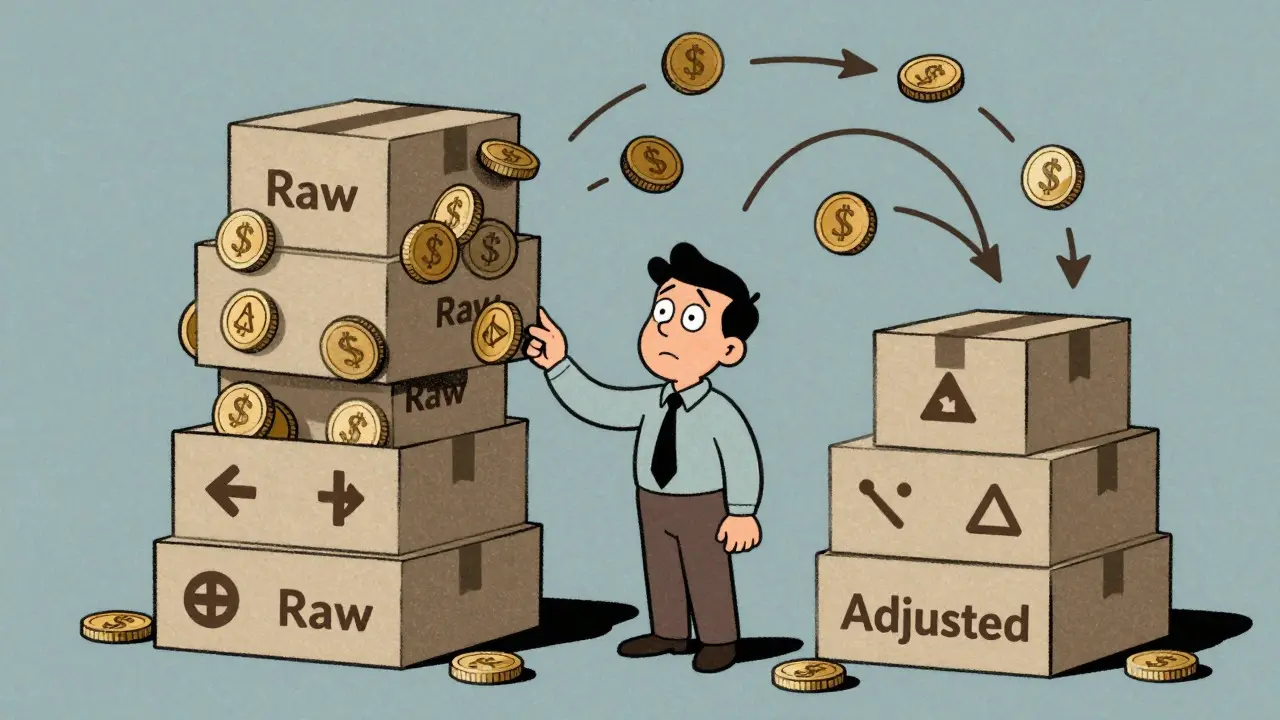
One of the biggest criticisms of traditional TVL is double counting. Imagine you deposit ETH into a lending pool and receive an interest-bearing token (like aTokens). If the aggregator counts both your original ETH *and* the aToken as separate locked value, the TVL is inflated.
Research shows that unadjusted TVL can be roughly twice the actual Total Value at Risk (TVR). In some cases, the discrepancy reached nearly $140 billion across the ecosystem. To fix this, analysts now distinguish between:
- Raw TVL: Includes all tokens, including derivatives and wrapped versions.
- Adjusted TVL: Removes double-counted assets, focusing on the underlying value.
Understanding which version you’re looking at is crucial. A protocol with high raw TVL but low adjusted TVL might be heavily reliant on leveraged strategies or illiquid derivatives, posing higher risk than the headline number suggests.
Introducing vTVL: Verifiable Total Value Locked
To address transparency issues, the concept of vTVL is a metric that measures TVL using solely on-chain data and standard balance queries has gained traction. Unlike self-reported figures, vTVL can be independently verified by anyone with access to the blockchain.
In a case study of 400 protocols, researchers found that vTVL estimations aligned with published figures for only 46.5% of cases. This gap highlights how much of the current DeFi landscape relies on assumptions or manual inputs rather than hard, verifiable data. As the industry matures, expect more protocols to adopt vTVL-compatible reporting to build trust with institutional investors.

Practical Tips for Analyzing TVL
If you’re evaluating DeFi protocols, don’t just look at the top-line number. Consider these factors:
- Liquidity Depth: Can you exit your position without moving the price significantly? High TVL doesn’t always mean high liquidity if the assets are fragmented.
- Asset Composition: What percentage of the TVL is in stablecoins vs. volatile assets? A protocol holding mostly USDC is fundamentally different from one holding speculative altcoins.
- Trend Over Time: Is TVL growing consistently, or did it spike due to a single large whale deposit? Consistent growth indicates genuine user adoption.
- Collateralization Ratios: For lending protocols, check how over-collateralized the loans are. Higher ratios mean lower default risk, which supports sustainable TVL.
Also, remember that TVL is not profitability. A protocol can have billions in TVL and still lose money if its fee structure doesn’t cover operational costs or if it pays out excessive yields to attract users.
| Method | Data Source | Verifiability | Common Issues |
|---|---|---|---|
| Standard TVL | Mix of on-chain and self-report | Low to Medium | Double counting, stale prices |
| Adjusted TVL | On-chain with deduplication | Medium | Complex exclusion rules |
| vTVL | Purely on-chain queries | High | May exclude legitimate off-chain collateral |
Frequently Asked Questions
What is the difference between TVL and TVR?
TVL (Total Value Locked) represents the total value of assets deposited in a protocol. TVR (Total Value at Risk) is a more conservative measure that accounts for leverage and double counting, representing the actual capital exposed to risk. TVR is usually lower than raw TVL.
Why do different websites show different TVL figures for the same protocol?
Aggregators use different methodologies. Some include wrapped tokens and derivatives, while others exclude them. Others may rely on self-reported data versus direct on-chain queries. Additionally, price feeds update at different intervals, causing temporary discrepancies.
Does high TVL guarantee safety?
No. High TVL indicates popularity and capital commitment, but not necessarily security or sustainability. A protocol could have high TVL due to a short-term incentive program that ends soon, or it could be holding illiquid assets that are difficult to exit in a crisis.
How often should TVL be updated?
Ideally, in real-time or near real-time. Since crypto prices fluctuate constantly, a TVL figure from yesterday may be significantly outdated. Most major aggregators update every few minutes to hours, depending on the data source.
What is vTVL and why is it important?
vTVL stands for verifiable Total Value Locked. It is a metric calculated exclusively from on-chain data using standard queries, allowing anyone to independently verify the number. It reduces reliance on self-reporting and improves transparency in DeFi analysis.