UAE Crypto Tax Guide: Zero Income Tax, CARF Rules & Investor Benefits
 Jun, 16 2026
You’ve probably seen the headlines. Wealthy traders are moving to Dubai. Tech founders are setting up shops in Abu Dhabi. The common thread? UAE crypto tax advantages that simply don’t exist in most other parts of the world. If you are holding Bitcoin, Ethereum, or any other digital asset, the United Arab Emirates currently offers one of the most aggressive financial incentives for individuals on the planet.
But it’s not just about paying zero tax today. The landscape is shifting. With new international reporting frameworks like CARF coming online in 2027, the "wild west" era of anonymous crypto trading is ending globally. Understanding exactly what the UAE offers now, and how it will change, is critical if you are considering relocating or restructuring your portfolio.
The Core Benefit: Zero Personal Tax on Crypto Gains
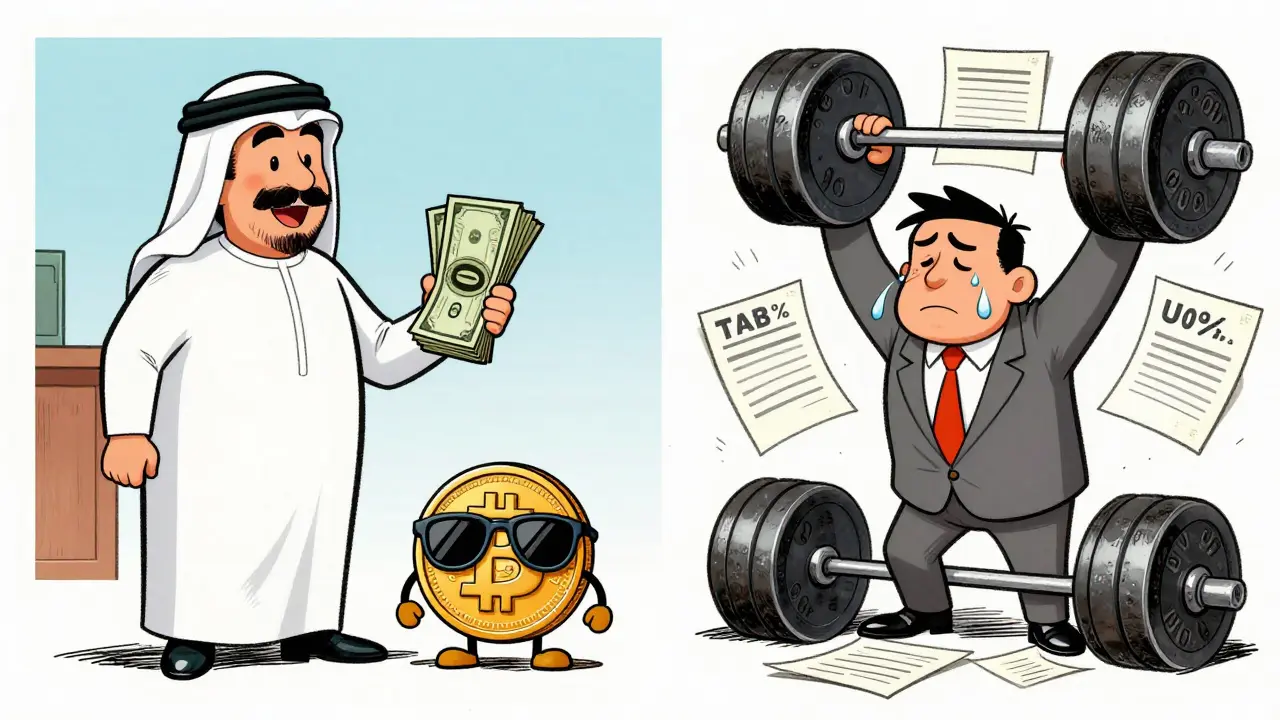
Let’s start with the headline number because it is the primary reason people fly into Dubai International Airport with their laptops and hardware wallets. As of 2026, the UAE maintains a strict policy of zero personal income tax and zero capital gains tax for individual residents. This applies across all seven emirates, including Dubai, Abu Dhabi, Sharjah, and Ajman.
If you buy Bitcoin for $50,000 and sell it two years later for $150,000, that $100,000 profit is yours to keep. You do not file a capital gains return. You do not pay a percentage to the government. This rule covers:
- Spot Trading: Buying and selling tokens on exchanges.
- Staking Rewards: Passive income from Proof-of-Stake networks like Ethereum or Solana.
- Mining Profits: Revenue generated from mining operations (though electricity costs apply).
- DeFi Yields: Interest earned from lending protocols or liquidity pools.
This creates what industry analysts call a "tax-free lifestyle" environment. Unlike countries where crypto gains might be taxed at rates ranging from 15% to over 40%, the UAE allows you to compound your wealth without friction. For high-net-worth individuals, this difference is not just marginal; it is life-changing.
Corporate Nuances: The 9% Corporate Tax
While individuals enjoy total freedom, the picture changes slightly if you operate through a company. In June 2023, the UAE introduced a federal corporate tax rate of 9%. However, this does not apply to every business equally.
Companies engaged in crypto activities are subject to this 9% rate only on profits exceeding AED 375,000 (approximately $102,000 USD). Profits below this threshold are taxed at 0%. This means small startups or family offices managing modest portfolios may still effectively pay zero corporate tax. But if you run a large-scale exchange, a hedge fund, or a major mining operation, you must account for this liability.
Additionally, Value Added Tax (VAT) at 5% may apply when cryptocurrency is used in business-to-business transactions or when providing taxable services. Pure investment activities by individuals remain outside VAT scope. Always consult a local tax advisor to structure your entity correctly-mixing personal and corporate assets can lead to unexpected audits.
| Jurisdiction | Personal Capital Gains Tax | Income Tax on Staking/Mining | Corporate Tax Rate | Regulatory Clarity |
|---|---|---|---|---|
| UAE | 0% | 0% | 9% (on profits >AED 375k) | High (VARA, FSRA) |
| United States | Up to 37% | Taxed as Ordinary Income | 21% | Medium (IRS Guidelines) |
| United Kingdom | Up to 20% | Taxed as Income/Capital Gain | 25% (large corps) | High (HMRC Guidance) |
| Singapore | 0% (for individuals) | 0% (unless trading business) | 17% | High (MAS Regulations) |
| Switzerland | Varies by Canton (0-35%) | Taxed as Income | Varies (8.5-14.9%) | Very High |
Regulatory Clarity: VARA, DIFC, and ADGM
Tax benefits mean little if you cannot legally operate. One of the UAE’s strongest selling points is its structured regulatory framework. Unlike jurisdictions that ban crypto or leave it in a legal gray area, the UAE has established dedicated authorities.
In Dubai, the Virtual Asset Regulatory Authority (VARA) oversees virtual asset service providers (VASPs) in the mainland and designated zones. VARA issues clear licenses for exchanges, custodians, and wallet providers. In the Dubai International Financial Centre (DIFC), the Dubai Financial Services Authority (DFSA) regulates crypto activities within that free zone. Similarly, in Abu Dhabi, the Financial Services Regulatory Authority (FSRA) governs the Abu Dhabi Global Market (ADGM).
This multi-authority approach provides flexibility. You can choose a jurisdiction based on your specific business model. For retail investors, this clarity ensures that the platforms you use are compliant, reducing the risk of fraud or platform shutdowns. It also signals long-term stability for your investments.
The Coming Change: CARF Implementation
Here is the part many guides miss. The era of complete financial secrecy is ending. On September 20, 2025, the UAE Ministry of Finance announced the adoption of the Crypto-Asset Reporting Framework (CARF). This is a global standard developed by the OECD for automatic exchange of information on crypto assets.
What does this mean for you?
- Timeline: Final regulations are expected in 2026. Implementation begins January 1, 2027. The first data exchange occurs in 2028.
- Data Collection: Crypto service providers (exchanges, brokers, custodians) will collect detailed data on your holdings, transaction history, and residency status.
- Reporting: This data will be automatically shared with tax authorities in your country of residence.
Crucially, CARF does not impose new taxes in the UAE. It imposes transparency. If you are a tax resident of the UAE, you continue to pay zero tax. However, if you maintain tax residency elsewhere (e.g., the US, UK, or Australia), those countries will receive your UAE crypto data and may tax you accordingly.
To benefit fully from UAE tax advantages, you must establish genuine tax residency in the UAE. This requires more than just buying an apartment; it involves meeting physical presence requirements and securing the appropriate visa.
Establishing Residency: Visas for Crypto Professionals
The UAE has streamlined immigration for crypto professionals. The most popular option is the Dubai Virtual Assets Visa, which offers 1- to 5-year residency permits for specialists in blockchain, AI, and fintech. Requirements typically include:
- A valid job offer from a VARA-licensed entity.
- Proof of specialized skills or experience in the crypto sector.
- Minimum salary thresholds (varies by role).
Alternatively, the Golden Visa offers 10-year residency for investors who purchase real estate worth at least AED 2 million ($545,000) or invest in approved funds. While not exclusive to crypto, many investors combine property purchases with crypto portfolios to secure long-term residency.
Establishing residency is key. Without it, you remain a tax resident of your home country, and CARF will ensure your home country knows about your UAE-based activities.
Practical Steps for Relocating Investors
If you are serious about leveraging UAE tax advantages, follow this checklist:
- Verify Residency Status: Determine if you qualify for tax residency in the UAE. Consult an immigration lawyer to understand physical presence rules (typically 90+ days per year).
- Choose Your Entity Structure: Decide whether to hold assets personally (simplest, zero tax) or through a company (useful for scaling, subject to 9% corp tax above threshold).
- Select a Regulated Exchange: Use platforms licensed by VARA, DFSA, or FSRA. This ensures compliance with future CARF reporting and protects against fraud.
- Maintain Records: Keep detailed logs of all transactions, including dates, amounts, fees, and counterparty details. Even with zero tax, good records protect you during audits or residency applications.
- Monitor CARF Updates: Stay informed on final CARF regulations expected in 2026. Adjust your strategy if your home country has aggressive extraterritorial tax laws.
Why the UAE Remains a Top Choice
Despite the upcoming CARF implementation, the UAE remains one of the top five crypto-friendly jurisdictions globally, alongside Singapore, Switzerland, and Hong Kong. Why? Because CARF affects transparency, not taxation. The UAE’s core advantage-zero personal tax on capital gains and income-remains intact for residents.
Moreover, the UAE offers infrastructure that pure tax havens lack. World-class banking, advanced internet connectivity, luxury living, and a growing community of crypto entrepreneurs create an ecosystem where wealth can be built and enjoyed. Recent data shows over 26% of UAE residents own cryptocurrency, indicating strong local adoption and network effects.
For traders and investors, the message is clear: Move early, establish genuine residency, and leverage the current window of opportunity. The combination of tax efficiency, regulatory clarity, and lifestyle benefits makes the UAE a compelling destination for the next decade of digital asset growth.
Is there really zero tax on crypto profits in the UAE?
Yes, for individual residents. The UAE charges 0% personal income tax and 0% capital gains tax on cryptocurrency trading, staking, mining, and sales. This applies across all seven emirates. However, companies may pay 9% corporate tax on profits exceeding AED 375,000.
How does CARF affect crypto investors in the UAE?
CARF (Crypto-Asset Reporting Framework) requires crypto service providers to share user data with tax authorities. Starting in 2027, exchanges will report your holdings and transactions. If you are a UAE tax resident, you still pay zero tax. If you are a tax resident of another country, that country may tax you based on the reported data.
Do I need a special visa to benefit from UAE crypto tax laws?
To fully benefit, you should establish tax residency in the UAE. This typically requires obtaining a residency visa (such as the Golden Visa or Professional Visa) and spending sufficient time in the country (usually 90+ days per year). Tourists or short-term visitors remain tax residents of their home countries.
Which regulatory authority oversees crypto in Dubai?
In Dubai mainland and designated zones, the Virtual Asset Regulatory Authority (VARA) oversees crypto activities. In the Dubai International Financial Centre (DIFC), the Dubai Financial Services Authority (DFSA) is responsible. Both provide clear licensing frameworks for exchanges and service providers.
When will CARF regulations take effect in the UAE?
The UAE signed the Multilateral Competent Authority Agreement for CARF in late 2025. Final regulations are expected in 2026, with implementation starting January 1, 2027. The first automatic exchange of data between countries will occur in 2028.
Terry Hyland
June 16, 2026 AT 11:26its all a scam to steal your money and hide it from the real people who work hard. rich guys just want to play god with digital coins while we suffer. dont trust this.
Monica Pathammavong
June 18, 2026 AT 09:19u forgot to mention that CARF is basically the OECD spying on everyone lol. also u have typos everywhere but i guess thats expected from someone writing about tax havens. very sus.
Tim Lefebvre
June 19, 2026 AT 09:04hey there! i think you missed a few details about the corporate tax threshold. its actually pretty complex if you are running a business entity rather than holding personally. make sure to check the latest VARA guidelines because they change often. hope this helps!
Fede Faith
June 19, 2026 AT 13:01The distinction between personal and corporate holdings is crucial here. Many investors overlook the 9% corporate tax implication when structuring their entities in free zones like DIFC or ADGM. It is not enough to just buy property; you need genuine economic substance. The regulatory clarity provided by VARA is indeed a massive advantage compared to the ambiguity in other jurisdictions, but do not underestimate the compliance burden that comes with CARF implementation in 2027. You must ensure your residency status is ironclad before moving significant assets.
Josh Dodson
June 19, 2026 AT 20:10great post man! really helpful for those of us thinking about moving. just remember to talk to a lawyer before doing anything big tho. good luck!
Suman Patil
June 21, 2026 AT 11:30Let's dive into the blockchain mechanics here. The decentralization aspect means that while UAE regulates the VASPs, the underlying protocol remains borderless. This creates an interesting friction point for CARF enforcement. How will they track non-custodial DeFi yields? That is the real question for the tech-savvy crowd. We need to look at smart contract audits and on-chain analytics tools to truly understand exposure. Let's collaborate on this topic.
Mauricio Contreras Loredo
June 22, 2026 AT 05:37Oh wow, another paradise for the elite. I am sure the air smells like money down there. Please tell me you are not one of them.
sreeja boora
June 24, 2026 AT 04:56The regulatory framework in India is vastly superior due to its strict oversight mechanisms which protect citizens from fraudulent schemes prevalent in unregulated markets such as the UAE. One must consider the long-term stability offered by established financial institutions rather than speculative crypto environments. The emphasis on transparency in Indian tax laws ensures equitable contribution towards national development unlike the loopholes exploited by foreign entities.
Grace Newman
June 25, 2026 AT 12:29It is imperative to recognize that the implementation of CARF represents a coordinated global effort to dismantle financial privacy under the guise of anti-money laundering initiatives. Historical precedents suggest that such frameworks invariably expand beyond their stated scope, leading to increased surveillance capabilities for authoritarian regimes. Citizens should remain vigilant against these encroachments on individual liberties and consider alternative decentralized storage solutions.
Annemarie Fitzgerald
June 25, 2026 AT 19:10the concept of zero tax is an illusion created by the void where morality should be. we are dancing on the edge of a cliff pretending the ground is solid. what does it mean to own nothing in a world where everything is connected? profound questions lie beneath the surface of these spreadsheets.
Abby Sivertsen
June 27, 2026 AT 09:34I lived in Dubai for a bit and the lifestyle is undeniably luxurious but the heat can be brutal. People often romanticize the tax benefits without considering the cultural adjustment required. It is a transient community so building deep connections can be challenging. Just something to weigh alongside the financial gains.
Benjamin Eisen
June 28, 2026 AT 06:15i was wondering if the golden visa requires active investment or if passive income counts too? seems like a lot of hoops to jump through for zero tax. anyone know the exact days needed for residency?
Kenneth Riley
June 29, 2026 AT 05:43this entire narrative is flawed because you ignore the systemic risks inherent in relying on a single jurisdiction for asset protection. when CARF kicks in your data is gone and then what? you are exposed. stop acting like this is a permanent solution it is a temporary loophole closing fast. wake up sheeple.
ravi mahla
June 30, 2026 AT 05:02haha nice try but we all know the market will crash next week anyway. enjoy your zero tax on losses buddy. seriously though good info for the bold ones.
Mark Brunschwiler
July 1, 2026 AT 23:35i feel so empty inside looking at these numbers. why do we chase wealth when our souls are starving? the desert sands will bury us all eventually no matter how much bitcoin we hold. let us talk about our pain instead.
Sonya O'Brien
July 2, 2026 AT 15:54While the article provides a comprehensive overview of the current tax landscape in the United Arab Emirates, it is essential to consider the broader implications of international cooperation frameworks like CARF on individual privacy rights and the potential for unintended consequences regarding small-scale traders who may inadvertently fall afoul of complex reporting requirements designed primarily for institutional players. Furthermore, the psychological impact of constantly monitoring regulatory changes can lead to decision fatigue among retail investors who might otherwise benefit from the simplified tax structure if they were not overwhelmed by the administrative burden associated with maintaining compliant records across multiple jurisdictions simultaneously.
Filbert Reeves
July 3, 2026 AT 15:56you guys are sleeping on the fact that CARF is just the beginning of a total global cashless society controlled by central banks. they want to track every satoshi you move. the UAE is playing both sides right now but eventually they will fold to pressure. i have been saying this for years but nobody listens until it is too late. prepare for the worst.
Nick Rice
July 4, 2026 AT 02:43The strategic positioning of the UAE as a crypto hub is undeniable given its proactive regulatory approach. However, prospective residents must evaluate the sustainability of this model amidst growing global pressure for tax harmonization. The introduction of CARF signifies a shift towards transparency which aligns with international standards but may erode some of the traditional anonymity advantages previously associated with the region. Success depends on adapting quickly to these evolving legal landscapes.
Amit Thakur
July 4, 2026 AT 06:00We need to leverage the robust infrastructure available in Dubai for maximum yield optimization. The integration of AI-driven trading bots with local exchange APIs offers unparalleled efficiency. Do not hesitate to scale your operations aggressively while the window is open. Network effects are strong here and participation is key to survival in this competitive ecosystem. Let us dominate the market together.
Eric Scheinberg
July 4, 2026 AT 10:55It is important to note that the legal framework surrounding virtual assets in the UAE continues to evolve rapidly. Investors should exercise due diligence when selecting service providers and ensure full compliance with all applicable regulations including those related to anti-money laundering and counter-terrorism financing. Professional advice is strongly recommended to navigate these complexities effectively.